Yael Halevi-Wise - Böcker
Visar alla böcker från författaren Yael Halevi-Wise. Handla med fri frakt och snabb leverans.
4 produkter
4 produkter
1 780 kr
Skickas inom 5-8 vardagar
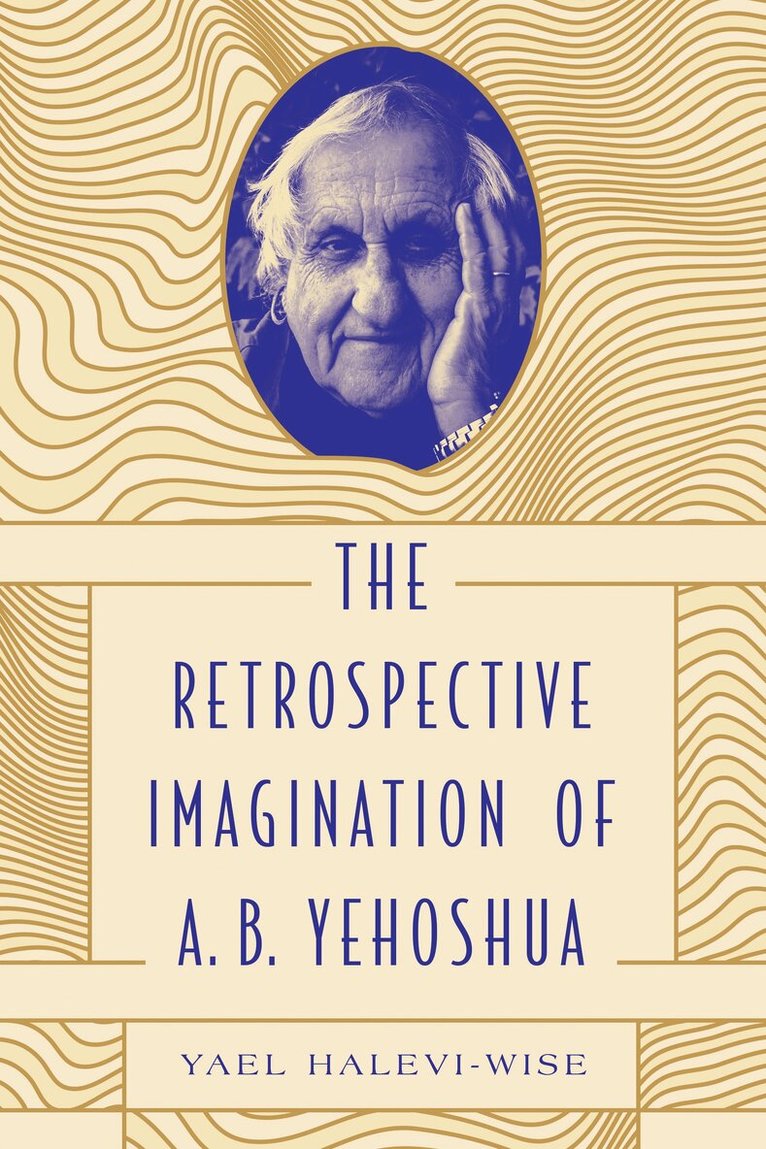
Once referred to by the New York Times as the “Israeli Faulkner,” A. B. Yehoshua’s fiction invites an assessment of Israel’s Jewish inheritance and the moral and political options that the country currently faces in the Middle East. The Retrospective Imagination of A. B. Yehoshua is an insightful overview of the fiction, nonfiction, and hundreds of critical responses to the work of Israel’s leading novelist.Instead of an exhaustive chronological-biographical account of Yehoshua’s artistic growth, Yael Halevi-Wise calls for a systematic appreciation of the author’s major themes and compositional patterns. Specifically, she argues for reading Yehoshua’s novels as reflections on the “condition of Israel,” constructed multifocally to engage four intersecting levels of signification: psychological, sociological, historical, and historiosophic. Each of the book’s seven chapters employs a different interpretive method to showcase how Yehoshua’s constructions of character psychology, social relations, national history, and historiosophic allusions to traditional Jewish symbols manifest themselves across his novels. The book ends with a playful dialogue in the style of Yehoshua’s masterpiece, Mr. Mani, that interrogates his definition of Jewish identity.Masterfully written, with full control of all the relevant materials, Halevi-Wise’s assessment of Yehoshua will appeal to students and scholars of modern Jewish literature and Jewish studies.
430 kr
Skickas inom 7-10 vardagar
Once referred to by the New York Times as the “Israeli Faulkner,” A. B. Yehoshua’s fiction invites an assessment of Israel’s Jewish inheritance and the moral and political options that the country currently faces in the Middle East. The Retrospective Imagination of A. B. Yehoshua is an insightful overview of the fiction, nonfiction, and hundreds of critical responses to the work of Israel’s leading novelist.Instead of an exhaustive chronological-biographical account of Yehoshua’s artistic growth, Yael Halevi-Wise calls for a systematic appreciation of the author’s major themes and compositional patterns. Specifically, she argues for reading Yehoshua’s novels as reflections on the “condition of Israel,” constructed multifocally to engage four intersecting levels of signification: psychological, sociological, historical, and historiosophic. Each of the book’s seven chapters employs a different interpretive method to showcase how Yehoshua’s constructions of character psychology, social relations, national history, and historiosophic allusions to traditional Jewish symbols manifest themselves across his novels. The book ends with a playful dialogue in the style of Yehoshua’s masterpiece, Mr. Mani, that interrogates his definition of Jewish identity.Masterfully written, with full control of all the relevant materials, Halevi-Wise’s assessment of Yehoshua will appeal to students and scholars of modern Jewish literature and Jewish studies.
1 160 kr
Skickas inom 10-15 vardagar
Arguing that genre must play a role in our study of narrative fiction, this tour of the novel examines interactive storytelling scenes in which characters argue about how to tell a tale that meets their respective social and aesthetic expectations. Through intense readings of interactive storytelling scenes in works spanning the 17th through 20th centuries, Halevi-Wise demonstrates how dramatized arguments about storytelling open a window on social and generic dilemmas affecting the narrative of each novel at the time of its composition. Examined in detail are Cervantes' Don Quixote, Sterne's Tristam Shandy, Austen's Northanger Abbey, Dickens's Little Dorrit, Conrad's Lord Jim, Yehoshua's Mr. Mani, and Esquivel'sI Like Water for Chocolate.Redressing an imbalance between sociological approaches that displace aesthetic considerations and aesthetic analyses that bracket cultural phenomena, the author shows why both genre and culture must be taken into account when we analyze the formation and reception of a narrative. Each interactive storytelling event illustrates how social and aesthetic interests compete and reinvent themselves within their framing texts and those texts' respective national and historical contexts. Just as social interactions cannot be indefinitely displaced in the study of narrative fiction, genre cannot be ignored in the study of identity politics. What emerges from this unique examination is a postmodern poetics of the novel that takes genre and history into account.
701 kr
Skickas inom 10-15 vardagar
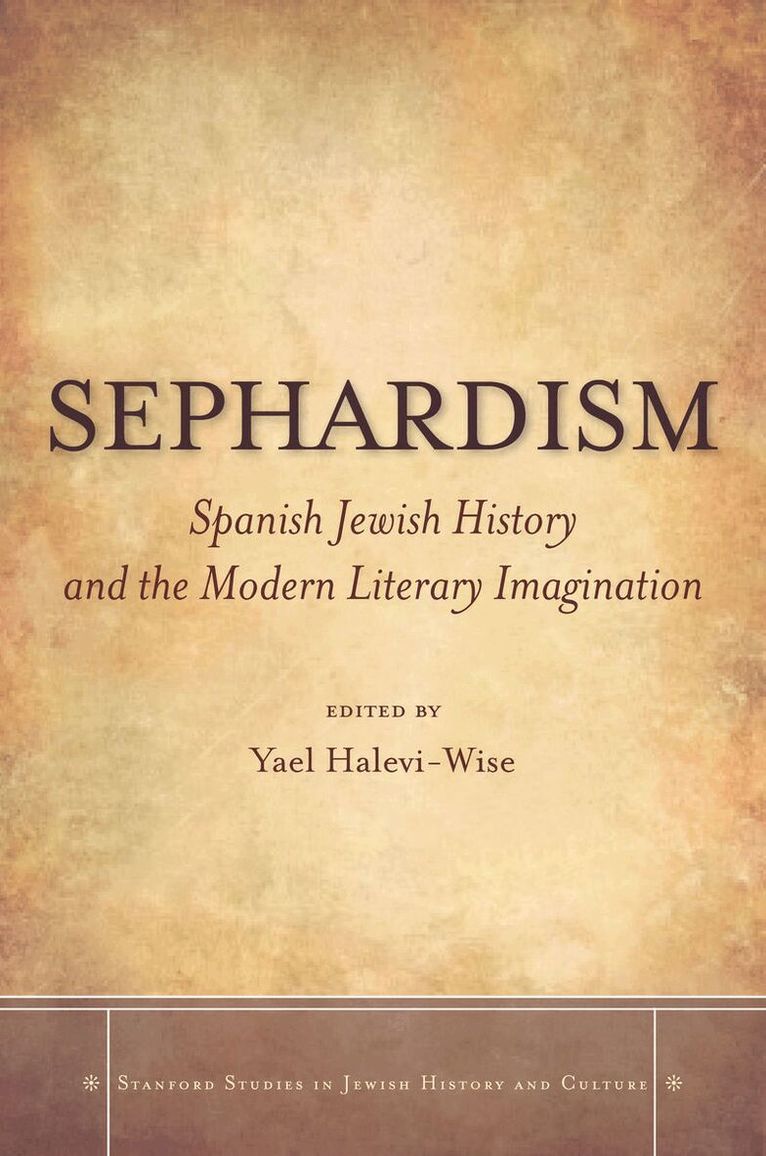
In this book, Sephardism is defined not as an expression of Sephardic identity but as a politicized literary metaphor. Since the nineteenth century, this metaphor has occurred with extraordinary frequency in works by authors from a variety of ethnicities, religions, and nationalities in Europe, the Americas, North Africa, Israel, and even India. Sephardism asks why Gentile and Jewish writers and cultural figures have chosen to draw upon the medieval Sephardic experience to express their concerns about dissidents and minorities in modern nations? To what extent does their use of Sephardism overlap with other politicized discourses such as orientalism, hispanism, and medievalism, which also emerged from a clash between authoritarian, progressive, and romantic ideologies? This book brings a new approach to Sephardic Studies by situating it at a crossroads between Jewish Studies and Hispanic Studies in ways that enhance our appreciation of how historical fiction and political history have shaped, and were shaped by, historical attitudes toward Jews and their representation.