Yagil Levy - Böcker
Visar alla böcker från författaren Yagil Levy. Handla med fri frakt och snabb leverans.
9 produkter
9 produkter
318 kr
Skickas inom 7-10 vardagar
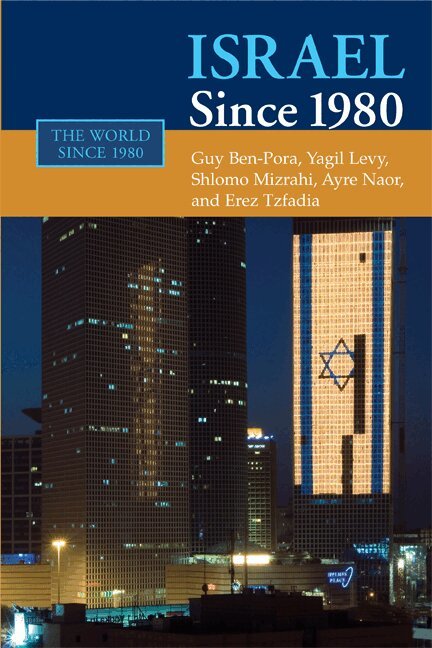
Over the last quarter century, a radical demographic, economic and political transformation has been taking place from within Israel. Israelis are beginning to ask some fundamental questions about the country they live in and what it means to be an Israeli. This book, written by five Israeli academics, probes the changing nature of Israeli society over the last twenty-five years. It considers the deep rifts in that society caused by ethnic, cultural, class and religious divide. It looks at political and economic changes and how privatization has undermined the welfare state. It questions the role of the military in the light of the wider social and economic changes. Finally, and crucially, it asks whether new political initiatives can offer a realistic alternative to the inadequacies of recent governments. This is an informative account of Israel's recent past and the challenges it faces in the twenty-first century.
645 kr
Skickas inom 7-10 vardagar
Over the last quarter century, a radical demographic, economic and political transformation has been taking place from within Israel. Israelis are beginning to ask some fundamental questions about the country they live in and what it means to be an Israeli. This book, written by five Israeli academics, probes the changing nature of Israeli society over the last twenty-five years. It considers the deep rifts in that society caused by ethnic, cultural, class and religious divide. It looks at political and economic changes and how privatization has undermined the welfare state. It questions the role of the military in the light of the wider social and economic changes. Finally, and crucially, it asks whether new political initiatives can offer a realistic alternative to the inadequacies of recent governments. This is an informative account of Israel's recent past and the challenges it faces in the twenty-first century.
1 476 kr
Skickas inom 10-15 vardagar
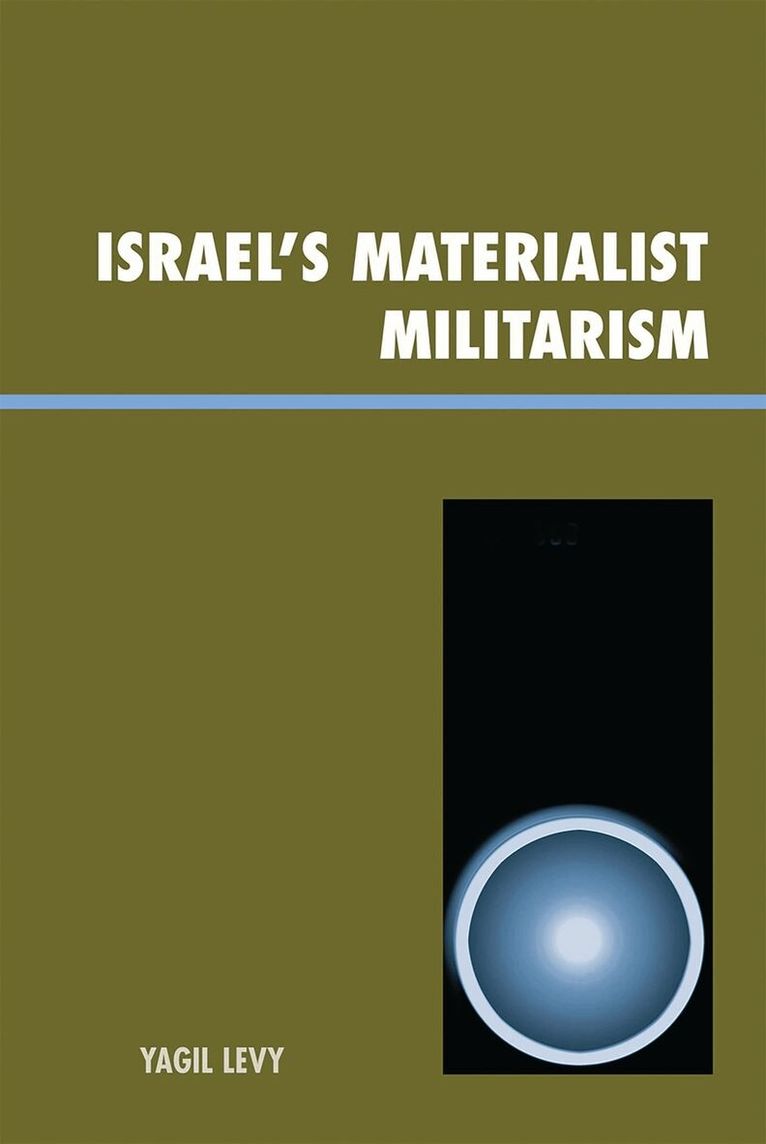
Israel's Materialist Militarism examines the decade of fluctuations in Israel's military policies, from the peace period of the Oslo Accords to the al-Aqsa Intifada, when the military's use of excessive force led to the collapse of the Palestinian Authority, and on to the Second Lebanon War of 2006, which reversed the moderating tendencies of the withdrawal from Gaza a year earlier.These dynamics of escalation and deescalation are explained in terms of materialist militarism, the exchange between social groups' military sacrifice and their social rewards, which in turn increases or decreases the level of militarism in society. Levy thus lays down a theoretical framework vital to tracing the fluctuating levels of militarism in Israel and elsewhere. Israel's Materialist Militarism is recommended for those interested in the Arab-Israeli conflict and military-society relations in general.
675 kr
Skickas inom 10-15 vardagar
Israel's Materialist Militarism examines the decade of fluctuations in Israel's military policies, from the peace period of the Oslo Accords to the al-Aqsa Intifada, when the military's use of excessive force led to the collapse of the Palestinian Authority, and on to the Second Lebanon War of 2006, which reversed the moderating tendencies of the withdrawal from Gaza a year earlier.These dynamics of escalation and deescalation are explained in terms of materialist militarism, the exchange between social groups' military sacrifice and their social rewards, which in turn increases or decreases the level of militarism in society. Levy thus lays down a theoretical framework vital to tracing the fluctuating levels of militarism in Israel and elsewhere. Israel's Materialist Militarism is recommended for those interested in the Arab-Israeli conflict and military-society relations in general.
1 088 kr
Tillfälligt slut
Questions the commonly accepted view that Israel's military policies were formed in direct response to Arab states' hostility and argues for a historical linkage between Israel's changing military posture and the development of an inequitable Israeli social structure.Trial and Error offers a unique exploration of the link between Israel's military policies and its ethno-class relations of power that has theoretical implications elsewhere. The book denounces the commonly accepted view that Israel's military policies were crafted merely as a direct and inevitable response to neighboring Arab states' hostility. Instead, Yagil Levy shows that Israel's security interests were also determined by the social interests of a rising middle class comprised of Jews of European descent. Because of the protracted state of war, this class achieved dominant status over other groups. As a result, a strong link was created between increasing inegalitarianism in Israeli society and missed opportunities to adopt more moderate foreign policies at crucial crossroads up to the 1980s. Paradoxically, however, as war benefits elevated the consumerist lifestyle of the middle class, the burden of war became less appealing to it. Levy argues that this and other social constraints, along with limitations imposed by the international system, played a focal role in channeling Israel's policies toward the 1990s' peace process.
394 kr
Tillfälligt slut
Questions the commonly accepted view that Israel's military policies were formed in direct response to Arab states' hostility and argues for a historical linkage between Israel's changing military posture and the development of an inequitable Israeli social structure.Trial and Error offers a unique exploration of the link between Israel's military policies and its ethno-class relations of power that has theoretical implications elsewhere. The book denounces the commonly accepted view that Israel's military policies were crafted merely as a direct and inevitable response to neighboring Arab states' hostility. Instead, Yagil Levy shows that Israel's security interests were also determined by the social interests of a rising middle class comprised of Jews of European descent. Because of the protracted state of war, this class achieved dominant status over other groups. As a result, a strong link was created between increasing inegalitarianism in Israeli society and missed opportunities to adopt more moderate foreign policies at crucial crossroads up to the 1980s. Paradoxically, however, as war benefits elevated the consumerist lifestyle of the middle class, the burden of war became less appealing to it. Levy argues that this and other social constraints, along with limitations imposed by the international system, played a focal role in channeling Israel's policies toward the 1990s' peace process.
873 kr
Skickas inom 10-15 vardagar
2012 Winner of the Shapiro Award for the Best Book in Israel Studies, presented by the Association for Israel StudiesWhose life is worth more? That is the question that states inevitably face during wartime. Which troops are thrown to the first lines of battle and which ones remain relatively intact? How can various categories of civilian populations be protected? And when front and rear are porous, whose life should receive priority, those of soldiers or those of civilians? In Israel's Death Hierarchy, Yagil Levy uses Israel as a compelling case study to explore the global dynamics and security implications of casualty sensitivity. Israel, Levy argues, originally chose to risk soldiers mobilized from privileged classes, more than civilians and other soldiers. However, with the mounting of casualty sensitivity, the state gradually restructured what Levy calls its "death hierarchy" to favor privileged soldiers over soldiers drawn from lower classes and civilians, and later to place enemy civilians at the bottom of the hierarchy by the use of heavy firepower. The state thus shifted risk from soldiers to civilians. As the Gaza offensive of 2009 demonstrates, this new death hierarchy has opened Israel to global criticism.
1 466 kr
Skickas inom 7-10 vardagar
Modern democracies face tough life-and-death choices in armed conflicts. Chief among them is how to weigh the value of soldiers' lives against those of civilians on both sides. The first of its kind, Whose Life Is Worth More? reveals that how these decisions are made is much more nuanced than conventional wisdom suggests. When these states are entangled in prolonged conflicts, hierarchies emerge and evolve to weigh the value of human life.Yagil Levy delves into a wealth of contemporary conflicts, including the drone war in Pakistan, the Kosovo war, the Israeli-Palestinian conflict, and the US and UK wars in Iraq and Afghanistan. Cultural narratives about the nature and necessity of war, public rhetoric about external threats facing the nation, antiwar movements, and democratic values all contribute to the perceived validity of civilian and soldier deaths. By looking beyond the military to the cultural and political factors that shape policies, this book provides tools to understand how democracies really decide whose life is worth more.
362 kr
Skickas inom 7-10 vardagar
Modern democracies face tough life-and-death choices in armed conflicts. Chief among them is how to weigh the value of soldiers' lives against those of civilians on both sides. The first of its kind, Whose Life Is Worth More? reveals that how these decisions are made is much more nuanced than conventional wisdom suggests. When these states are entangled in prolonged conflicts, hierarchies emerge and evolve to weigh the value of human life.Yagil Levy delves into a wealth of contemporary conflicts, including the drone war in Pakistan, the Kosovo war, the Israeli-Palestinian conflict, and the US and UK wars in Iraq and Afghanistan. Cultural narratives about the nature and necessity of war, public rhetoric about external threats facing the nation, antiwar movements, and democratic values all contribute to the perceived validity of civilian and soldier deaths. By looking beyond the military to the cultural and political factors that shape policies, this book provides tools to understand how democracies really decide whose life is worth more.