Yingyan Zhang – författare
Visar alla böcker från författaren Yingyan Zhang. Handla med fri frakt och snabb leverans.
7 produkter
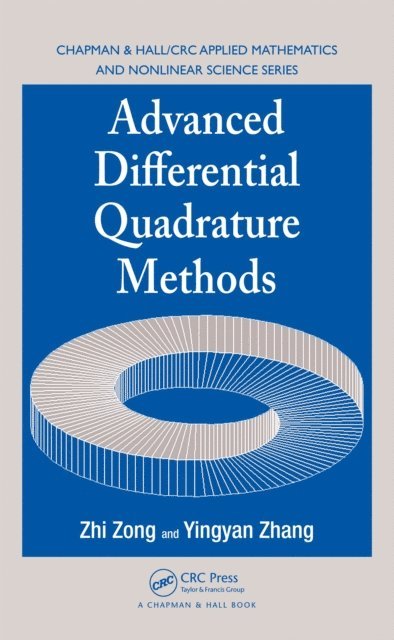
Advanced Differential Quadrature Methods
E-bok, 2009
1437 kr
Lägg i varukorg
Modern Tools to Perform Numerical DifferentiationThe original direct differential quadrature (DQ) method has been known to fail for problems with strong nonlinearity and material discontinuity as well as for problems involving singularity, irregularity, and multiple scales. But now researchers in …
Carbon Nanotubes and Nanosensors
Vibration, Buckling and Balistic Impact
Av Guillaume Ghyselinck, Yingyan Zhang m. fl.
E-bok, 2013
3029 kr
Lägg i varukorg
The main properties that make carbon nanotubes (CNTs) a promising technology for many future applications are: extremely high strength, low mass density, linear elastic behavior, almost perfect geometrical structure, and nanometer scale structure. Also, CNTs can conduct electricity better than …
Carbon Nanotubes and Nanosensors
Vibration, Buckling and Balistic Impact
Av Guillaume Ghyselinck, Yingyan Zhang m. fl.
E-bok, 2013
3096 kr
Lägg i varukorg
The main properties that make carbon nanotubes (CNTs) a promising technology for many future applications are: extremely high strength, low mass density, linear elastic behavior, almost perfect geometrical structure, and nanometer scale structure. Also, CNTs can conduct electricity better than …
Advanced Differential Quadrature Methods
Häftad, 2017
1217 kr
Lägg i varukorg
Modern Tools to Perform Numerical DifferentiationThe original direct differential quadrature (DQ) method has been known to fail for problems with strong nonlinearity and material discontinuity as well as for problems involving singularity, irregularity, and multiple scales. But now researchers in …
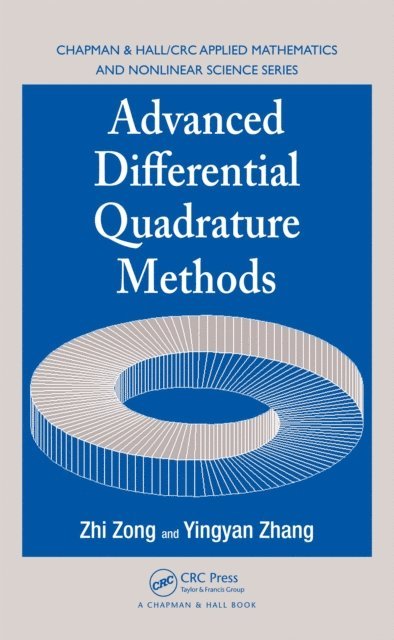
Advanced Differential Quadrature Methods
E-bok, 2009
1437 kr
Lägg i varukorg
Modern Tools to Perform Numerical DifferentiationThe original direct differential quadrature (DQ) method has been known to fail for problems with strong nonlinearity and material discontinuity as well as for problems involving singularity, irregularity, and multiple scales. But now researchers in …
Carbon Nanotubes and Nanosensors
Vibration, Buckling and Balistic Impact
Av Isaac Elishakoff, Kevin Dujat m. fl.
Inbunden, 2012
2657 kr
Lägg i varukorg
The main properties that make carbon nanotubes (CNTs) a promising technology for many future applications are: extremely high strength, low mass density, linear elastic behavior, almost perfect geometrical structure, and nanometer scale structure. Also, CNTs can conduct electricity better than …
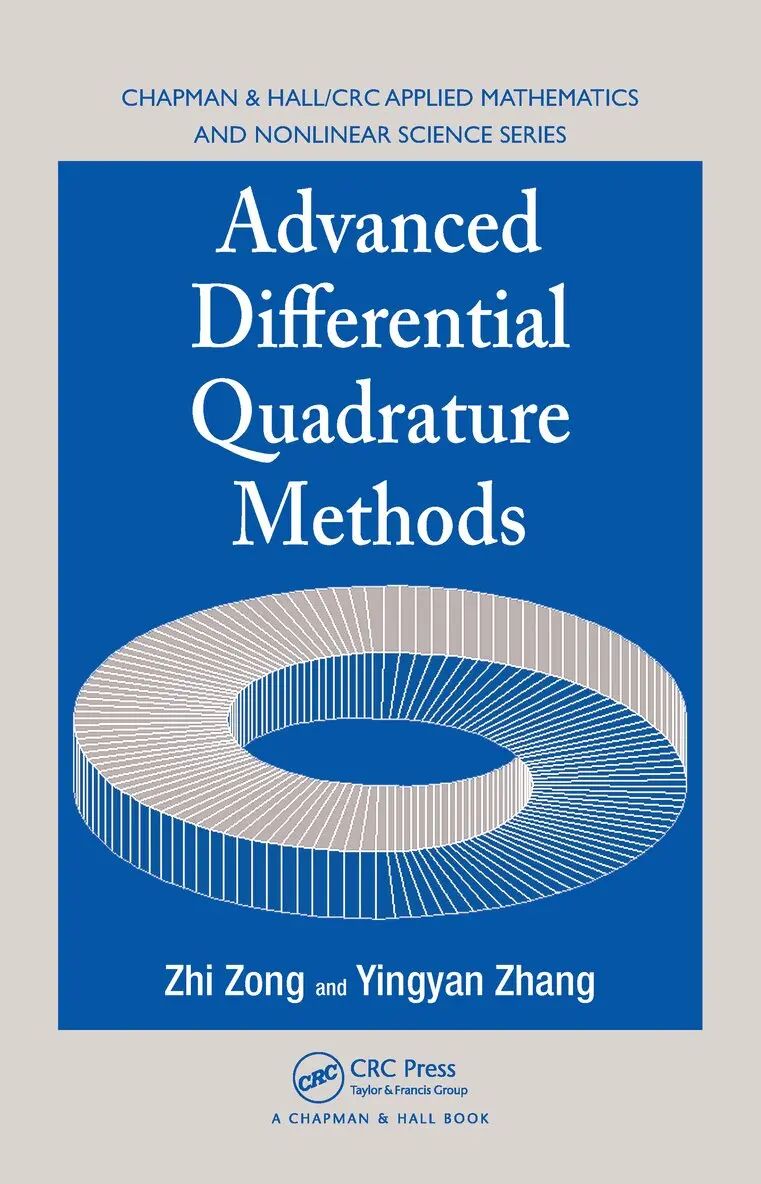
Advanced Differential Quadrature Methods
Inbunden, 2009
2185 kr
Tillfälligt slut
Modern Tools to Perform Numerical DifferentiationThe original direct differential quadrature (DQ) method has been known to fail for problems with strong nonlinearity and material discontinuity as well as for problems involving singularity, irregularity, and multiple scales. But now researchers in …