Yu-Shuang Yao - Böcker
Visar alla böcker från författaren Yu-Shuang Yao. Handla med fri frakt och snabb leverans.
3 produkter
3 produkter
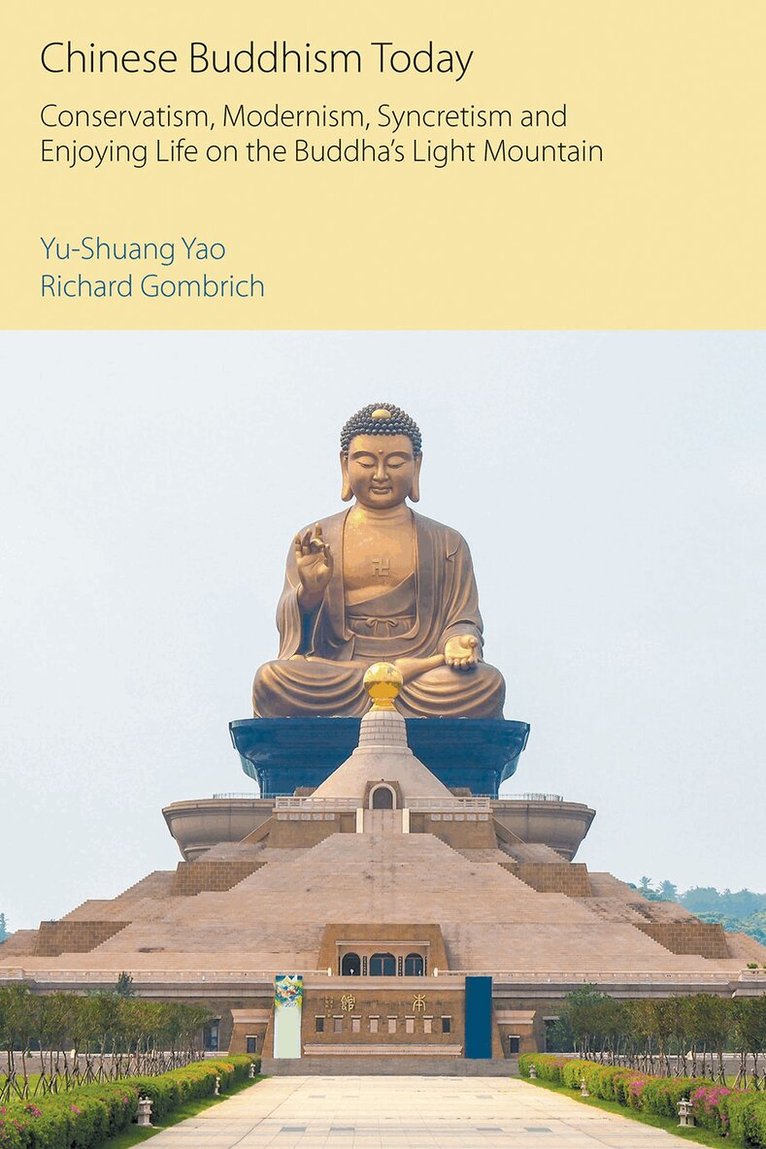
Chinese Buddhism Today
Conservatism, Modernism, Syncretism and Enjoying Life on the Buddha's Light Mountain
Inbunden, Engelska, 2022
1 022 kr
Skickas inom 5-8 vardagar
Fo Guang Shan, “Buddha’s Light Mountain”, is a Buddhist movement founded in Taiwan in 1967 and led by the Ven Hsing Yun (b.1927), who had fled to Taiwan from mainland China in 1949. It stands in the Chinese tradition of Mahāyāna Buddhism and more specifically is a form of Buddhism which in English is usually referred to as “Humanistic Buddhism” or as “engaged Buddhism”. Humanistic Buddhism owes its origin to the Chinese monk Tai Xu (1890-1947). He found the Buddhism which surrounded him in China dreary and moribund, preoccupied with rituals for the dead, and offering nothing to help or guide people living in the world outside monasteries. His determination to reverse this decay centred on the idea that it was the vocation of a Mahayana Buddhist to do good to others, finding their own spiritual benefit in benefitting society.Hsing Yun has been a devoted disciple of Tai Xu. It is telling that he founded a seminary before he founded a monastery, and has laid huge emphasis on education. As the sub-title of this book indicates, in order to make Buddhism widely attractive and relevant he has incorporated every influence available. Gifted with a benign personality, he has turned his seemingly boundless energy and prodigious versatility to creating an institution which presents Buddhism as potentially a source for benefitting society through making life enjoyable. This book hopes to convey the movement’s ethos primarily by focusing on his views and activities.
Chinese Buddhism Today
Conservatism, Modernism, Syncretism and Enjoying Life on the Buddha's Light Mountain
Häftad, Engelska, 2022
370 kr
Skickas inom 5-8 vardagar
Fo Guang Shan, “Buddha’s Light Mountain”, is a Buddhist movement founded in Taiwan in 1967 and led by the Ven Hsing Yun (b.1927), who had fled to Taiwan from mainland China in 1949. It stands in the Chinese tradition of Mahāyāna Buddhism and more specifically is a form of Buddhism which in English is usually referred to as “Humanistic Buddhism” or as “engaged Buddhism”. Humanistic Buddhism owes its origin to the Chinese monk Tai Xu (1890-1947). He found the Buddhism which surrounded him in China dreary and moribund, preoccupied with rituals for the dead, and offering nothing to help or guide people living in the world outside monasteries. His determination to reverse this decay centred on the idea that it was the vocation of a Mahayana Buddhist to do good to others, finding their own spiritual benefit in benefitting society.Hsing Yun has been a devoted disciple of Tai Xu. It is telling that he founded a seminary before he founded a monastery, and has laid huge emphasis on education. As the sub-title of this book indicates, in order to make Buddhism widely attractive and relevant he has incorporated every influence available. Gifted with a benign personality, he has turned his seemingly boundless energy and prodigious versatility to creating an institution which presents Buddhism as potentially a source for benefitting society through making life enjoyable. This book hopes to convey the movement’s ethos primarily by focusing on his views and activities.
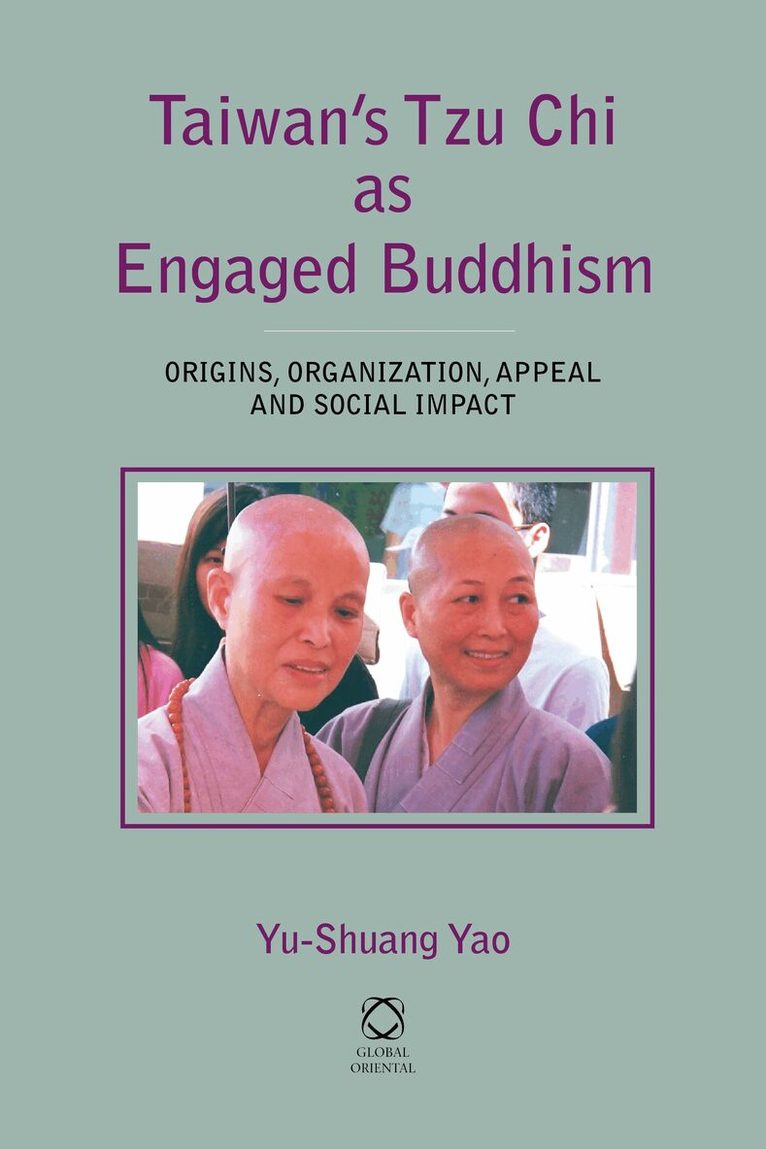
Taiwan's Tzu Chi as Engaged Buddhism
Origins, Organization, Appeal and Social Impact
Inbunden, Engelska, 2012
1 452 kr
Skickas inom 5-8 vardagar
This book is the first comprehensive sociological account and in-depth analysis of a new Chinese Buddhist movement, known as Tzu Chi (otherwise, the Buddhist Compassion Merit Society). Based in Taiwan, it was founded in 1966 and still led by a female Buddhist master – Master Cheng Yen. Its members are laity, and women play a major role. The main focus of the movement is medical charity – to ease and if possible prevent suffering and to teach ethics to the wealthy; at the same time, it also offers members a religion and a way of life. Recruitment typically attracts people from the urban middle class. With some 3.5 million members and a very low drop-out rate, Tzu Chi is extraordinarily successful, and has spread to other parts of the world, not least mainland China where it is attracting the attention of the general public and the media. The book stands in the Anglo-American tradition of the sociology of religion; it also draws on the author’s knowledge of Buddhist history. The data come from participant observation and many long interviews. It will be of particular interest to students of new religious movements, religious studies in contemporary China, and studies in ethics and social change in East Asia.