Yun Lee Too – författare
Visar alla böcker från författaren Yun Lee Too. Handla med fri frakt och snabb leverans.
17 produkter
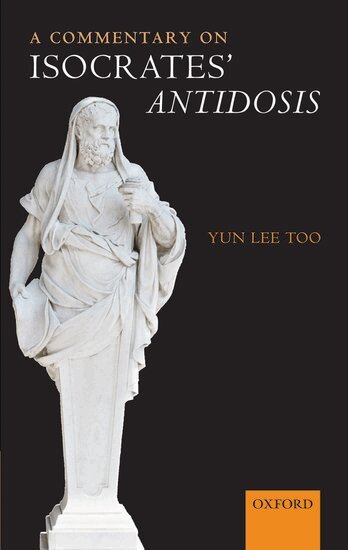
Commentary on Isocrates' Antidosis
Av Yun Lee Too
E-bok, 2008
1855 kr
Lägg i varukorg
How does one construct a role for oneself in the fourth-century democratic city? This commentary on Isocrates'' Antidosis , which includes a full translation as well as an extensive introduction, demonstrates that a rhetorician may do so by assuming roles that subvert many of the conventions …
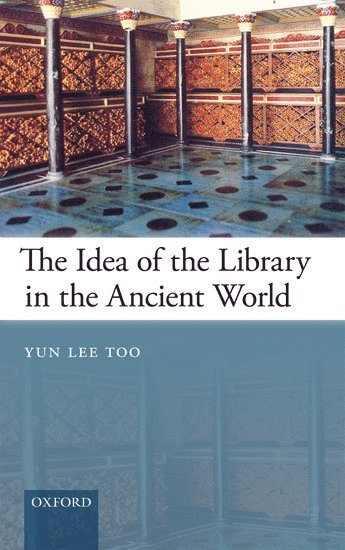
Idea of the Library in the Ancient World
Av Yun Lee Too
E-bok, 2010
1718 kr
Lägg i varukorg
In The Idea of the Library in the Ancient World Yun Lee Too argues that the ancient library was much more than its incarnation at Alexandria, which has been the focus for students of the subject up till now. In fact, the library is a complex institution with many different forms. It can be a …
Idea of the Library in the Ancient World
Av Yun Lee Too
E-bok, 2010
1681 kr
Lägg i varukorg
In The Idea of the Library in the Ancient World Yun Lee Too argues that the ancient library was much more than its incarnation at Alexandria, which has been the focus for students of the subject up till now. In fact, the library is a complex institution with many different forms. It can be a …
The Idea of Ancient Literary Criticism
Av Yun Lee Too
Inbunden, 1999
3179 kr
Lägg i varukorg
Yun Lee Too offers a sustained reading of the social function of the body of texts we identify as 'ancient literary criticism' with major implications for how we understand this discourse and also modern criticism and literary theory. The author argues that when Greek and Roman authors discuss what …
A Commentary on Isocrates' Antidosis
Av Yun Lee Too
Inbunden, 2008
2968 kr
Lägg i varukorg
How does one construct a role for oneself in the fourth-century democratic city? This commentary on Isocrates' Antidosis , which includes a full translation as well as an extensive introduction, demonstrates that a rhetorician may do so by assuming roles that subvert many of the conventions invoked …
The Idea of the Library in the Ancient World
Av Yun Lee Too
Inbunden, 2010
2357 kr
Lägg i varukorg
In The Idea of the Library in the Ancient World Yun Lee Too argues that the ancient library was much more than its incarnation at Alexandria, which has been the focus for students of the subject up till now. In fact, the library is a complex institution with many different forms. It can be a …
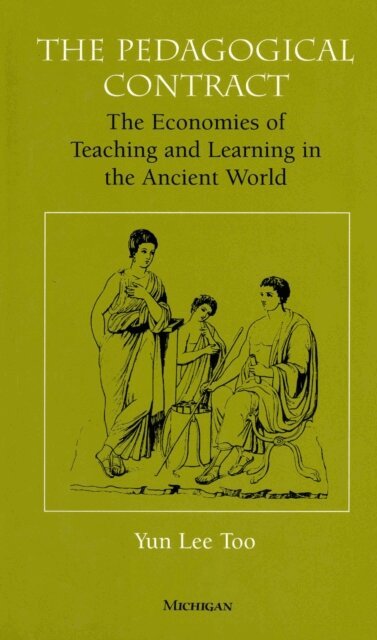
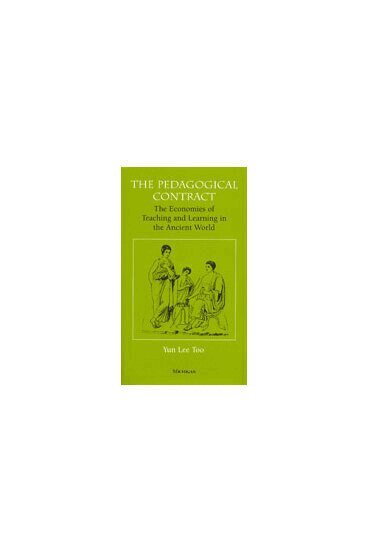
Pedagogical Contract
The Economies of Teaching and Learning in the Ancient World
Av Yun Lee Too
E-bok, 2010
1524 kr
Lägg i varukorg
The Pedagogical Contract explores the relationship between teacher and student and argues for ways of reconceiving pedagogy. It discloses this relationship as one that since antiquity has been regarded as a scene of give-and-take, where the teacher exchanges knowledge for some sort of payment by …
Pedagogy and Power
Rhetorics of Classical Learning
Av Yun Lee Too, Niall Livingstone
Häftad, 2007
834 kr
Lägg i varukorg
Pedagogy and Power is a volume of interdisciplinary essays which explores the political dimensions of Graeco-Roman education and of its subsequent models. Seeking to make the various structures and discourses of intellectual authority more apparent, the essays argue that there is a social context …
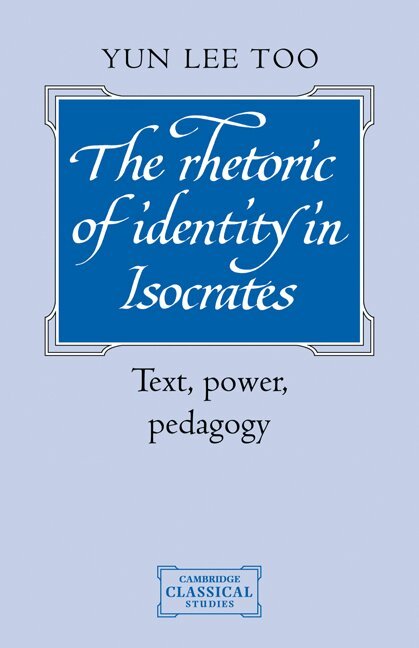
The Rhetoric of Identity in Isocrates
Text, Power, Pedagogy
Av Yun Lee Too
Häftad, 2009
823 kr
Lägg i varukorg
The Rhetoric of Identity in Isocrates offers a sustained interpretation of the Isocratean corpus, showing that rhetoric is a language which the author uses to create a political identity for himself in fourth-century Athens. Dr Too examines how Isocrates' discourse addresses anxieties surrounding …
The Rhetoric of Identity in Isocrates
Text, Power, Pedagogy
Av Yun Lee Too
Inbunden, 1995
2266 kr
Lägg i varukorg
The Rhetoric of Identity in Isocrates offers a sustained interpretation of the Isocratean corpus, showing that rhetoric is a language which the author uses to create a political identity for himself in fourth-century Athens. Dr Too examines how Isocrates' discourse addresses anxieties surrounding …
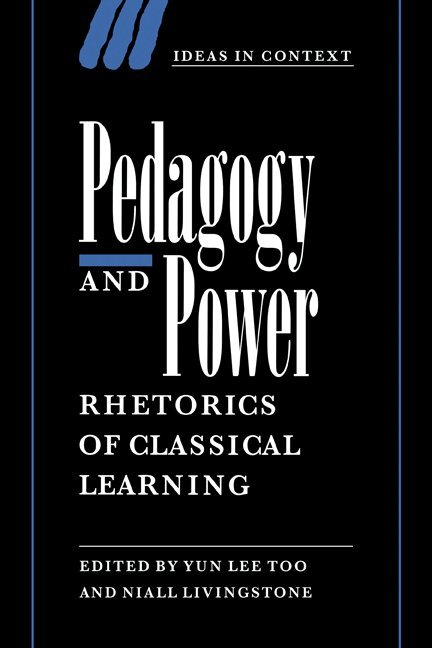
Pedagogy and Power
Rhetorics of Classical Learning
Av Yun Lee Too, Niall Livingstone
Inbunden, 1998
2060 kr
Lägg i varukorg
Pedagogy and Power is a volume of interdisciplinary essays which explores the political dimensions of Graeco-Roman education and of its subsequent models. Seeking to make the various structures and discourses of intellectual authority more apparent, the essays argue that there is a social context …
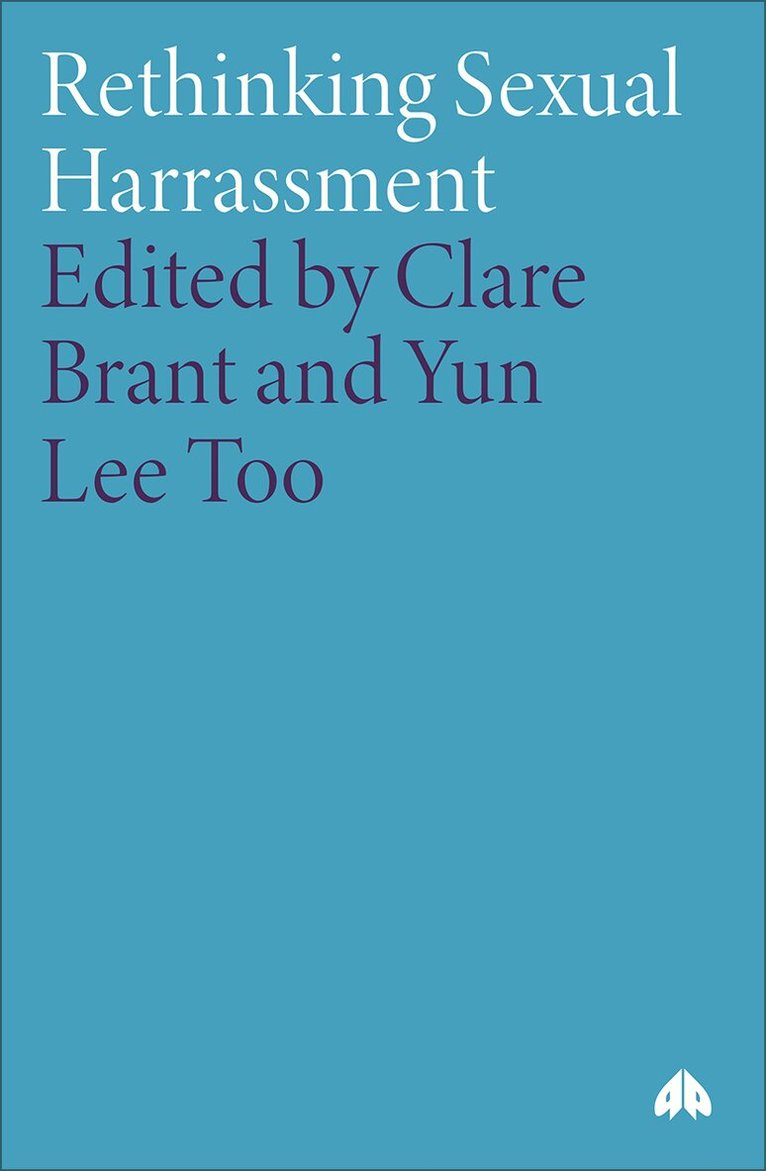
Rethinking Sexual Harrassment
Av Yun Lee Too, Clare Brant m. fl.
Häftad, 1994
308 kr
Lägg i varukorg
'An innovative and challenging title from feminists in Britain [...] makes a valuable contribution to understanding sexual harassment' Feminist Bookstore News'Serious and scholarly ... deserves a wide audience' Journal of the Institute of Health Education'Excellent ... However familiar the subject …
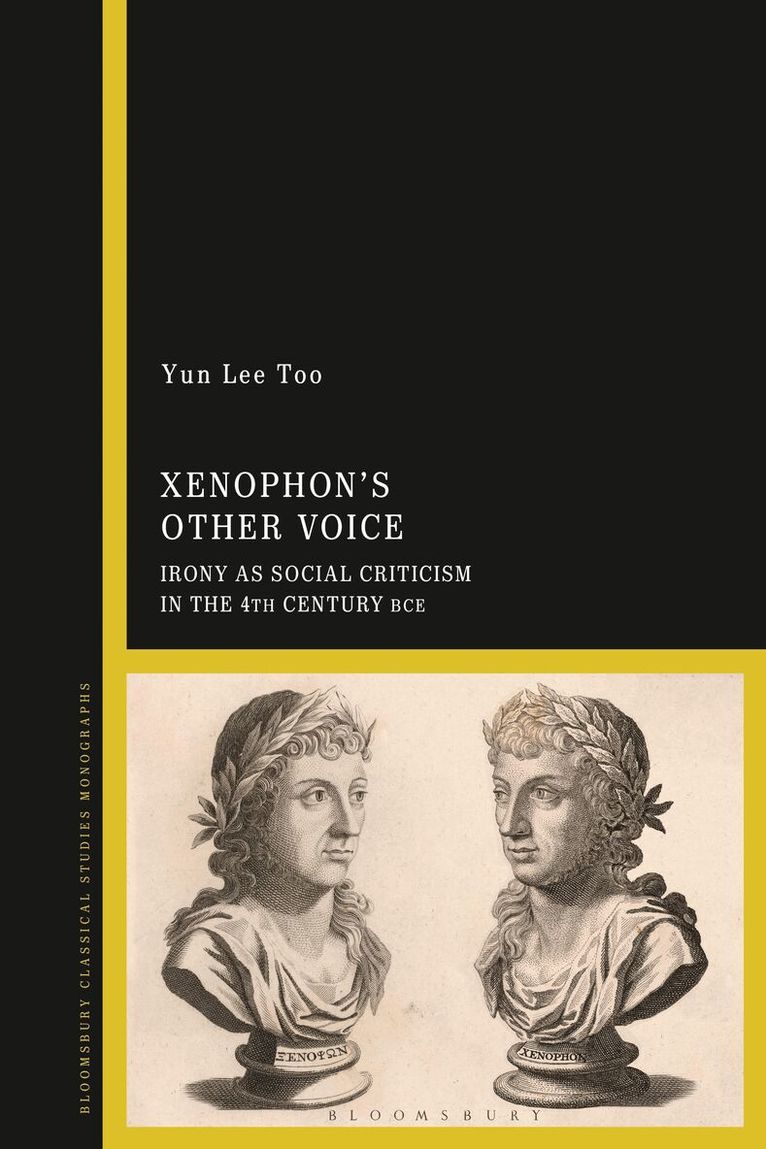
Xenophon’s Other Voice
Irony as Social Criticism in the 4th Century BCE
Av Yun Lee Too
Inbunden, 2021
1628 kr
Lägg i varukorg
This volume explores irony – in its essence, saying other than one actually means – in the collected works of Xenophon. Xenophon’s Other Voice argues that there are two voices in the author: one ostensible at the level of the literal text, which is available to everyone, while the sub-title …
Xenophon’s Other Voice
Irony as Social Criticism in the 4th Century BCE
Av Yun Lee Too
Häftad, 2023
494 kr
Lägg i varukorg
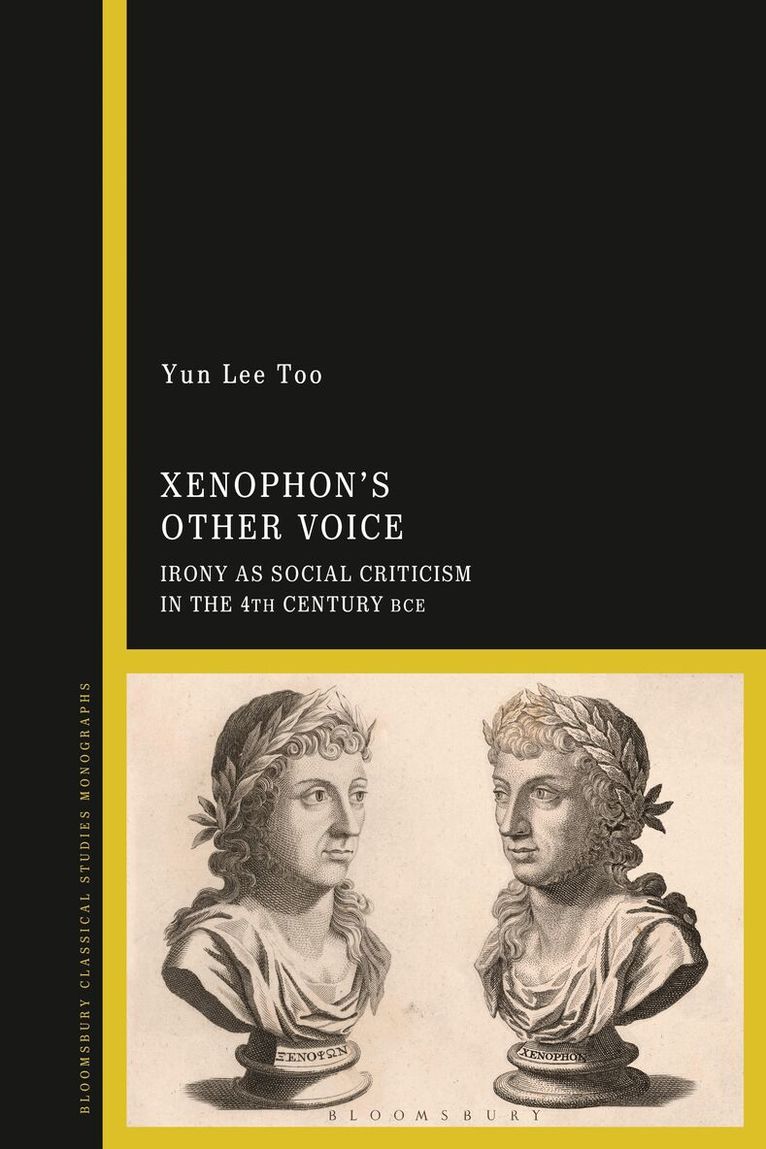
This volume explores irony – in its essence, saying other than one actually means – in the collected works of Xenophon. Xenophon’s Other Voice argues that there are two voices in the author: one ostensible at the level of the literal text, which is available to everyone, while the sub-title …
Xenophon’s Other Voice
Irony as Social Criticism in the 4th Century BCE
Av Yun Lee Too
E-bok, 2021
538 kr
Lägg i varukorg
This volume explores irony – in its essence, saying other than one actually means – in the collected works of Xenophon. Xenophon''s Other Voice argues that there are two voices in the author: one ostensible at the level of the literal text, which is available to everyone, while the sub-title …
Xenophon’s Other Voice
Irony as Social Criticism in the 4th Century BCE
Av Yun Lee Too
E-bok, 2021
522 kr
Lägg i varukorg
This volume explores irony – in its essence, saying other than one actually means – in the collected works of Xenophon. Xenophon''s Other Voice argues that there are two voices in the author: one ostensible at the level of the literal text, which is available to everyone, while the sub-title …
Pedagogical Contract
The Economies of Teaching and Learning in the Ancient World
Av Yun Lee Too
Inbunden, 2000
1157 kr
Tillfälligt slut
The Pedagogical Contract explores the relationship between teacher and student and argues for ways of reconceiving pedagogy. It discloses this relationship as one that since antiquity has been regarded as a scene of give-and-take, where the teacher exchanges knowledge for some sort of payment by …