Yuval Feldman – författare
Visar alla böcker från författaren Yuval Feldman. Handla med fri frakt och snabb leverans.
4 produkter
4 produkter
377 kr
Skickas inom 7-10 vardagar
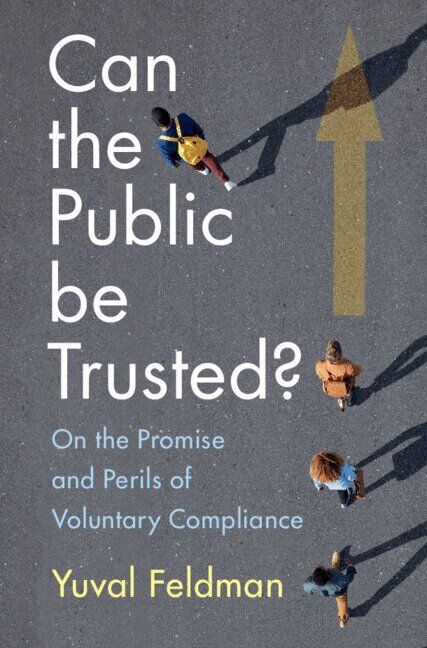
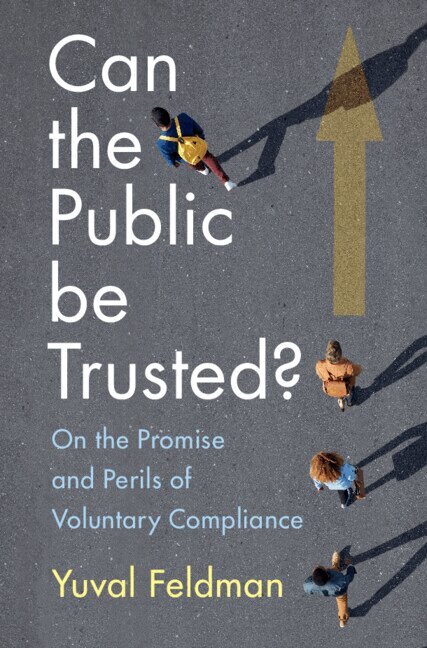
When do citizens voluntarily comply with regulations rather than act out of fear of sanctions? Can the Public be Trusted? challenges prevailing regulatory paradigms by examining when democratic states can rely on voluntary compliance. Drawing on behavioral science, law, and public policy research, Yuval Feldman explores why voluntary compliance, despite often yielding superior and more sustainable outcomes, remains underutilized by policymakers. Through empirical analysis of policy implementation in COVID-19 response, tax compliance, and environmental regulation, Feldman examines trust-based governance's potential and limitations. The book presents a comprehensive framework for understanding how cultural diversity, technological change, and institutional trust shape voluntary cooperation. By offering evidence-based insights, Feldman provides practical recommendations for balancing trust, accountability, and enforcement in regulatory design. This book is essential reading for scholars, policymakers, and practitioners seeking to optimize regulatory outcomes through enhanced voluntary compliance. This title is also available as open access on Cambridge Core.
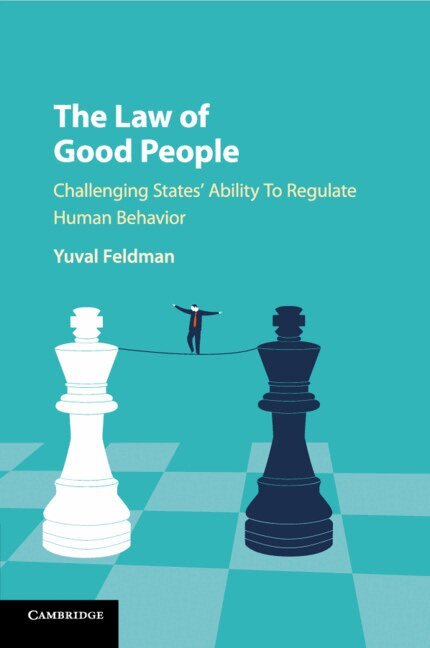
The Law of Good People
Challenging States' Ability to Regulate Human Behavior
Inbunden, Engelska, 2018
1 376 kr
Skickas inom 7-10 vardagar
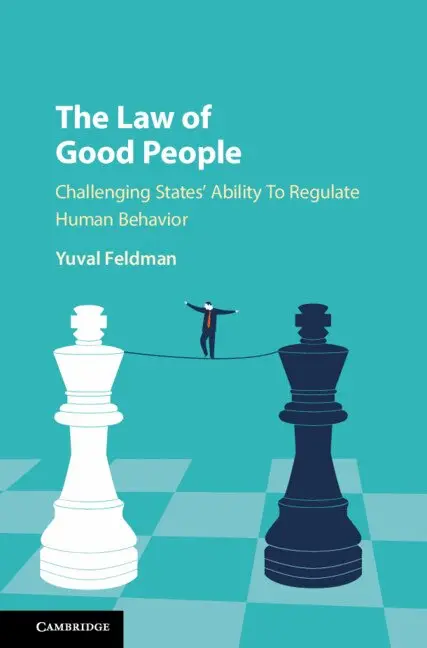
Currently, the dominant enforcement paradigm is based on the idea that states deal with 'bad people' - or those pursuing their own self-interests - with laws that exact a price for misbehavior through sanctions and punishment. At the same time, by contrast, behavioral ethics posits that 'good people' are guided by cognitive processes and biases that enable them to bend the laws within the confines of their conscience. In this illuminating book, Yuval Feldman analyzes these paradigms and provides a broad theoretical and empirical comparison of traditional and non-traditional enforcement mechanisms to advance our understanding of how states can better deal with misdeeds committed by normative citizens blinded by cognitive biases regarding their own ethicality. By bridging the gap between new findings of behavioral ethics and traditional methods used to modify behavior, Feldman proposes a 'law of good people' that should be read by scholars and policymakers around the world.
428 kr
Skickas inom 7-10 vardagar
Currently, the dominant enforcement paradigm is based on the idea that states deal with 'bad people' - or those pursuing their own self-interests - with laws that exact a price for misbehavior through sanctions and punishment. At the same time, by contrast, behavioral ethics posits that 'good people' are guided by cognitive processes and biases that enable them to bend the laws within the confines of their conscience. In this illuminating book, Yuval Feldman analyzes these paradigms and provides a broad theoretical and empirical comparison of traditional and non-traditional enforcement mechanisms to advance our understanding of how states can better deal with misdeeds committed by normative citizens blinded by cognitive biases regarding their own ethicality. By bridging the gap between new findings of behavioral ethics and traditional methods used to modify behavior, Feldman proposes a 'law of good people' that should be read by scholars and policymakers around the world.
1 218 kr
Skickas inom 7-10 vardagar
When do citizens voluntarily comply with regulations rather than act out of fear of sanctions? Can the Public be Trusted? challenges prevailing regulatory paradigms by examining when democratic states can rely on voluntary compliance. Drawing on behavioral science, law, and public policy research, Yuval Feldman explores why voluntary compliance, despite often yielding superior and more sustainable outcomes, remains underutilized by policymakers. Through empirical analysis of policy implementation in COVID-19 response, tax compliance, and environmental regulation, Feldman examines trust-based governance's potential and limitations. The book presents a comprehensive framework for understanding how cultural diversity, technological change, and institutional trust shape voluntary cooperation. By offering evidence-based insights, Feldman provides practical recommendations for balancing trust, accountability, and enforcement in regulatory design. This book is essential reading for scholars, policymakers, and practitioners seeking to optimize regulatory outcomes through enhanced voluntary compliance. This title is also available as open access on Cambridge Core.