Yves Charles Zarka – författare
Visar alla böcker från författaren Yves Charles Zarka. Handla med fri frakt och snabb leverans.
10 produkter
Hobbes and Modern Political Thought
Häftad, 2018
409 kr
Lägg i varukorg
Reveals the Hobbesian origins of contemporary political concerns, especially the relationships between state, individual and lawYves Charles Zarka shows you how Hobbes established the framework for modern political thought. Discover the origin of liberalism in the Hobbesian theory of negative …
Philosophie et politique à l'âge classique
E-bok, 2015
559 kr
Lägg i varukorg
Cet ouvrage a pour objet d’élucider les concepts politiques majeurs produits par l’âge classique : la souveraineté, le pacte social, la raison d’État, le droit naturel, la tolérance, l’émancipation par la raison, les droits de l’homme, la reformulation de la problématique théologico-politique, etc. …
Philosophie et politique à l'âge classique
Häftad, 2018
572 kr
Lägg i varukorg
Cet ouvrage a pour objet d’élucider les concepts politiques majeurs produits par l’âge classique : la souveraineté, le pacte social, la raison d’État, le droit naturel, la tolérance, l’émancipation par la raison, les droits de l’homme, la reformulation de la problématique théologico-politique, etc. …
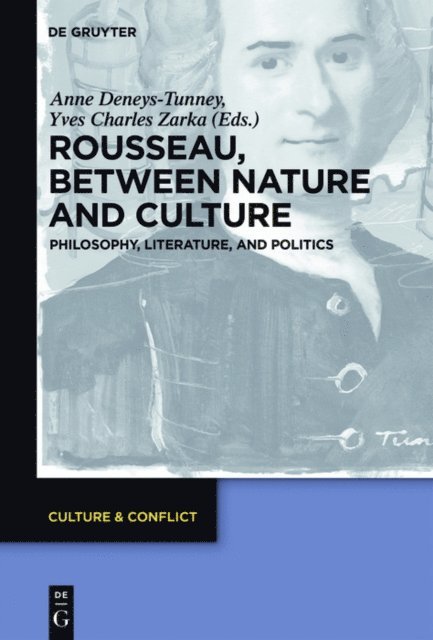
Rousseau Between Nature and Culture
Philosophy, Literature, and Politics
Av Anne Deneys-Tunney, Yves Charles Zarka
Inbunden, 2016
1727 kr
Lägg i varukorg
Rousseau has been seen as the inventor of the concept of nature; in this collective volume philosophers and literary specialists from France and the United States examine how Rousseau's philosophy can be reinterpreted from the point of view of a constant dialectical debate between nature and …
Rousseau Between Nature and Culture
Philosophy, Literature, and Politics
Av Yves Charles Zarka, Anne Deneys-Tunney
E-bok, 2016
1742 kr
Lägg i varukorg
Rousseau has been seen as the inventor of the concept of nature; in this collective volume philosophers and literary specialists from France and the United States examine how Rousseau''s philosophy can be reinterpreted from the point of view of a constant dialectical debate between nature and …
Rousseau Between Nature and Culture
Philosophy, Literature, and Politics
Av Yves Charles Zarka, Anne Deneys-Tunney
E-bok, 2016
1742 kr
Lägg i varukorg
Rousseau has been seen as the inventor of the concept of nature; in this collective volume philosophers and literary specialists from France and the United States examine how Rousseau''s philosophy can be reinterpreted from the point of view of a constant dialectical debate between nature and …
Rousseau Between Nature and Culture
Philosophy, Literature, and Politics
Av Anne Deneys-Tunney, Yves Charles Zarka
Häftad, 2021
337 kr
Lägg i varukorg
Jetzt als Broschur
Metamorfosis del monstruo político
Y otros ensayos sobre la democracia
E-bok, 2019
125 kr
Lägg i varukorg
La presente obra se articula en torno a dos perspectivas. La primera trata de poner de manifiesto las transformaciones singulares que afectan profundamente a la política y pueden explicar las derivas de la democracia actual. Para ello, el autor se vale de la figura del monstruo, ya que su devenir …
La inapropiabilidad de la Tierra
Principio de una refundación filosófica frente a los desafíos de nuestro tiempo
E-bok, 2016
68 kr
Lägg i varukorg
La Tierra está en estado crítico. La propiedad domina nuestro tiempo y también aumenta la desigualdad entre las sociedades del mundo. La Tierra no es solo la tierra, sino que también y fundamentalmente es el mundo habitable; pero está siendo continuamente destruida, el hombre la destruye. Es …
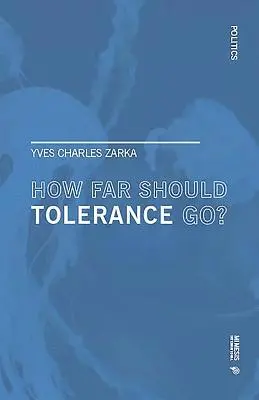
How far Should Tolerance go?
Häftad, 2018
379 kr
Tillfälligt slut
What are the limits of tolerance in constitutional or liberal democracies today? This is a crucial question, for if there were no limits to tolerance, it would ultimately destroy itself by accepting the intolerable. The concept of tolerance has to be assessed from a political point of view, thus …