Zachary Valentine Wright - Böcker
Visar alla böcker från författaren Zachary Valentine Wright. Handla med fri frakt och snabb leverans.
3 produkter
3 produkter
Realizing Islam
The Tijaniyya in North Africa and the Eighteenth-Century Muslim World
Inbunden, Engelska, 2020
1 063 kr
Skickas inom 10-15 vardagar
The Tijaniyya is the largest Sufi order in West and North Africa. In this unprecedented analysis of the Tijaniyya's origins and development in the late eighteenth century, Zachary Valentine Wright situates the order within the broader intellectual history of Islam in the early modern period. Introducing the group's founder, Ahmad al-Tijani (1737 - 1815), Wright focuses on the wider network in which al-Tijani traveled, revealing it as a veritable global Islamic revival whose scholars commanded large followings, shared key ideas, and produced literature read widely throughout the Muslim world. They were linked through chains of knowledge transmission from which emerged vibrant discourses of renewal in the face of perceived social and political corruption. Wright argues that this constellation of remarkable Muslim intellectuals, despite the uncertainly of the age, promoted personal verification in religious learning. With distinctive concern for the notions of human actualization and a universal human condition, the Tijaniyya emphasized the importance of the realization of Muslim identity. Since its beginnings in North Africa in the eighteenth century, the Tijaniyya has quietly expanded its influence beyond Africa, with significant populations in the Middle East, Southeast Asia, and North America. We are proud to offer this book in our usual print and ebook formats, plus as an open-access edition available through the Sustainable History Monograph Project.
Realizing Islam
The Tijaniyya in North Africa and the Eighteenth-Century Muslim World
Häftad, Engelska, 2020
368 kr
Skickas inom 10-15 vardagar
The Tijaniyya is the largest Sufi order in West and North Africa. In this unprecedented analysis of the Tijaniyya's origins and development in the late eighteenth century, Zachary Valentine Wright situates the order within the broader intellectual history of Islam in the early modern period. Introducing the group's founder, Ahmad al-Tijani (1737 - 1815), Wright focuses on the wider network in which al-Tijani traveled, revealing it as a veritable global Islamic revival whose scholars commanded large followings, shared key ideas, and produced literature read widely throughout the Muslim world. They were linked through chains of knowledge transmission from which emerged vibrant discourses of renewal in the face of perceived social and political corruption. Wright argues that this constellation of remarkable Muslim intellectuals, despite the uncertainly of the age, promoted personal verification in religious learning. With distinctive concern for the notions of human actualization and a universal human condition, the Tijaniyya emphasized the importance of the realization of Muslim identity. Since its beginnings in North Africa in the eighteenth century, the Tijaniyya has quietly expanded its influence beyond Africa, with significant populations in the Middle East, Southeast Asia, and North America. We are proud to offer this book in our usual print and ebook formats, plus as an open-access edition available through the Sustainable History Monograph Project.
Del 18 - Islam in Africa
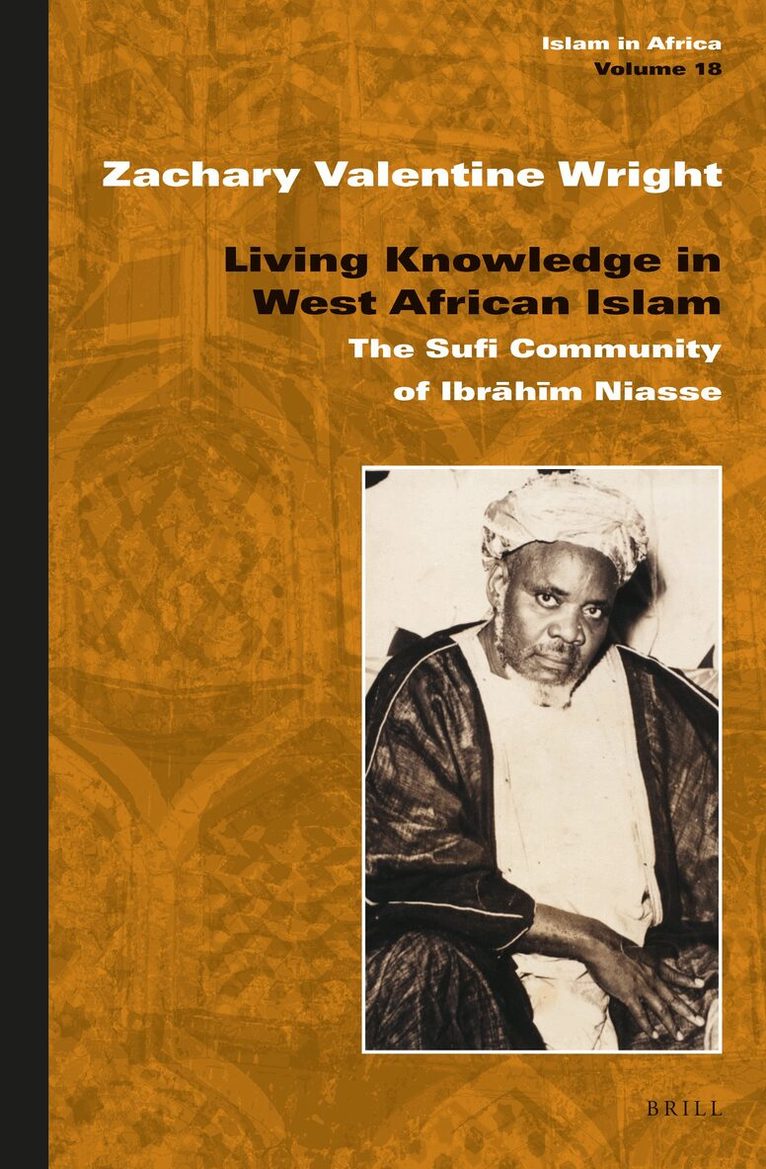
Living Knowledge in West African Islam
The Sufi Community of Ibrāhīm Niasse
Inbunden, Engelska, 2015
2 406 kr
Skickas inom 5-8 vardagar
Living Knowledge in West African Islam examines the actualization of religious identity in the community of Ibrāhīm Niasse (d.1975, Senegal). With millions of followers throughout Africa and the world, the community arguably represents one of the twentieth century’s most successful Islamic revivals. Niasse’s followers, members of the Tijāniyya Sufi order, gave particular attention to the widespread transmission of the experiential knowledge (maʿrifa) of God. They also worked to articulate a global Islamic identity in the crucible of African decolonization. The central argument of this book is that West African Sufism is legible only with an appreciation of centuries of Islamic knowledge specialization in the region. Sufi masters and disciples reenacted and deepened preexisting teacher-student relationships surrounding the learning of core Islamic disciplines, such as the Qurʾān and jurisprudence. Learning Islam meant the transformative inscription of sacred knowledge in the student’s very being, a disposition acquired in the master’s exemplary physical presence. Sufism did not undermine traditional Islamic orthodoxy: the continued transmission of Sufi knowledge has in fact preserved and revived traditional Islamic learning in West Africa.