Zaragosa Vargas – Författare
Visar alla böcker från författaren Zaragosa Vargas. Handla med fri frakt och snabb leverans.
2 produkter
2 produkter
Del 1 - Latinos in American Society and Culture
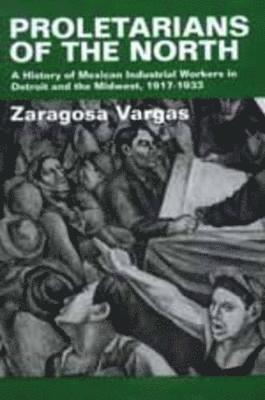
Proletarians of the North
A History of Mexican Industrial Workers in Detroit and the Midwest, 1917-1933
Häftad, Engelska, 1999
591 kr
Skickas inom 3-6 vardagar
Between the end of World War I and the Great Depression, over 58,000 Mexicans journeyed to the Midwest in search of employment. Many found work in agriculture, but thousands more joined the growing ranks of the industrial proletariat. Throughout the northern Midwest, and especially in Detroit, Mexican workers entered steel mills, packing houses, and auto plants, becoming part of the modern American working class. Zaragosa Vargas's work focuses on this little-known feature in the history of Chicanos and American labor. In relating the experiences of Mexicans in workplace and neighborhood, and in showing the roles of Mexican women, the Catholic Church, and labor unions, Vargas enriches our knowledge of immigrant urban life. His is an important work that will be welcomed by historians of Chicano Studies and American labor.
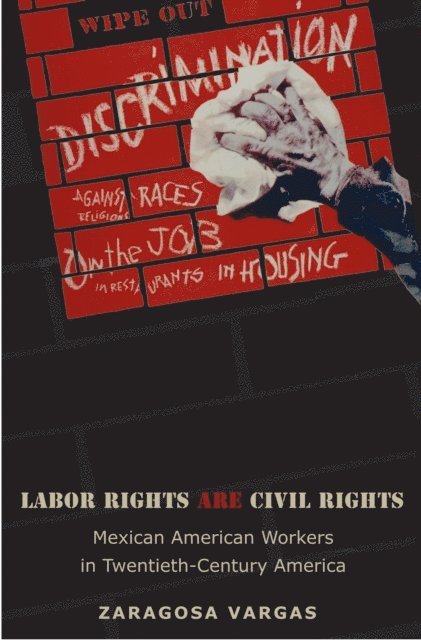
Labor Rights Are Civil Rights
Mexican American Workers in Twentieth-Century America
Häftad, Engelska, 2007
325 kr
Skickas inom 7-10 vardagar
In 1937, Mexican workers were among the strikers and supporters beaten, arrested, and murdered by Chicago policemen in the now infamous Republic Steel Mill Strike. Using this event as a springboard, Zaragosa Vargas embarks on the first full-scale history of the Mexican-American labor movement in twentieth-century America. Absorbing and meticulously researched, Labor Rights Are Civil Rightspaints a multifaceted portrait of the complexities and contours of the Mexican American struggle for equality from the 1930s to the postwar era. Drawing on extensive archival research, Vargas focuses on the large Mexican American communities in Texas, Colorado, and California. As he explains, the Great Depression heightened the struggles of Spanish speaking blue-collar workers, and employers began to define citizenship to exclude Mexicans from political rights and erect barriers to resistance. Mexican Americans faced hostility and repatriation. The mounting strife resulted in strikes by Mexican fruit and vegetable farmers. This collective action, combined with involvement in the Communist party, led Mexican workers to unionize.Vargas carefully illustrates how union mobilization in agriculture, tobacco, garment, and other industries became an important vehicle for achieving Mexican American labor and civil rights. He details how interracial unionism proved successful in cross-border alliances, in fighting discriminatory hiring practices, in building local unions, in mobilizing against fascism and in fighting brutal racism. No longer willing to accept their inferior status, a rising Mexican American grassroots movement would utilize direct action to achieve equality.