Zev Handel – författare
Visar alla böcker från författaren Zev Handel. Handla med fri frakt och snabb leverans.
5 produkter
5 produkter
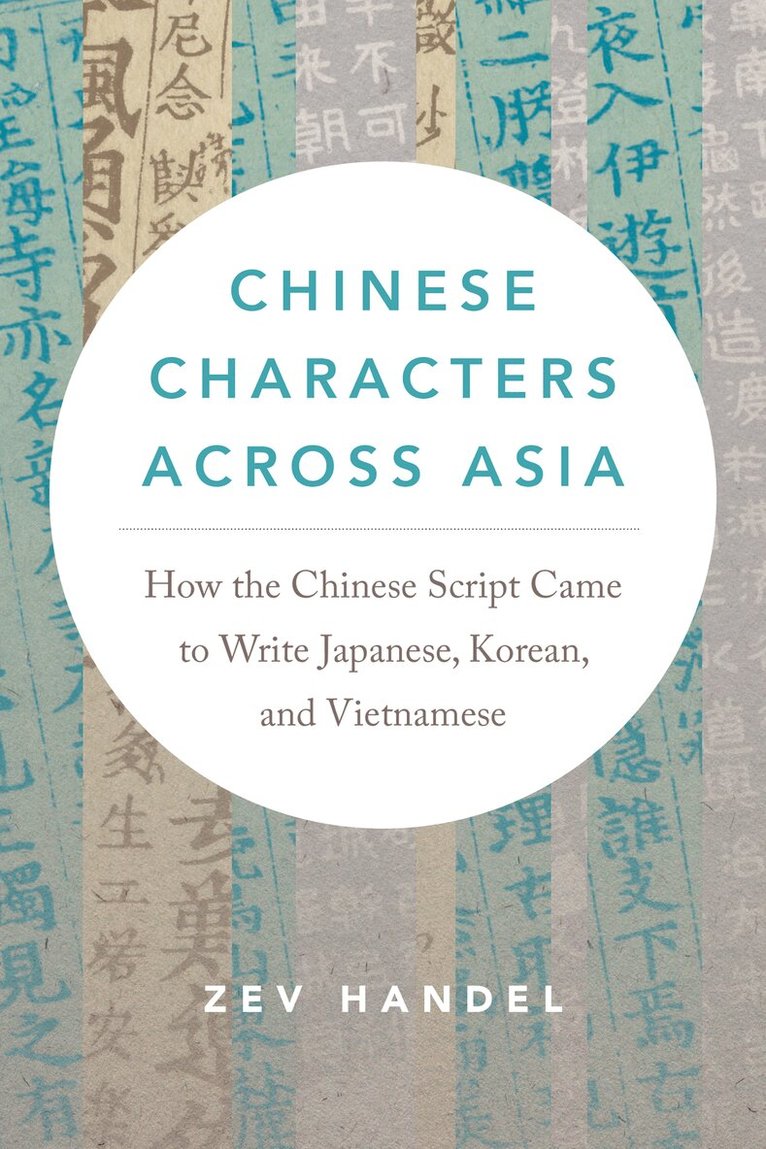
Chinese Characters across Asia
How the Chinese Script Came to Write Japanese, Korean, and Vietnamese
Inbunden, Engelska, 2025
1 811 kr
Skickas inom 7-10 vardagar
A fascinating story of writing across cultures and timeWhile other ancient nonalphabetic scripts—Sumerian cuneiform, Egyptian hieroglyphs, and Mayan hieroglyphs—are long extinct, Chinese characters, invented over three thousand years ago, are today used by well over a billion people to write Chinese and Japanese. In medieval East Asia, the written Classical Chinese language knit the region together in a common intellectual enterprise that encompassed religion, philosophy, historiography, political theory, art, and literature. Literacy in Classical Chinese set the stage for the adaptation of Chinese characters into ways of writing non-Chinese languages like Vietnamese and Korean, which differ dramatically from Chinese in vocabularies and grammatical structures.Because of its unique status in the modern world, myths and misunderstandings about Chinese characters abound. Where does this writing system, so different in form and function from alphabetic writing, come from? How does it really work? How did it come to be used to write non-Chinese languages? And why has it proven so resilient? By exploring the spread and adaptation of the script across two millennia and thousands of miles, Chinese Characters across Asia addresses these questions and provides insights into human cognition and culture. Written in an approachable style and meant for readers with no prior knowledge of Chinese script or Asian languages, it presents a fascinating story that challenges assumptions about speech and writing.
Chinese Characters across Asia
How the Chinese Script Came to Write Japanese, Korean, and Vietnamese
Häftad, Engelska, 2025
510 kr
Skickas inom 7-10 vardagar
A fascinating story of writing across cultures and timeWhile other ancient nonalphabetic scripts—Sumerian cuneiform, Egyptian hieroglyphs, and Mayan hieroglyphs—are long extinct, Chinese characters, invented over three thousand years ago, are today used by well over a billion people to write Chinese and Japanese. In medieval East Asia, the written Classical Chinese language knit the region together in a common intellectual enterprise that encompassed religion, philosophy, historiography, political theory, art, and literature. Literacy in Classical Chinese set the stage for the adaptation of Chinese characters into ways of writing non-Chinese languages like Vietnamese and Korean, which differ dramatically from Chinese in vocabularies and grammatical structures.Because of its unique status in the modern world, myths and misunderstandings about Chinese characters abound. Where does this writing system, so different in form and function from alphabetic writing, come from? How does it really work? How did it come to be used to write non-Chinese languages? And why has it proven so resilient? By exploring the spread and adaptation of the script across two millennia and thousands of miles, Chinese Characters across Asia addresses these questions and provides insights into human cognition and culture. Written in an approachable style and meant for readers with no prior knowledge of Chinese script or Asian languages, it presents a fascinating story that challenges assumptions about speech and writing.
435 kr
Kommande
Grounded in descriptive linguistics, this textbook introduces the basics of the major subfields of linguistics, as well as the Chinese writing system, for students with no prior linguistic training. It presents the Chinese language from the perspective of both modern linguistics and its longstanding philological legacy, as well as providing historical and sociolinguistic context. Chapters cover phonology and phonetics, morphology, lexicon, lexical semantics, syntax, sign language and braille. Authentic, real-world examples are drawn from Chinese newspapers, websites, and social media to facilitate meaningful linguistic analysis, while other examples contrast English and Chinese to help students grasp key concepts. Students will also benefit from the robust pedagogical approach, which includes learning objectives, guiding questions, checkpoint summaries, discussion questions, exercises, further readings, and bilingual glossaries. Supplementary resources provide answers to exercises, sample course syllabi, links to resources, and recordings of sounds.
1 503 kr
Skickas inom 11-20 vardagar
Grounded in descriptive linguistics, this textbook introduces the basics of the major subfields of linguistics, as well as the Chinese writing system, for students with no prior linguistic training. It presents the Chinese language from the perspective of both modern linguistics and its longstanding philological legacy, as well as providing historical and sociolinguistic context. Chapters cover phonology and phonetics, morphology, lexicon, lexical semantics, syntax, sign language and braille. Authentic, real-world examples are drawn from Chinese newspapers, websites, and social media to facilitate meaningful linguistic analysis, while other examples contrast English and Chinese to help students grasp key concepts. Students will also benefit from the robust pedagogical approach, which includes learning objectives, guiding questions, checkpoint summaries, discussion questions, exercises, further readings, and bilingual glossaries. Supplementary resources provide answers to exercises, sample course syllabi, links to resources, and recordings of sounds.
Del 1 - Language, Writing and Literary Culture in the Sinographic Cosmopolis
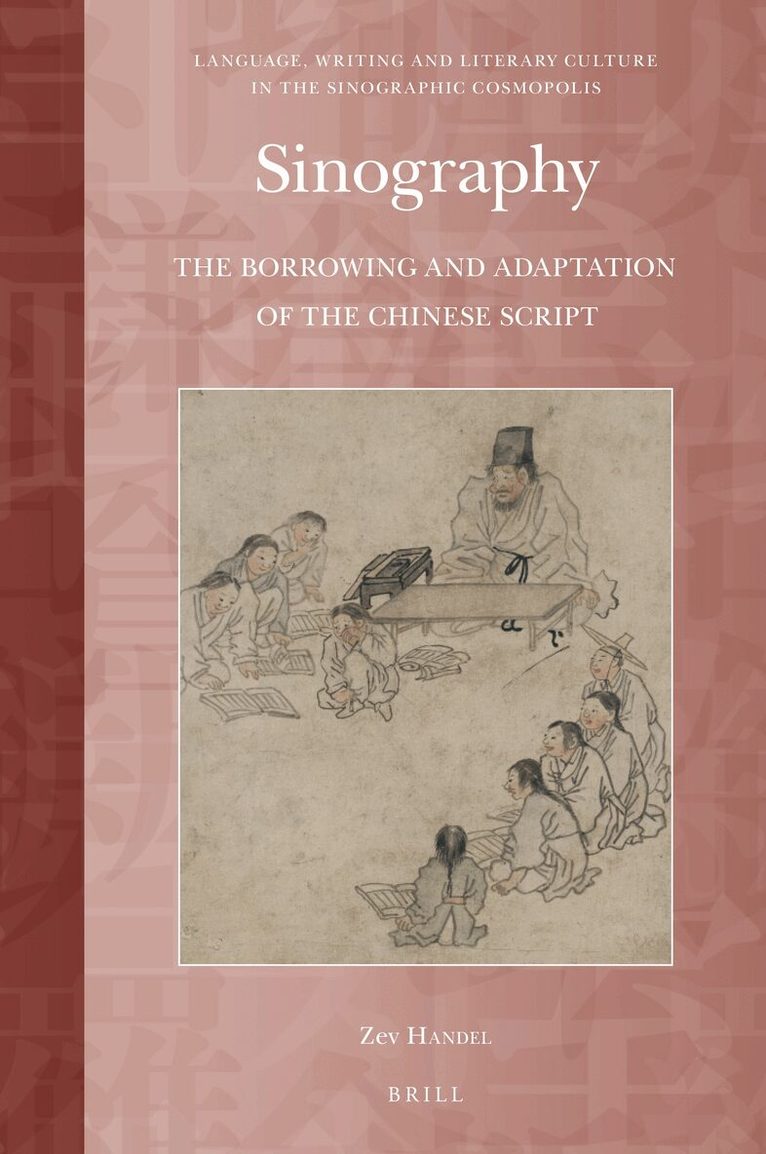
Sinography: The Borrowing and Adaptation of the Chinese Script
Inbunden, Engelska, 2019
921 kr
Skickas inom 5-8 vardagar
In the more than 3,000 years since its invention, the Chinese script has been adapted many times to write languages other than Chinese, including Korean, Vietnamese, Japanese, and Zhuang. In Sinography: The Borrowing and Adaptation of the Chinese Script, Zev Handel provides a comprehensive analysis of how the structural features of these languages constrained and motivated methods of script adaptation. This comparative study reveals the universal principles at work in the borrowing of logographic scripts. By analyzing and explaining these principles, Handel advances our understanding of how early writing systems have functioned and spread, providing a new framework that can be applied to the history of scripts beyond East Asia, such as Sumerian and Akkadian cuneiform.