Zeynep Celik - Böcker
Visar alla böcker från författaren Zeynep Celik. Handla med fri frakt och snabb leverans.
8 produkter
8 produkter
1 073 kr
Skickas inom 7-10 vardagar
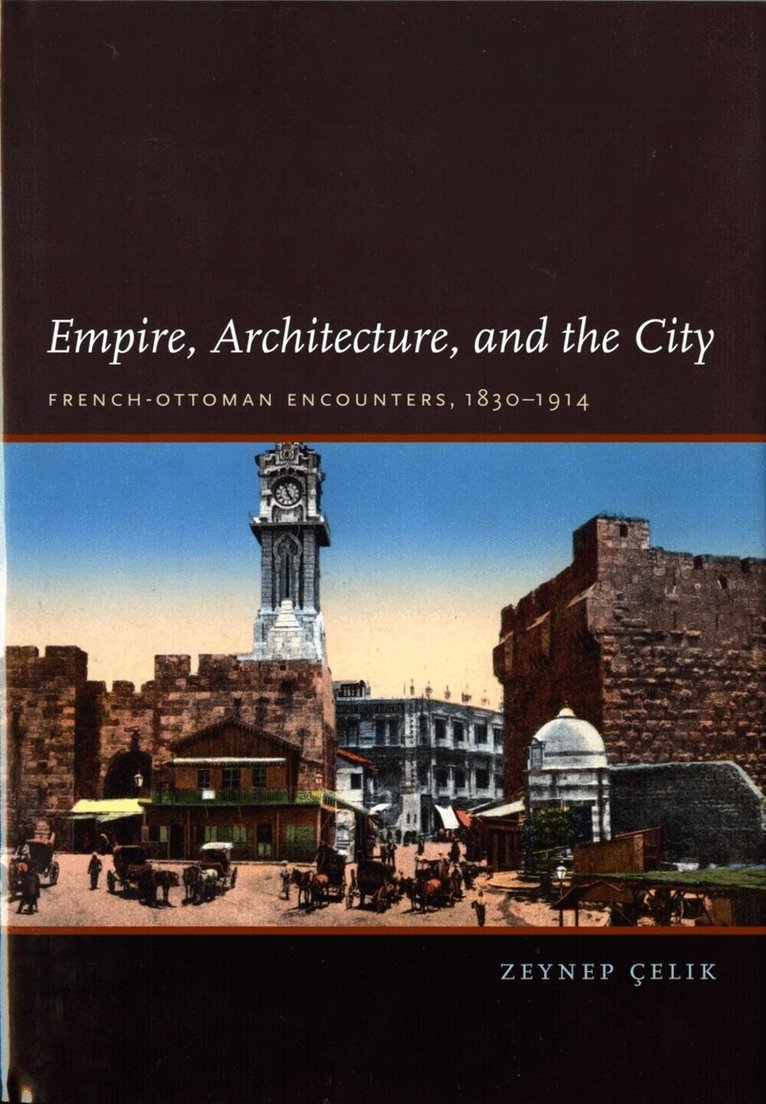
Winner of the 2010 Spiro Kostof Award (sponsored by the Society of Architectural Historians)Empire building and modernity dominate the history of the nineteenth century. The French and Ottoman empires capitalized on modern infrastructure and city building to control diverse social, cultural, and political landscapes. Zeynep Celik examines the cities of Algeria and Tunisia under French colonial rule and those of the Ottoman Arab provinces. By shifting the emphasis from the “centers” of Paris and Istanbul to the “peripheries,” she presents a more nuanced look at cross-cultural exchanges. The different political agendas of the French and Ottoman empires reveal the myriad meanings behind remarkably similar urban forms and buildings. This lavishly illustrated volume makes numerous archival plans, photographs, and postcards available for the first time, along with reproductions from periodicals and official yearbooks.Roads, railroads, ports, and waterways served many imperial agendas, ranging from military to commercial and even ideological. Interventions changed the urban fabrics in unprecedented ways: straight arteries were cut through cities, European-style quarters were appended to historic cores, and new industrial and mining towns, military posts, and administrative centers were built according to the latest trends. These major feats of engineering were carefully planned to construct a modern image while addressing practical concerns of growth and communication.Celik discusses public squares as privileged sites of imperial expression, as evidenced by the buildings that defined them and the iconographically charged monuments that adorned them. She examines the architecture of public buildings. Theaters, schools, and hospitals and the offices that housed the imperial administrative apparatus (city halls, government palaces, post offices, police stations, and military structures) were new secular monuments, designed according to European models but in a range of architectural expressions.Public ceremonies, set against modern urban spaces, played key roles in conveying political messages. Celik maps out their orchestrated occupation of streets and squares. She concludes with questions on how the various attitudes of both empires engaged cultural differences, race, and civilizing missions.
590 kr
Skickas inom 7-10 vardagar
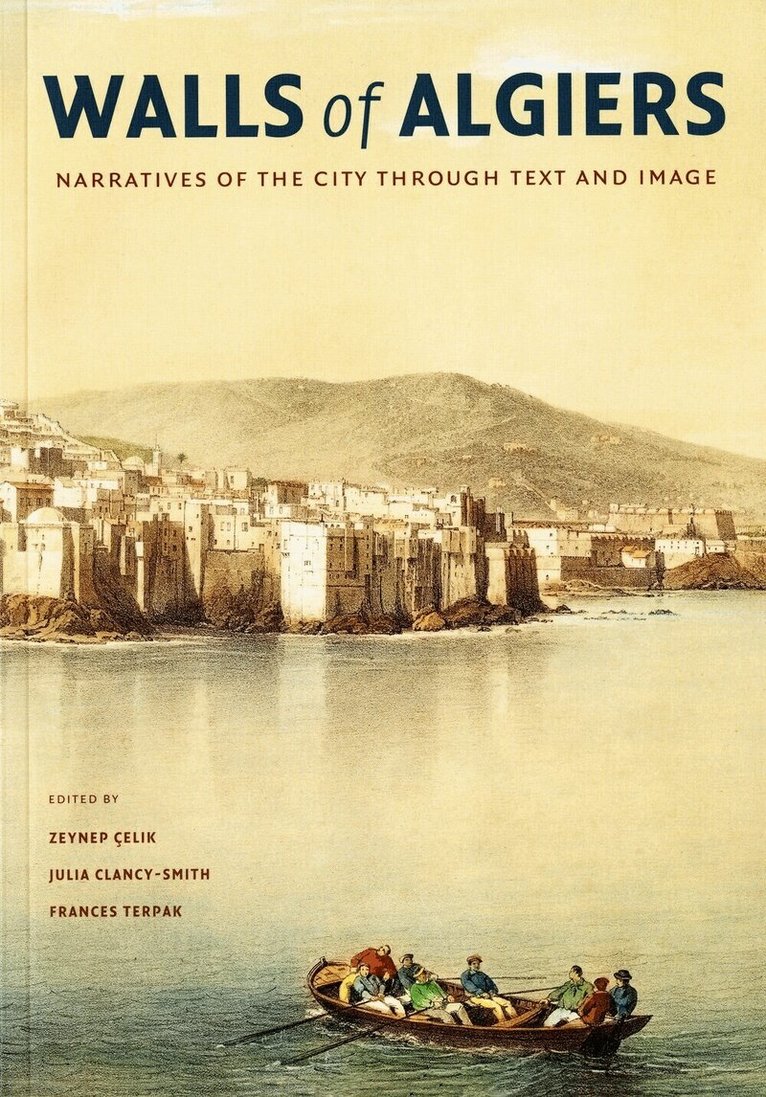
Walls of Algiers examines the historical processes that transformed Ottoman Algiers, the "Bulwark of Islam," into "Alger la blanche," the colonial urban showpiece - and, after the outbreak of revolution in 1954 - counter-model of France's global empire. In this volume, the city of Algiers serves as a case study for the analysis of the proactive and reactive social, political, technical, and artistic forces that generate a city's form. Visual sources - prints, photographs, paintings, architectural drawings, urban designs, and film - are treated as primary evidence that complements and even challenges textual documents.The contributors' wide-ranging but intersecting essays span the disciplines of art history, social and cultural history, urban studies, and film history. Walls of Algiers presents a multifaceted look at the social use of urban space in a North African city. Its contributors' innovative methodologies allow important insights into often overlooked aspects of life in a city whose name even today conjures up enchantment as well as incomprehensible violence.Contributors include Julia Clancy-Smith, Omar Carlier, Frances Terpak, Zeynep Celik, Eric Breitbart, Isabelle Grangaud, and Patricia M. E. Lorcin.
322 kr
Skickas inom 7-10 vardagar
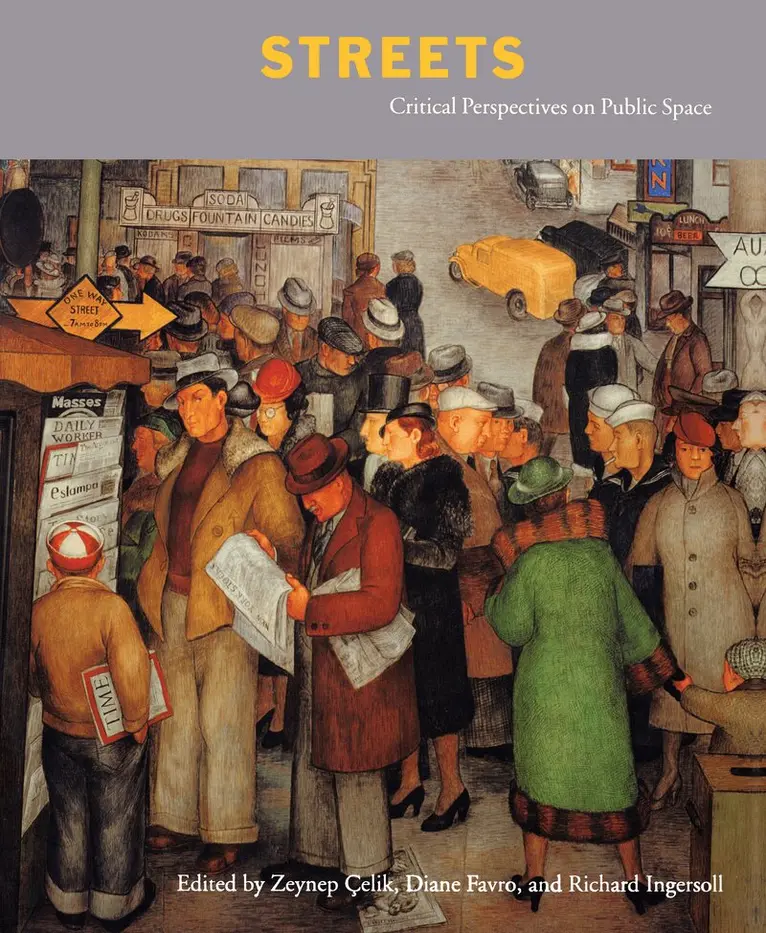
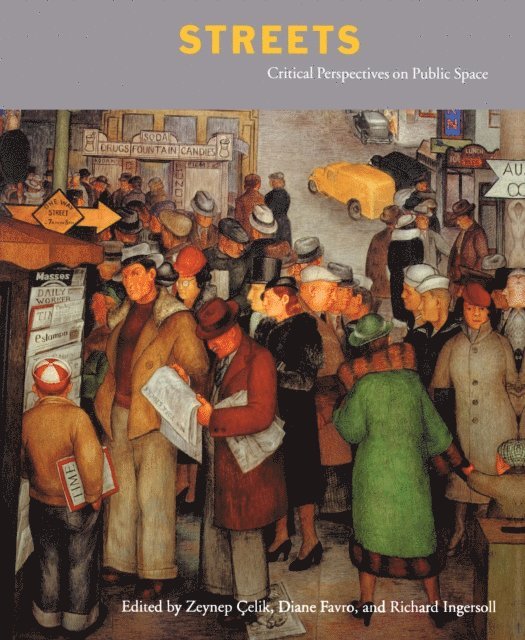
This collection of twenty-one essays, written by colleagues and former students of the architectural historian Spiro Kostof (1936-1991), presents case studies on Kostof's model of urban forms and fabrics. The essays are remarkably diverse: the range includes pre-Columbian Inca settlements, fourteenth-century Cairo, nineteenth-century New Orleans, and twentieth-century Tokyo. Focusing on individual streets around the world and from different historical periods, the collection is an inviting overview of the street as an urban institution. The theme of the volume is that the street presents itself as the basic structuring device of a city's form and also as the locus of its civilization. Each essay is a detailed investigation of a single urban street with unique historical conditions. The authors' shared concern regarding anthropological, political, and technical aspects of street making coalesce into a critical discourse on urban space. A fitting tribute to Spiro Kostof, this collection will be greatly admired by scholars and general readers alike.
319 kr
Skickas inom 7-10 vardagar
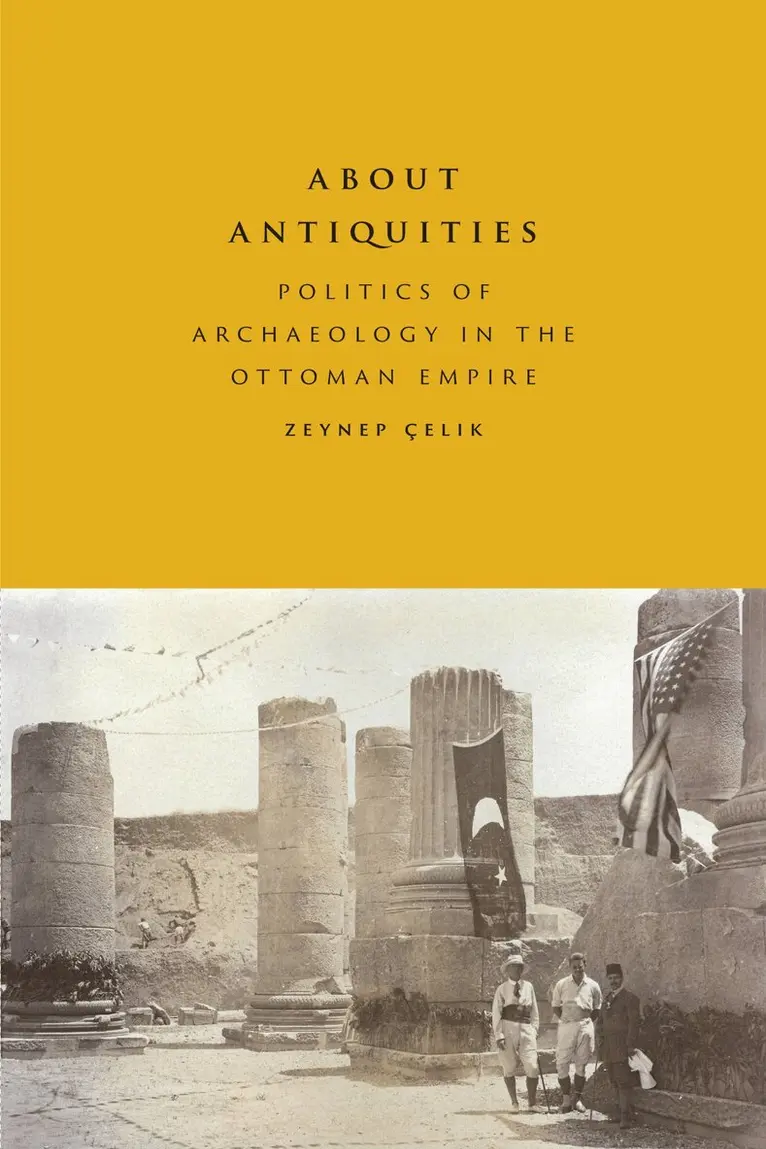
Antiquities have been pawns in empire-building and global rivalries; power struggles; assertions of national and cultural identities; and cross-cultural exchanges, cooperation, abuses, and misunderstandings-all with the underlying element of financial gain. Indeed, “who owns antiquity?” is a contentious question in many of today’s international conflicts.About Antiquities offers an interdisciplinary study of the relationship between archaeology and empire-building around the turn of the twentieth century. Starting at Istanbul and focusing on antiquities from the Ottoman territories, Zeynep Çelik examines the popular discourse surrounding claims to the past in London, Paris, Berlin, and New York. She compares and contrasts the experiences of two museums-Istanbul’s Imperial Museum and the Metropolitan Museum of Art-that aspired to emulate European collections and gain the prestige and power of owning the material fragments of ancient history. Going beyond institutions, Çelik also unravels the complicated interactions among individuals-Westerners, Ottoman decision makers and officials, and local laborers-and their competing stakes in antiquities from such legendary sites as Ephesus, Pergamon, and Babylon.Recovering perspectives that have been lost in histories of archaeology, particularly those of the excavation laborers whose voices have never been heard, About Antiquities provides important historical context for current controversies surrounding nation-building and the ownership of the past.
597 kr
Skickas inom 3-6 vardagar
648 kr
Skickas inom 3-6 vardagar
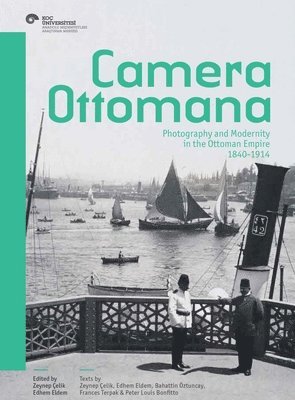
From its birth in 1839, photography has participated in modernity as much as it has symbolized it. Its capacity to record and display and its claim to accuracy and truth intricately linked the new technology to the dynamism of the modern world. The Ottoman Empire embraced photography with great enthusiasm. In fact, the impact and meaning of photography were compounded with the thrust of modernization and westernization of the Tanzimat movement. By the turn of the century, photography in the Ottoman lands had become a standard feature of everyday life, of public media, and of the state apparatus.This volume explores some of the most striking aspects of the close connection between photography and modernity with a particular focus on the Ottoman Empire. Much of the material concerns the display of modernity through photography, as was so often the case in the photographs and albums commissioned by the Sultan to showcase his empire for Western audiences. Nevertheless, modernity was often embedded in the photographic act, transforming it into a common and mundane practice. Be it in the form of images disseminated through the illustrated press, postcards sent out to family members or anonymous collectors, portraits presented to friends and acquaintances, or pictures taken of employees and convicts, photography had started to invade practically every sphere of public and private life.The visual world we live in today was born some 150 years ago. Camera Ottomana is both a homage to, and a critical assessment of, the local dimension of one of the most potent and transformative technological inventions of the recent past.
169 kr
Skickas inom 7-10 vardagar
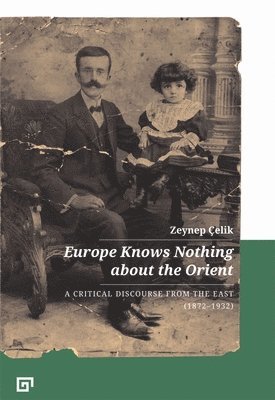
A century before the publication of Edward Said’s Orientalism, a passionate discourse emerged in the Ottoman Empire, rebutting politicized Western representations of the East. Until the 1930s, Ottoman and early Turkish Republican intellectuals, well acquainted with the European political and cultural scene and charged with their own ideological agendas, deconstructed tired clichés about “the Orient.” In this book, Zeynep Çelik recontextualizes Eurocentric postcolonial studies, unearthing an important episode in modern Middle Eastern intellectual history and curating a selection of primary texts illustrating the debates.
399 kr
Skickas inom 3-6 vardagar