Häftad, Engelska, 2022
289 kr
Skickas inom 5-8 vardagar
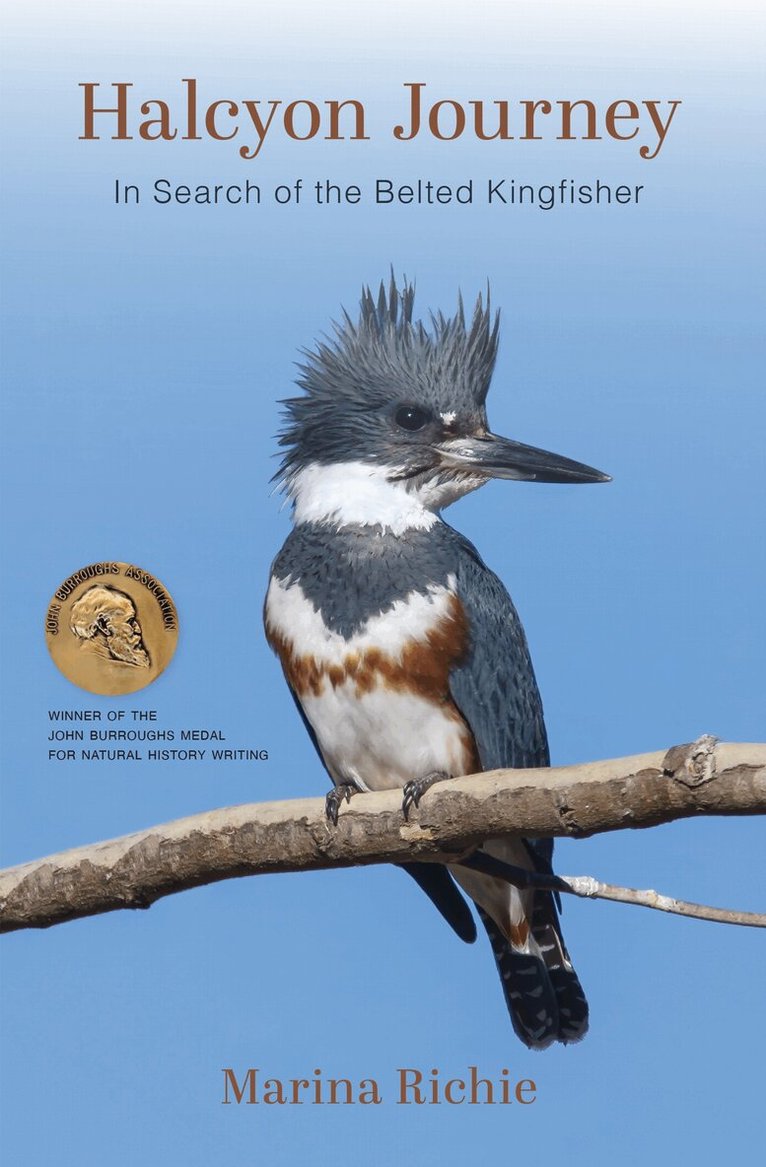
More than one hundred species of kingfishers are found distributed around the world – every continent but Antarctica. All share oversized heads, dagger bills, and short flicking tails. Many have dazzling rainbow feathers. They range in size from the diminutive pygmy kingfisher of African rainforests to the kookaburra of Australia. Here, Marina Richie takes as her inspiration the belted kingfisher, found all over North America but not as well-known as other common birds. In this first book on belted kingfishers, Richie plunges headfirst – just like a kingfisher would – into their lives, following them from her backyard to archives around the world. On a small stretch of Rattlesnake Creek in Missoula, Montana, Richie spent hundreds of hours seeking and observing a skittish pair of nesting belted kingfishers. Weaving natural history, mythology, and memoir, Richie celebrates the belted kingfisher through a journey of discovery across multiple seasons. She discusses the scientific literature on kingfishers, the role of citizen scientists, the appearance of kingfishers in religions and cultures from ancient Greece to the Salish tribes, and her own observations: the staccato calls, the sharp dives, the scenes of females chasing after each other. Her quest taught her not just about kingfishers but also about stillness and the world around her. Spending long hours still on the creek bank, she reflects on the challenges and narratives of wildlife, of environmental change, and of her own life: the death of her father, himself a bird lover; balancing her passion for kingfishers with marriage, motherhood, and paid work; and finally a decision to leave Montana for a different life in Oregon.