A History Of Cant and Slang Dictionaries – serie
Visar alla böcker i serien A History Of Cant and Slang Dictionaries. Handla med fri frakt och snabb leverans.
6 produkter
6 produkter
1 499 kr
Skickas inom 3-6 vardagar
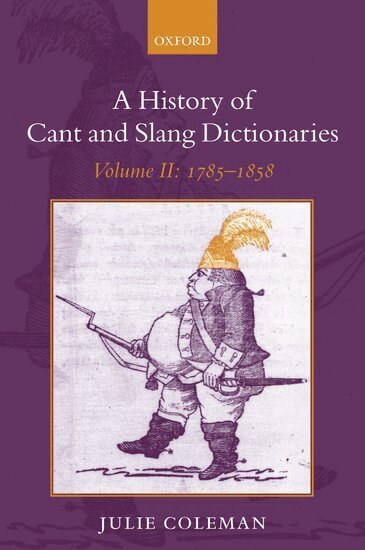
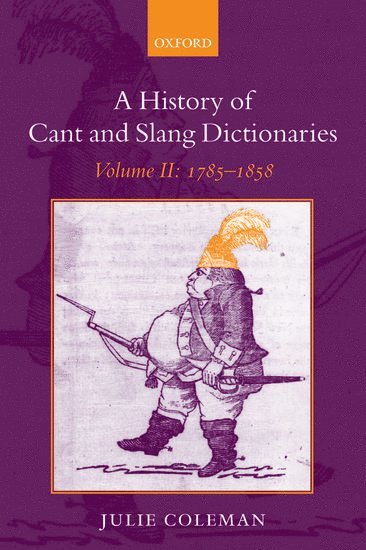
The second volume of Julie Coleman's fascinating and entertaining history of the uses and the recording of slang and criminal cant takes the story from 1785 to 1858 and explores its first manifestations in the USA and Australia. During this period glossaries of cant are thrown into the shade by dictionaries of slang, which now include the language of thieves and cover a broad spectrum of non-standard English. Cant represented a practical threat to life and property. Slang, the author reveals, was a threat to the moral core of society, insidiously seductive to a wide section of the public. Julie Coleman shows how Francis Grose's Dictionary of the Vulgar Tongue revolutionised lexicography of non-standard English. She explores the earliest Australian and American slang glossaries, whose authors included the thrice-transported James Hardy Vaux and George Matsell, New York City's first chief of police.
2 393 kr
Skickas inom 5-8 vardagar
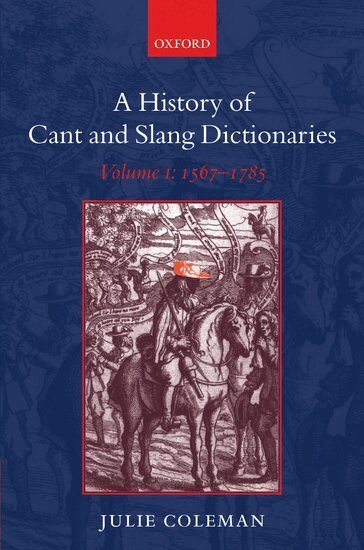
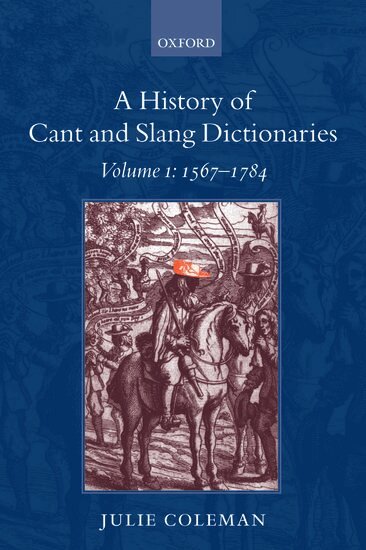
This is the first volume in a complete history of the documentation of English cant and slang from 1567 to the present. It gives unparalleled insights into the early history of slang, the people who used it, and how and why it was recorded.Well over a hundred glossaries of cant and slang were published between 1567 and 1784. The cant lists reveal the secret language allegedly used by thieves and beggars to conceal their illicit conspiracies: Dr Coleman investigates where and how they were produced and the relationship between such lists and canting literature. She considers why this period was so fascinated by crime and by criminals, and apparently so obsessed with the need to record their language. How far, she asks, are the lists genuine records of contemporary cant, and how far the products of literary invention? Who produced them, and how were they researched? Who bought them, and what did they hope to gain from them? This absorbing and astute book will be an invaluable resource for anyone interested in English slang and its history. It also provides unusual and unexpected insights into the underworlds of early modern England.
2 842 kr
Skickas inom 5-8 vardagar
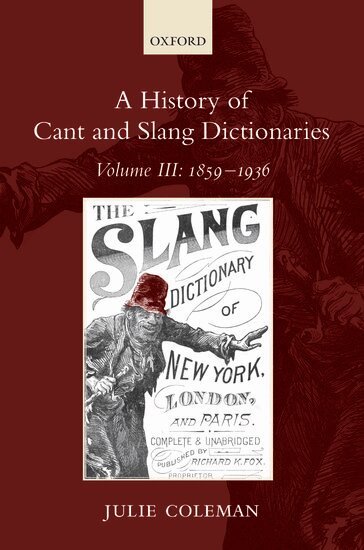
This book continues Julie Coleman's acclaimed history of dictionaries of English slang and cant. It describes the increasingly systematic and scholarly way in which such terms were recorded and classified in the UK, the USA, Australia, and elsewhere, and the huge growth in the publication of and public appetite for dictionaries, glossaries, and guides to the distinctive vocabularies of different social groups, classes, districts, regions, and nations. Dr Coleman describes the origins of words and phrases and explores their history. By copious example she shows how they cast light on everyday life across the globe - from settlers in Canada and Australia and cockneys in London to gang-members in New York and soldiers fighting in the Boer and First World Wars - as well as on the operations of the narcotics trade and the entertainment business and the lives of those attending American colleges and British public schools.The slang lexicographers were a colourful bunch. Those featured in this book include spiritualists, aristocrats, socialists, journalists, psychiatrists, school-boys, criminals, hoboes, police officers, and a serial bigamist. One provided the inspiration for Robert Lewis Stevenson's Long John Silver. Another was allegedly killed by a pork pie. Julie Coleman's account will interest historians of language, crime, poverty, sexuality, and the criminal underworld.
707 kr
Skickas inom 7-10 vardagar
This is the first volume in a complete history of the documentation of English cant and slang from 1567 to the present. It gives unparalleled insights into the early history of slang, the people who used it, and how and why it was recorded.Well over a hundred glossaries of cant and slang were published between 1567 and 1784. The cant lists reveal the secret language allegedly used by thieves and beggars to conceal their illicit conspiracies: Dr Coleman investigates where and how they were produced and the relationship between such lists and canting literature. She considers why this period was so fascinated by crime and by criminals, and apparently so obsessed with the need to record their language. How far, she asks, are the lists genuine records of contemporary cant, and how far the products of literary invention? Who produced them, and how were they researched? Who bought them, and what did they hope to gain from them? This absorbing and astute book will be an invaluable resource for anyone interested in English slang and its history. It also provides unusual and unexpected insights into the underworlds of early modern England.
573 kr
Skickas inom 7-10 vardagar
The second volume of Julie Coleman's entertaining and revealing history of the recording and uses of slang and criminal cant takes the story from 1785 to 1858, and explores their manifestations in the United States of America and Australia. During this period glossaries of cant were thrown into the shade by dictionaries of slang, which now covered a broad spectrum of non-standard English, including the language of thieves. Julie Coleman shows how Francis Grose's Dictionary of the Vulgar Tongue revolutionized the lexicography of the underworld. She explores the compilation and content of the earliest Australian and American slang glossaries, whose authors included the thrice-transported James Hardy Vaux and the legendary George Matsell, New York City's first chief of police, whose The Secret Language of Crime: The Rogue's Lexicon informed the script of Martin Scorcese's film Gangs of New York.Cant represented a tangible danger to life and property, but slang threatened to undermine good behaviour and social morality. Julie Coleman shows how and why they were at once repellent and seductive. Her fascinating account casts fresh light on language and life in some of the darker regions of Great Britain and the English-speaking world.
2 528 kr
Skickas inom 5-8 vardagar
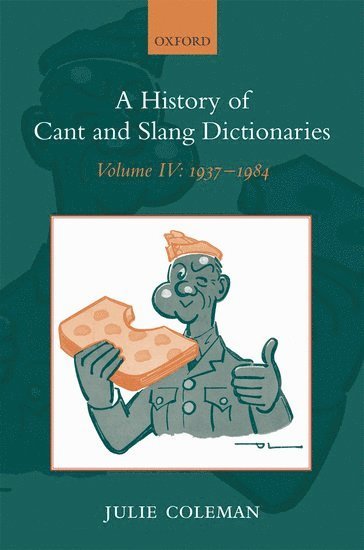
The starting date of the fourth volume of Julie Coleman's pioneering history marks the appearance of the most influential slang dictionary of the twentieth century, Eric Partridge's Dictionary of Slang and Unconventional English, produced at a time when the Depression had broken down traditional working-class communities; the United States was a still-reluctant world power; and another world war was inevitable. If the First World War unsettled combatants' minds, the second unsettled society. It challenged values around the world and, as the author shows, offered new opportunities for vibrant self-expression. Lexicographers recorded a rich harvest of words and phrases from around the world, reflecting new-found freedoms from convention, increased social mobility, and the continued rise of the mass media. Julie Coleman's account ranges across the English-speaking world. It will fascinate all those interested in slang and its reflections of social and cultural change.