Addison-Wesley Signature Series (Vernon) - Böcker
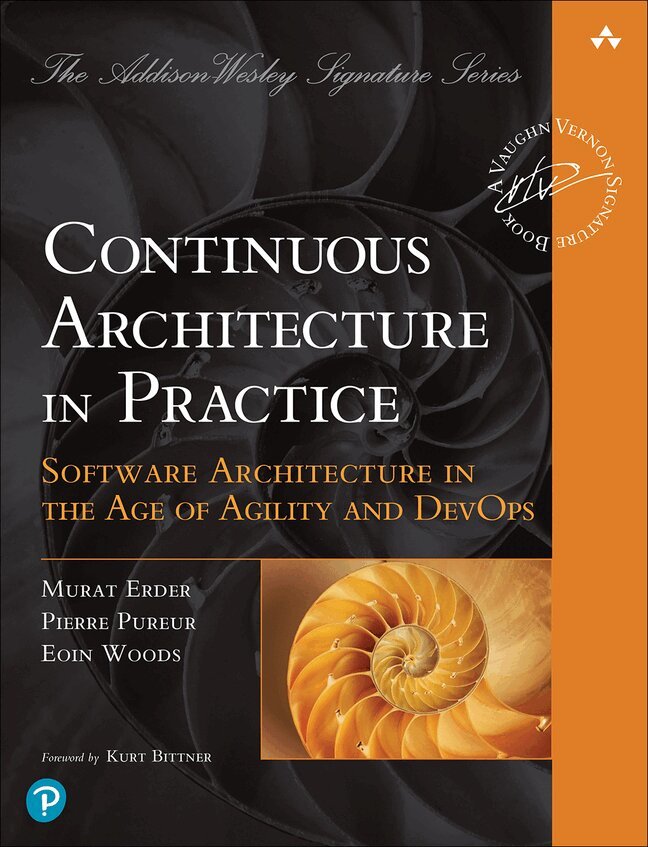
Continuous Architecture in Practice
Software Architecture in the Age of Agility and DevOps
303 kr
Skickas inom 7-10 vardagar
Implementing Strategic Monoliths and Microservices
Patterns and Practices for Continuous Improvement
317 kr
Kommande
Balancing Coupling in Software Design
Universal Design Principles for Architecting Modular Software Systems
305 kr
Skickas inom 7-10 vardagar
Learn How Coupling Impacts Every Software Design Decision You Make--and How to Control It
If you want to build modular, evolvable, and resilient software systems, you have to get coupling right. Every design decision you make influences coupling, which in turn shapes the design options available to you. Despite its importance, coupling often doesn't receive the attention it deserves--until now.
Since the dawn of software engineering, it's been clear that proper management of coupling is essential for architecting modular software systems. This topic has been extensively researched over the years, but some of that knowledge has been forgotten, and some of it is challenging to apply in this day and age. In Balancing Coupling in Software Design, author Vlad Khononov has built a model that not only draws on this accumulated knowledge, but also adapts it to modern software engineering practices, offering a fresh perspective on modular software design.
With principles grounded in practice, Vlad teaches you not only to navigate the multi-dimensional nature of coupling but also to use coupling as a tool for managing complexity and increasing modularity. And who knows, maybe this book will change the way you think about software design as whole.
Defines the concept of coupling and the role it plays in system design and architecture Explains how coupling can both increase complexity and foster modularity of a system Introduces a holistic model that turns coupling into a tool for designing modular software Shows how to evolve design decisions to support continuous growth of software systems Illustrates the discussed principles with detailed examples based on real-life case studies"Coupling is one of those words that is used a lot, but little understood. Vlad propels us from simplistic slogans like 'always decouple components' to a nuanced discussion of coupling in the context of complexity and software evolution. If you build modern software, read this book!"--Gregor Hohpe, author of The Software Architect Elevator
Register your book for convenient access to downloads, updates, and/or corrections as they become available. See inside book for details.
Strategic Monoliths and Microservices
Driving Innovation Using Purposeful Architecture
276 kr
Skickas inom 7-10 vardagar
312 kr
Skickas inom 7-10 vardagar
303 kr
Skickas inom 7-10 vardagar
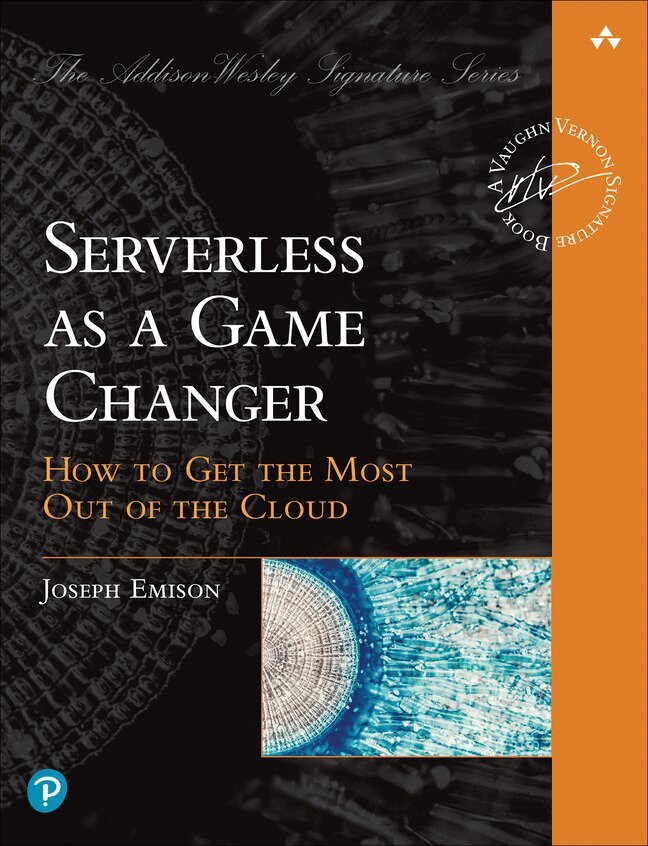
Leverage the “serverless mindset” to build and deploy software faster, better, and with less expense.
In this definitive guide, Joseph Emison shows how to leverage “serverless” for maximum customer value. He reveals why mindset is crucial to modern IT strategy and explains why and how to move toward a truly serverless mindset.
Many organizations are falling short when it comes to leveraging the cloud. Drawing on his experience as a pioneering CTO across multiple industries, Emison shows why and how you can gain immense business value from the cloud. While many serverless adopters focus on converting and building apps on serverless compute platforms like AWS Lambda, Emison offers better ways to think about your tech stack, optimize build-or-buy decisions, choose the right vendor for each commercial off-the-shelf (COTS) or open-source solution, and draw on the industry's best managed services.
To help you develop a serverless mindset, Emison includes a case study demonstrating a real-world enterprise transition to serverless. The author also provides an exclusive directory of current managed services with focused descriptions and concise explanations of each service and its role in modern application architecture. Many of these services are unfamiliar to enterprise architects, but they are enterprise tested and can radically simplify any serverless transition.
Evolve your tech stack and mindset to gain the full benefits of the cloud Deliver software faster, better, and at lower cost with serverless Use serverless architectures and managed services to offload tasks that don't add value Follow a real-world case study taking you from where you are to where you want to be Explore an exclusive managed services directory to find resources to streamline your serverless transitionTransform your mindset and organization by leveraging serverless architecture to change the game and win it.
Register your book for convenient access to downloads, updates, and/or corrections as they become available. See inside book for details.
Architecture for Flow
Adaptive Systems with Domain-Driven Design, Wardley Mapping, and Team Topologies
297 kr
Skickas inom 7-10 vardagar
Master Adaptive Socio-Technical Systems That Thrive Amid Change: Align Strategy, Architecture, and Teams for Continuous Flow of Value
In today's rapidly evolving business landscape, the ability to adapt to change is not just advantageous, it's essential for survival. Architecture for Flow: Adaptive Systems with Domain-Driven Design, Wardley Mapping, and Team Topologies, presents a holistic approach that integrates business strategy, software design and architecture, and team organization to create adaptive, socio-technical systems optimized for continuous change and feedback. By combining Wardley Mapping, Domain-Driven Design, and Team Topologies, this book offers a comprehensive toolset for organizations to anticipate change, unlock blockers to flow, and maintain competitive advantage in an increasingly uncertain world.
Author Susanne Kaiser addresses the fundamental challenge facing modern organizations: how to design and build adaptive systems that thrive amid constant change. Drawing from historical examples of companies that failed to adapt, she emphasizes that optimization requires treating organizations as socio-technical systems where social and technical aspects are aligned and designed together. Her "Architecture for Flow Canvas" provides practical tools and methodologies for designing systems that can evolve continuously while delivering sustainable value.
Understand competitive landscapes and anticipate change through strategic visualization Analyze problem domains and design modular solution spaces aligned with business and user needs Implement domain models that keep core business logic decoupled from external changes Optimize team structures and interactions to reduce bottlenecks and enhance flow Practical guidance for transforming monolithic systems into adaptive architectures Foster organizational culture that sustains flow and embraces future changeThis book offers a timely and essential perspective that goes beyond local optimization to address systemic improvement. For technical leaders, architects, and managers facing the challenges of continuous adaptation, this book offers a path forward that balances effectiveness with efficiency, ensuring that organizations deliver sustainable value in an increasingly complex and rapidly changing world.
Register your book for convenient access to downloads, updates, and/or corrections as they become available. See inside book for details.
Domain Storytelling
A Collaborative, Visual, and Agile Way to Build Domain-Driven Software
276 kr
Skickas inom 7-10 vardagar
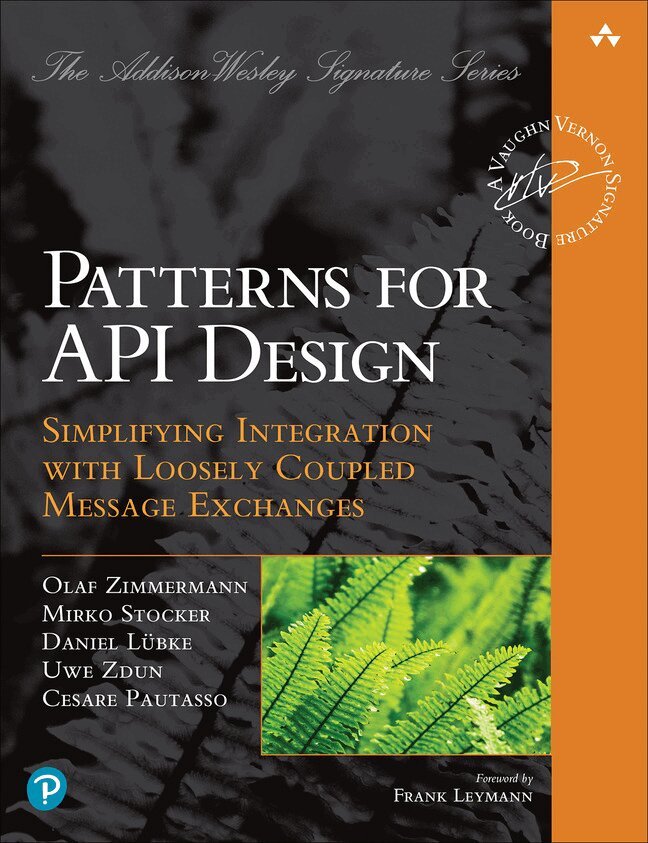
Patterns for API Design
Simplifying Integration with Loosely Coupled Message Exchanges
366 kr
Skickas inom 7-10 vardagar
Proven Patterns for Designing Evolvable High-Quality APIs--For Any Domain, Technology, or Platform
APIs enable breakthrough innovation and digital transformation in organizations and ecosystems of all kinds. To create user-friendly, reliable and well-performing APIs, architects, designers, and developers need expert design guidance. This practical guide cuts through the complexity of API conversations and their message contents, introducing comprehensive guidelines and heuristics for designing APIs sustainably and specifying them clearly, for whatever technologies or platforms you use.
In Patterns for API Design: Simplifying Integration with Loosely Coupled Message Exchanges, five expert architects and developers cover the entire API lifecycle, from launching projects and establishing goals through defining requirements, elaborating designs, planning evolution, and creating useful documentation. They crystallize the collective knowledge of many practitioners into 44 API design patterns, consistently explained with context, pros and cons, conceptual solutions, and concrete examples. To make their pattern language accessible, they present a domain model, a running case study, decision narratives with pattern selection options and criteria, and walkthroughs of real-world projects applying the patterns in two different industries.
Identify and overcome API design challenges with patterns Size your endpoint types and operations adequately Design request and response messages and their representations Refine your message design for quality Plan to evolve your APIs Document and communicate your API contracts Combine patterns to solve real-world problems and make the right tradeoffs"This book provides a healthy mix of theory and practice, containing numerous nuggets of deep advice but never losing the big picture . . . grounded in real-world experience and documented with academic rigor applied and practitioner community feedback incorporated. I am confident that [it] will serve the community well, today and tomorrow."
--Prof. Dr. Dr. h. c. Frank Leymann, Managing Director, Institute of Architecture of Application Systems, University of Stuttgart
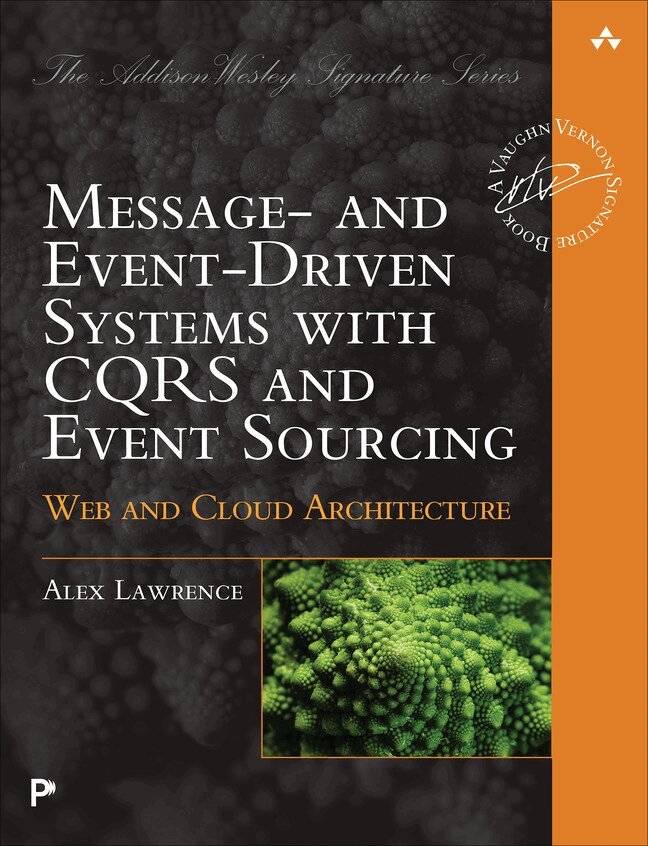
Message- and Event-Driven Systems with CQRS and Event Sourcing
Web and Cloud Architecture
348 kr
Kommande
Learn How to Design and Build Scalable Systems Using Message-Driven Architecture, CQRS, and Event Sourcing
In today's fast-paced digital landscape, businesses must adapt rapidly to evolving demands. Message- and Event-Driven Systems with CQRS and Event Sourcing reveals how modern message-driven web and cloud architectures can fuel digital transformation, drive agility, and ensure robust scalability. This book bridges the gap between theory and practice, empowering architects and developers to build systems that thrive in the cloud era.
Author Alex Lawrence demystifies a collection of widely discussed architectural patterns, clearly distinguishing between message-driven, event-driven, CQRS, and Event Sourcing approaches, and showing precisely when to apply each. By untangling concepts that are often confused, he provides both a strategic overview and practical guidance for designing each system component.
Unlike most resources that focus on Java or C#, this book leverages Node.js, JavaScript, and TypeScript, making it uniquely relevant for today's web and cloud developers. Readers will discover how to isolate business capabilities, accelerate time-to-market, and future-proof their technology stack, enabling continuous evolution without sacrificing stability or performance.
Implement the core anatomy of message-driven systems by mapping specific technical responsibilities to components and navigating the trade-offs of various implementation approaches Segregate responsibilities with CQRS to separate command and query logic, enabling optimization of read and write sides independently for better performance and scalability Leverage Event Sourcing to model domain state as a sequence of immutable events, providing a reliable historical record and a foundation for highly reactive systems Orchestrate long-running processes by designing resilient workflows that manage complex, multi-step business logic across asynchronous boundaries using domain-specific components Design for evolution and composition by applying tactical patterns for domain modeling, managing message schema changes, and unifying data from disparate sources into reactive user interfacesBuild the architectural knowledge that distinguishes scalable systems and start architecting for inevitable change with patterns that matter.
Software as a Product
Bridging the Gap Between Technology and Product Development
294 kr
Kommande
348 kr
Kommande