Adolescent Development and Legal Policy - Böcker
Visar alla böcker i serien Adolescent Development and Legal Policy. Handla med fri frakt och snabb leverans.
6 produkter
6 produkter
180 kr
Skickas inom 7-10 vardagar
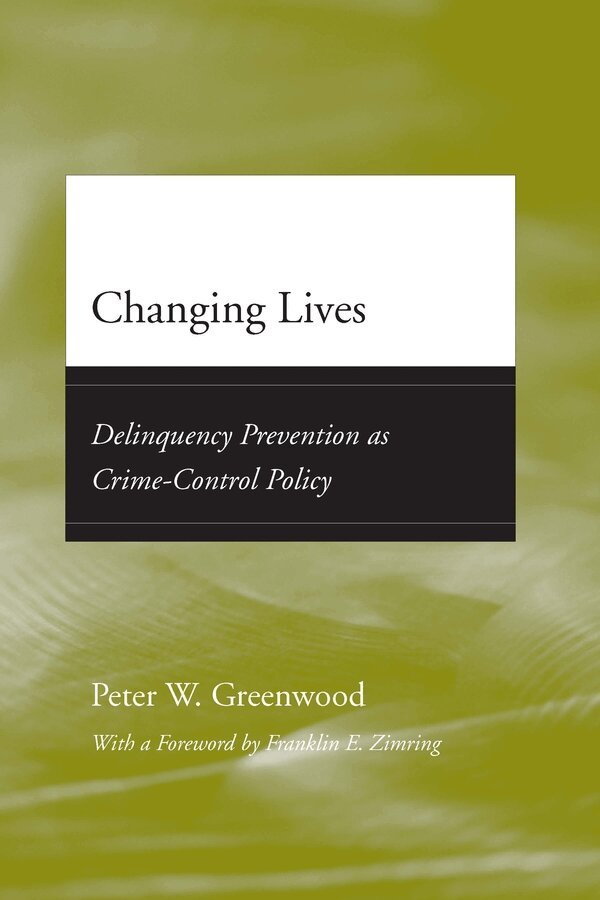
Historically, it has been difficult to measure the impact of policies and programs designed to address juvenile crime. The most commonly used strategies for combating juvenile delinquency have primarily relied on intuition and fads. However, the promising research documented in "Changing Lives" presents methods that can directly remedy these deficiencies in our juvenile justice system. Peter W. Greenwood demonstrates here that as crime rates have fallen, researchers have identified connections between specific risk factors and criminal behavior. At the same time, program developers have discovered a wide array of innovative interventions. The result of all this activity has been the revelation of a few prevention models that reduce crime much more cost-effectively than popular approaches such as tougher sentencing, the D.A.R.E. campaign, boot camps, and "scared straight" programs."Changing Lives" expertly presents the most promising of these prevention programs, their histories, the quality of evidence to support their effectiveness, the public policy programs involved in bringing them into wider use, and the potential for investments and developmental research to increase the range and quality of programs.
411 kr
Tillfälligt slut
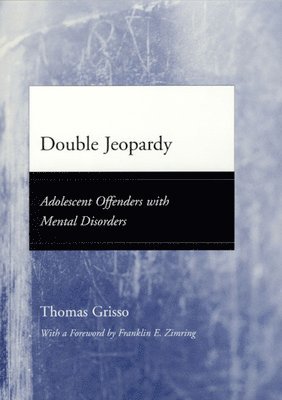
Nearly two-thirds of adolescent offenders currently held in juvenile justice facilities across the United States meet the criteria for one or more mental disorders - a fact that has many parents, healthcare providers, and legislatures wondering about our mental health systems for children. Have these systems failed so badly that we must arrest our children for crimes in order for them to receive help? In "Double Jeopardy", leading researcher, Thomas Grisso considers the newest data on the nature of mental disorders in youth - examining, for example, their relationship to delinquency, the values and limits of various treatment methods, and common, related patterns of adolescent offending - and then charts a course for practitioners working within today's juvenile justice system. Grisso carefully evaluates the threefold obligations of that system: as a custodian of children with health needs, a legal system promoting fairness in youth adjudication, and protector of public safety. "Double Jeopardy" provides a scientific and practical foundation for lawmakers, judges, attorneys, and mental health care professionals, as well as researchers in mental health and adolescent development.
260 kr
Skickas inom 7-10 vardagar
Nearly two-thirds of adolescent offenders currently held in juvenile justice facilities across the United States meet the criteria for one or more mental disorders - a fact that has many parents, healthcare providers, and legislatures wondering about our mental health systems for children. Have these systems failed so badly that we must arrest our children for crimes in order for them to receive help? In "Double Jeopardy", leading researcher, Thomas Grisso considers the newest data on the nature of mental disorders in youth - examining, for example, their relationship to delinquency, the values and limits of various treatment methods, and common, related patterns of adolescent offending - and then charts a course for practitioners working within today's juvenile justice system. Grisso carefully evaluates the threefold obligations of that system: as a custodian of children with health needs, a legal system promoting fairness in youth adjudication, and protector of public safety. "Double Jeopardy" provides a scientific and practical foundation for lawmakers, judges, attorneys, and mental health care professionals, as well as researchers in mental health and adolescent development.
Justice for Girls?
Stability and Change in the Youth Justice Systems of the United States and Canada
Inbunden, Engelska, 2009
588 kr
Skickas
For over a century, as women have fought for and won greater freedoms, concern over an epidemic of female criminality, especially among young women, has followed. Fear of this crime wave - despite a persistent lack of evidence of its existence - has played a decisive role in the development of the youth justice systems in the United States and Canada. "Justice for Girls?" is a comprehensive comparative study of the way these countries have responded to the hysteria over 'girl crime' and how it has affected the treatment of both girls and boys. Tackling a century of historical evidence and crime statistics, Jane B. Sprott and Anthony N. Doob carefully trace the evolution of approaches to the treatment of young offenders. Seeking to keep youths out of adult courts, both countries have built their systems around rehabilitation. But, as Sprott and Doob reveal, the myth of the 'girl crime wave' led to a punitive system where young people are dragged into court for minor offenses and girls are punished far more severely than boys. Thorough, timely, and persuasive, "Justice for Girls?" will be vital to anyone working with troubled youths.
474 kr
Tillfälligt slut
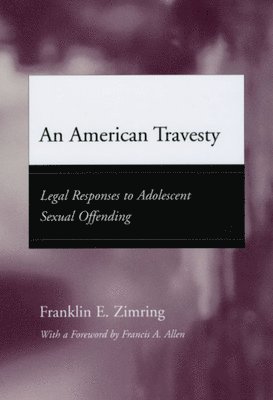
"An American Travesty" is the first scholarly book in half a century to analyze the justice system's response to sexual misconduct by children and adolescents in the United States. Writing with a refreshing dose of common sense, Franklin E. Zimring discusses our society's failure to consider the developmental status of adolescent sex offenders. Too often, he argues, the American legal system ignores age and developmental status when adjudicating young sexual offenders, in many cases responding as they would to an adult.
243 kr
Skickas inom 7-10 vardagar
"An American Travesty" is the first scholarly book in half a century to analyze the justice system's response to sexual misconduct by children and adolescents in the United States. Writing with a refreshing dose of common sense, Franklin E. Zimring discusses our society's failure to consider the developmental status of adolescent sex offenders. Too often, he argues, the American legal system ignores age and developmental status when adjudicating young sexual offenders, in many cases responding as they would to an adult.