Advances in Chemistry Education Series – serie
Visar alla böcker i serien Advances in Chemistry Education Series. Handla med fri frakt och snabb leverans.
18 produkter
18 produkter
Inbunden, Engelska, 2019
1 732 kr
Skickas inom 5-8 vardagar
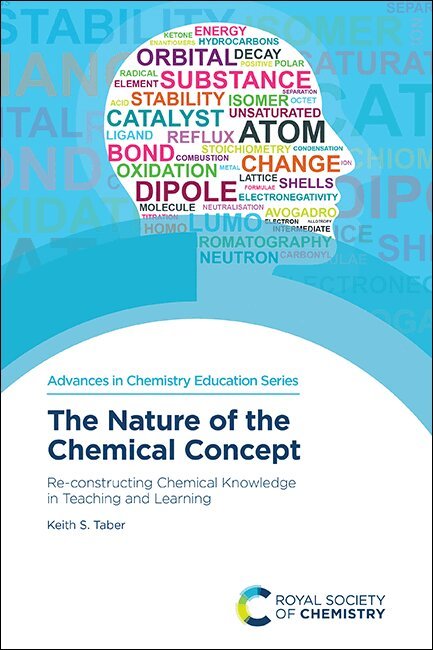
The features of chemistry that make it such a fascinating and engaging subject to teach also contribute to it being a challenging subject for many learners. Chemistry draws upon a wide range of abstract concepts, which are embedded in a large body of theoretical knowledge. As a science, chemistry offers ideas that are the products of scientists’ creative imaginations, and yet which are motivated and constrained by observations of natural phenomena. Chemistry is often discussed and taught largely in terms of non-observable theoretical entities - such as molecules and electrons and orbitals - which probably seem as familiar and real to a chemistry teacher as Bunsen burners: and, yet, comprise a realm as alien and strange to many students as some learners’ own alternative conceptions (‘misconceptions’) may appear to the teacher.All chemistry teachers know that chemistry is a conceptual subject, especially at the upper end of secondary school and at university level, and that some students struggle to understand many chemical ideas. This book offers a step-by-step analysis and discussion of just why some students find chemistry difficult, by examining the nature of chemistry concepts, and how they are communicated and learnt. The book considers the idea of concepts itself; draws upon case studies of how canonical chemical concepts have developed; explores how chemical concepts become represented in curriculum and in classroom teaching; and discusses how conceptual learning and development occurs. This book will be invaluable to anyone interested in teaching and learning and offers guidance to teachers looking to make sense of, and respond to, the challenges of teaching chemistry.
Inbunden, Engelska, 2018
1 713 kr
Skickas inom 5-8 vardagar
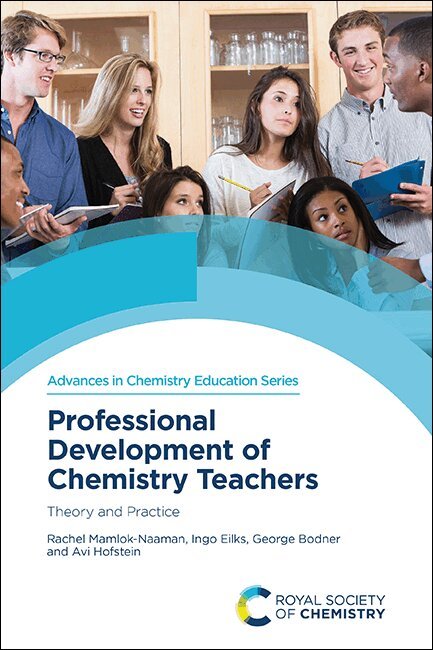
Continuous professional development of chemistry teachers is essential for any effective chemistry teaching due to the evolving nature of the subject matter and its instructional techniques. Professional development aims to keep chemistry teaching up-to-date and to make it more meaningful, more educationally effective, and better aligned to current requirements.Presenting models and examples of professional development for chemistry teachers, from pre-service preparation through to continuous professional development, the authors walk the reader through theory and practice. The authors discuss factors which affect successful professional development, such as workload, availability and time constraints, and consider how we maintain the life-long learning of chemistry teachers. With a solid grounding in the literature and drawing on many examples from the authors’ rich experiences, this book enables researchers and educators to better understand teachers’ roles in effective chemistry education and the importance of their professional development.
Inbunden, Engelska, 2019
1 713 kr
Skickas inom 5-8 vardagar
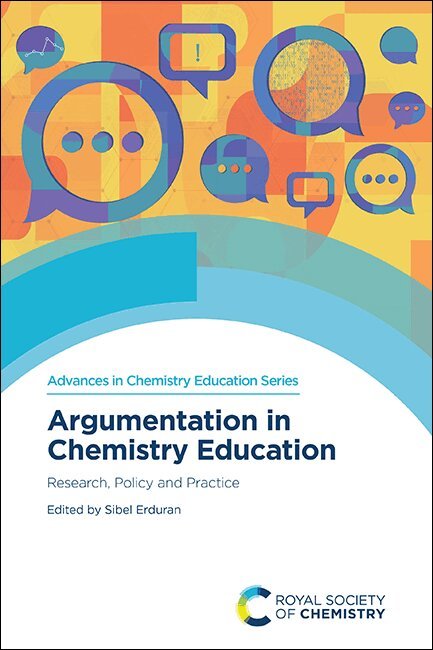
Many studies have highlighted the importance of discourse in scientific understanding. Argumentation is a form of scientific discourse that plays a central role in the building of explanations, models and theories. Scientists use arguments to relate the evidence that they select from their investigations and to justify the claims that they make about their observations. The implication is that argumentation is a scientific habit of mind that needs to be appropriated by students and explicitly taught through suitable instruction.Edited by Sibel Erduran, an internationally recognised expert in chemistry education, this book brings together leading researchers to draw attention to research, policy and practice around the inclusion of argumentation in chemistry education. Split into three sections: Research on Argumentation in Chemistry Education, Resources and Strategies on Argumentation in Chemistry Education, and Argumentation in Context, this book blends practical resources and strategies with research-based evidence. The book contains state of the art research and offers educators a balanced perspective on the theory and practice of argumentation in chemistry education.
Inbunden, Engelska, 2020
1 679 kr
Skickas inom 5-8 vardagar
Many projects in recent years have applied context-based learning and engagement tools to the fostering of long-term student engagement with chemistry. While empirical evidence shows the positive effects of context-based learning approaches on students’ interest, the long-term effects on student engagement have not been sufficiently highlighted up to now. Edited by respected chemistry education researchers, and with contributions from practitioners across the world, Engaging Learners with Chemistry sets out the approaches that have been successfully tested and implemented according to different criteria, including informative, interactive, and participatory engagement, while also considering citizenship and career perspectives.Bringing together the latest research in one volume, this book will be useful for chemistry teachers, researchers in chemistry education and professionals in the chemical industry seeking to attract students to careers in the chemical sector.
Inbunden, Engelska, 2020
1 728 kr
Skickas inom 5-8 vardagar
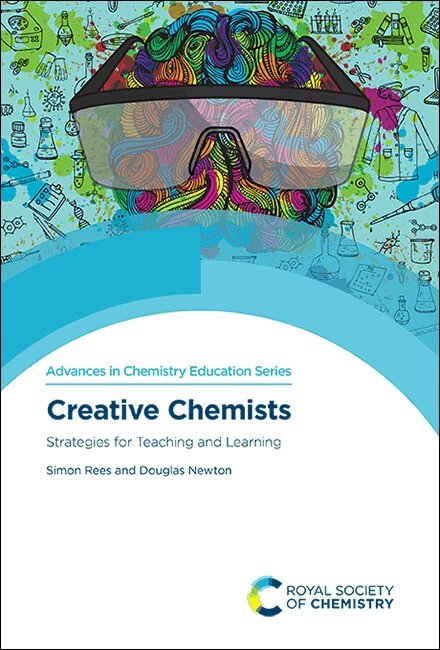
Creative thinking, be it that of the teacher or the student, has tended to be overlooked in science, but exercising it is important. This book shows how it can be done in chemistry, both in the context of creative chemistry teaching and in learning chemistry.Going beyond principles and ideology, readers will find practical strategies, tools, examples, and case studies in a variety of contexts to bring creative thinking theory into practice. Beginning with a discussion on the nature of creativity, the authors’ debunk misconceptions and address the relationship between creativity and problem solving. Delving into opportunities for practising creative thinking in science, for instance, hypothesis generation and experiment design, the authors’ then move on to discussions around assessing and evaluating creative thinking. Further areas covered include: multisensory chemistry, language and literacy, practical work and story-telling. As a resource, this book points the way to fostering exploration and the development of creative thinking in chemistry for the benefit of the student, and for the benefit of the teacher in offering a source of satisfaction and achievement in the work they do.With a foreword by John Holman.
Inbunden, Engelska, 2024
1 665 kr
Skickas inom 5-8 vardagar
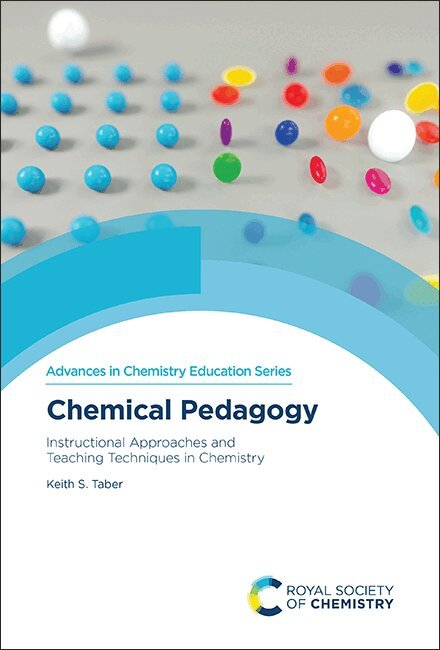
How should chemistry be taught in schools, colleges, and universities? Chemical Pedagogy discusses teaching approaches and techniques, the reasoning behind them, and the evidence for their effectiveness.The book surveys a wide range of different pedagogic strategies and tactics that have been recommended to better engage learners and provide more effective chemistry teaching. These accounts are supported by an initial introduction to some key ideas and debates about pedagogy - the science of teaching. Chemical Pedagogy discusses how teaching innovations can be tested to inform research-based practice. Through this book, the author explores the challenges of carrying out valid experimental studies in education, and the impediments to generalising study results to diverse teaching and learning contexts. As a result, the author highlights both the need to read published studies critically and the value of teachers and lecturers testing out recommended innovations in their own classrooms.Chemical Pedagogy introduces core principles – from research into human cognition and learning – to provide a theoretical perspective on how to best teach for engagement and understanding. An examination of some of the more contentious debates about pedagogy leads to the advice to seek ‘optimally guided instruction’ which balances the challenge offered to learners with the level of support provided. This provides a framework for discussing a wide range of teaching approaches and techniques that have been recommended to those teaching chemistry across educational levels, including both those intended to replace ‘teaching from the front’ and others that can be built into traditional lecture courses to enhance the learning experience.
Inbunden, Engelska, 2022
1 713 kr
Skickas inom 5-8 vardagar
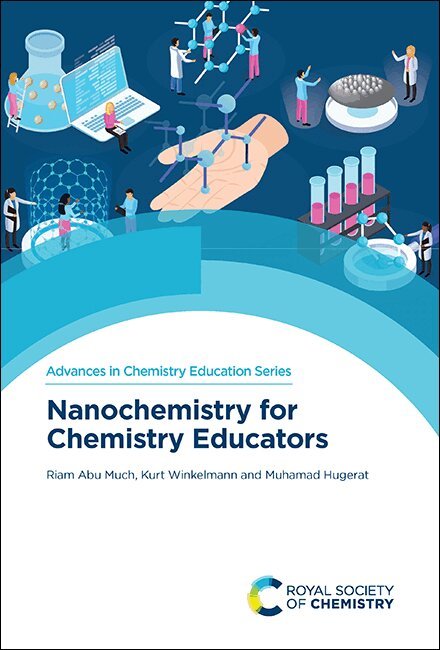
For the first time, this book sets out ways to teach the science of nanochemistry at a level suitable for pre-service and in-service teachers in middle and secondary school. The authors draw upon peer-reviewed science education literature for experiments, activities, educational research, and methods of teaching the subject.The book starts with an overview of chemical nanotechnology, including definition of the basic concepts in nanoscience, properties, types of nanostructured materials, synthesis, characterization, and applications. It includes examples of how nanochemistry impacts our daily lives. This theoretical background is an address for teachers even if they do not have enough information about the subject of nanoscale science. Subsequent chapters present best practices for presenting the material to students in a way that improves their attitudes and knowledge toward nanochemistry and STEM subjects in general. The final chapter includes experiments designed for middle and high school students.From basic science through to current and near-future developments for applications of nanomaterials and nanostructures in medicine, electronics, energy, and the environment, users of the book will find a wealth of ideas to convey nanochemistry in an engaging way to students.
Inbunden, Engelska, 2026
1 713 kr
Skickas inom 5-8 vardagar
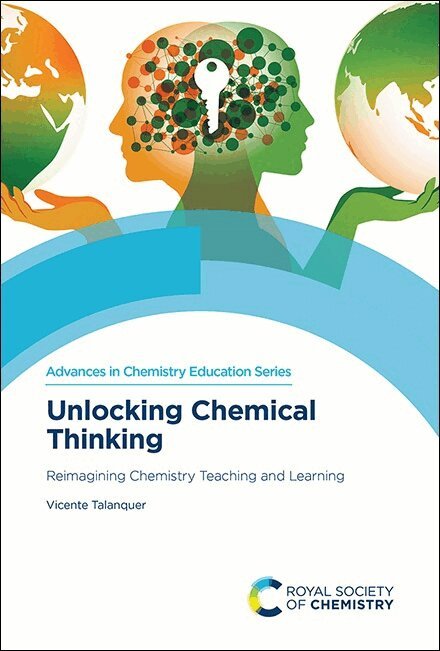
Traditional approaches to chemistry education emphasize the memorization of disconnected facts over the development of meaningful understanding and reasoning. Unlocking Chemical Thinking advocates for a shift toward teaching centered on central disciplinary ideas integrated with authentic chemical practices to encourage students to think and solve problems in relevant contexts.Drawing on current developments in science and chemistry education research, the book highlights the importance of fostering multiple modes of reasoning in chemistry, including the analysis of intuitive ways of thinking that often mislead students, to support more effective learning progressions. It promotes knowledge integration and encourages the creation of learning environments that are both purposeful and inclusive. By reimagining chemistry instruction through the lens of chemical thinking, the book aims to equip students with the intellectual tools to understand and address real-world challenges, preparing them not just to learn chemistry, but to think and act responsibly in a complex, interconnected world.
Inbunden, Engelska, 2025
1 728 kr
Skickas inom 5-8 vardagar
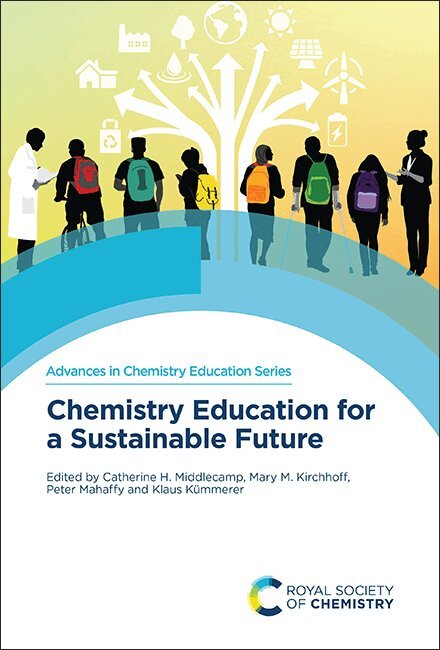
Now and in the years ahead, we need to sustain all life on our planet. How do we do this? Chemistry, the science of materials, provides part of the answer to this question. Practicing chemistry in a green and sustainable manner is essential to achieving a sustainable future. However, sustainability concepts seldom are taught in the chemistry classroom. For example, the connections between chemistry and systems thinking, planetary boundaries, sustainable development goals, and ethics are not widely taught, yet these all can inform how we can sustain life now and in the future.Chemistry Education for a Sustainable Future addresses what our students need to learn today to help all people and the planet thrive. This book provides a logical sequence of topics and offers chemistry educators practical strategies to equip today’s students with the tools needed to become scientists and citizens who can responsibly contribute to a sustainable future.
Inbunden, Engelska, 2026
1 713 kr
Skickas inom 5-8 vardagar
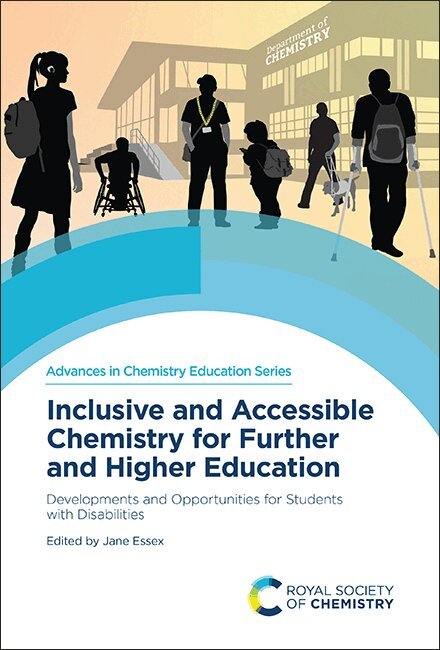
Chemistry, and science more broadly, should be welcoming and accessible to everyone with an interest. However, stigma and discrimination often colour the experiences of students with disabilities. With improved awareness and understanding of the functional needs of students with different types of disability we can make chemistry in higher education accessible to all.Drawing on research evidence on approaches to inclusion and describing examples of the inclusion of chemistry students with differing types of disability, this book sets out what we know about successful inclusion. Wide ranging accounts provide a discussion of barriers faced, helpful strategies and recommendations for improving accessibility and inclusivity in higher education.
Inbunden, Engelska, 2021
1 732 kr
Skickas inom 5-8 vardagar
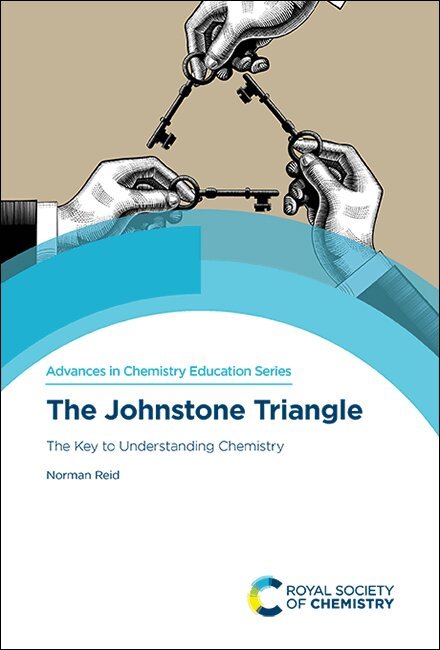
Chemistry is often seen as a difficult subject to understand. This book focusses on the triangle model that Alex H. Johnstone developed in the early 1980s. Originally conceived in the context of making chemistry more accessible to a wider range of learners, the model has been applied in almost every area of education in chemistry at all stages of learning. In looking at why chemistry is difficult, there are two central questions. Firstly, does the problem relate to the nature of chemistry and, secondly, does it relate to the way humans gain understanding? Both were found to be important and the answers to the two question were found to be connected. The triangle model arose from sustained research into human learning. The central finding from research is the critical role of working memory and the model rationalises so much evidence from chemistry education research as well as the repeated experiences of teachers of chemistry at all levels. In order to understand chemistry, it is essential to develop sound mental models of molecular reality. It generates major implications for the way a chemistry curriculum should be constructed and the processes of teaching and learning in chemistry when the goal is focussed on understanding the key ideas. Some of these implications are developed and pointers offered to more successful ways forward.The power of the Johnstone Triangle lies in the way it offers clear directions for all involved in chemistry education. It is hoped that this book will prove helpful to all involved in sharing the exciting story of the way humans have come to understand the molecular world, one of the great examples of great human endeavour.
Inbunden, Engelska, 2021
1 728 kr
Skickas inom 5-8 vardagar
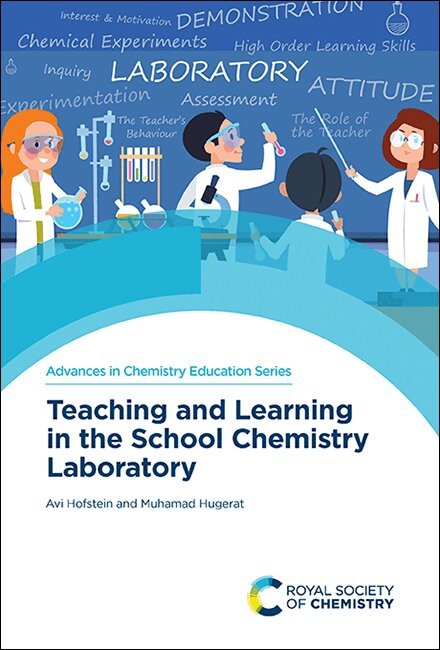
Research into the educational effectiveness of chemistry practical work has shown that the laboratory offers a unique mode of instruction, assessment and evaluation. Laboratory work is an integral and important part of the learning process, used to encourage the development of high order thinking and learning alongside high order learning and thinking skills such as argumentation and metacognition.Authored by renowned experts in the field of chemistry education, this book provides a holistic approach to cover all issues related to learning and teaching in the chemistry laboratory. With sections focused on developing the skill sets of teachers, as well as approaches to supporting students in the laboratory, the book offers a comprehensive look at vicarious instruction methods, teacher and students' roles, and the blend with ICT, simulations, and other effective approaches to practical work. The book concludes with a focus on retrospective issues, followed-up with a look to the future of laboratory learning. A product of nearly fifty years of research, this book will be useful for chemistry teachers, curriculum developers, researchers in chemistry education, and professional development providers.
Inbunden, Engelska, 2021
1 665 kr
Skickas inom 5-8 vardagar
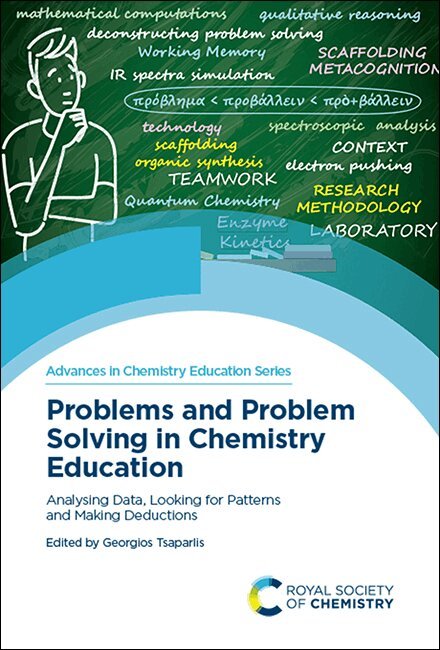
Problem solving is central to the teaching and learning of chemistry at secondary, tertiary and post-tertiary levels of education, opening to students and professional chemists alike a whole new world for analysing data, looking for patterns and making deductions. As an important higher-order thinking skill, problem solving also constitutes a major research field in science education. Relevant education research is an ongoing process, with recent developments occurring not only in the area of quantitative/computational problems, but also in qualitative problem solving.The following situations are considered, some general, others with a focus on specific areas of chemistry: quantitative problems, qualitative reasoning, metacognition and resource activation, deconstructing the problem-solving process, an overview of the working memory hypothesis, reasoning with the electron-pushing formalism, scaffolding organic synthesis skills, spectroscopy for structural characterization in organic chemistry, enzyme kinetics, problem solving in the academic chemistry laboratory, chemistry problem-solving in context, team-based/active learning, technology for molecular representations, IR spectra simulation, and computational quantum chemistry tools. The book concludes with methodological and epistemological issues in problem solving research and other perspectives in problem solving in chemistry.With a foreword by George Bodner.
Inbunden, Engelska, 2022
1 728 kr
Skickas inom 5-8 vardagar
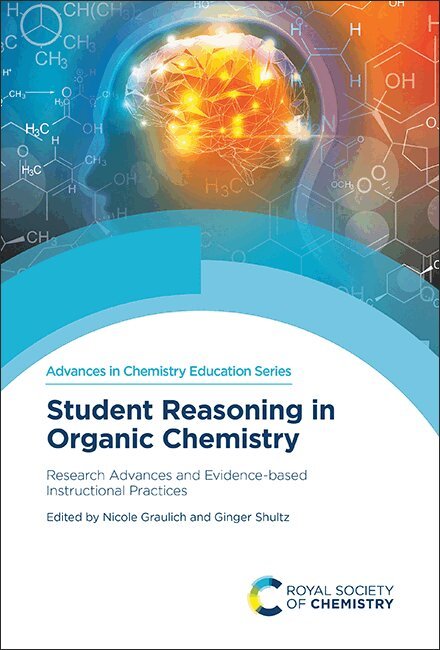
Reasoning about structure-reactivity and chemical processes is a key competence in chemistry. Especially in organic chemistry, students experience difficulty appropriately interpreting organic representations and reasoning about the underlying causality of organic mechanisms. As organic chemistry is often a bottleneck for students’ success in their career, compiling and distilling the insights from recent research in the field will help inform future instruction and the empowerment of chemistry students worldwide. This book brings together leading research groups to highlight recent advances in chemistry education research with a focus on the characterization of students’ reasoning and their representational competencies, as well as the impact of instructional and assessment practices in organic chemistry. Written by leaders in the field, this title is ideal for chemistry education researchers, instructors and practitioners, and graduate students in chemistry education.
Inbunden, Engelska, 2023
1 732 kr
Skickas inom 5-8 vardagar
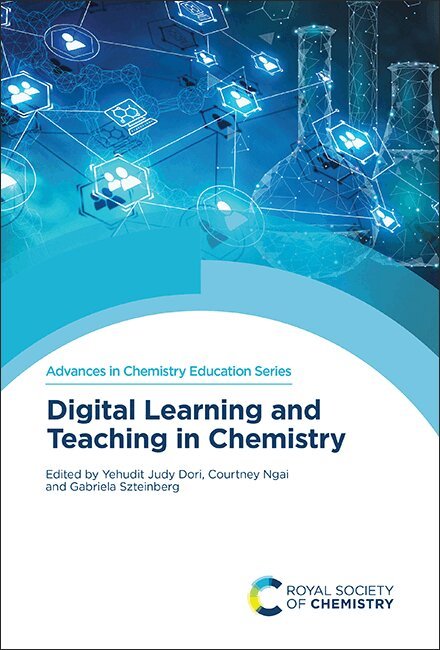
Education is always evolving, and most recently has shifted to increased online or remote learning. Digital Learning and Teaching in Chemistry compiles the established and emerging trends in this field, specifically within the context of learning and teaching in chemistry. This book shares insights about five major themes: best practices for teaching and learning digitally, digital learning platforms, virtual visualisation and laboratory to promote learning in science, digital assessment, and building communities of learners and educators. The authors are chemistry instructors and researchers from nine countries, contributing an international perspective on digital learning and teaching in chemistry.While the chapters in this book span a wide variety of topics, as a whole, they focus on using technology and digital platforms as a method for supporting inclusive and meaningful learning. The best practices and recommendations shared by the authors are highly relevant for modern chemistry education, as teaching and learning through digital methods is likely to persist. Furthermore, teaching chemistry digitally has the potential to bring greater equity to the field of chemistry education in terms of who has access to quality learning, and this book will contribute to that goal. This book will be essential reading for those working in chemical education and teaching.Yehudit Judy Dori is internationally recognised, formerly Dean of the Faculty of Education of Science and Technology at the Technion Israel Institute of Technology and won the 2020 NARST Distinguished Contributions to Science Education through Research Award–DCRA for her exceptional research contributions. Courtney Ngai and Gabriela Szteinberg are passionate researchers and practitioners in the education field. Courtney Ngai is the Associate Director of the Office of Undergraduate Research and Artistry at Colorado State University. Gabriela Szteinberg serves as Assistant Dean and Academic Coordinator for the College of Arts and Sciences at Washington University in St. Louis.
Häftad, Engelska, 2022
439 kr
Skickas inom 5-8 vardagar
Continuous professional development of chemistry teachers is essential for any effective chemistry teaching due to the evolving nature of the subject matter and its instructional techniques. Professional development aims to keep chemistry teaching up-to-date and to make it more meaningful, more educationally effective, and better aligned to current requirements.Presenting models and examples of professional development for chemistry teachers, from pre-service preparation through to continuous professional development, the authors walk the reader through theory and practice. The authors discuss factors which affect successful professional development, such as workload, availability and time constraints, and consider how we maintain the life-long learning of chemistry teachers. With a solid grounding in the literature and drawing on many examples from the authors’ rich experiences, this book enables researchers and educators to better understand teachers’ roles in effective chemistry education and the importance of their professional development.
Häftad, Engelska, 2022
439 kr
Skickas inom 5-8 vardagar
Many studies have highlighted the importance of discourse in scientific understanding. Argumentation is a form of scientific discourse that plays a central role in the building of explanations, models and theories. Scientists use arguments to relate the evidence that they select from their investigations and to justify the claims that they make about their observations. The implication is that argumentation is a scientific habit of mind that needs to be appropriated by students and explicitly taught through suitable instruction.Edited by Sibel Erduran, an internationally recognised expert in chemistry education, this book brings together leading researchers to draw attention to research, policy and practice around the inclusion of argumentation in chemistry education. Split into three sections: Research on Argumentation in Chemistry Education, Resources and Strategies on Argumentation in Chemistry Education, and Argumentation in Context, this book blends practical resources and strategies with research-based evidence. The book contains state of the art research and offers educators a balanced perspective on the theory and practice of argumentation in chemistry education.
Häftad, Engelska, 2022
444 kr
Skickas inom 5-8 vardagar
The features of chemistry that make it such a fascinating and engaging subject to teach also contribute to it being a challenging subject for many learners. Chemistry draws upon a wide range of abstract concepts, which are embedded in a large body of theoretical knowledge. As a science, chemistry offers ideas that are the products of scientists’ creative imaginations, and yet which are motivated and constrained by observations of natural phenomena. Chemistry is often discussed and taught largely in terms of non-observable theoretical entities - such as molecules and electrons and orbitals - which probably seem as familiar and real to a chemistry teacher as Bunsen burners: and, yet, comprise a realm as alien and strange to many students as some learners’ own alternative conceptions (‘misconceptions’) may appear to the teacher.All chemistry teachers know that chemistry is a conceptual subject, especially at the upper end of secondary school and at university level, and that some students struggle to understand many chemical ideas. This book offers a step-by-step analysis and discussion of just why some students find chemistry difficult, by examining the nature of chemistry concepts, and how they are communicated and learnt. The book considers the idea of concepts itself; draws upon case studies of how canonical chemical concepts have developed; explores how chemical concepts become represented in curriculum and in classroom teaching; and discusses how conceptual learning and development occurs. This book will be invaluable to anyone interested in teaching and learning and offers guidance to teachers looking to make sense of, and respond to, the challenges of teaching chemistry.