Africa: Policies for Prosperity - Böcker
Visar alla böcker i serien Africa: Policies for Prosperity. Handla med fri frakt och snabb leverans.
4 produkter
4 produkter
1 002 kr
Skickas inom 5-8 vardagar
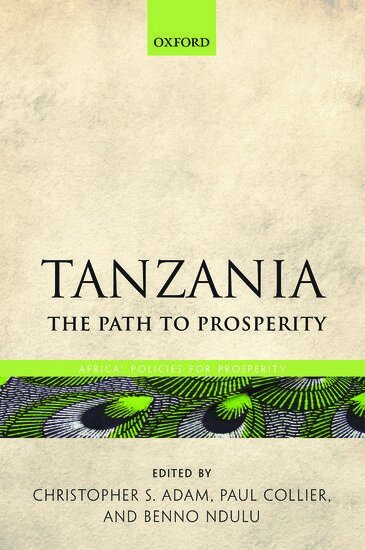
This book, the third in the Africa: Policies for Prosperity series, is concerned with the challenges of securing economic prosperity in Tanzania over the coming decades. Building on widespread economic reforms in the early 1990s, Tanzania has recorded steady economic growth over the last two decades, despite the downturn in global economic fortunes since 2008. The process of reform is continuous, however, and the challenge facing the current generation of policymakers is how to harness these favourable gains in macroeconomic stability and turn them into a coherent strategy for labour-intensive, inclusive growth over the coming decades. The next twenty years offer huge opportunity but also huge challenges to Tanzania. The pace of economic transformation and integration into the regional and global economy is picking up; society is becoming much more urban and with population growth remaining high, the need for high-quality employment, especially amongst the young, has never been so pressing. At the same time, the discovery of large natural gas reserves and a programme of heavy investment in transport and communications infrastructure creates the opportunity for Tanzania not just to exploit its natural locational advantage, but to finance the investment in this transformation.This volume brings leading international and national scholars into the policy arena to examine these challenges and to lay out, in a rigorous but accessible manner, economic policy options facing policymakers in Tanzania.
1 236 kr
Skickas inom 7-10 vardagar
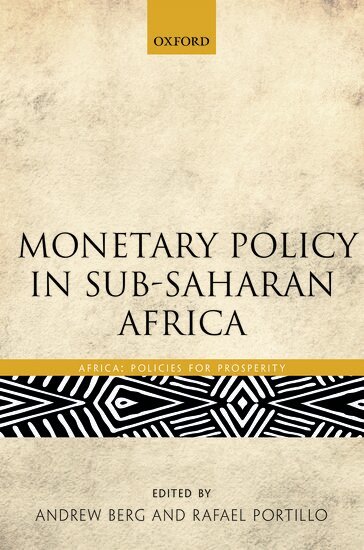
Low-income countries in sub-Saharan Africa present unique monetary policy challenges, from the high share of volatile food in consumption to underdeveloped financial markets; however most academic and policy work on monetary policy is aimed at much richer countries. Can economic models and methods invented for rich countries even be adapted and applied here? How does and should monetary policy work in sub-Saharan African? Monetary Policy in Sub-Saharan Africa answers these questions and provides practical tools and policy guidance to respond to the complex challenges of this region.Most countries in sub-Saharan Africa have made great progress in stabilizing inflation over the past two decades. As they have achieved a degree of basic macroeconomic stability, policymakers are looking to avoid policy misalignments and respond appropriately to shocks in order to achieve stability and growth. Officially, they often have adopted "money targeting" frameworks, a regime that has long disappeared from almost all advanced and even emerging-market discussions. In practice, though, they are in many cases finding current regimes lacking, with opaque and sometimes inconsistent objectives, inadequate transmission of policy to the economy, and difficulties in responding to supply shocks. Monetary Policy in Sub-Saharan Africa takes a new approach by applying dynamic general equilibrium models suitably adapted to reflect key features of low-income countries for the analysis of monetary policy in sub-Saharan African countries.Using a progressive approach derived from the International Monetary Fund's extensive practice and research, Monetary Policy in Sub-Saharan Africa seeks to address what we know about the empirics of monetary transmission in low-income countries, how monetary policy can work in countries characterized by underdeveloped financial markets and opaque policy regimes, and how we can use empirical and theoretical methods largely derived in advanced countries to answer these questions. It then uses these key topics to guide policymakers as they attempt to adjust food price, terms of trade, aid shocks, and the effects of the global financial crisis.
1 433 kr
Skickas inom 5-8 vardagar
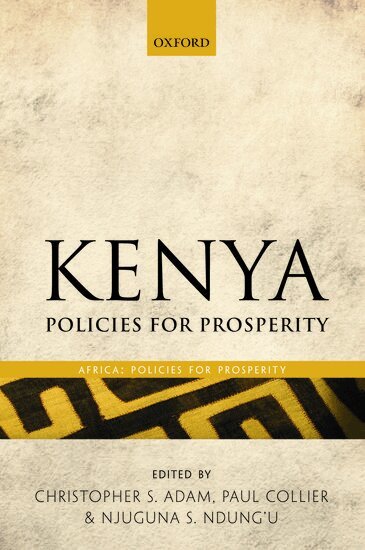
This is the first volume in a new series Africa: Policies for Prosperity. For the first time in more than a generation, sustained economic growth has been achieved across the continent - despite the downturn in global economic fortunes since 2008 - and in many countries these gains have been realized through policy reforms driven by the decisive leadership of a new generation of economic policymakers. The process of reform is continuous, however, and the challenge currently facing this new generation is how to harness these favourable gains in macroeconomic stability and turn them into a coherent strategy for sustainable growth and poverty reduction over the coming decades. These challenges are substantial and encompass the broad remit of economic policy. Each volume in this series brings leading scholars into the policy arena to examine these challenges and to lay out, in a rigorous but accessible manner, key challenges and policy options facing policymakers on the continent. Kenya has experienced a period of high and sustained growth since the mid 1990s, growth that has involved economic transformation away from a heavy reliance on traditional economic activities towards an emerging manufacturing economy. But this process, and the economic and social stability that had come to characterize Kenya, have been severely tested by the post-election violence of 2008. Restoring equitable growth and sustaining the structural transformation of the economy is essential if Kenya is to leave this period behind.The chapters in this volume address the key issues that will face economic policy makers in the coming years. They cover the conventional but central questions of finance and macroeconomic management, but also much deeper structural issues of trade, employment generation and education; of land policy, migration and urbanization; and the fiscal challenges facing an ageing but increasingly urbanized, and increasingly affluent, society.
1 926 kr
Skickas inom 7-10 vardagar
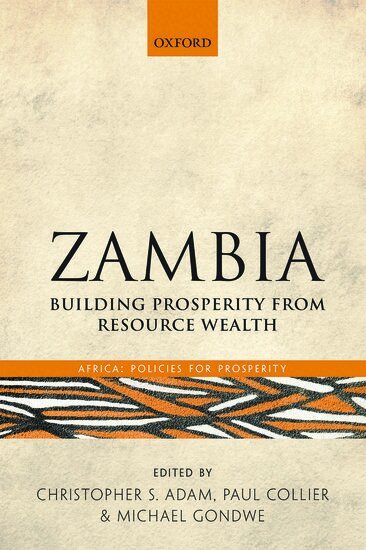
Zambia is a landlocked mineral dependent country in Southern Africa whose history is intimately entwined with the copper mining industry. Having gained Independence from Britain in 1964 at the height of a copper boom, the country experienced a slow and painful economic decline over the next quarter century. However, following a traumatic and protracted process of economic adjustment through the 1990s and early 2000s, Zambia's economic potential is now better than it has been at any time since Independence. This book, which contains a set of rigorous but accessible essays by a range of Zambian and international scholars, seeks to examine the challenges and opportunities that currently face Zambian policymakers as they seek to harness the country's valuable natural assets to broad-based and sustainable economic growth over the coming decades. Written in a non-technical manner by leading scholars in the field, the chapters address key challenges in the areas of natural resource management, agriculture, trade, employment and migration, education, finance, and investment. This is the second volume in the Africa: Policies for Prosperity series following on from the successful first volume on Kenya.