After the Postcolonial - Böcker
Visar alla böcker i serien After the Postcolonial. Handla med fri frakt och snabb leverans.
6 produkter
6 produkter
599 kr
Skickas inom 7-10 vardagar
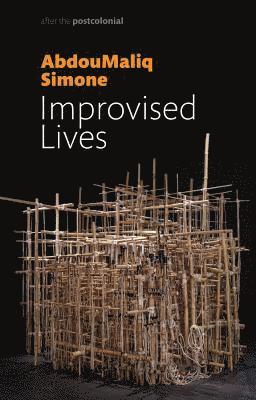
The poor and working people in cities of the South find themselves in urban spaces that are conventionally construed as places to reside or inhabit. But what if we thought of popular districts in more expansive ways that capture what really goes on within them? In such cities, popular districts are the settings of more uncertain operations that take place under the cover of darkness, generating uncanny alliances among disparate bodies, materials and things and expanding the urban sensorium and its capacities for liveliness.In this important new book AbdouMaliq Simone explores the nature of these alliances, portraying urban districts as sites of enduring transformations through rhythms that mediate between the needs of residents not to draw too much attention to themselves and their aspirations to become a small niche of exception. Here we discover an urban South that exists as dense rhythms of endurance that turn out to be vital for survival, connectivity, and becoming.
204 kr
Skickas inom 7-10 vardagar
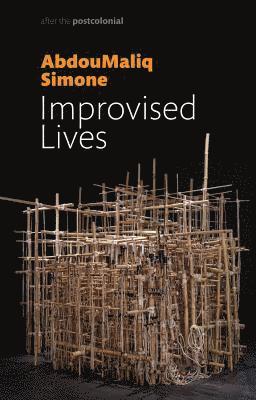
The poor and working people in cities of the South find themselves in urban spaces that are conventionally construed as places to reside or inhabit. But what if we thought of popular districts in more expansive ways that capture what really goes on within them? In such cities, popular districts are the settings of more uncertain operations that take place under the cover of darkness, generating uncanny alliances among disparate bodies, materials and things and expanding the urban sensorium and its capacities for liveliness.In this important new book AbdouMaliq Simone explores the nature of these alliances, portraying urban districts as sites of enduring transformations through rhythms that mediate between the needs of residents not to draw too much attention to themselves and their aspirations to become a small niche of exception. Here we discover an urban South that exists as dense rhythms of endurance that turn out to be vital for survival, connectivity, and becoming.
599 kr
Skickas inom 7-10 vardagar
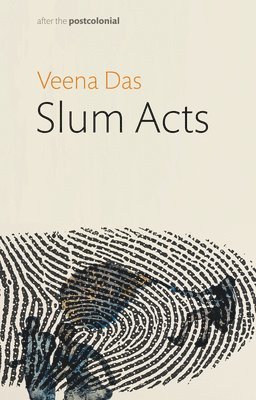
This book examines the ways in which knowledge that is inordinate, excessive, and overwhelming comes to mark everyday life in low-income, poor neighborhoods in Delhi with crumbling infrastructures and pervasive violence. Based on long-term ethnography in these spaces, this book provides a detailed analysis of the institutions of the state, particularly of policing and law in India. It argues that catastrophic events at the national level and the techniques of governance through which they are handled secrete forms of knowing that get embedded into the nooks and crannies of everyday life, eroding trust, sowing suspicions, and leading to an exhaustion of capacity for care. Yet the paths to survival honed within these spaces generate critique that compels us to ask how punishment and torture become routinized in democracies. Following the paths of those who struggle with these questions in these neighborhoods, the book finds that deep philosophical questions, such as the inhuman as a possibility of the human rather than its boundary, arise in the weaves of these lives and are experienced as a dimension of the social.This book will be of great interest to students and scholars in anthropology and throughout the social sciences and humanities.
204 kr
Skickas inom 7-10 vardagar
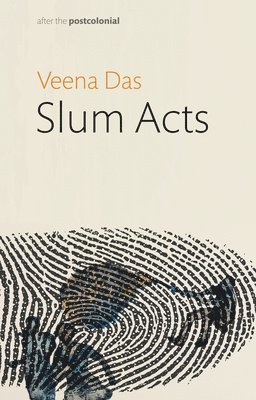
This book examines the ways in which knowledge that is inordinate, excessive, and overwhelming comes to mark everyday life in low-income, poor neighborhoods in Delhi with crumbling infrastructures and pervasive violence. Based on long-term ethnography in these spaces, this book provides a detailed analysis of the institutions of the state, particularly of policing and law in India. It argues that catastrophic events at the national level and the techniques of governance through which they are handled secrete forms of knowing that get embedded into the nooks and crannies of everyday life, eroding trust, sowing suspicions, and leading to an exhaustion of capacity for care. Yet the paths to survival honed within these spaces generate critique that compels us to ask how punishment and torture become routinized in democracies. Following the paths of those who struggle with these questions in these neighborhoods, the book finds that deep philosophical questions, such as the inhuman as a possibility of the human rather than its boundary, arise in the weaves of these lives and are experienced as a dimension of the social.This book will be of great interest to students and scholars in anthropology and throughout the social sciences and humanities.
659 kr
Skickas inom 7-10 vardagar
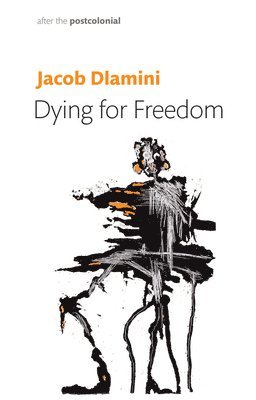
What happens when death becomes the ultimate marker of one’s commitment to one’s freedom? What happens when the opposite of freedom is not unfreedom but death, not slavery but mortality? How are we to think of the right to life when a political demand for dignity and honor might be more important than life itself?Dying for Freedom explores these questions by drawing on archival evidence from South Africa to show how death and conflicting notions of sacrifice dominated the struggle for political equality in that country. This political investment in death as a marker of commitment to the anti-apartheid struggle encouraged a masculinist style of politics in which the fight for freedom was seen and understood by many activists as a struggle literally for manhood. This investment generated a notion of political sacrifice so absolute that anything less than death was rendered suspect. More importantly, it resulted in a hierarchy of death whereby some deaths were more important than others, and where some deaths could be mourned and others not.This highly original account of the necropolitics of the liberation struggle will be of interest to students and scholars throughout the humanities and social sciences and to anyone interested in South Africa.
224 kr
Skickas inom 7-10 vardagar
What happens when death becomes the ultimate marker of one’s commitment to one’s freedom? What happens when the opposite of freedom is not unfreedom but death, not slavery but mortality? How are we to think of the right to life when a political demand for dignity and honor might be more important than life itself?Dying for Freedom explores these questions by drawing on archival evidence from South Africa to show how death and conflicting notions of sacrifice dominated the struggle for political equality in that country. This political investment in death as a marker of commitment to the anti-apartheid struggle encouraged a masculinist style of politics in which the fight for freedom was seen and understood by many activists as a struggle literally for manhood. This investment generated a notion of political sacrifice so absolute that anything less than death was rendered suspect. More importantly, it resulted in a hierarchy of death whereby some deaths were more important than others, and where some deaths could be mourned and others not.This highly original account of the necropolitics of the liberation struggle will be of interest to students and scholars throughout the humanities and social sciences and to anyone interested in South Africa.