Jacob Dlamini – författare
Visar alla böcker från författaren Jacob Dlamini. Handla med fri frakt och snabb leverans.
10 produkter
10 produkter
Häftad, Engelska, 2015
430 kr
Skickas inom 3-6 vardagar
Inbunden, Engelska, 2020
293 kr
Skickas inom 10-15 vardagar
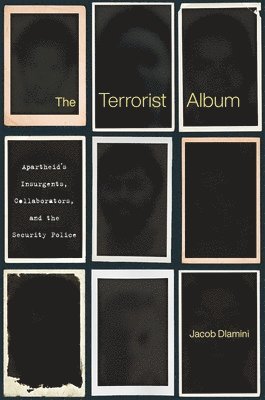
An award-winning historian and journalist tells the very human story of apartheid’s afterlife, tracing the fates of South African insurgents, collaborators, and the security police through the tale of the clandestine photo album used to target apartheid’s enemies.From the 1960s until the early 1990s, the South African security police and counterinsurgency units collected over 7,000 photographs of apartheid’s enemies. The political rogue’s gallery was known as the “terrorist album,” copies of which were distributed covertly to police stations throughout the country. Many who appeared in the album were targeted for surveillance. Sometimes the security police tried to turn them; sometimes the goal was elimination.All of the albums were ordered destroyed when apartheid’s violent collapse began. But three copies survived the memory purge. With full access to one of these surviving albums, award-winning South African historian and journalist Jacob Dlamini investigates the story behind these images: their origins, how they were used, and the lives they changed. Extensive interviews with former targets and their family members testify to the brutal and often careless work of the police. Although the police certainly hunted down resisters, the terrorist album also contains mug shots of bystanders and even regime supporters. Their inclusion is a stark reminder that apartheid’s guardians were not the efficient, if morally compromised, law enforcers of legend but rather blundering agents of racial panic.With particular attentiveness to the afterlife of apartheid, Dlamini uncovers the stories of former insurgents disenchanted with today’s South Africa, former collaborators seeking forgiveness, and former security police reinventing themselves as South Africa’s newest export: “security consultants” serving as mercenaries for Western nations and multinational corporations. The Terrorist Album is a brilliant evocation of apartheid’s tragic caprice, ultimate failure, and grim legacy.
Inbunden, Engelska, 2024
697 kr
Skickas inom 5-8 vardagar
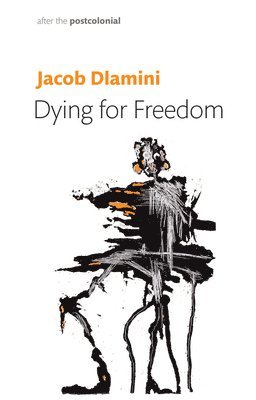
What happens when death becomes the ultimate marker of one’s commitment to one’s freedom? What happens when the opposite of freedom is not unfreedom but death, not slavery but mortality? How are we to think of the right to life when a political demand for dignity and honor might be more important than life itself?Dying for Freedom explores these questions by drawing on archival evidence from South Africa to show how death and conflicting notions of sacrifice dominated the struggle for political equality in that country. This political investment in death as a marker of commitment to the anti-apartheid struggle encouraged a masculinist style of politics in which the fight for freedom was seen and understood by many activists as a struggle literally for manhood. This investment generated a notion of political sacrifice so absolute that anything less than death was rendered suspect. More importantly, it resulted in a hierarchy of death whereby some deaths were more important than others, and where some deaths could be mourned and others not.This highly original account of the necropolitics of the liberation struggle will be of interest to students and scholars throughout the humanities and social sciences and to anyone interested in South Africa.
Häftad, Engelska, 2024
227 kr
Skickas
What happens when death becomes the ultimate marker of one’s commitment to one’s freedom? What happens when the opposite of freedom is not unfreedom but death, not slavery but mortality? How are we to think of the right to life when a political demand for dignity and honor might be more important than life itself?Dying for Freedom explores these questions by drawing on archival evidence from South Africa to show how death and conflicting notions of sacrifice dominated the struggle for political equality in that country. This political investment in death as a marker of commitment to the anti-apartheid struggle encouraged a masculinist style of politics in which the fight for freedom was seen and understood by many activists as a struggle literally for manhood. This investment generated a notion of political sacrifice so absolute that anything less than death was rendered suspect. More importantly, it resulted in a hierarchy of death whereby some deaths were more important than others, and where some deaths could be mourned and others not.This highly original account of the necropolitics of the liberation struggle will be of interest to students and scholars throughout the humanities and social sciences and to anyone interested in South Africa.
E-bok
Engelska, 2024236 kr
Läs direkt efter köp
What happens when death becomes the ultimate marker of one’s commitment to one’s freedom? What happens when the opposite of freedom is not unfreedom but death, not slavery but mortality? How are we to think of the right to life when a political demand for dignity and honor might be more important than life itself?Dying for Freedom explores these questions by drawing on archival evidence from South Africa to show how death and conflicting notions of sacrifice dominated the struggle for political equality in that country. This political investment in death as a marker of commitment to the anti-apartheid struggle encouraged a masculinist style of politics in which the fight for freedom was seen and understood by many activists as a struggle literally for manhood. This investment generated a notion of political sacrifice so absolute that anything less than death was rendered suspect. More importantly, it resulted in a hierarchy of death whereby some deaths were more important than others, and where some deaths could be mourned and others not.This highly original account of the necropolitics of the liberation struggle will be of interest to students and scholars throughout the humanities and social sciences and to anyone interested in South Africa.
E-bok
PDF, Engelska, 2024737 kr
Läs direkt efter köp
What happens when death becomes the ultimate marker of one’s commitment to one’s freedom? What happens when the opposite of freedom is not unfreedom but death, not slavery but mortality? How are we to think of the right to life when a political demand for dignity and honor might be more important than life itself?Dying for Freedom explores these questions by drawing on archival evidence from South Africa to show how death and conflicting notions of sacrifice dominated the struggle for political equality in that country. This political investment in death as a marker of commitment to the anti-apartheid struggle encouraged a masculinist style of politics in which the fight for freedom was seen and understood by many activists as a struggle literally for manhood. This investment generated a notion of political sacrifice so absolute that anything less than death was rendered suspect. More importantly, it resulted in a hierarchy of death whereby some deaths were more important than others, and where some deaths could be mourned and others not.This highly original account of the necropolitics of the liberation struggle will be of interest to students and scholars throughout the humanities and social sciences and to anyone interested in South Africa.
E-bok
PDF, Engelska, 2014443 kr
Läs direkt efter köp
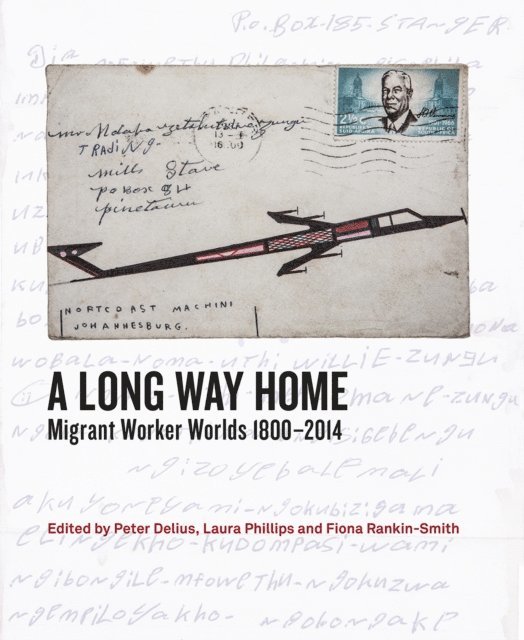
In no other society in the world have urbanisation and industrialization been as comprehensively based on migrant labour as in South Africa. Rather than focusing on the well-documented narrative of displacement and oppression, A Long Way Home captures the humanity, agency and creative modes of self-expression of the millions of workers who helped to build and shape modern South Africa. The book spans a three-hundred-year history beginning with the exportation of slave labour from Mozambique in the eighteenth century and ending with the strikes and tensions on the platinum belt in recent years. It shows not only the age-old mobility of African migrants across the continent but also, with the growing demand for labour in the mining industry, the importation of Chinese indentured migrant workers. Contributions include 18 essays and over 90 artworks and photographs that traverse homesteads, chiefdoms and mining hostels, taking readers into the materiality of migrant life and its customs and traditions, including the rituals practiced by migrants in an effort to preserve connections to “home” and create a sense of “belonging”. The essays and visual materials provide multiple perspectives on the lived experience of migrant labourers and celebrate their extraordinary journeys. A Long Way Home was conceived during the planning of an art exhibition entitled ‘Ngezinyawo: Migrant Journeys’ at Wits Art Museum. The interdisciplinary nature of the contributions and the extraordinary collection of images selected to complement and expand on the text make this a unique collection.
E-bok
PDF, Engelska, 2016428 kr
Läs direkt efter köp
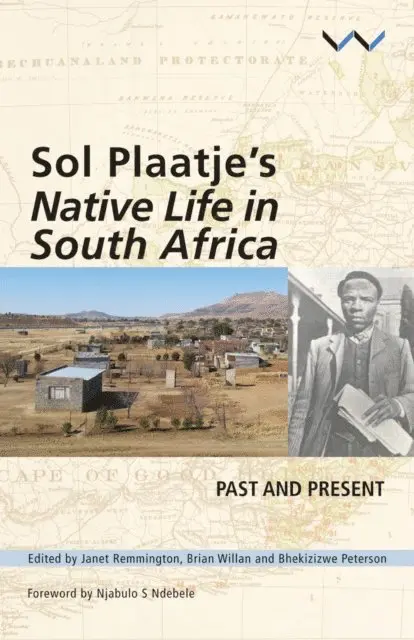
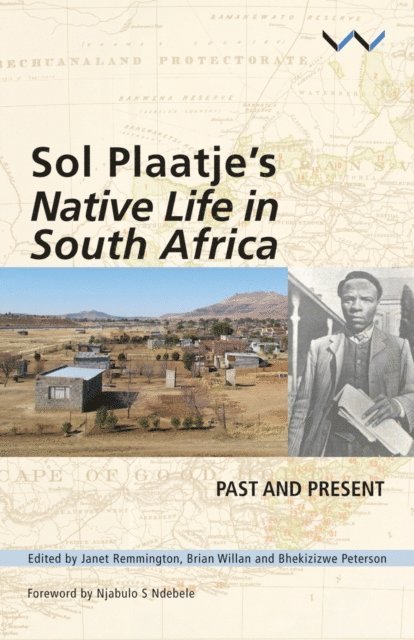
First published in 1916, Sol Plaatje’s Native Life in South Africa was written by one of the South Africa’s most talented early twentieth-century black leaders and journalists. Plaatje’s pioneering book arose out of an early African National Congress campaign to protest against the discriminatory1913 Natives Land Act. Native Life vividly narrates Plaatje’s investigative journeying into South Africa’s rural heartlands to report on the effects of the Act and his involvement in the deputation to the British imperial government. At the same time it tells the bigger story of the assault on black rights and opportunities in the newly consolidated Union of South Africa – and the resistance to it. Originally published in war-time London, but about South Africa and its place in the world, Native Life travelled far and wide, being distributed in the United States under the auspices of prominent African-American W E B Du Bois. South African editions were to follow only in the late apartheid period and beyond. The aim of this multi-authored volume is to shed new light on how and why Native Life came into being at a critical historical juncture, and to reflect on how it can be read in relation to South Africa’s heightened challenges today. Crucial areas that come under the spotlight in this collection include land, race, history, mobility, belonging, war, the press, law, literature, language, gender, politics, and the state.
E-bok
Engelska, 2016432 kr
Läs direkt efter köp
First published in 1916, Sol Plaatje’s Native Life in South Africa was written by one of the South Africa’s most talented early twentieth-century black leaders and journalists. Plaatje’s pioneering book arose out of an early African National Congress campaign to protest against the discriminatory1913 Natives Land Act. Native Life vividly narrates Plaatje’s investigative journeying into South Africa’s rural heartlands to report on the effects of the Act and his involvement in the deputation to the British imperial government. At the same time it tells the bigger story of the assault on black rights and opportunities in the newly consolidated Union of South Africa – and the resistance to it. Originally published in war-time London, but about South Africa and its place in the world, Native Life travelled far and wide, being distributed in the United States under the auspices of prominent African-American W E B Du Bois. South African editions were to follow only in the late apartheid period and beyond. The aim of this multi-authored volume is to shed new light on how and why Native Life came into being at a critical historical juncture, and to reflect on how it can be read in relation to South Africa’s heightened challenges today. Crucial areas that come under the spotlight in this collection include land, race, history, mobility, belonging, war, the press, law, literature, language, gender, politics, and the state.
E-bok
Engelska, 2014443 kr
Läs direkt efter köp
In no other society in the world have urbanisation and industrialization been as comprehensively based on migrant labour as in South Africa. Rather than focusing on the well-documented narrative of displacement and oppression, A Long Way Home captures the humanity, agency and creative modes of self-expression of the millions of workers who helped to build and shape modern South Africa. The book spans a three-hundred-year history beginning with the exportation of slave labour from Mozambique in the eighteenth century and ending with the strikes and tensions on the platinum belt in recent years. It shows not only the age-old mobility of African migrants across the continent but also, with the growing demand for labour in the mining industry, the importation of Chinese indentured migrant workers. Contributions include 18 essays and over 90 artworks and photographs that traverse homesteads, chiefdoms and mining hostels, taking readers into the materiality of migrant life and its customs and traditions, including the rituals practiced by migrants in an effort to preserve connections to “home” and create a sense of “belonging”. The essays and visual materials provide multiple perspectives on the lived experience of migrant labourers and celebrate their extraordinary journeys. A Long Way Home was conceived during the planning of an art exhibition entitled ‘Ngezinyawo: Migrant Journeys’ at Wits Art Museum. The interdisciplinary nature of the contributions and the extraordinary collection of images selected to complement and expand on the text make this a unique collection.