Afterlives of the Bible – Serie
Visar alla böcker i serien Afterlives of the Bible. Handla med fri frakt och snabb leverans.
4 produkter
4 produkter
788 kr
Tillfälligt slut
When Mieke Bal reread the story of Joseph and Potiphar's wife as an adult, she was struck by differences between her childhood memories of a moral tale and what she read today. In "Loving Yusuf", Bal seeks to resolve this clash between memory and text, using the same story - in which Joseph spurns the advances of his master's wife, who then falsely accuses him of rape - as her point of departure. She juxtaposes the "Genesis" tale to the rather different version told in the Qur'an and the depictions of it by Rembrandt, and explores how Thomas Mann's great retelling in "Joseph and His Brothers" reworks these versions.Through this inquiry she develops concepts for the analysis of texts that are both strange and overly familiar - culturally remote yet constantly retold. As she puts personal memories in dialogue with scholarly exegesis, Bal asks how all of these different versions complicate her own and others' experience of the story, and how the different truths of these texts in their respective traditions illuminate the process of canonization.
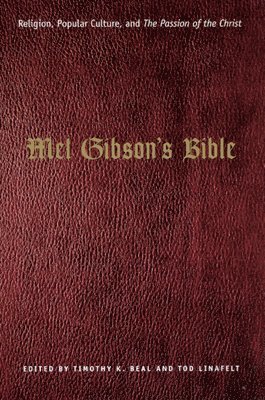
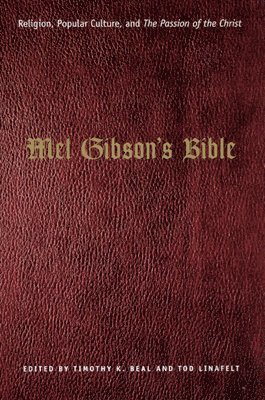
Mel Gibson's Bible
Religion, Popular Culture, and "The Passion of the Christ"
Inbunden, Engelska, 2005
587 kr
Tillfälligt slut
"The Passion of the Christ" was an extraordinary media event. But the film has also, and more importantly, been a religious phenomenon. Mel Gibson's professed intent was to create not just a cinematic experience but a spiritual one. And he has succeeded for many moviegoers, most notably evangelical Christians, of whom millions have embraced the film as a presentation of Holy Scripture, a twenty-first-century incarnation of the Word. In this volume, biblical scholars Timothy K. Beal and Tod Linafelt - along with an esteemed group of contributors - offer a provocative range of views on "The Passion of the Christ". The book is organized in three parts. The first analyzes the film in terms of its religious foundations, including the Gospels and nonbiblical religious texts: What are the film's literary sources and how does it use them? In what ways does the medium of film require a radically different way of representing gospel narrative? The second group of essays focuses on the ethical and theological implications of the film's presentation of the Christian gospel: What do we make of its representations of female sexuality?What are the implications of focusing on the Passion in terms of atonement rather than social justice? Finally, the third section explores the film as a pop cultural phenomenon: How has the film worked to create a sense of insider status for some and alienated so many others? What can we learn about the religious dimensions of contemporary mass culture from the film's reception? Whether one is inspired or appalled by "The Passion of the Christ", there can be no question that it is a defining moment in the cultural afterlife of the Bible. This volume tries to make sense of that moment and will prove to be a touchstone for adherents and detractors of the film alike.
244 kr
Skickas inom 7-10 vardagar
"The Passion of the Christ" was an extraordinary media event. But the film has also, and more importantly, been a religious phenomenon. Mel Gibson's professed intent was to create not just a cinematic experience but a spiritual one. And he has succeeded for many moviegoers, most notably evangelical Christians, of whom millions have embraced the film as a presentation of Holy Scripture, a twenty-first-century incarnation of the Word. In this volume, biblical scholars Timothy K. Beal and Tod Linafelt - along with an esteemed group of contributors - offer a provocative range of views on "The Passion of the Christ". The book is organized in three parts. The first analyzes the film in terms of its religious foundations, including the Gospels and nonbiblical religious texts: What are the film's literary sources and how does it use them? In what ways does the medium of film require a radically different way of representing gospel narrative? The second group of essays focuses on the ethical and theological implications of the film's presentation of the Christian gospel: What do we make of its representations of female sexuality?What are the implications of focusing on the Passion in terms of atonement rather than social justice? Finally, the third section explores the film as a pop cultural phenomenon: How has the film worked to create a sense of insider status for some and alienated so many others? What can we learn about the religious dimensions of contemporary mass culture from the film's reception? Whether one is inspired or appalled by "The Passion of the Christ", there can be no question that it is a defining moment in the cultural afterlife of the Bible. This volume tries to make sense of that moment and will prove to be a touchstone for adherents and detractors of the film alike.
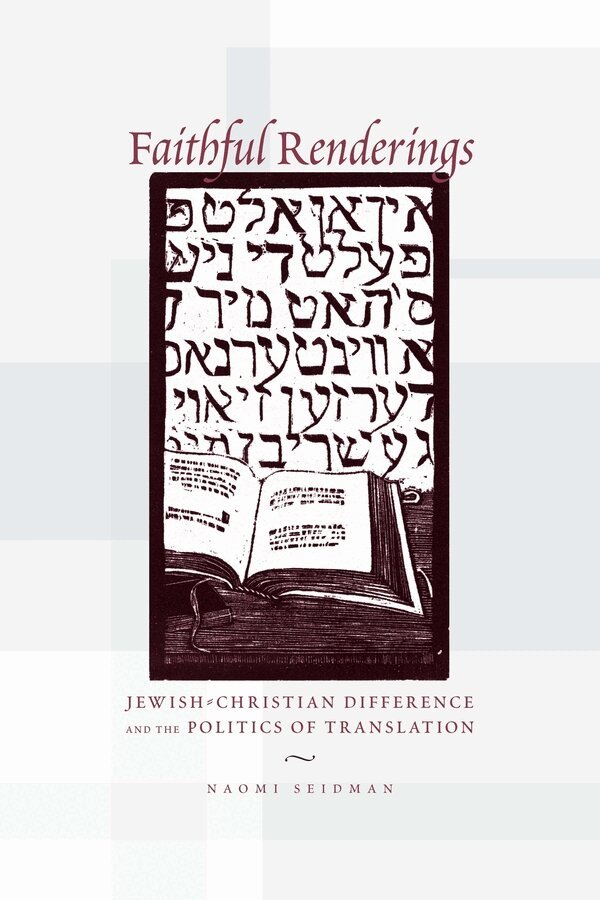
Faithful Renderings
Jewish-Christian Difference and the Politics of Translation
Häftad, Engelska, 2006
284 kr
Skickas inom 7-10 vardagar
Faithful Renderings reads translation history through the lens of Jewish–Christian difference and, conversely, views Jewish–Christian difference as an effect of translation. Subjecting translation to a theological-political analysis, Seidman asks how the charged Jewish–Christian relationship—and more particularly the dependence of Christianity on the texts and translations of a rival religion—has haunted the theory and practice of translation in the West. Bringing together central issues in translation studies with episodes in Jewish–Christian history, Naomi Seidman considers a range of texts, from the Bible to Elie Wiesel’s Night, delving into such controversies as the accuracy of various Bible translations, the medieval use of converts from Judaism to Christianity as translators, the censorship of anti-Christian references in Jewish texts, and the translation of Holocaust testimony. Faithful Renderings ultimately reveals that translation is not a marginal phenomenon but rather a crucial issue for understanding the relations between Jews and Christians and indeed the development of each religious community.