Alembics: Penn Studies in Literature and Science - Böcker
Visar alla böcker i serien Alembics: Penn Studies in Literature and Science. Handla med fri frakt och snabb leverans.
7 produkter
7 produkter
931 kr
Skickas inom 10-15 vardagar
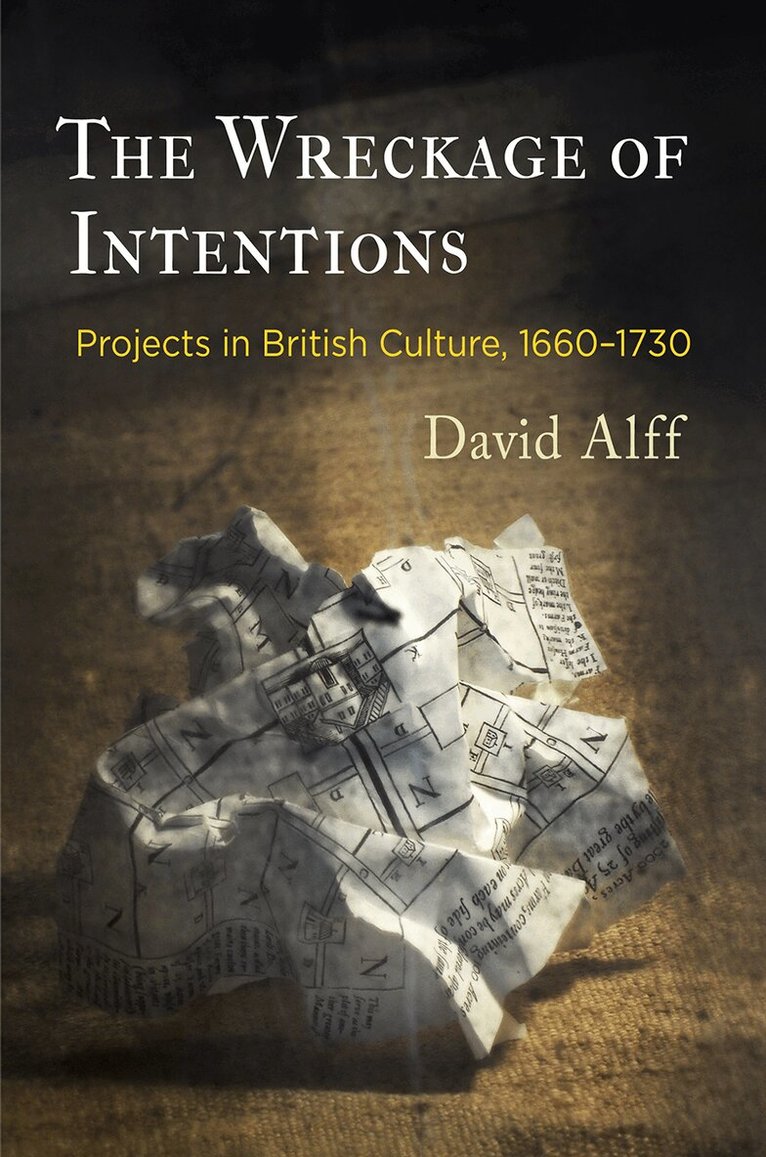
The seventeenth and eighteenth centuries in Britain saw the proposal of so many endeavors called "projects"-a catchphrase for the daring, sometimes dangerous practice of shaping the future-that Daniel Defoe dubbed his era a "Projecting Age." These ideas spanned a wide variety of scientific, technological, and intellectual interventions intended for the betterment of England. But for all the fanfare surrounding them, few such schemes actually materialized, leaving scores of defunct visions, from Defoe's own attempt to farm cats for perfume, to Mary Astell's proposal to charter a college for women, to countless ventures for improving land, streamlining government, and inventing new consumer goods. Taken together, these failed plans form a compelling alternative history of a Britain that might have been.The Wreckage of Intentions offers a comprehensive and critical account of projects, exploring the historical memory surrounding these concrete yet incomplete efforts to advance British society during a period defined by revolutions in finance and agriculture, the rise of experimental science, and the establishment of constitutional monarchy. Using methods of literary analysis, David Alff shows how projects began as written proposals, circulated as print objects, spurred physical undertakings, and provoked responses in the realms of poetry, fiction, and drama. Mapping this process discloses the ways in which eighteenth-century authors applied their faculties of imagination to achieve finite goals and, in so doing, devised new ways of seeing the world through its future potential. Approaching old projects through the language, landscapes, data, and personas they left behind, Alff contends this vision was, and remains, vital to the functions of statecraft, commerce, science, religion, and literature.
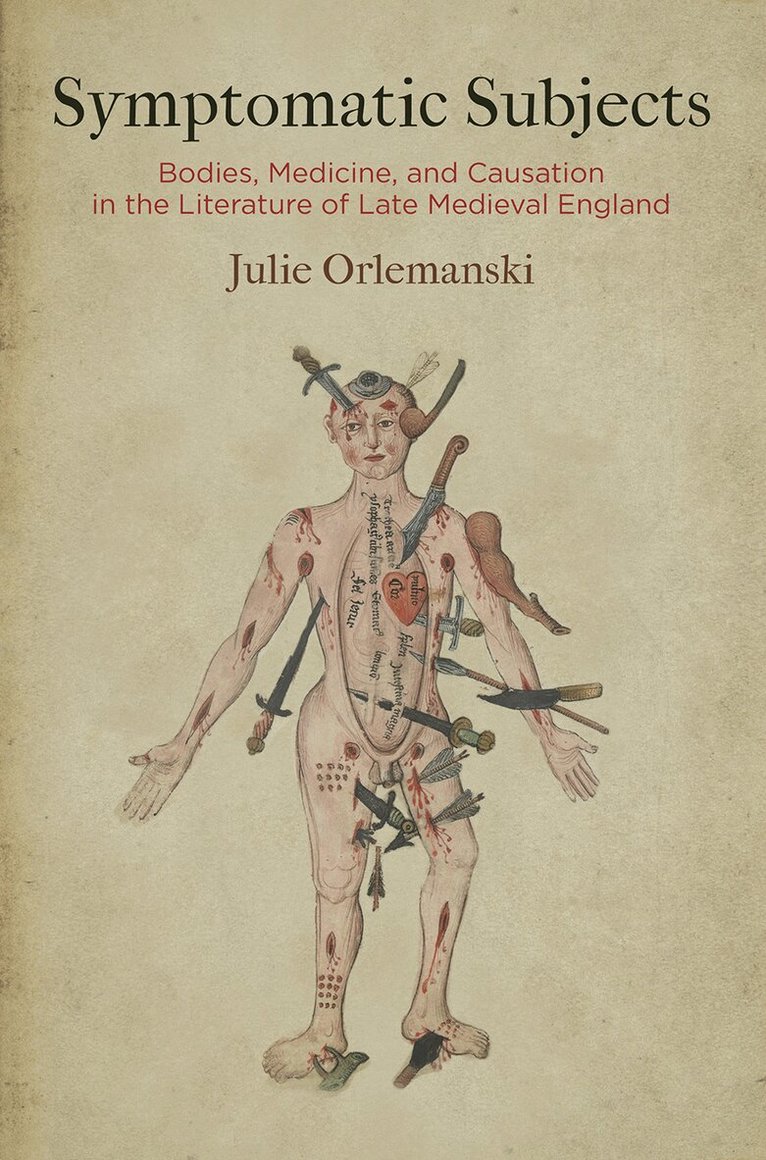
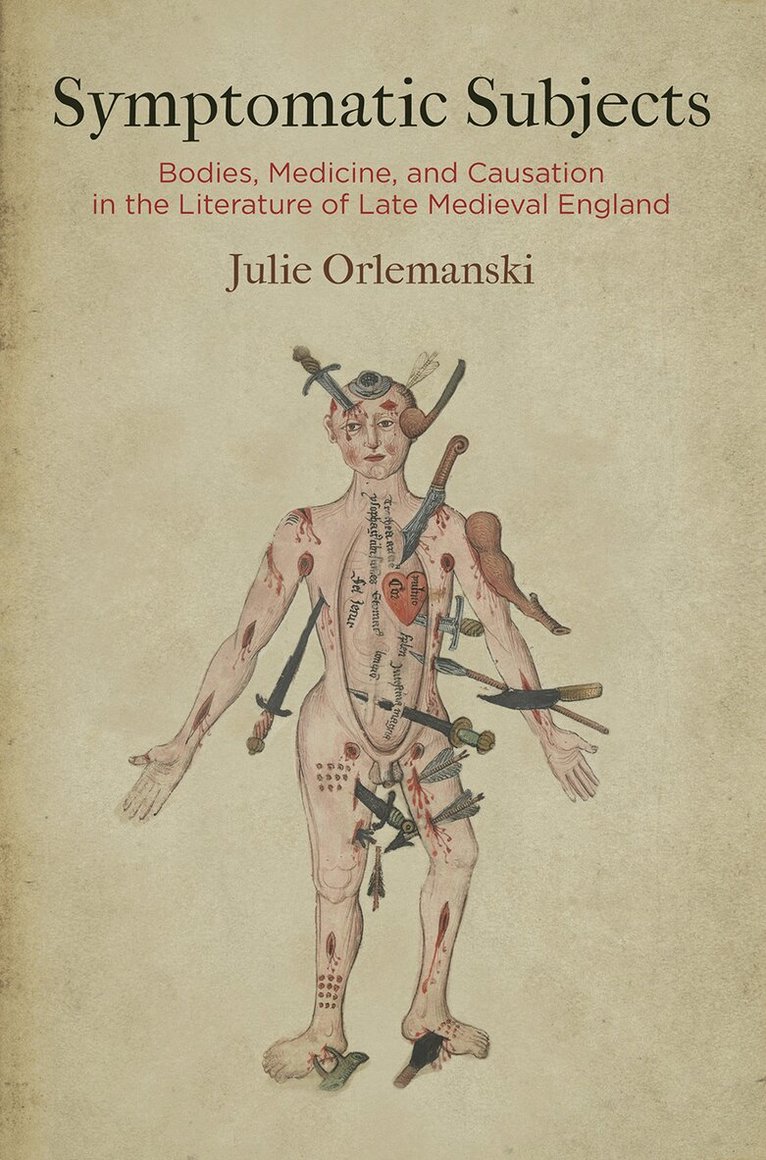
Symptomatic Subjects
Bodies, Medicine, and Causation in the Literature of Late Medieval England
Inbunden, Engelska, 2019
931 kr
Skickas inom 10-15 vardagar
In the period just prior to medicine's modernity-before the rise of Renaissance anatomy, the centralized regulation of medical practice, and the valorization of scientific empiricism-England was the scene of a remarkable upsurge in medical writing. Between the arrival of the Black Death in 1348 and the emergence of printed English books a century and a quarter later, thousands of discrete medical texts were copied, translated, and composed, largely for readers outside universities. These widely varied texts shared a model of a universe crisscrossed with physical forces and a picture of the human body as a changeable, composite thing, tuned materially to the world's vicissitudes. According to Julie Orlemanski, when writers like Geoffrey Chaucer, Robert Henryson, Thomas Hoccleve, and Margery Kempe drew on the discourse of phisik-the language of humors and complexions, leprous pustules and love sickness, regimen and pharmacopeia-they did so to chart new circuits of legibility between physiology and personhood.Orlemanski explores the texts of her vernacular writers to show how they deployed the rich terminology of embodiment and its ailments to portray symptomatic figures who struggled to control both their bodies and the interpretations that gave their bodies meaning. As medical paradigms mingled with penitential, miraculous, and socially symbolic systems, these texts demanded that a growing number of readers negotiate the conflicting claims of material causation, intentional action, and divine power. Examining both the medical writings of late medieval England and the narrative and poetic works that responded to them, Symptomatic Subjects illuminates the period's conflicts over who had the authority to construe bodily signs and what embodiment could be made to mean.
736 kr
Skickas inom 7-10 vardagar
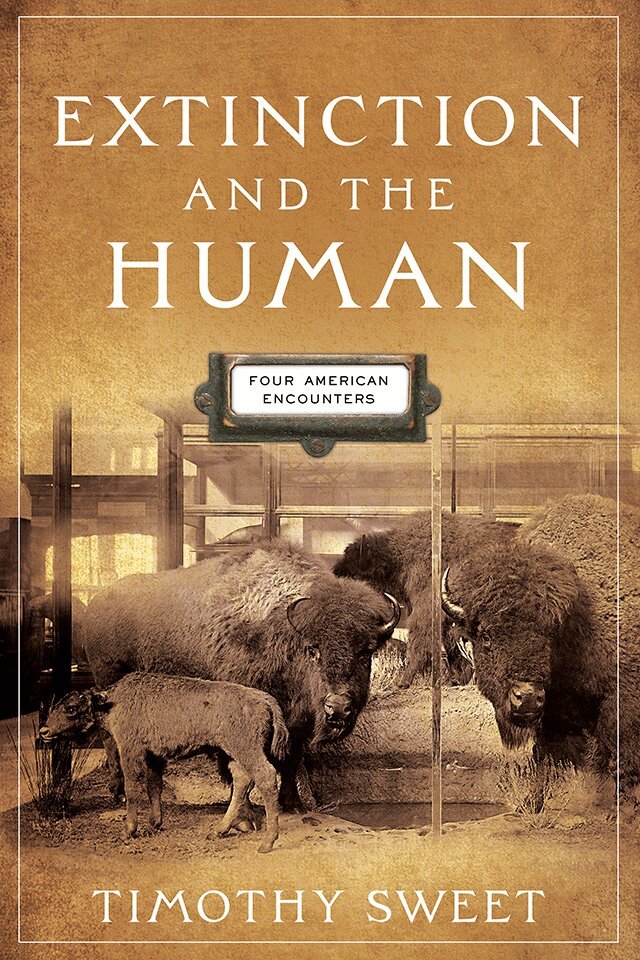
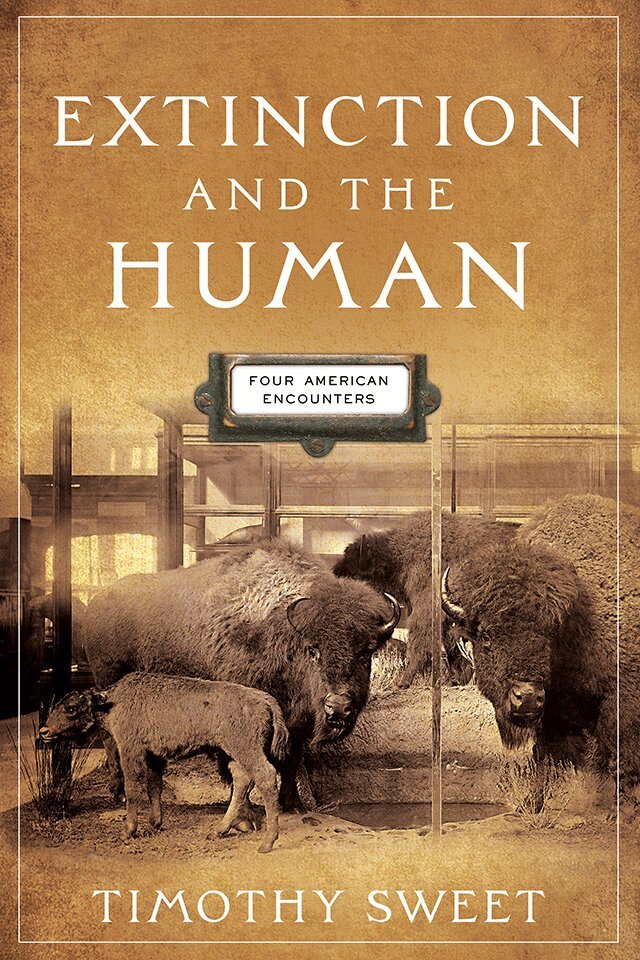
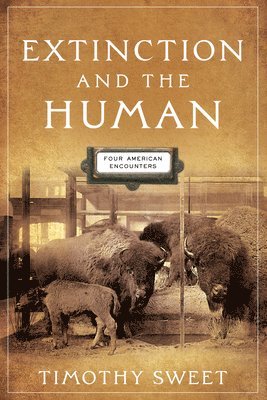
The Americas have been the site of two distinct waves of human migration, each associated with human-caused extinctions. The first occurred during the late Pleistocene era, some ten to thirty thousand years ago; the other began during the time of European settler-colonization and continues to this day.In Extinction and the Human Timothy Sweet ponders the realities of animal extinction and endangerment and the often divergent Native American and Euro-American narratives that surround them. He focuses especially on the force of human impact on megafauna-mammoths, whales, and the North American bison-beginning with the moments that these species' extinction or endangerment began to generate significant print archives: transcriptions of traditional Indigenous oral narratives, historical and scientific accounts, and literary narratives by Indigenous American and Euro-American authors. "If the Sixth Extinction is a hyperobject, an event so massively distributed in space and time that it cannot be experienced directly," he writes, "these cases of particular megafauna have nevertheless consistently commanded our focus and attention. They form a starting point for a coherent, approachable history."Reflecting on questions of agency, responsibility, and moral assessment, Sweet engages with the consequences of thinking of humans as fundamentally separate from the rest of the natural world. He investigates stories of a lost race of giants at the time of the first encounters between Europeans and Indigenous Americans; culturally distinct ways of understanding the extinction of the mammoths; the impact of the Euro-American whaling industry and the controversial revitalization of Native American whaling traditions; and the bison's near-extermination at the hands of white market hunters and today's Euro-American and Native American efforts on behalf of the animal's preservation. He reflects on humans' relations with animals through models of divine preservation, competitive extermination, evolutionary determination, biophilia, and treaties with animals. Ultimately, he argues, it is the critical assessment of ideas of human exceptionalism that provides a necessary counterpoint both to apologies for human mastery over nature and deep ecology's attempts to erase the human.
796 kr
Skickas inom 7-10 vardagar
Is plot a line, an arc, or a shape? None of these. Rather than thinking of plot as a sequence of events or actions put into place solely through human agency against the backdrop of setting, this book questions why we should distinguish between plot and setting—and indeed, whether we can make such a distinction. After all, plot, Yoon Sun Lee contends, cannot be disentangled from the material setting in which it takes place.In The Natural Laws of Plot, Lee connects the history of the novel and the history of science to show how plot in the realist novel is given shape by the characteristics of the physical world—and how in turn, plot serves as the avenue through which the realist novel participates in the same lines of inquiry about the world as pursued by the natural and physical sciences. Lee argues that the novel emerges and evolves in tandem with the development of scientific practices and concepts in eighteenth- and nineteenth-century Europe to investigate the idea of a unified and objective world. Drawing on readings from Defoe, Austen, Scott, and many others, Lee demonstrates how bodies, human and non-human, behave according to laws that are built into worlds by plot, and how they are subject to causes and consequences that can occur independently of individual action, social forces, or metaphysical destiny. This interest in representing and exploring how things happen sets the novel apart from other literary genres, and makes the history of science integral to the understanding of the history and theory of the novel, and of narrative.Plot, Lee shows us, is immersive and powerful, because it satisfies our wish to know how things happen in a coherent, objective, and possibly real world.
808 kr
Skickas inom 10-15 vardagar
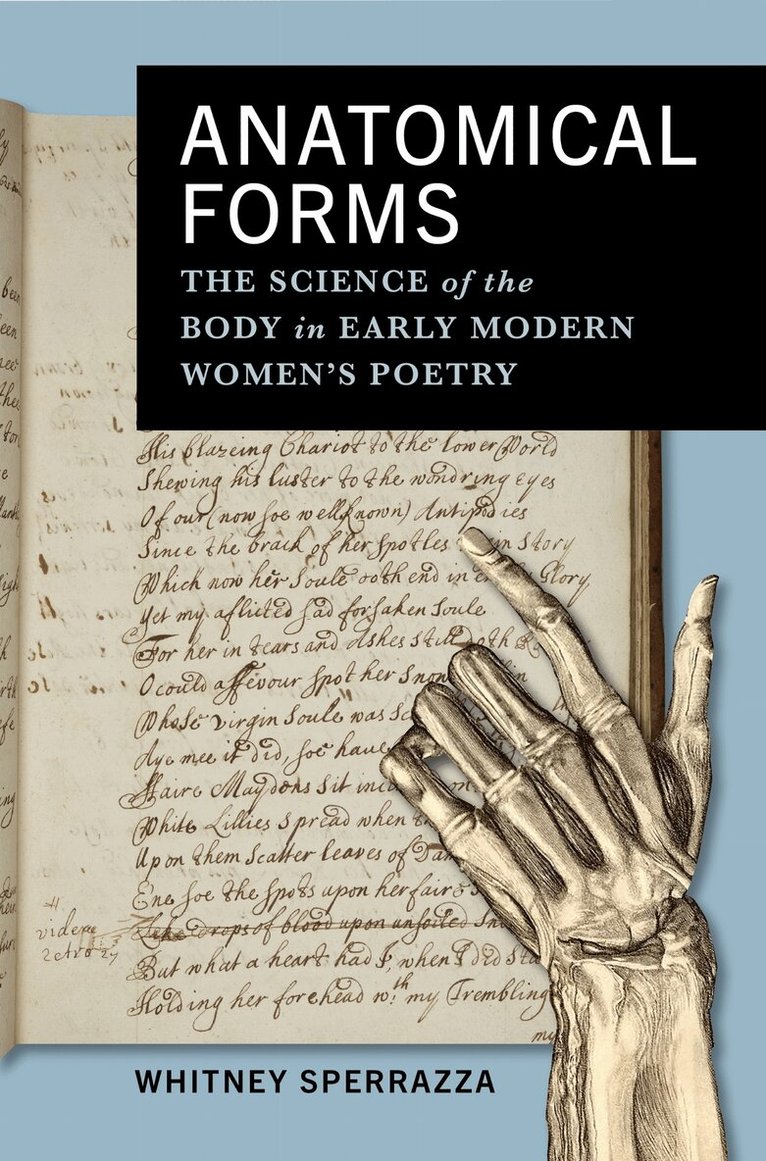
Demonstrates how early modern women writers such as Margaret Cavendish and Hester Pulter wielded poetics as a tool for scientific workAnatomical Forms excavates the shared material practices of women's poetic work and anatomical study in early modern England. Asserting that poetry is a dimensional technology, Whitney Sperrazza demonstrates how women writers wielded poetics as a tool for scientific work in order to explore and challenge rapid developments in anatomy and physiology.In the sixteenth and seventeenth centuries, anatomists were actively exploring the best ways to represent bodies in texts—to translate the work of the dissection room into the pages of books. When we recognize Renaissance anatomy as fundamentally a book-making project, Sperrazza insists, we find a complex and expansive history of anatomy in the pages of women's poetry. Women poets have long been absent from histories of literature and science, but by shifting our focus from content to form, Sperrazza reveals complex engagements with questions on corpse preservation, dissection, obstetrics and gynecology, and skin theory in the poetry of Margaret Cavendish, Aemilia Lanyer, Mary Wroth, Mary Sidney Herbert, and Hester Pulter.Through close formal analysis and original research on early modern anatomy treatises, Anatomical Forms weaves together critical conversations in poetics, book history, the history of science, and women's writing. Sperrazza challenges her readers to imagine science differently—to understand that science might not always look like we expect it to look—and, in the process, brings into focus a feminist history of poetic form centered on material practice.
362 kr
Skickas inom 10-15 vardagar
A reflection on the realities of animal extinction and endangerment, focusing especially on the force of human impact on megafauna—mammoths, whales, and the North American bisonThe Americas have been the site of two distinct waves of human migration, each associated with human-caused extinctions. The first occurred during the late Pleistocene era, some ten to thirty thousand years ago; the other began during the time of European settler-colonization and continues to this day.In Extinction and the Human Timothy Sweet ponders the realities of animal extinction and endangerment and the often divergent Native American and Euro-American narratives that surround them. He focuses especially on the force of human impact on megafauna—mammoths, whales, and the North American bison—beginning with the moments that these species' extinction or endangerment began to generate significant print archives: transcriptions of traditional Indigenous oral narratives, historical and scientific accounts, and literary narratives by Indigenous American and Euro-American authors. "If the Sixth Extinction is a hyperobject, an event so massively distributed in space and time that it cannot be experienced directly," he writes, "these cases of particular megafauna have nevertheless consistently commanded our focus and attention. They form a starting point for a coherent, approachable history."Reflecting on questions of agency, responsibility, and moral assessment, Sweet engages with the consequences of thinking of humans as fundamentally separate from the rest of the natural world. He investigates stories of a lost race of giants at the time of the first encounters between Europeans and Indigenous Americans; culturally distinct ways of understanding the extinction of the mammoths; the impact of the Euro-American whaling industry and the controversial revitalization of Native American whaling traditions; and the bison's near-extermination at the hands of white market hunters and today's Euro-American and Native American efforts on behalf of the animal's preservation. He reflects on humans' relations with animals through models of divine preservation, competitive extermination, evolutionary determination, biophilia, and treaties with animals. Ultimately, he argues, it is the critical assessment of ideas of human exceptionalism that provides a necessary counterpoint both to apologies for human mastery over nature and deep ecology's attempts to erase the human.
1 021 kr
Kommande