American Childhoods Series - Böcker
Visar alla böcker i serien American Childhoods Series. Handla med fri frakt och snabb leverans.
4 produkter
4 produkter
282 kr
Skickas inom 10-15 vardagar
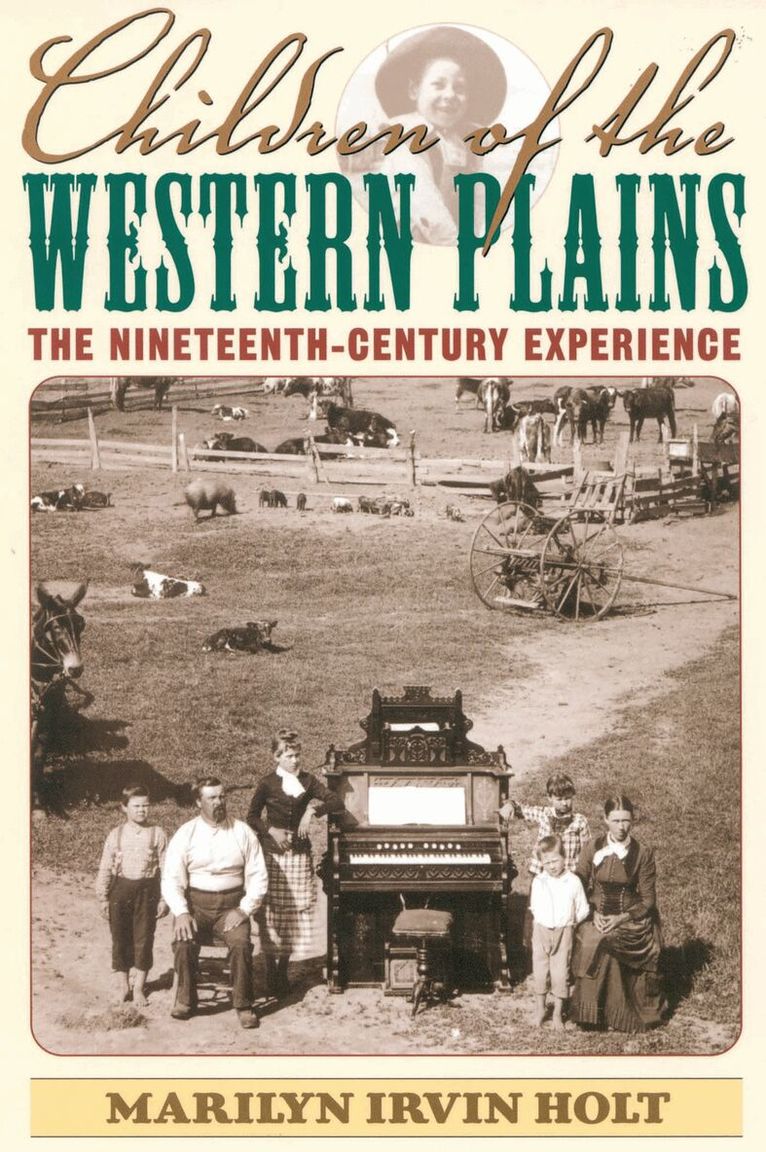
On December 7, 1828, Lewis Bissell Dougherty was born at Cantonment Leavenworth, the military post of the Missouri River. For the rest of his life, Dougherty carried a footnote to his name: he was one of the first white children to be born in Kansas. These "first" children came to be celebrated as white America's first steps onto the Western frontier. In Children of the Western Plains, Marilyn Holt rescues the experience of children from the usual adult perspectives on Western history. Her book is the first in a new series that will emphasize the experience of children during different times and at different locales in the American past. The books will be abundantly illustrated with black-and-white photographs and drawings. They will take advantage of primary source materials, reminiscences, documents, and secondary works in telling the story of American children throughout the nation's history. In Ms. Holt's book, she explores what life was like for youngsters who lived on the Great Plains in nineteenth-century frontier life. She is especially interested in how they were raised, how they were influenced by their environment, and what sort of independence they experienced while growing up. Her chapters address a breadth of experiences and perceptions: why families came to the Great Plains and where they decided to settle; how families and communities were organized for education, work, and play; how health care, accidents, and mortality affected childhoods; and what children experienced outside the home. As much as possible, she lets the children speak for themselves. This is their story. With 25 black-and-white photographs.
282 kr
Skickas inom 10-15 vardagar
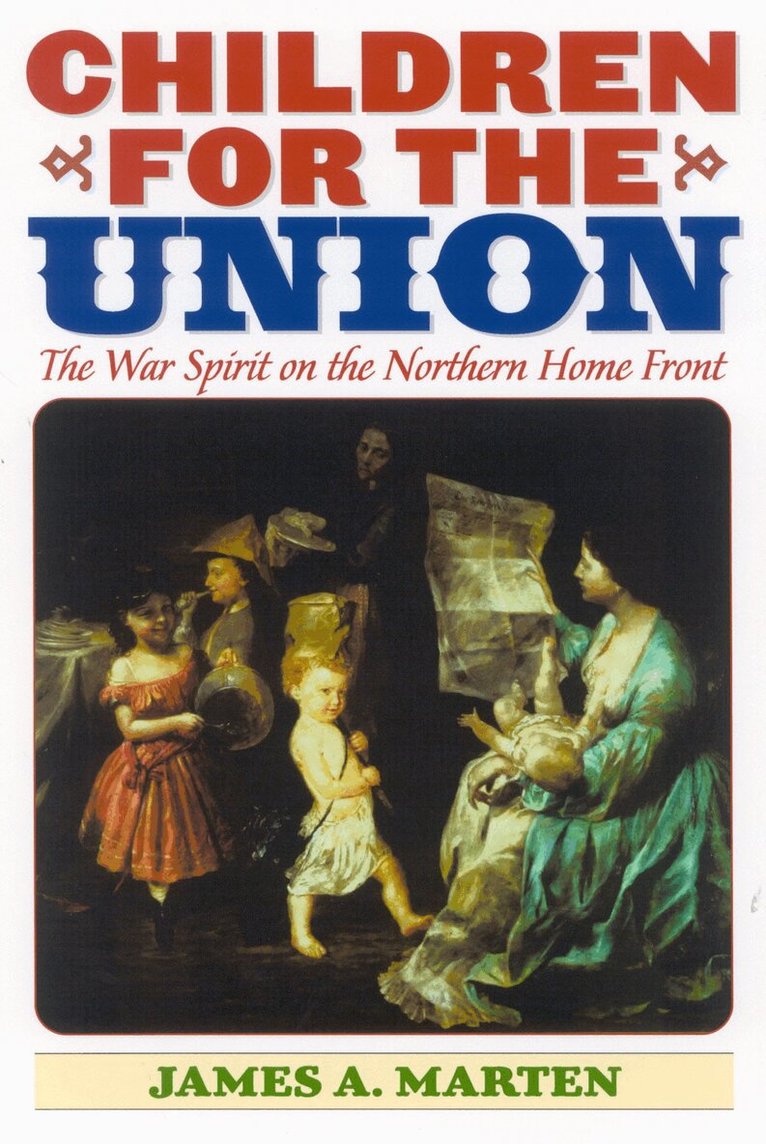
The Civil War influenced virtually every aspect of children's lives, and in turn they eagerly incorporated the experience of war into their daily assumptions and activities. In this new contribution to the American Childhoods series, James A. Marten places the experiences of children living in the North during the Civil War into the larger contexts of economic, political, and cultural developments during the nineteenth century. On the home front, children became almost full-fledged members of their communities in their support of the war effort. They left school to replace absent men on farms and in factories, helped raise funds for hospitals and other soldiers' causes, and volunteered to knit socks, pick lint, and perform other necessary duties. Even as families were torn apart by the war, Mr. Marten notes, family ties grew stronger as Union soldiers filled their letters with love and advice for their children. He shows how the war brought writers for children to challenge the pacifism reflected in antebellum literature and instead to promote controversial political viewpoints such as abolitionism and to support the Union's military action. Indeed, Northern children's lives were militarized as never before, from the toys and games and stories that were overwhelmed by images of warfare and pro-Union ideals to actual military service by under-age soldiers and drummer boys. Both heroes and casualties, drummer boys in fact became potent symbols of the Northern war effort and the subject of countless poems and articles, at least temporarily altering perceptions of proper roles for children and youth in American society. As adults looking back, Northern children saw the war as a great adventure or a turning point in their lives. Some mourned lost fathers or relatives; others mourned lost childhoods. Children for the Union opens a new window on the impact of the war and shows that the youngest Americans were inevitable and enthusiastic participants in the nation's worst crisis. Abundantly illustrated.
213 kr
Skickas inom 10-15 vardagar
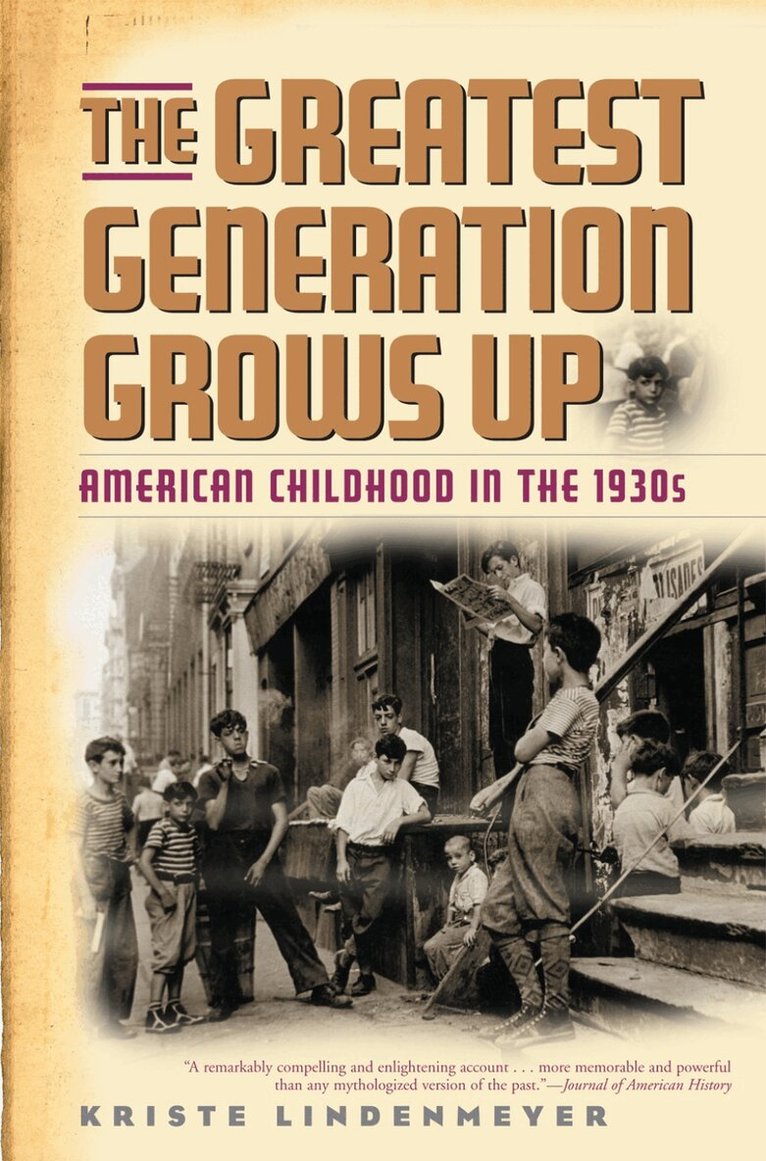
What was it like growing up in the Great Depression, and how did America's youngest citizens contribute to the history of that fateful decade? In The Greatest Generation Grows Up, Kriste Lindenmeyer shows that the experiences of depression-era children help us understand the course of the 1930s as well as the history of American childhood. For the first time, she notes, federal policy extended childhood dependence through the teen years while cultural changes reinforced this ideal of modern childhood. Grade-based grammar schools and high schools expanded rapidly, strengthening age-based distinctions among children and segregating them further from the world of adults. Radio broadcasters, filmmakers, and manufacturers began to market their products directly to children and teens, powerfully linking consumerism and modern childhood. In all, the thirties experience worked to confer greater identity on American children, and Ms. Lindenmeyer's story provides essential background for understanding the legacy of those men and women whom Tom Brokaw has called "America's greatest generation." While many children suffered terribly during these years—and are remembered vividly in the Farm Security Administration's stunning photographs of the era—Ms. Lindenmeyer argues that an exclusive focus on those who were ill-housed, ill-fed, and ill-clothed neglects the contributions and widely varied experiences of American youngsters. The decade's important changes touched the lives of all children and teenagers. By 1940, the image of an idyllic modern childhood had been strengthened in law and confirmed in culture by the depression years. With 21 black-and-white illustrations.
292 kr
Skickas inom 7-10 vardagar
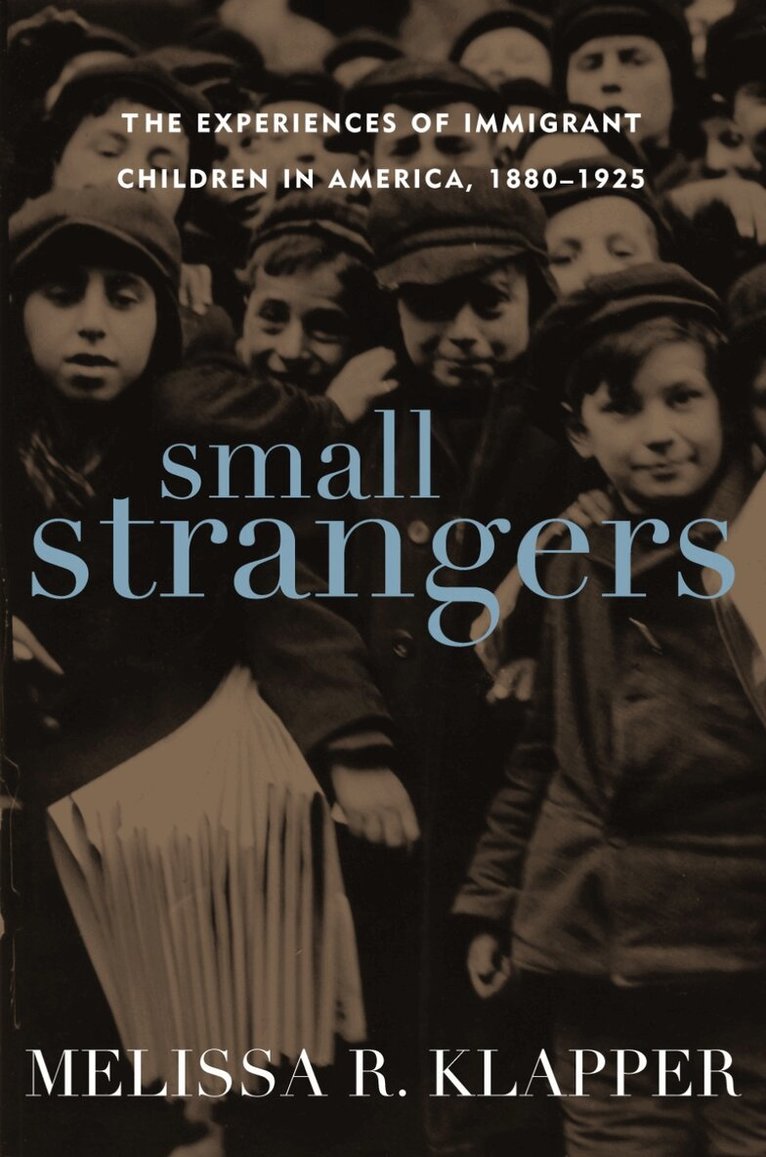
Children are the largely neglected players in the great drama of American immigration. In one of history's most remarkable movements of people across national borders, almost twenty-five million immigrants came to the United States in the late nineteenth and early twentieth centuries—from Mexico, Japan, and Canada as well as the more common embarkation points of southern and eastern Europe. Many of them were children. Together with the American-born children of immigrants, they made up a significant part of turn-of-the-century U.S. society. Small Strangers recounts and interprets their varied experiences to illustrate how immigration, urbanization, and industrialization—all related processes—molded modern America. Growing up in crowded tenements, insular mill towns, rural ethnic enclaves, or middle-class homes, as they came of age they found themselves increasingly caught between Old World expectations and New World demands. The encounters of these children with ethnic heritage, American values, and mass culture helped shape the twentieth century in a United States still known symbolically around the world as a nation of immigrants.