American Pres Reference Series - Böcker
Visar alla böcker i serien American Pres Reference Series. Handla med fri frakt och snabb leverans.
6 produkter
6 produkter
706 kr
Skickas inom 3-6 vardagar
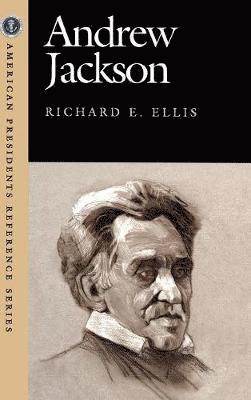
Each volume in the American Presidents Reference Series is organized around an individual presidency and gathers a host of biographical, analytical, and primary source historical material that will analyze the presidency and bring the president, his administration, and his times to life. The series focuses on key moments in U.S. political history as seen through the eyes of the most influential presidents to take the oath of office. Unique headnotes provide the context to data, tables and excerpted primary source documents.Andrew Jackson, born in 1767, attained the rank of major general. Through his military exploits during the war of 1812, Jackson was nicknamed "Old Hickory." His victory in the Battle of New Orleans helped launch his political career. Although Senator Jackson won the most electoral votes in the 1824 presidential election, the race was thrown in the House of Representatives where John Quincy Adams prevailed. Four years later he defeated Adams and became the seventh president of the United States. He was the first westerner to be elected by the common man and not the elite, and the first to be a target of a presidential assassin. With the turmoil of the times, Jackson was confronted with sectional politics, nullification threats, and the responsibility of removing Native Americans from their ancestral homes. Jackson died in 1845.This new volume on the Andrew Jackson presidency will cover: Economic developmentThe new Democratic PartyNative AmericansThe Bank of the United StatesSectionalismHis military careerPersonal scandal
706 kr
Skickas inom 3-6 vardagar
Each volume in the American Presidents Reference Series is organized around an individual presidency and gathers a host of biographical, analytical, and primary source historical material that will analyze the presidency and bring the president, his administration, and his times to life. The series focuses on key moments in U.S. political history as seen through the eyes of the most influential presidents to take the oath of office. Unique headnotes provide the context to data, tables and excerpted primary source documents. Lyndon Baines Johnson was born in 1908. He was first elected to Congress in 1937 and reelected twice. When he set his sights on the U.S. Senate in 1940 he was defeated. Following the Japanese attack on Pearl Harbor, Johnson was the first member of the House to volunteer for active military duty. In 1949 he became a U.S. Senator and was elected its majority leader in 1955. Johnson sought the Democratic presidential nomination in 1960, but lost to John F. Kennedy, who would offer him the vice president spot. In a close election, the Kennedy/Johnson ticket prevailed over Nixon/Lodge. In 1963 Vice President Johnson was part of the motorcade traveling through Dallas, Texas when Lee Harvey Oswald assassinated Kennedy. Johnson, while aboard Air Force One, was sworn in as 36th president of the United States. His administration crafted and oversaw several great moments in American history, including civil rights efforts, the Great Society, and technological advances. These events were, to some degree, overshadowed by the poor economy, civil unrest, and the U.S involvement in the Vietnam War. Troubled by his rapidly declining public approval, he did not seek re-election. This new volume on the presidency of Lyndon Baines Johnson will cover: His political skills Replacing JFK The Vietnam War The Economy The Great Society Civil Rights Technology and Space
706 kr
Skickas inom 3-6 vardagar
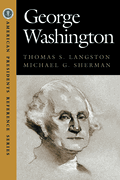
Each volume in the new American Presidents Reference Series is organized around an individual presidency and gathers a host of biographical, analytical, and primary source historical material that will analyze the presidency and bring the president, his administration, and his times to life. The series focuses on key moments in U.S. political history as seen through the eyes of the most influential presidents to take the oath of office. Unique headnotes provide the context to data, tables and excerpted primary source documents. George Washington, born in 1732, was the first president under the Constitution of the United States. In 1753 he began his military career as a major in the Virginia militia. In 1755 he was appointed aide-de-camp to Major General Edward Braddock, under whom he fought in the French and Indian War. Three years later Washington resigned his post to seek election to the Virginia House of Burgesses, where he served for nine years. He was also a Virginia delegate to the First Continental Convention. On June 16, 1775, Washington accepted a commission as the commanding general of the Continental army. His skills as a multifaceted leader military, political, inspirational eventually led to the British defeat, the signing of the Treaty of Paris in September 1783, and Washington′s retirement. However, in 1787 he agreed to serve as a delegate to the constitutional convention. Presidential electors unanimously elected Washington president in 1789.Key events during his two terms of office were the enactment of the Bill of Rights, Washington′s commitment to neutrality in his foreign policies, and the ongoing debate about the role of the national government as championed by ardent opponents in Washington′s administration: the Democratic-Republican Secretary of State Thomas Jefferson and the Federalist Secretary of the Treasury Alexander Hamilton. Washington established the tradition of the two-term presidency when he retired. George Washington died on December 14, 1799.This new volume of the presidency of George Washington will cover: His military exploits before, during, and after the American Revolution,His inspirational role during the constitutional convention,The Jeffersonian and Hamiltonian political perspectives,Foreign affairs, American neutrality, and the Jay Treaty of 1795,Washington′s legacy on American democracy.
706 kr
Skickas inom 3-6 vardagar
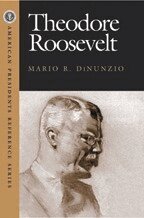
Each volume in the new American Presidents Reference Series is organized around an individual presidency and gathers a host of biographical, analytical, and primary source historical material that will analyze the presidency and bring the president, his administration, and his times to life. The series focuses on key moments in U.S. political history as seen through the eyes of the most influential presidents to take the oath of office. Unique headnotes provide the context to data, tables and excerpted primary source documents. Theodore Roosevelt was born on October 27, 1858. He was elected to the New York state legislature in 1881. Following the death of his first wife, Alice Roosevelt, in February 1884, Roosevelt left politics to manage a cattle ranch in the Dakota Territory. In 1886 he returned to New York City, ran unsuccessfully for mayor, and married Edith Kermit Carow. Between 1889 and 1895 Roosevelt headed the U.S. Civil Service Commission. From 1895 to 1897 he served as president of the Police Commission in New York City. In 1897 President William McKinley appointed him assistant secretary of the navy. He resigned to serve in the military during the war against Spain. As lieutenant colonel he organized and led the Rough Riders, a regiment of cavalry, in Cuba. In 1889 Roosevelt narrowly won election as the New York State governor. The following year he accepted the Republican Party nomination as vice president on the McKinley reelection ticket. The ticket was victorious. On September 14, 1901, President McKinley died after being shot by anarchist Leon Czolgosz. At age forty-two Roosevelt became the youngest person to serve as president. Key policies and events during the Roosevelt administration were his antitrust efforts (culminating in the landmark 1904 Supreme Court decision Northern Securities Co. v. United States), ending the 1902 coal miners strike, acquiring the land to build the Panama Canal, introducing numerous pieces of reform legislation, and mediating the end to the Russo-Japanese War (an effort that won him the Nobel Peace Prize). In 1908 Roosevelt endorsed the election of his friend and secretary of war, William Howard Taft, to succeed him, but by 1910 he distanced himself from Taft. In 1912 Roosevelt unsuccessfully sought the Republican Party nomination to oust Taft. The Bull Moose Party, a third party of Republican progressives, was created and nominated Roosevelt. While campaigning, Roosevelt was barely sidetracked when he was shot in the chest. Splitting the Republican Party vote, Roosevelt finished in second place to Woodrow Wilson (Taft finished in third). On January 6, 1919, Theodore Roosevelt died.This new volume on the presidency of Theodore Roosevelt will cover his hard-charging personality,reformist, progressive domestic policies,environmental policies,role in the Republican and Bull Moose Parties,relationship with Congress, the Supreme Court, and the media,allegedly imperialistic foreign policies.
706 kr
Skickas inom 3-6 vardagar
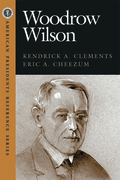
Each volume in the new American Presidents Reference Series is organized around an individual presidency and gathers a host of biographical, analytical, and primary source historical material that will analyze the presidency and bring the president, his administration, and his times to life. The series focuses on key moments in U.S. political history as seen through the eyes of the most influential presidents to take the oath of office. Unique headnotes provide the context to data, tables and excerpted primary source documents.Woodrow Wilson was born on December 28, 1856. He taught history and later political science at Bryn Mawr College, Wesleyan University, and Princeton University. In 1902 he was unanimously elected as president of Princeton. In 1910 he was elected governor of New Jersey. On the forty-sixth ballot at the 1912 Democratic National Convention, Wilson was nominated as the party′s presidential candidate. Benefiting from Theodore Roosevelt′s ticket-splitting third-party nomination, Wilson was elected the twenty-eighth president of the United States. Key events during the Wilson administration include the reduction of the tariff, enactment of the federal reserve system, creation of the Federal Trade Commission, his narrow reelection against Charles Evans Hughes, Wilson′s Fourteen Points, and the League of Nations. On October 2, 1919, Wilson suffered a stroke, which left him incapacitated. Historians have concluded that his wife, Edith, conducted much of the affairs of state on behalf of the invalid Wilson. Woodrow Wilson died on February 3, 1924. This new volume on the presidency of Woodrow Wilson will cover his reformist-natured domestic policies,World War I, the Fourteen Points, and the League of Nations,the role of Edith Bolling Wilson in the Wilson presidency.
706 kr
Skickas inom 3-6 vardagar
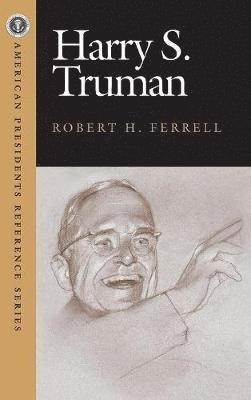
Each volume in the new American Presidents Reference Series is organized around an individual presidency and gathers a host of biographical, analytical, and primary source historical material that will analyze the presidency and bring the president, his administration, and his times to life. The series focuses on key moments in U.S. political history as seen through the eyes of the most influential presidents to take the oath of office. Unique headnotes provide the context to data, tables and excerpted primary source documents.Harry Truman was born on May 8, 1884. He served with distinction during World War I as a commander of an artillery battery, and he ultimately attained the rank of major. In 1922, with the support of political boss Tom Pendergast, Truman was elected as a county judge. He lost reelection, but then won again as presiding judge in 1926 and 1930. In 1934 Truman was elected to the U.S. Senate, where he supported President Franklin Roosevelt′s New Deal policies and entry into World War II. When Vice President Henry Wallace alienated Democratic Party leaders, Truman was nominated for vice president. On April 12, 1945, eighty-two days into Truman′s vice presidency, Roosevelt died in Warm Springs, Georgia. At the age of sixty-one, Truman was sworn in as the thirty-third president of the United States. Key events during the Truman presidency include victory in World War II and Truman′s decision to drop atomic bombs on Japan, the start of the cold war with the Soviet Union and its eastern European satellites, the Marshall Plan, the Berlin airlift, the Fair Deal, price-control legislation, and the McCarthy hearings. In March 1952 Truman announced that he would not seek reelection. Harry S. Truman died on December 26, 1972.This new volume on the presidency of Harry S. Truman will cover campaigns, elections, and the Pendergast connection,Senator Truman, particularly his chairmanship of the Special Committee to Investigate the National Defense Program,FDR, World War II, and the atomic bomb decision,Joseph McCarthy, the cold war, and the police action in Korea,civil rights.