American Presidents Series - Böcker
Visar alla böcker i serien American Presidents Series. Handla med fri frakt och snabb leverans.
10 produkter
10 produkter
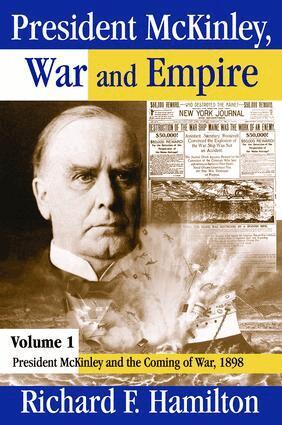
President McKinley, War and Empire
President McKinley and the Coming of War, 1898
Inbunden, Engelska, 2006
2 159 kr
Skickas inom 10-15 vardagar
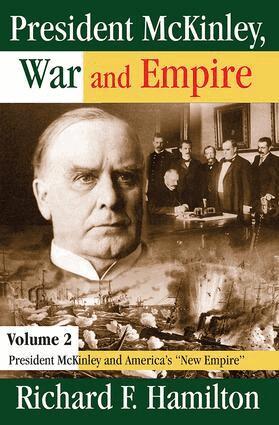
The "progressive" reading of history focuses on two major antecedents for the origins of the United States' 1898 war with Spain: the 1896 presidential election and the Hearst-Pulitzer press war that, reportedly, generated an irresistible clamor from an "aroused public." Underlying those narratives are two very different theoretical frameworks: a class-dominance view and that of the mass society. Volume 1 of President McKinley, War and Empire assesses the adequacy of those readings.In the 1896 election the Republicans, led by William McKinley, were challenged by William Jennings Bryan, a radical and an inflationist, who had defeated the conservative leaders of the Democratic Party. The Bryanites portrayed the 1896 election as a struggle between "Wall Street" and "the people." McKinley was portrayed as a docile, pliable figure whose campaign was directed by an adept Ohio business magnate, Mark Hanna. The McKinley victory meant that "big business" was now "in control."The Cuban insurgency, begun in 1895, gained attention and support from the American newspapers. This began with a circulation war in New York City, with Hearst and Pulitzer publishing "sensational" reports about the struggle in Cuba. The resulting public clamor, it is said, overwhelmed the members of the legislative and executive branches. McKinley and his advisors fended off those demands as best they could but, following the sinking of the Maine, he conceded and asked Congress to authorize intervention.This work provides an original assessment of those long-standing claims, the basic elements of the progressive history. It reviews McKinley's biography, principally the events leading up to his election victory, including discussion of Hanna's role. It then examines the events leading up to the war. Studies of press content are reviewed and new material is introduced. The work also argues that two other factors were decisive: the efforts of an adept Cuban pressure group and partisan politics. The theoretical implications are explored and an alternative framework, elitism, is argued. The result is a different, a more complex view of the origins of the war.
President McKinley, War and Empire
President McKinley and America's New Empire
Inbunden, Engelska, 2007
2 096 kr
Skickas inom 10-15 vardagar
This second volume of President McKinley, War and Empire assesses five theories that have dominated analysis of modern societies in the last century--liberalism, Marxism, mass society, pluralism, and elitism--in accounting for an aberrant event in American history: the Spanish-American War. President McKinley and the Coming of the War 1898, volume 1 of this definitive history, considered the origins of that war. This second volume is concerned with the war's outcome; the settlement in which the U.S. gained an "empire."The book begins by reviewing various expansionist episodes in U.S. history--some successes, some failures--and by analyzing the complexities, support, and opposition involved in expansionism. It then examines the work of expansionist writers, men said to have "driven" the 1898-99 movement, finding these claims to be questionable.Hamilton assesses McKinley's decision-making in regard to the settlement of the Spanish-American War, including the influences that might have moved him, as well as his own justifications. He then reviews the subsequent achievements: the size and character of the new American "empire;" trade flows the Philippine experience and U.S. efforts in China--supposedly the prime goal of the new imperialism. Many contemporary writers anticipated great possibilities in China, but that "fabled" market remained minuscule throughout the following century. Much American trade continued to be with Western Europe, while the biggest change in U.S. exports went largely unnoticed--Canada became the nation's number one trading partner.In much historical writing, McKinley is portrayed as little more than a "front man" for Mark Hanna, the adept businessman-politician who organized and led his presidential campaign, aided by generous financial contributions from business leaders across the nation. Hanna certainly was a leading figure in McKinley's career, but the assumption that his influence was controlling is not justified, as has been shown in recent research. McKinley was far more than a figurehead easily manipulated by representatives of "the interests."
309 kr
Skickas inom 5-8 vardagar
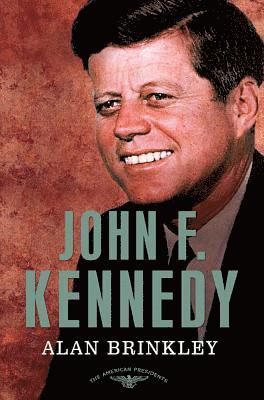
John Fitzgerald Kennedy was a new kind of president. He redefined how Americans came to see the nation's chief executive. He was forty-three when he was inaugurated in 1961 - the youngest man ever elected to the office - and he personified what he called the "New Frontier" as the United States entered the 1960s. But as Alan Brinkley shows in this incisive and lively assessment, the reality of Kennedy's achievements was much more complex than the legend. His brief presidency encountered significant failures - among them the Bay of Pigs fiasco, which cast its shadow on nearly every national-security decision that followed. But Kennedy also had successes, among them the Cuban Missile Crisis and his belated but powerful stand against segregation. Kennedy seemed to live on a knife's edge, moving from one crisis to another - Cuba, Laos, Berlin, Vietnam, Mississippi, Georgia, and Alabama. His controversial public life mirrored his hidden private life. He took risks that would seem reckless and even foolhardy when they emerged from secrecy years later. Kennedy's life, and his violent and sudden death, reshaped our view of the presidency.Brinkley gives us a full picture of the man, his times, and his enduring legacy.
President McKinley, War and Empire
President McKinley and the Coming of War, 1898
Häftad, Engelska, 2017
704 kr
Skickas inom 10-15 vardagar
The "progressive" reading of history focuses on two major antecedents for the origins of the United States' 1898 war with Spain: the 1896 presidential election and the Hearst-Pulitzer press war that, reportedly, generated an irresistible clamor from an "aroused public." Underlying those narratives are two very different theoretical frameworks: a class-dominance view and that of the mass society. Volume 1 of President McKinley, War and Empire assesses the adequacy of those readings.In the 1896 election the Republicans, led by William McKinley, were challenged by William Jennings Bryan, a radical and an inflationist, who had defeated the conservative leaders of the Democratic Party. The Bryanites portrayed the 1896 election as a struggle between "Wall Street" and "the people." McKinley was portrayed as a docile, pliable figure whose campaign was directed by an adept Ohio business magnate, Mark Hanna. The McKinley victory meant that "big business" was now "in control."The Cuban insurgency, begun in 1895, gained attention and support from the American newspapers. This began with a circulation war in New York City, with Hearst and Pulitzer publishing "sensational" reports about the struggle in Cuba. The resulting public clamor, it is said, overwhelmed the members of the legislative and executive branches. McKinley and his advisors fended off those demands as best they could but, following the sinking of the Maine, he conceded and asked Congress to authorize intervention.This work provides an original assessment of those long-standing claims, the basic elements of the progressive history. It reviews McKinley's biography, principally the events leading up to his election victory, including discussion of Hanna's role. It then examines the events leading up to the war. Studies of press content are reviewed and new material is introduced. The work also argues that two other factors were decisive: the efforts of an adept Cuban pressure group and partisan politics. The theoretical implications are explored and an alternative framework, elitism, is argued. The result is a different, a more complex view of the origins of the war.
704 kr
Skickas inom 10-15 vardagar
This second volume of President McKinley, War and Empire assesses five theories that have dominated analysis of modern societies in the last century--liberalism, Marxism, mass society, pluralism, and elitism--in accounting for an aberrant event in American history: the Spanish-American War. President McKinley and the Coming of the War 1898, volume 1 of this definitive history, considered the origins of that war. This second volume is concerned with the war's outcome; the settlement in which the U.S. gained an "empire."The book begins by reviewing various expansionist episodes in U.S. history--some successes, some failures--and by analyzing the complexities, support, and opposition involved in expansionism. It then examines the work of expansionist writers, men said to have "driven" the 1898-99 movement, finding these claims to be questionable.Hamilton assesses McKinley's decision-making in regard to the settlement of the Spanish-American War, including the influences that might have moved him, as well as his own justifications. He then reviews the subsequent achievements: the size and character of the new American "empire;" trade flows the Philippine experience and U.S. efforts in China--supposedly the prime goal of the new imperialism. Many contemporary writers anticipated great possibilities in China, but that "fabled" market remained minuscule throughout the following century. Much American trade continued to be with Western Europe, while the biggest change in U.S. exports went largely unnoticed--Canada became the nation's number one trading partner.In much historical writing, McKinley is portrayed as little more than a "front man" for Mark Hanna, the adept businessman-politician who organized and led his presidential campaign, aided by generous financial contributions from business leaders across the nation. Hanna certainly was a leading figure in McKinley's career, but the assumption that his influence was controlling is not justified, as has been shown in recent research. McKinley was far more than a figurehead easily manipulated by representatives of "the interests."
2 234 kr
Skickas inom 10-15 vardagar
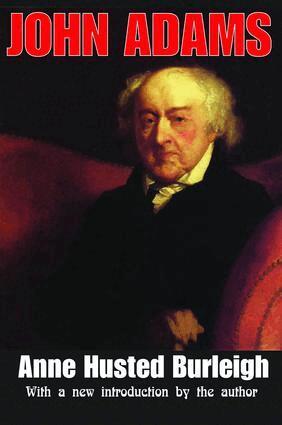
The rare man who can sift the unchanging out of a constantly changing world is a man for the ages. John Adams, philosopher of the Revolution and early America, and participant in many of the major events of that period, strove to find universal patterns in the lives of all men. His life and ideas are as pertinent to our time as they were to his own. We still ponder the nature of the unbreakable bond between liberty and law. As did Adams, we question how to relate the goal of freedom to the authority necessary in political society.Adams viewed man as a being of liberty subject to God's law. Th is colored his answer to the fundamental problem of how to reconcile liberty and law. His solution was not original. It was an answer rooted in the thought of classical Greek, Roman and English political philosophers. Moreover, it was the answer of a lawyer who, by his very profession, viewed man as an historian whose accumulated experience in history tells us about human nature. Because the principles of politics and human nature that he delineated are still relevant, Adams correctly shares a place as one of America's outstanding political thinkers.Burleigh gives us a warm, sensitive study of John Adams in the many roles he played during his eventful life: student, lawyer, polemicist, Founding Father, diplomat, President, husband, father. His own brilliance and the events of the times in which he lived combined to off er him the knowledge and fame he sought. Her new introduction explains our continuing interest in this central figure of the early years of the American Republic.
711 kr
Skickas inom 10-15 vardagar
The rare man who can sift the unchanging out of a constantly changing world is a man for the ages. John Adams, philosopher of the Revolution and early America, and participant in many of the major events of that period, strove to find universal patterns in the lives of all men. His life and ideas are as pertinent to our time as they were to his own. We still ponder the nature of the unbreakable bond between liberty and law. As did Adams, we question how to relate the goal of freedom to the authority necessary in political society.Adams viewed man as a being of liberty subject to God's law. Th is colored his answer to the fundamental problem of how to reconcile liberty and law. His solution was not original. It was an answer rooted in the thought of classical Greek, Roman and English political philosophers. Moreover, it was the answer of a lawyer who, by his very profession, viewed man as an historian whose accumulated experience in history tells us about human nature. Because the principles of politics and human nature that he delineated are still relevant, Adams correctly shares a place as one of America's outstanding political thinkers.Burleigh gives us a warm, sensitive study of John Adams in the many roles he played during his eventful life: student, lawyer, polemicist, Founding Father, diplomat, President, husband, father. His own brilliance and the events of the times in which he lived combined to off er him the knowledge and fame he sought. Her new introduction explains our continuing interest in this central figure of the early years of the American Republic.
2 104 kr
Skickas inom 10-15 vardagar
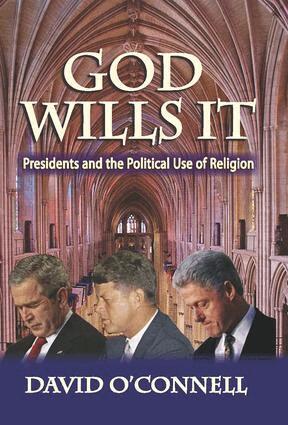
God Wills It is a comprehensive study of presidential religious rhetoric. Using careful analysis of hundreds of transcripts, David O'Connell reveals the hidden strategy behind presidential religious speech. He asks when and why religious language is used, and when it is, whether such language is influential.Case studies explore the religious arguments presidents have made to defend their decisions on issues like defense spending, environmental protection, and presidential scandals. O'Connell provides strong evidence that when religious rhetoric is used public opinion typically goes against the president, the media reacts harshly to his words, and Congress fails to do as he wants. An experimental chapter casts even further doubt on the persuasiveness of religious rhetoric.God Wills It shows that presidents do not talk this way because they want to. Presidents like Jimmy Carter and George H.W. Bush were quite uncomfortable using faith to promote their agendas. They did so because they felt they must. God Wills It shows that even if presidents attempt to call on the deity, the more important question remains: Will God come when they do?
2 167 kr
Skickas inom 10-15 vardagar
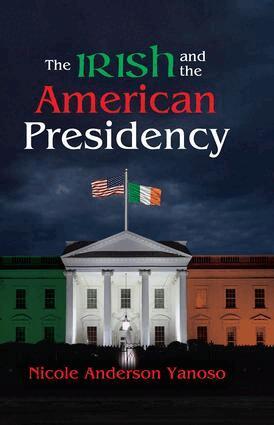
There is a widely held notion that, except for the elections of 1928 and 1960, the Irish have primarily influenced only state and local government. The Irish and the American Presidency reveals that the Irish have had a consistent and noteworthy impact on presidential careers, policies, and elections throughout American history. Using US party systems as an organizational framework, this book examines the various ways that Scots-Irish and Catholic Irish Americans, as well as the Irish who remained in eire, have shaped, altered, and sometimes driven such presidential political factors as party nominations, campaign strategies, elections, and White House policymaking.The Irish seem to be inextricably interwoven into important moments of presidential political history. Yanoso discusses the Scots-Irish participation in the American Revolution, the Whiskey Rebellion, and the War of 1812. She describes President Bill Clinton's successful Good Friday Agreement that brought peace and hope to Northern Ireland. And finally, she assesses the now-common presidential visits to Ireland as a strategy for garnering Irish-American support back home.No previous work has explored the impact of Irish and Irish-American affairs on US presidential politics throughout the entire scope of American history. Readers interested in presidential politics, American history, and/or Irish/Irish-American history are certain to find The Irish and the American Presidency enjoyable, informative, and impactful.
683 kr
Skickas inom 10-15 vardagar
God Wills It is a comprehensive study of presidential religious rhetoric. Using careful analysis of hundreds of transcripts, David O'Connell reveals the hidden strategy behind presidential religious speech. He asks when and why religious language is used, and when it is, whether such language is influential.Case studies explore the religious arguments presidents have made to defend their decisions on issues like defence spending, environmental protection, and presidential scandals. O'Connell provides strong evidence that when religious rhetoric is used public opinion typically goes against the president, the media reacts harshly to his words, and Congress fails to do as he wants. An experimental chapter casts even further doubt on the persuasiveness of religious rhetoric.God Wills It shows that presidents do not talk this way because they want to. Presidents like Jimmy Carter and George H.W. Bush were quite uncomfortable using faith to promote their agendas. They did so because they felt they must. God Wills It shows that even if presidents attempt to call on the deity, the more important question remains: Will God come when they do?