America's National Parks - Böcker
Visar alla böcker i serien America's National Parks. Handla med fri frakt och snabb leverans.
6 produkter
6 produkter
257 kr
Skickas inom 7-10 vardagar
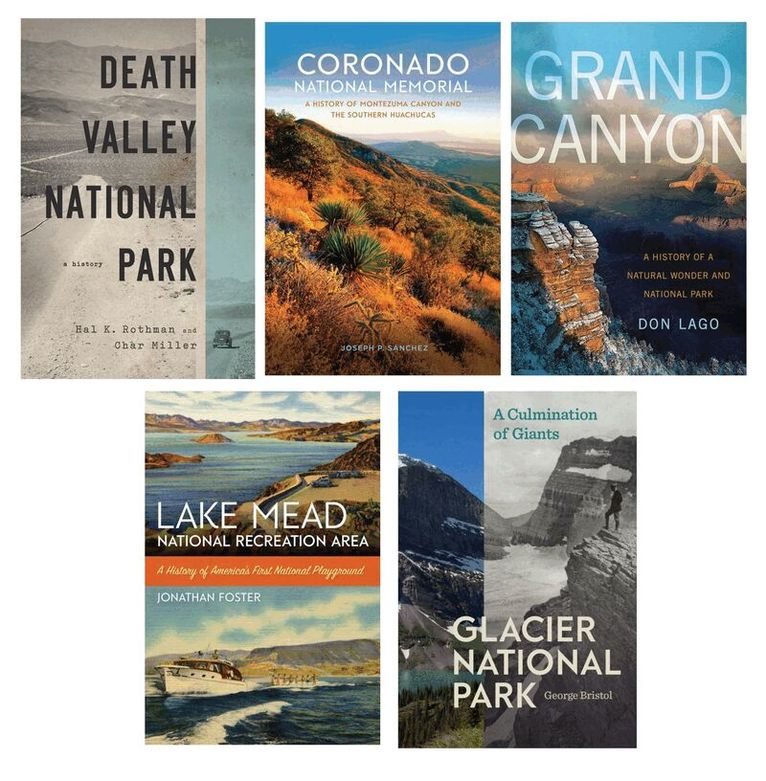
The first comprehensive study of the park, past and present, Death Valley National Park probes the environmental and human history of this most astonishing desert. Established as a national monument in 1933, Death Valley was an anomaly within the national park system. Though many who knew this landscape were convinced that its stark beauty should be preserved, to do so required a reconceptualisation of what a park consists of, grassroots and national support for its creation, and a long and difficult political struggle to secure congressional sanction. This history begins with a discussion of the physical setting, its geography and geology, and descriptions of the Timbisha, the first peoples to inhabit this tough and dangerous landscape. In the nineteenth and early twentieth centuries, new arrivals came to exploit the mineral resources in the region and develop permanent agricultural and resort settlements. Although Death Valley was established as a national monument in 1933, fear of the harsh desert precluded widespread acceptance by both the visiting public and its own administrative agency. As a result, Death Valley lacked both support and resources. This volume details the many debates over the park’s size; conflicts between miners, farmers, the military, and wilderness advocates; the treatment of the Timbisha; and the impact of tourists on its cultural and natural resources. In time, Death Valley came to be seen as one of the great natural wonders of the United States and was elevated to full national park status in 1994. The history of Death Valley National Park embodies the many tensions confronting American environmentalism.
238 kr
Skickas inom 7-10 vardagar
The Grand Canyon has long inspired deep emotions and responses. For the Native Americans who lived there, the canyon was home, full of sacred meanings. For the first European settlers to see it, the canyon drove them to great exploration adventures and Wild West dreams of wealth. The canyon also held deep importance for America’s pioneer conservationists such as Teddy Roosevelt, John Muir, and Aldo Leopold, and it played a central role in the emerging environmental movement.The Grand Canyon became a microcosm of the history and evolving values of the National Park Service, long conflicted between encouraging tourism and protecting nature. Many vivid characters shaped the canyon’s past. Its largest story is one of cultural history and changing American visions of the land.Grand Canyon: A History of a Natural Wonder and National Park is a mixture of great storytelling, unlikely characters, and important ideas. The book will appeal to both general readers and scholars interested in seeking a broader understanding of the canyon.
Devils Hole Pupfish
The Unexpected Survival of an Endangered Species in the Modern American West
Häftad, Engelska, 2021
310 kr
Skickas inom 7-10 vardagar
The Devils Hole pupfish is one of the rarest vertebrate animals on the planet; its only natural habitat is a ten-by-sixty-foot pool near Death Valley, on the Nevada—California border. Isolation in Devils Hole made the fish different from its close genetic relatives, but as Devils Hole Pupfish explores, what has made the species a survivor is its many surprising connections to the people who have studied, ignored, protested or protected it.
412 kr
Kommande
Many Americans revere their national parks as places of natural beauty and cultural significance—but few realize how often these landscapes have been shaped by the courtroom as much as by conservation policy. With more than 3,500 lawsuits involving the National Park Service, litigation has defined, defended, and sometimes even threatened the character of the parks. Without these legal fights, the Gettysburg battlefield might be covered with strip malls and the Grand Canyon reduced to a mining site. This book examines five landmark Supreme Court cases involving national parks—Gettysburg, Yellowstone, Grand Canyon, Death Valley, and the National Mall. Each chapter blends legal analysis with historical context, tracing the origins of the parks and the disputes that brought them before the nation's highest court. Spanning nearly a century, these cases reveal how the Court has shaped park policy, land use, Native American rights, water law, and free speech. Through these pivotal decisions, National Parks and the Supreme Court offers a new lens on the contested terrain of the national parks, where legal, environmental, and cultural values collide. By exploring the courts' influence on public lands, it deepens our understanding of the complexities of managing America's most cherished landscapes.
279 kr
Skickas inom 7-10 vardagar
Bristol takes readers on a journey through the history of Glacier National Park, beginning over a billion years ago from the formation of the Belt Sea, to the present day climate-changing extinction of the very glaciers that sculpted most of the wonders of its landscapes. He delves into the ways in which this area of Montana seemed to have been preparing itself for the coming of humankind through a series of landmass adjustments like the Lewis Overthrust and the ice ages that came and went. First there were tribes of Native Americans whose deep regard for nature left the landscape intact. They were followed by Euro-American explorers and settlers who may have been awed by the new lands, but began to move wildlife to near extinction. Fortunately for the area that would become Glacier, some began to recognize that laying siege to nature and its bounties would lead to wastelands. Bristol recounts how a renewed conservation ethic fostered by such leaders as Emerson, Thoreau, Olmstead, Muir, and Teddy Roosevelt took hold. Their disciples were Grinnell, Hill, Mather, Albright, and Franklin Roosevelt, and they would not only take up the call but rally for the cause. These giants would create and preserve a park landscape to accommodate visitors and wilderness alike.
279 kr
Skickas inom 7-10 vardagar
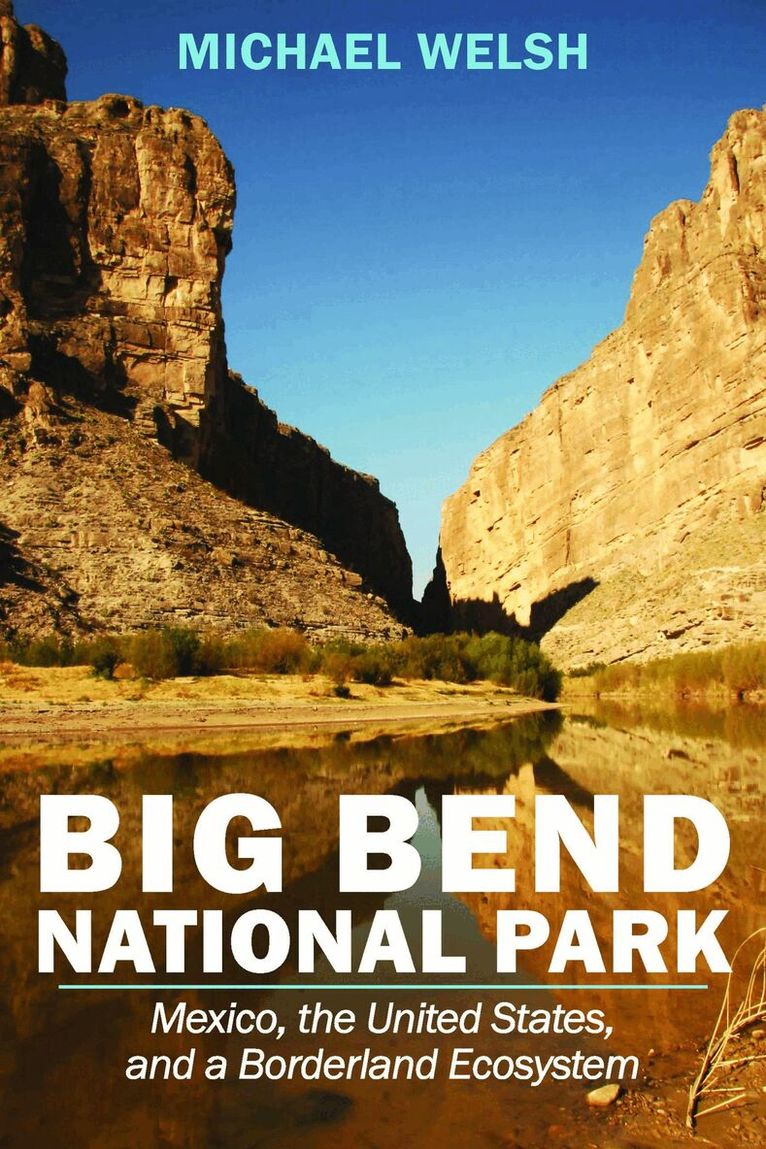
Known as a place of stark beauty, dramatic geographic dimension, and challenging desert terrain, Big Bend National Park is located in West Texas on the north bank of the Rio Grande, adjacent to the Mexican states of Coahuila and Chihuahua. Although a place of natural grandeur, the unique location of this 118-mile long, 1.5 million-acre corridor has led to many challenges between the United States and Mexico, two nations who share one ecosystem but inhabit different political worlds.Big Bend National Park explores the cultural and diplomatic history of this transborder region that was designated a national park on the US side and the site of a long-hoped-for "international peace park" on the other. Michael Welsh demonstrates the challenges faced and lessons learned by both the US and Mexico as they struggled against political and environmental vicissitudes in their attempts to realize the creation of a shared frontier.Geopolitical and environmental conflicts such as Cold War fears, immigration, the war on drugs, international water rights, and more stringent American border security measures after 9/11 all hindered relations between the two countries. But more recently, renewed cooperation and ongoing diplomatic relations have led to new developments. Mexican park personnel began assisting American officials with efforts to re-wild the American side of the river with animal species that had been eliminated, and the Obama administration relaxed some post-9/11 restrictions, allowing American visitors to cross over to the Mexican park and its nearby towns.The ambition of developing a park for peace has yet to materialize, even as individuals and their governments continue to work toward an accord. Big Bend National Park provides a greater understanding of this complex borderland and hopes to help fulfill the aspiration of creating a shared ecosystem and the dream of a park for peace.