Ancient Word - Böcker
Visar alla böcker i serien Ancient Word. Handla med fri frakt och snabb leverans.
13 produkter
13 produkter
649 kr
Skickas inom 10-15 vardagar
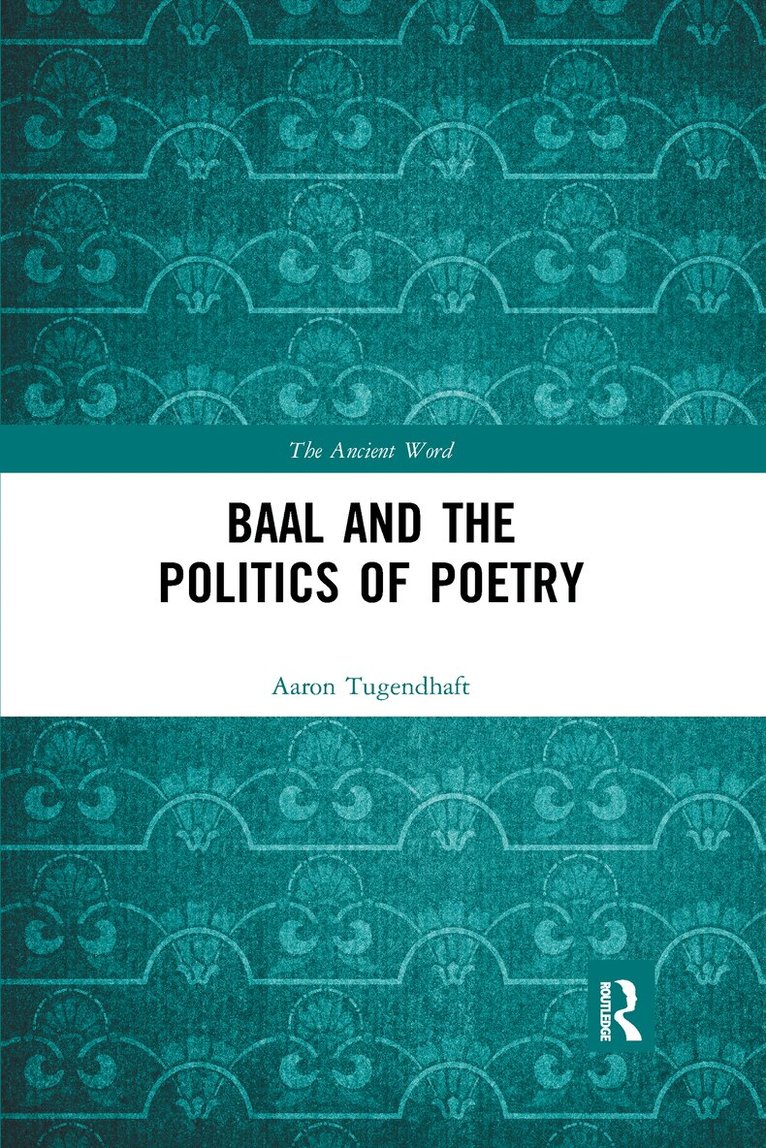
Baal and the Politics of Poetry provides a thoroughly new interpretation of the Ugaritic Baal Cycle that simultaneously inaugurates an innovative approach to studying ancient Near Eastern literature within the political context of its production. The book argues that the poem, written in the last decades of the Bronze Age, takes aim at the reigning political-theological norms of its day and uses the depiction of a divine world to educate its audience about the nature of human politics. By attuning ourselves to the specific historical context of this one poem, we can develop more nuanced appreciation of how poetry, politics, and religion have interacted—in antiquity, and beyond.
725 kr
Skickas inom 10-15 vardagar
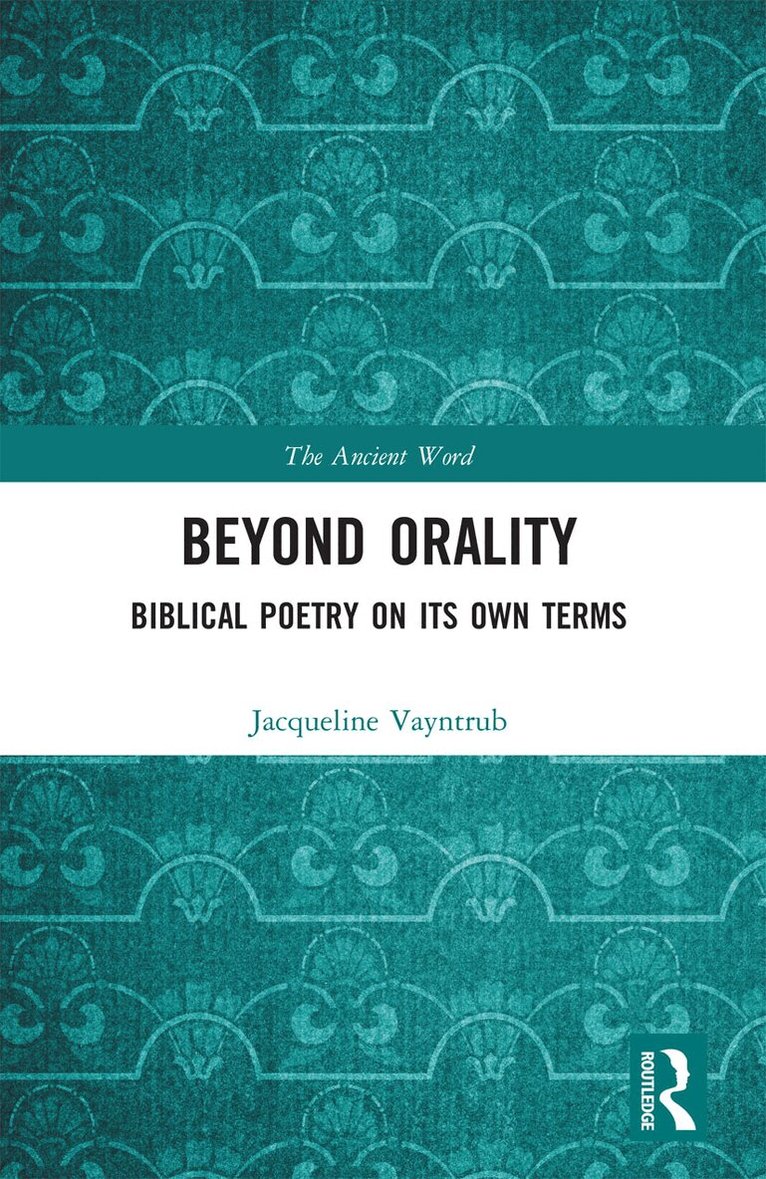
Central to understanding the prophecy and prayer of the Hebrew Bible are the unspoken assumptions that shaped them—their genres. Modern scholars describe these works as “poetry,” but there was no corresponding ancient Hebrew term or concept. Scholars also typically assume it began as “oral literature,” a concept based more in evolutionist assumptions than evidence. Is biblical poetry a purely modern fiction, or is there a more fundamental reason why its definition escapes us?Beyond Orality: Biblical Poetry on its Own Terms changes the debate by showing how biblical poetry has worked as a mirror, reflecting each era’s own self-image of verbal art. Yet Vayntrub also shows that this problem is rooted in a crucial pattern within the Bible itself: the texts we recognize as “poetry” are framed as powerful and ancient verbal performances, dramatic speeches from the past. The Bible’s creators presented what we call poetry in terms of their own image of the ancient and the oral, and understanding their native theories of Hebrew verbal art gives us a new basis to rethink our own.
576 kr
Skickas inom 10-15 vardagar
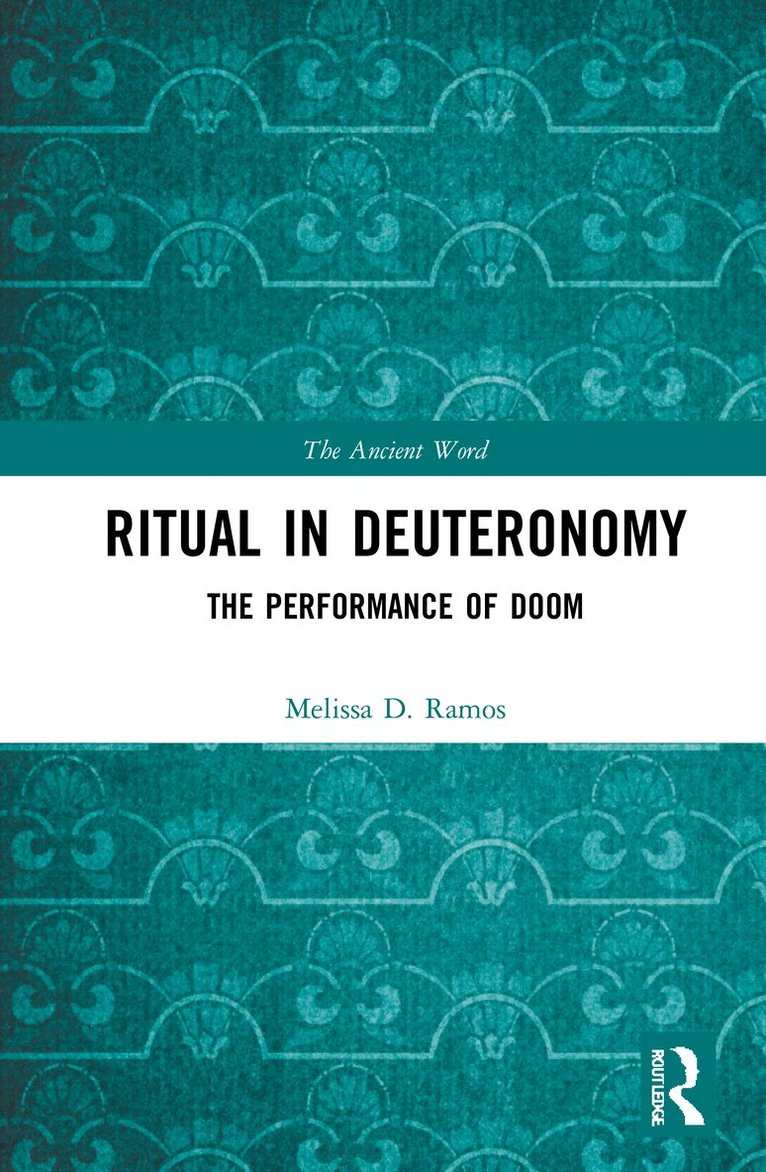
Ritual in Deuteronomy explores the symbolic world of Deuteronomy’s ritual covenant and curses through a lens of religious studies and anthropology, drawing on previously unexamined Mesopotamian material.This book focuses on the ritual material in Deuteronomy including commands regarding sacrifice, prayer objects, and especially the dramatic ritual enactment of the covenant including curses. The book’s most unique feature is an entirely new comparative study of Deut 27–30 with two ritual texts from Mesopotamia. No studies to date have undertaken a comparison of Deut 27–30 with ancient Near Eastern ritual texts outside of the treaty oath tradition. This fresh comparison illuminates how the ritual life of ancient Israel shaped the literary form of Deuteronomy and concludes that the performance of oaths was a social strategy, addressing contemporary anxieties and reinforcing systems of cultural power.This book offers a fascinating comparative study which will be of interest to undergraduate and graduate students in biblical studies, classical Hebrew, theology, and ancient Near Eastern studies. The book’s more technical aspects will also appeal to scholars of the Pentateuch, Deuteronomy, Biblical Law, Ancient Near Eastern History, Mesopotamian Studies, and Classics.
2 012 kr
Skickas inom 10-15 vardagar
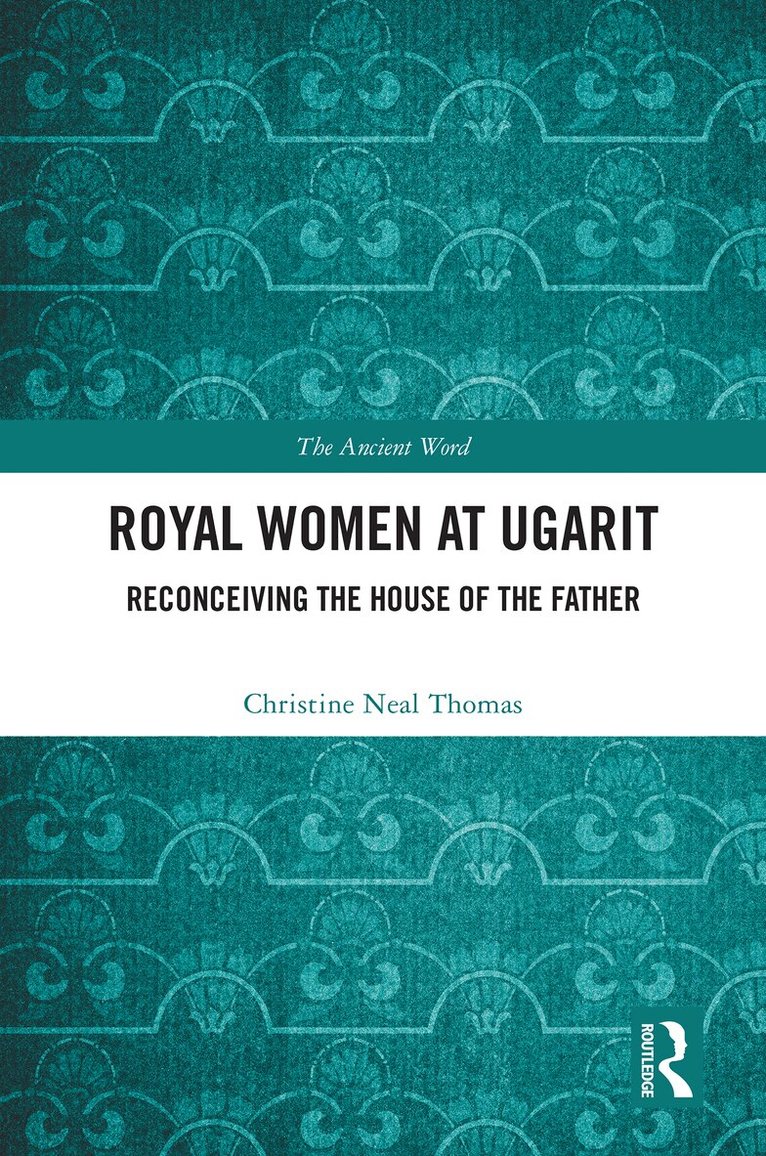
This volume challenges patrimonialism as a political model for the ancient Near East by engaging with letters and legal texts concerning royal women at Late Bronze Age Ugarit, demonstrating women’s pivotal roles in the exercise of power, and then bringing these insights to bear on the Hebrew Bible.The book offers a new vision of how women figure in ancient political systems. Through an analysis of royal letters, legal verdicts, and regional records, it examines overt claims and implicit anxieties concerning the pivotal roles of royal women. Three case studies from Late Bronze Age Ugarit reveal that a single woman functioning in a range of modalities—mother, daughter, sister, and wife—brokered a network of relationships among a range of men. Patrimonialism depended on the political polyvalence of women. Texts from Ugarit attest to this reality, and the biblical royal women of the House of David amplify its significance. This analysis of women’s activity within and among royal households is productive not only for the study of the Late Bronze Age Levant, but also as a model for analogous inquiries into ancient societies and other systems in which data are thin and patrimonialism widely in evidence.Royal Women at Ugarit is suitable for students and scholars working on women and gender in the ancient Near East, as well as those interested in the political realm of the Late Bronze Age and the intersections of biblical literature with other ancient texts.
725 kr
Skickas inom 10-15 vardagar
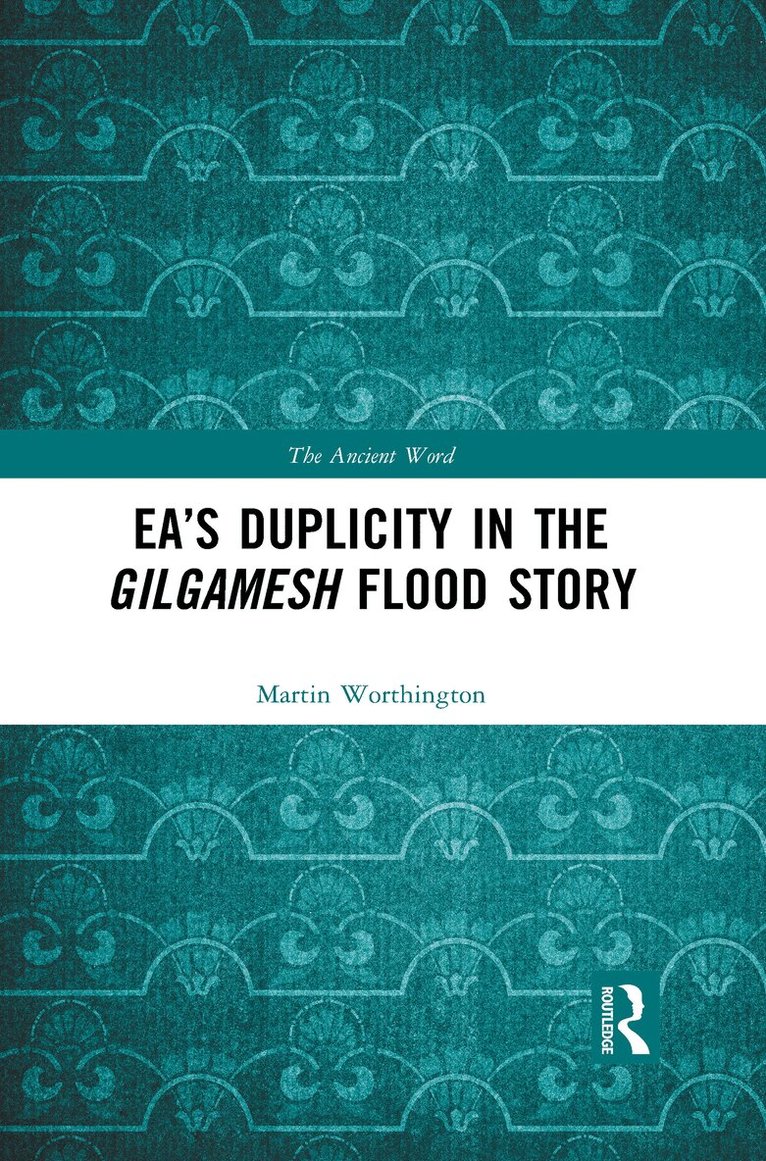
This volume opens up new perspectives on Babylonian and Assyrian literature, through the lens of a pivotal passage in the Gilgamesh Flood story. It shows how, using a nine-line message where not all was as it seemed, the god Ea inveigled humans into building the Ark. The volume argues that Ea used a ‘bitextual’ message: one which can be understood in different ways that sound the same. His message thus emerges as an ambivalent oracle in the tradition of ‘folktale prophecy’. The argument is supported by interlocking investigations of lexicography, divination, diet, figurines, social history, and religion. There are also extended discussions of Babylonian word play and ancient literary interpretation. Besides arguing for Ea’s duplicity, the book explores its implications – for narrative sophistication in Gilgamesh, for audiences and performance of the poem, and for the relation of the Gilgamesh Flood story to the versions in Atra-hasīs, the Hellenistic historian Berossos, and the Biblical Book of Genesis.Ea’s Duplicity in the Gilgamesh Flood Story will interest Assyriologists, Hebrew Bible scholars and Classicists, but also students and researchers in all areas concerned with Gilgamesh, word-play, oracles, and traditions about the Flood.
2 088 kr
Skickas inom 10-15 vardagar
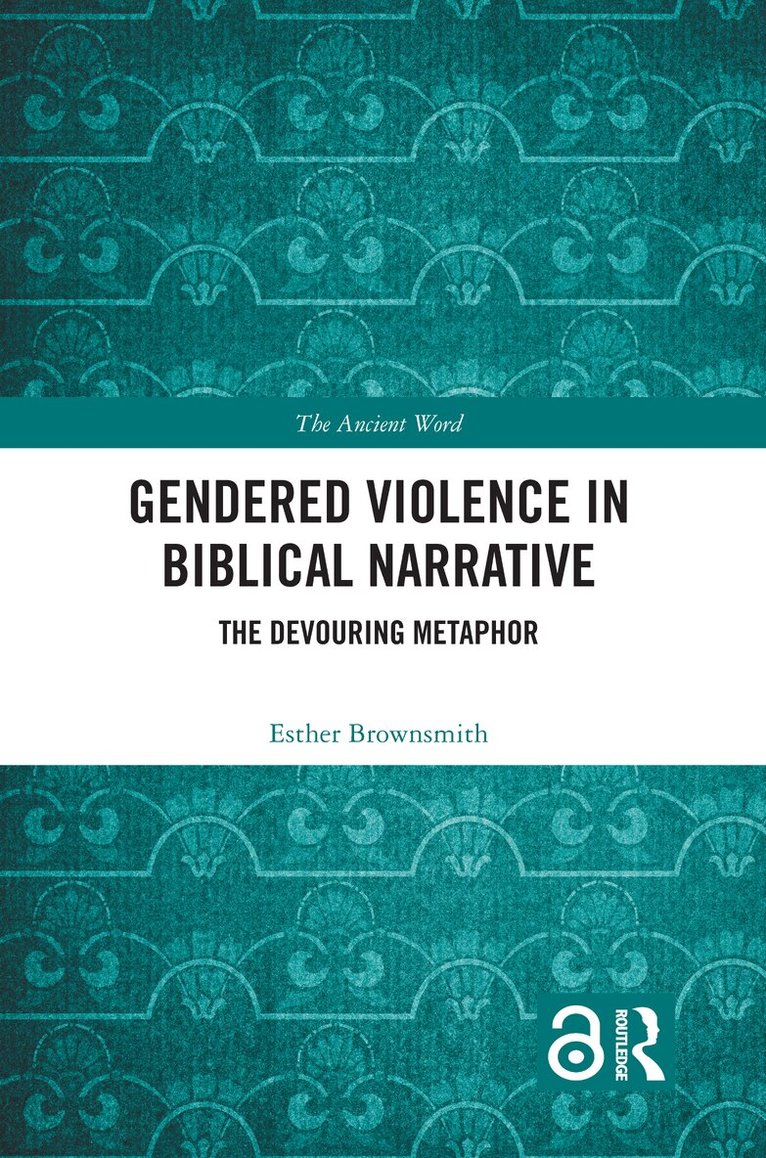
This book uses three examples of violent biblical stories about women, explored through the lens of conceptual metaphor theory in relation to culinary language used within these texts, to examine wider issues of gender and sexual violence in the Hebrew Bible.Utilising the tools of conceptual metaphor theory, feminist criticism, and classic textual analysis, Brownsmith interrogates some of the most troubling biblical passages for women—neither by redeeming them nor by condemning them, but by showing how they are intrinsically shaped by the enduring metaphor of woman as food in the Hebrew Bible, ancient Near East, and beyond. The volume explores three main case studies: the Levite’s “concubine” (Judges 19); Tamar and Amnon (2 Sam 13); and the life and death of Jezebel (primarily 1 Kings 21 and 2 Kings 9). All depict violence toward a woman as perpetrated by a man, interwoven with culinary language that cues their metaphorical implications. In these sensitive but critical readings of violent tales, Brownsmith also draws on a broad range of interdisciplinary connections from Ricoeur to ancient Ugaritic epics to modern comic books. Through this approach, readers gain new insights into how the Bible shapes its narratives through conceptual metaphors, and specifically how it makes meaning out of women’s brutalized bodies.Gendered Violence in Biblical Narrative: The Devouring Metaphor is suitable for students and scholars working on gender and sexual violence in the Hebrew Bible and the ancient Near East more broadly, as well as those working on conceptual metaphor theory and feminist criticism.The Open Access version of this book, available at http://www.taylorfrancis.com, has been made available under a Creative Commons Attribution-Non Commercial-No Derivatives (CC BY-NC-ND) 4.0 license.
630 kr
Skickas inom 10-15 vardagar
This book uses three examples of violent biblical stories about women, explored through the lens of conceptual metaphor theory in relation to culinary language used within these texts, to examine wider issues of gender and sexual violence in the Hebrew Bible.Utilising the tools of conceptual metaphor theory, feminist criticism, and classic textual analysis, Brownsmith interrogates some of the most troubling biblical passages for women—neither by redeeming them nor by condemning them, but by showing how they are intrinsically shaped by the enduring metaphor of woman as food in the Hebrew Bible, ancient Near East, and beyond. The volume explores three main case studies: the Levite’s “concubine” (Judges 19); Tamar and Amnon (2 Sam 13); and the life and death of Jezebel (primarily 1 Kings 21 and 2 Kings 9). All depict violence toward a woman as perpetrated by a man, interwoven with culinary language that cues their metaphorical implications. In these sensitive but critical readings of violent tales, Brownsmith also draws on a broad range of interdisciplinary connections from Ricoeur to ancient Ugaritic epics to modern comic books. Through this approach, readers gain new insights into how the Bible shapes its narratives through conceptual metaphors, and specifically how it makes meaning out of women’s brutalized bodies.Gendered Violence in Biblical Narrative: The Devouring Metaphor is suitable for students and scholars working on gender and sexual violence in the Hebrew Bible and the ancient Near East more broadly, as well as those working on conceptual metaphor theory and feminist criticism.The Open Access version of this book, available at http://www.taylorfrancis.com, has been made available under a Creative Commons Attribution-Non Commercial-No Derivatives (CC BY-NC-ND) 4.0 license.
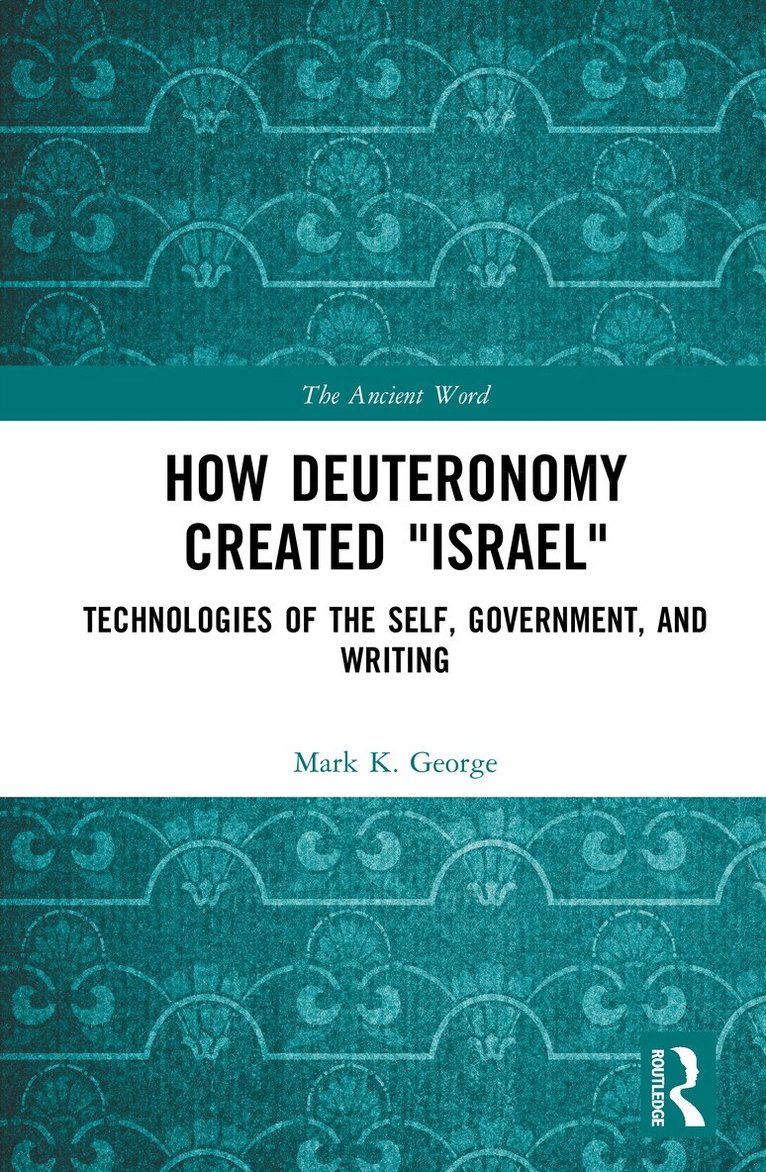
How Deuteronomy Created "Israel"
Technologies of the Self, Government, and Writing
Inbunden, Engelska, 2026
2 088 kr
Skickas inom 10-15 vardagar
In this book, Mark K. George argues that the goal of Deuteronomy is not merely to provide ancient Judah with another set of laws but to write “Israel” itself into existence. He reads Deuteronomy as a manual for self‑definition with two key aspects: being an Israelite means recognizing oneself as a subject under Yahweh’s control, and Deuteronomy is the handbook of techniques by which one monitors oneself to become Israel.Scholars have acknowledged the influence of certain literary features of ancient Assyrian imperial treaties on Deuteronomy. In this book, George argues that the key to both Deuteronomy and Assyrian rituals of control is their monitoring mechanism, not only speaking to their audiences but also providing them with new ways to understand themselves and behave. He suggests that Deuteronomy redefines not only Israel but also Yahweh himself according to an Assyrian imperial model—with Israel as the subject, God as a distant imperial ruler, and the text itself as a local monitor. In showing this, he extends the insights of Michel Foucault, who urged us to view power not merely as something imposed from above by force, but as something that can entwine and shape us from below.This book provides an invaluable exploration of Deuteronomy, of interest to scholars and students working on Deuteronomy itself and biblical studies more generally, as well as on questions of ancient politics and governmentality, Foucault studies, and the history and material culture of the Ancient Near East.
2 150 kr
Skickas inom 10-15 vardagar
Baal and the Politics of Poetry provides a thoroughly new interpretation of the Ugaritic Baal Cycle that simultaneously inaugurates an innovative approach to studying ancient Near Eastern literature within the political context of its production. The book argues that the poem, written in the last decades of the Bronze Age, takes aim at the reigning political-theological norms of its day and uses the depiction of a divine world to educate its audience about the nature of human politics. By attuning ourselves to the specific historical context of this one poem, we can develop more nuanced appreciation of how poetry, politics, and religion have interacted—in antiquity, and beyond.
Canaanite Scribal Creativity and the Making of Cuneiform Culture in the Amarna Age
Inbunden, Engelska, 2026
1 393 kr
Tillfälligt slut
Canaanite Scribal Creativity and the Making of Cuneiform Culture in the Amarna Age offer a nuanced exploration of the scribal practices behind the Canaanite Amarna Letters and wider scribal culture of the Levant during the Late Bronze Age (1550–1200 BCE).The book features a summary of the historical and scribal contexts of the Canaanite Amarna Tablets—a corpus of diplomatic letters between Canaanite and Egyptian rulers of the later 18th Dynasty—and provides a synthesis of research on cuneiform scribalism in the Late Bronze Age. It also offers a methodology for the multimodal analysis of Canaanite cuneiform tablets, which can be applied to other ancient corpora. Specifically, the proposed “code-alternation” approach offers a more accurate description of the range of linguistic, orthographic, and marking systems in the Canaanite Amarna Letters. The book sheds light upon the use of the cuneiform script and written Akkadian in diplomatic communications in the Ancient Near East and Eastern Mediterranean, broadening our understanding of this period which was pivotal to the development of writing, scribal culture, and West Semitic literary traditions.Canaanite Scribal Creativity and the Making of Cuneiform Culture in the Amarna Age is suitable for scholars of the Late Bronze Age southern Levant and those interested in literacies and scribal practices of the Ancient Near East.
2 401 kr
Skickas inom 10-15 vardagar
Central to understanding the prophecy and prayer of the Hebrew Bible are the unspoken assumptions that shaped them—their genres. Modern scholars describe these works as “poetry,” but there was no corresponding ancient Hebrew term or concept. Scholars also typically assume it began as “oral literature,” a concept based more in evolutionist assumptions than evidence. Is biblical poetry a purely modern fiction, or is there a more fundamental reason why its definition escapes us?Beyond Orality: Biblical Poetry on its Own Terms changes the debate by showing how biblical poetry has worked as a mirror, reflecting each era’s own self-image of verbal art. Yet Vayntrub also shows that this problem is rooted in a crucial pattern within the Bible itself: the texts we recognize as “poetry” are framed as powerful and ancient verbal performances, dramatic speeches from the past. The Bible’s creators presented what we call poetry in terms of their own image of the ancient and the oral, and understanding their native theories of Hebrew verbal art gives us a new basis to rethink our own.
2 401 kr
Skickas inom 10-15 vardagar
This volume opens up new perspectives on Babylonian and Assyrian literature, through the lens of a pivotal passage in the Gilgamesh Flood story. It shows how, using a nine-line message where not all was as it seemed, the god Ea inveigled humans into building the Ark. The volume argues that Ea used a ‘bitextual’ message: one which can be understood in different ways that sound the same. His message thus emerges as an ambivalent oracle in the tradition of ‘folktale prophecy’. The argument is supported by interlocking investigations of lexicography, divination, diet, figurines, social history, and religion. There are also extended discussions of Babylonian word play and ancient literary interpretation. Besides arguing for Ea’s duplicity, the book explores its implications – for narrative sophistication in Gilgamesh, for audiences and performance of the poem, and for the relation of the Gilgamesh Flood story to the versions in Atra-hasīs, the Hellenistic historian Berossos, and the Biblical Book of Genesis.Ea’s Duplicity in the Gilgamesh Flood Story will interest Assyriologists, Hebrew Bible scholars and Classicists, but also students and researchers in all areas concerned with Gilgamesh, word-play, oracles, and traditions about the Flood.
2 289 kr
Skickas inom 10-15 vardagar
Ritual in Deuteronomy explores the symbolic world of Deuteronomy’s ritual covenant and curses through a lens of religious studies and anthropology, drawing on previously unexamined Mesopotamian material.This book focuses on the ritual material in Deuteronomy including commands regarding sacrifice, prayer objects, and especially the dramatic ritual enactment of the covenant including curses. The book’s most unique feature is an entirely new comparative study of Deut 27–30 with two ritual texts from Mesopotamia. No studies to date have undertaken a comparison of Deut 27–30 with ancient Near Eastern ritual texts outside of the treaty oath tradition. This fresh comparison illuminates how the ritual life of ancient Israel shaped the literary form of Deuteronomy and concludes that the performance of oaths was a social strategy, addressing contemporary anxieties and reinforcing systems of cultural power.This book offers a fascinating comparative study which will be of interest to undergraduate and graduate students in biblical studies, classical Hebrew, theology, and ancient Near Eastern studies. The book’s more technical aspects will also appeal to scholars of the Pentateuch, Deuteronomy, Biblical Law, Ancient Near Eastern History, Mesopotamian Studies, and Classics.