Race, Rites, and Rhetoric: Colors, Cultures, and Communication – Serie
Visar alla böcker i serien Race, Rites, and Rhetoric: Colors, Cultures, and Communication. Handla med fri frakt och snabb leverans.
3 produkter
3 produkter
742 kr
Skickas inom 10-15 vardagar
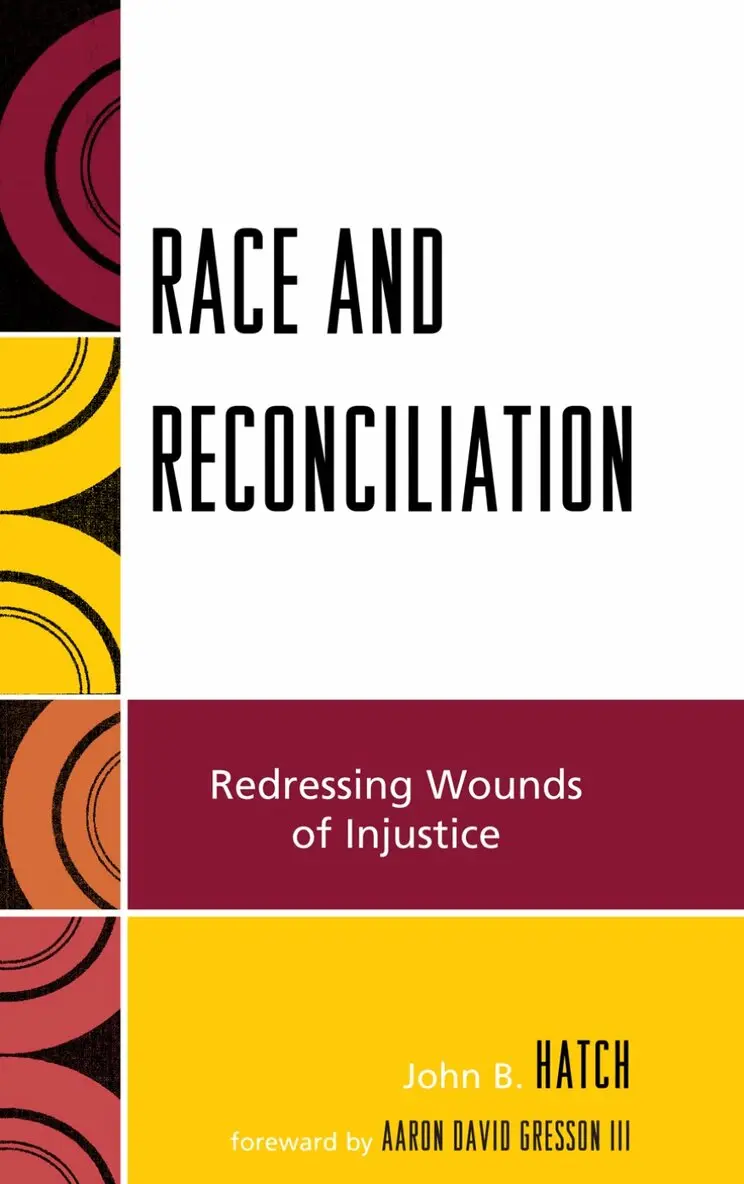
In this enlightening and insightful monograph, John B. Hatch analyzes various public discourses that have attempted to address the racialized legacy of slavery, from West Africa to the United States, and in doing so, proposes a rhetorical theory of reconciliation. Recognizing the impact both of religious traditions and modern social values on the dialogue of reconciliation, Hatch examines these influences in tandem with contemporary critical race theory. Hatch explores the social-psychological and ethical challenges of racial reconciliation in light of work by Mark McPhail, Kenneth Burke, Paul Ricoeur, and others. He then develops his own framework for understanding reconciliation—both as the recovery of a coherent ethical grammar and as a process of rhetorical interaction and hermeneutic reorientation through apology, forgiveness, reparations, symbolic healing, and related genres of reparative action. What emerges from this work is a profound vision for the prospects of meaningful redress and reconciliation in American race relations.
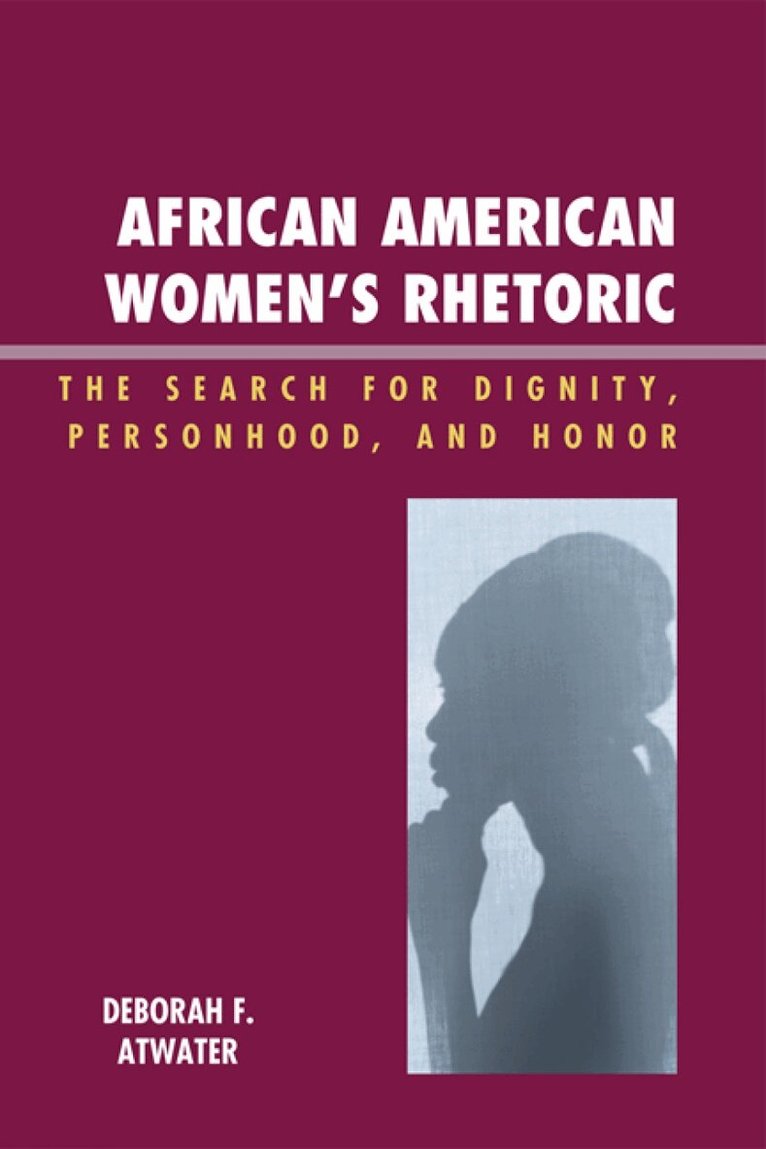
African American Women's Rhetoric
The Search for Dignity, Personhood, and Honor
Häftad, Engelska, 2010
608 kr
Skickas inom 10-15 vardagar
African American Women's Rhetoric: The Search for Dignity, Personhood, and Honor deals with the rhetoric of African American women from enslavement to current times, examining slave narratives and contemporary print, music, and other media surrounding the lives of African American women. Covering a variety of specific women and their rhetoric within the context of a historical period, the book provides central themes and strategic and social concerns of African American women and their environment. It frames, in some, cases, the rhetoric of contemporary women in politics and other fields of prominence—including Condoleeza Rice and Barbara Lee, among others.Deborah F. Atwater explores how African women today who engage in speech in the public sphere come from a historical line of active women who have been outspoken in politics, education, business, and various social contexts; heretofore, these women have not been studied in a comprehensive manner. Specifically, how do these African American women discuss themselves, and—more importantly—how do they represent who they are in various communities? How do these women persuade their diverse audiences to value what they say and who they are?African American Women's Rhetoric will be an invaluable contribution to upper-division undergraduate and graduate courses in Rhetoric, African American Rhetoric, History, and Women's Studies.
1 572 kr
Skickas inom 10-15 vardagar
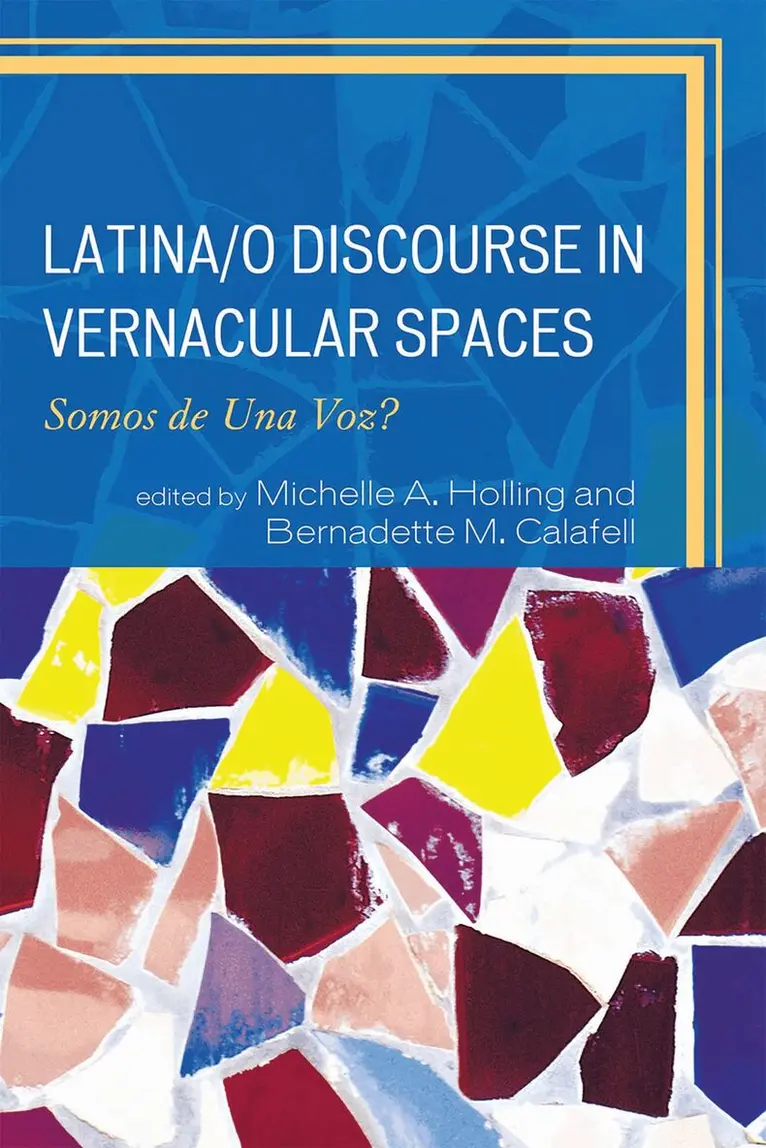
Taking up the charge to study discourses of marginalized groups, while simultaneously extending scholarship about Latina/os in the field of Communication, Latina/o Discourse in Vernacular Spaces: Somos de Una Voz? provides the most current work examining the vernacular voices of Latina/os. The editors of this diverse collection structure the book along four topics—Locating Foundations, Citizenship and Belonging, The Politics of Self-Representation, and Trans/National Voces—that are guided by the organizing principle of voz/voces [voice/voces]. Voz/voces resonates not only in intellectual endeavors but also in public arenas in which perceptions of Latina/os' being of one voice circulate. The study of voz/voces proceeds from a variety of sites including cultural myth, social movement, music, testimonios, a website, and autoethnographic performance. By questioning and addressing the politics of voz/voces, the essays collectively underscore the complexity that shapes Latina/o multivocality. Ultimately, the contours of Latina/o vernacular expressions call attention to the ways that these unique communities continue to craft identities that transform social understandings of who Latina/os are, to engage in forms of resistance that alter relations of power, and to challenge self- and dominant representations.