History, Languages, and Cultures of the Spanish and Portuguese Worlds – serie
Visar alla böcker i serien History, Languages, and Cultures of the Spanish and Portuguese Worlds. Handla med fri frakt och snabb leverans.
16 produkter
16 produkter
Inbunden, Engelska, 2010
841 kr
Skickas inom 10-15 vardagar
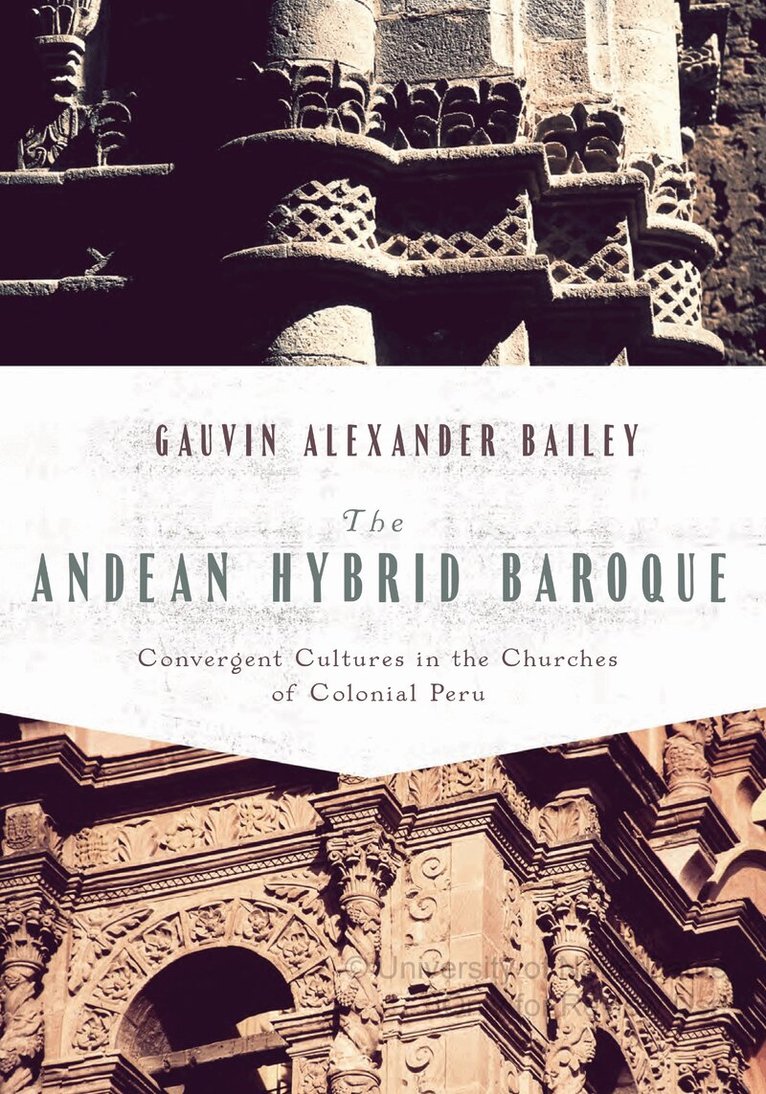
The Andean Hybrid Baroque is the first comprehensive study of the architecture and architectural sculpture of Southern Peru in the late colonial period (1660s-1820s), an enduring and polemical subject in Latin American art history. In the southern Andes during the last century and a half of colonial rule, when the Spanish crown was losing its grip on the Americas and Amerindian groups began organizing into activist and increasingly violent political movements, a style of architectural sculpture emerged that remains one of the most vigorous and creative outcomes of the meeting of two cultures. The Andean Hybrid Baroque (also known as "Mestizo Style"), was a flourishing school of carving distinguished by its virtuoso combination of European late Renaissance and Baroque forms with Andean sacred and profane symbolism, some of it originating in the pre-Hispanic era. The Andean Hybrid Baroque found its genesis and most comprehensive iconographical expression in the architecture of Catholic churches, chapels, cloisters, and conventual buildings. Drawing on hundreds of primary documents and on ethno-historical and anthropological literature that has rarely been applied to an art-historical subject, Gauvin Alexander Bailey provides the most substantial study of colonial Peruvian architecture in decades. The product of five years of photographic surveys in Peru, Bolivia, and Argentina, as well as research in governmental and ecclesiastical archives in Latin America and Europe, Bailey's richly illustrated study examines the construction history and decoration of forty-four churches. It offers a fundamentally new understanding of the chronology, regional variations, and diffusion of the Andean Hybrid Baroque style, as well as a fresh interpretation of its relationship to indigenous Andean culture.
Häftad, Engelska, 2007
520 kr
Skickas inom 10-15 vardagar
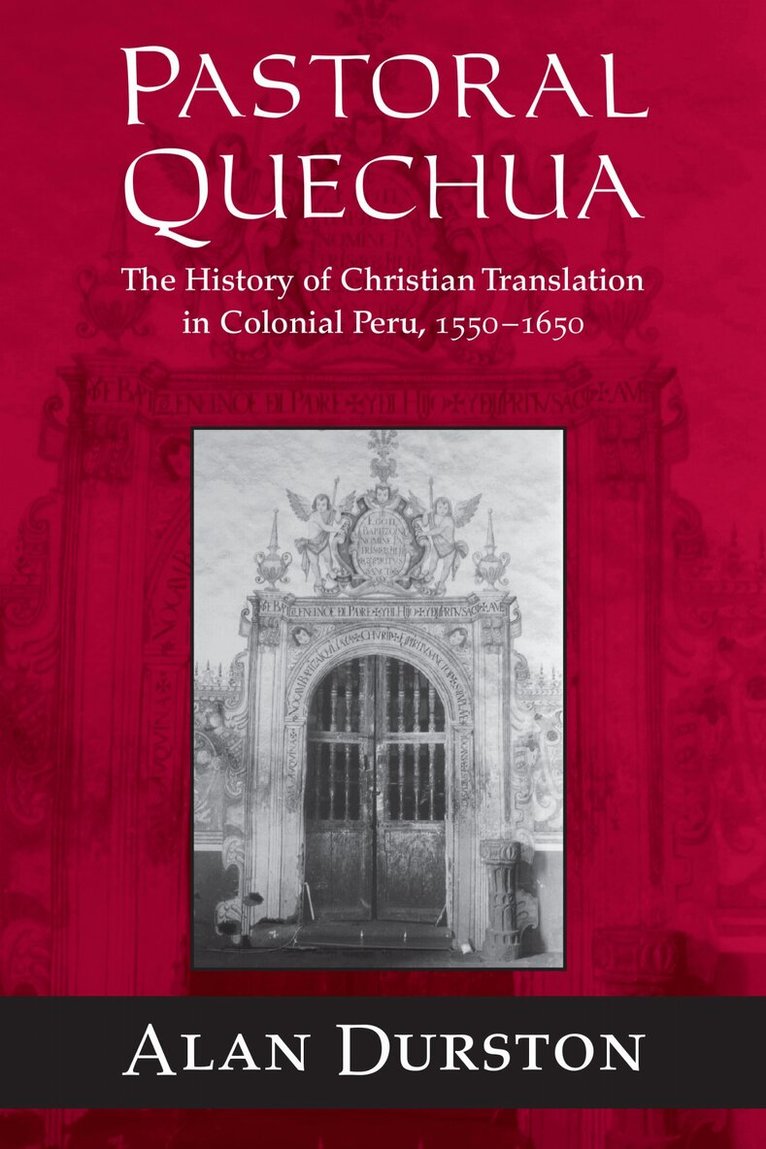
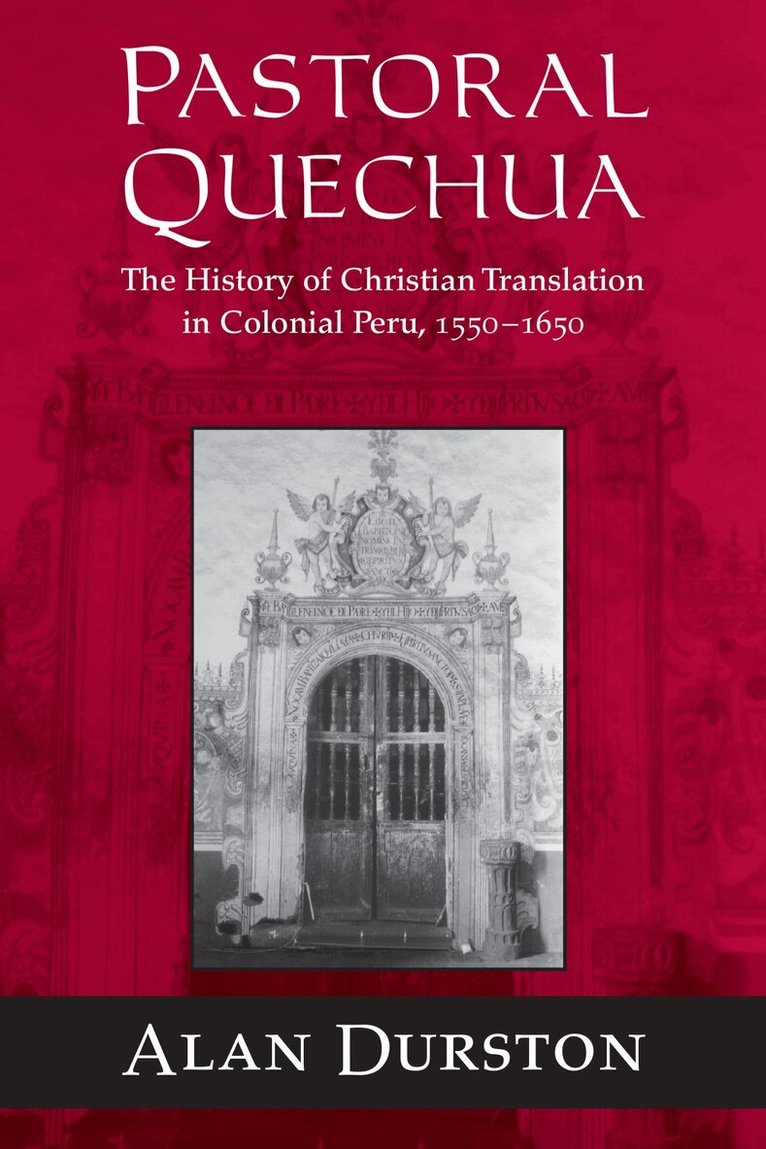
Pastoral Quechua explores the story of how the Spanish priests and missionaries of the Catholic church in post-conquest Peru systematically attempted to "incarnate" Christianity in Quechua, a large family of languages and dialects spoken by the dense Andes populations once united under the Inca empire. By codifying (and imposing) a single written standard, based on a variety of Quechua spoken in the former Inca capital of Cuzco, and through their translations of devotional, catechetical, and liturgical texts for everyday use in parishes, the missionary translators were on the front lines of Spanish colonialism in the Andes. The Christian pastoral texts in Quechua are important witnesses to colonial interactions and power relations. Durston examines the broad historical contexts of Christian writing in Quechua; the role that Andean religious images and motifs were given by the Spanish translators in creating a syncretic Christian-Andean iconography of God, Christ, and Mary; the colonial linguistic ideologies and policies in play; and the mechanisms of control of the subjugated population that can be found in the performance practices of Christian liturgy, the organization of the texts, and even in certain aspects of grammar.
Häftad, Engelska, 2011
480 kr
Skickas inom 10-15 vardagar
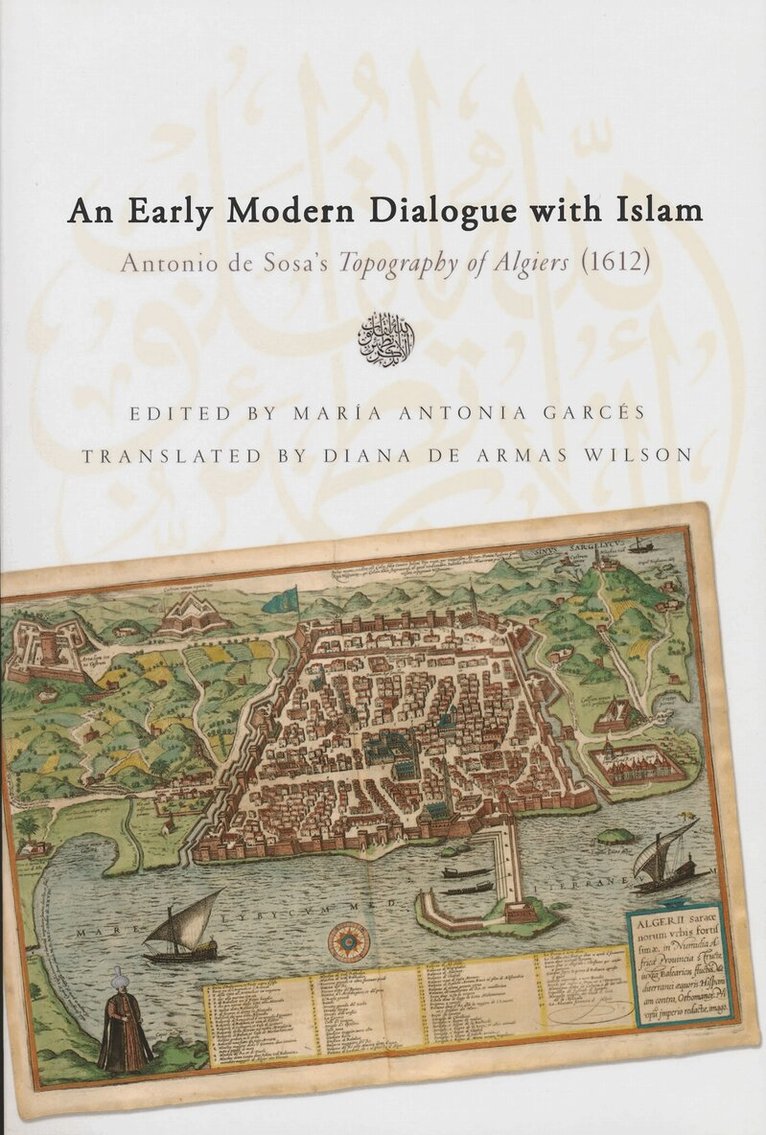
An Early Modern Dialogue with Islam: Antonio de Sosa'sTopography of Algiers (1612) makes available in translation a riveting sixteenth-century chronicle of European and North African cultural contacts that is virtually unknown to English-speaking readers. The Topography was written by a Portuguese cleric, Doctor Antonio de Sosa, who was captured by Algerian corsairs in 1577 and held as a Barbary slave for over four years while awaiting ransom. Sosa's work is a fascinating description of a city at the crossroads of civilizations, with a sophisticated multilingual population of Turks, Arabs, Moriscos, Berbers, Jews, Christian captives, and converts to Islam from across the world.In the Topography of Algiers, Sosa meticulously describes the inhabitants' daily lives; their fashions, pastimes, feasts, and funerals; their government; the landmarks of the city itself; and much more. Readers will be struck by the vibrancy of his narrative, rendered into English with crisp accuracy by Diana de Armas Wilson. The Topography is a treasure trove of amazing customs, startling behavior, and historical anecdotes that will enthrall readers. The extensive introduction by María Antonia Garcés is a superb archival study of the Mediterranean world described by the Topography, as well as an exposé of the adventurous, even scandalous, life of its author. The introduction also discusses the fraudulent publication of Sosa's Topography under another man's name.Sosa's chronicle stands out for its complexity, vitality, and the sharpness of the author's ethnographic vision. No other account of captivity in this period offers such a detailed and dynamic tableau of Algerian society at the end of the sixteenth century.
Häftad, Engelska, 2010
425 kr
Skickas inom 10-15 vardagar
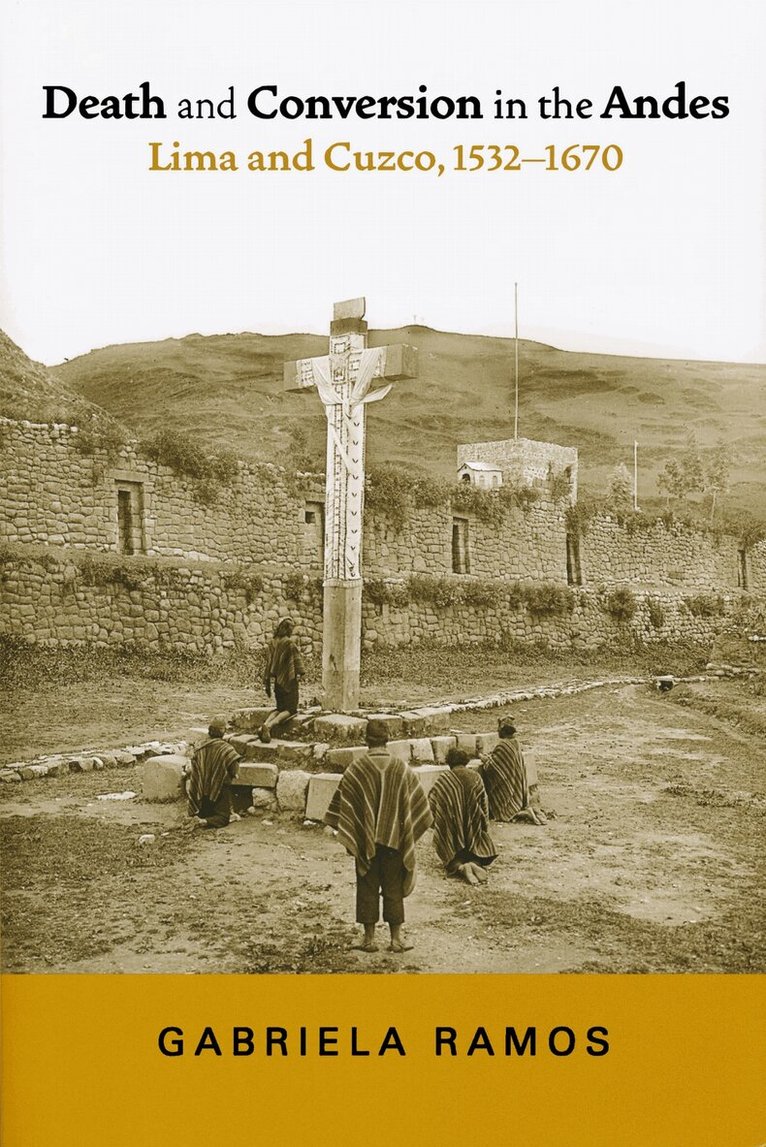
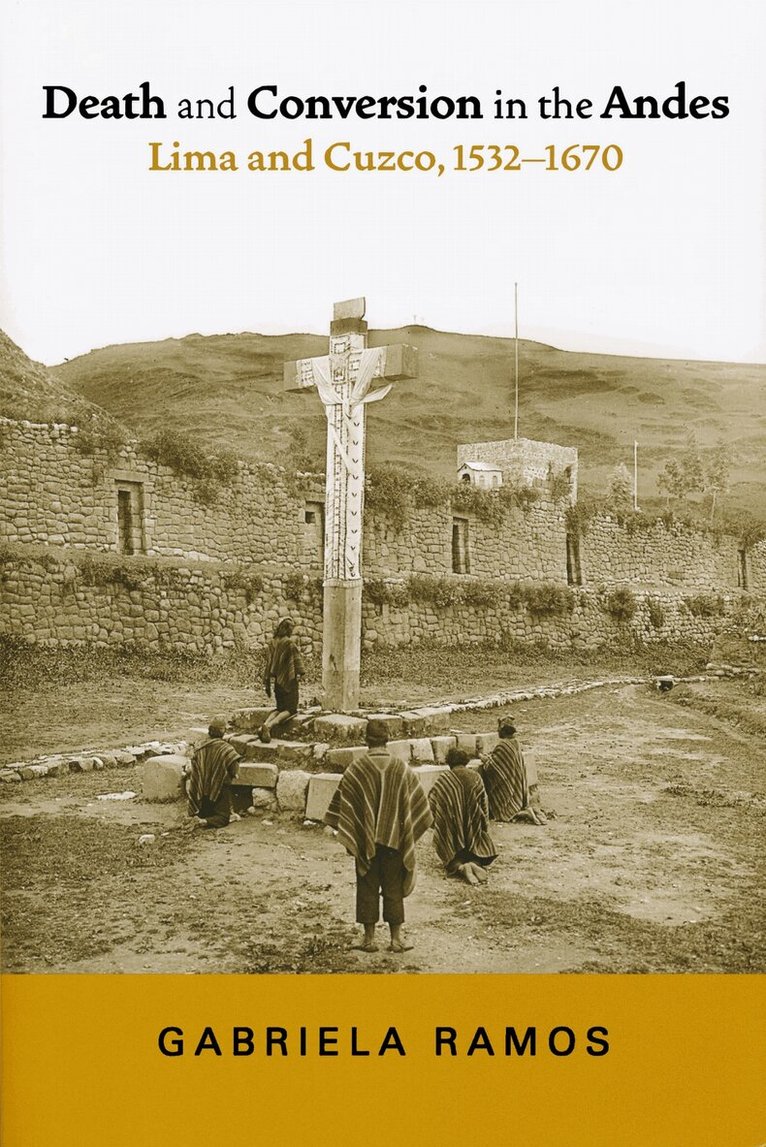
When the Spanish invaded the Inca empire in 1532, the cult of the ancestors was an essential feature of pre-Columbian religion throughout the Andes. The dead influenced politics, protected the living, symbolized the past, and legitimized claims over the land their descendants occupied, while the living honored the presence of the dead in numerous aspects of daily life. A central purpose of the Spanish missionary endeavor was to suppress the Andean cult of the ancestors and force the indigenous people to adopt their Catholic, legal, and cultural views concerning death. In her book, Gabriela Ramos reveals the extent to which Christianizing death was essential for the conversion of the indigenous population to Catholicism.Ramos argues that understanding the relation between death and conversion in the Andes involves not only considering the obvious attempts to destroy the cult of the dead, but also investigating a range of policies and strategies whose application demanded continuous negotiation between Spaniards and Andeans. Drawing from historical, archaeological, and anthropological research and a wealth of original archival materials, especially the last wills and testaments of indigenous Andeans, Ramos looks at the Christianization of death as it affected the lives of inhabitants of two principal cities of the Peruvian viceroyalty: Lima, the new capital founded on the Pacific coast by the Spanish, and Cuzco, the old capital of the Incas in the Andean highlands. Her study of the wills in particular demonstrates the strategies that Andeans devised to submit to Spanish law and Christian doctrine, preserve bonds of kinship, and cement their place in colonial society.
Häftad, Engelska, 2009
328 kr
Skickas inom 10-15 vardagar
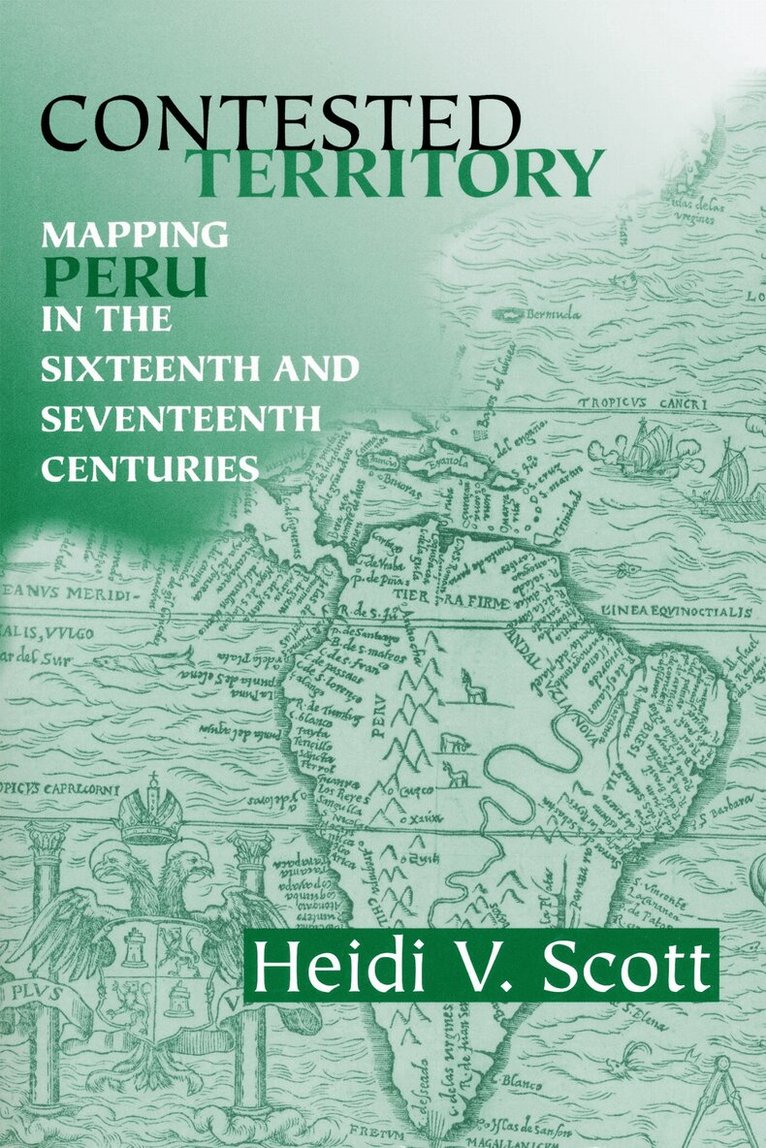
Landscape is never static, but changes continuously when seen in relation to human occupation, movement, labor, and discourse. Contested Territory explores the ways in which Peru's early colonial landscapes were experienced and portrayed, especially by the Spanish conquerors but also by their conquered subjects. It focuses on the role played by indigenous groups in shaping the Spanish experiences of landscapes, the diverse geographical images of Peru and ways in which these were constructed and contested, and what this can tell us about the nature of colonial relations in post-conquest Peru. This exceptional study, which draws from archival records and sources such as cartographies, offers a richly nuanced view of the complexity of colonial relations. It will be read with appreciation by those interested in Spanish history, geography, and colonialism.
Häftad, Engelska, 2014
510 kr
Skickas inom 10-15 vardagar
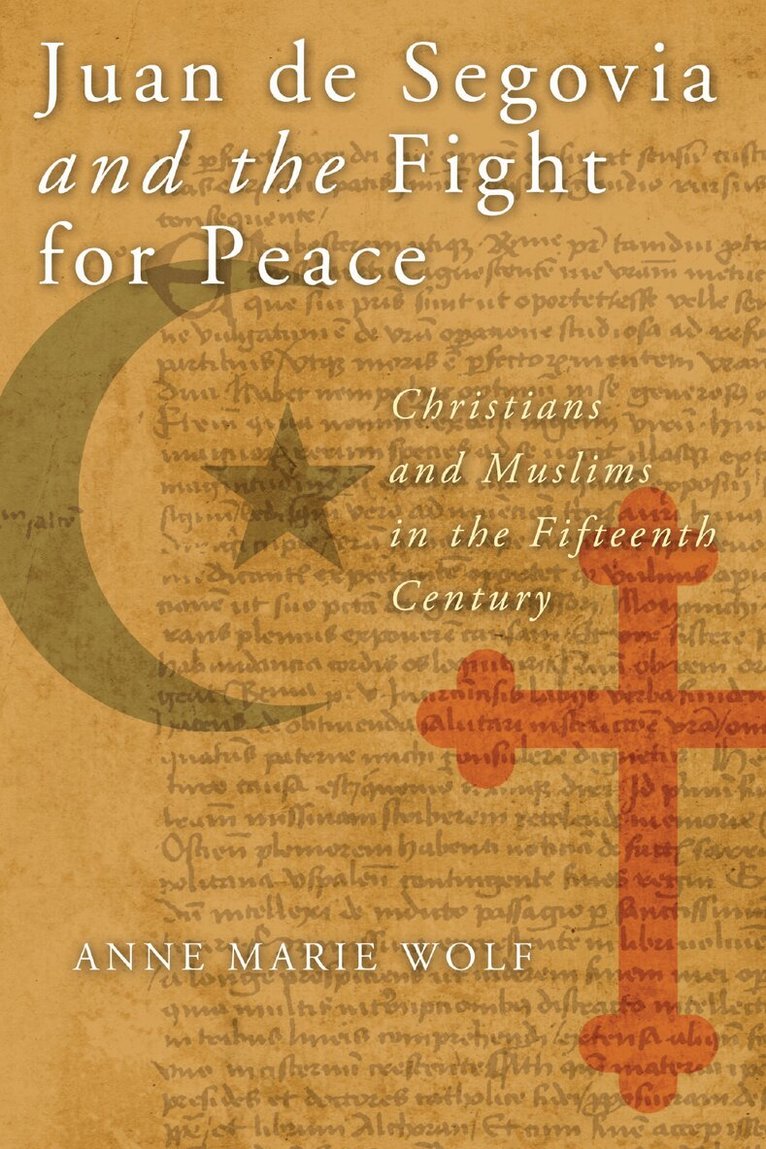
Juan de Segovia (d. 1458), theologian, translator of the Qur'ān, and lifelong advocate for the forging of peaceful relations between Christians and Muslims, was one of Europe's leading intellectuals. Today, however, few scholars are familiar with this important fifteenth-century figure. In this well-documented study, Anne Marie Wolf presents a clear, chronological narrative that follows the thought and career of Segovia, who taught at the University of Salamanca, represented the university at the Council of Basel (1431–1449), and spent his final years arguing vigorously that Europe should eschew war with the ascendant Ottoman Turks and instead strive to convert them peacefully to Christianity. What could make a prominent thinker, especially one who moved in circles of power, depart so markedly from the dominant views of his day and advance arguments that he knew would subject him to criticism and even ridicule? Although some historians have suggested that the multifaith heritage of his native Spain accounts for his unconventional belief that peaceful dialogue with Muslims was possible, Wolf argues that other aspects of his life and thought were equally important. For example, his experiences at the Council of Basel, where his defense of conciliarism in the face of opposition contributed to his ability to defend an unpopular position and where his insistence on conversion through peaceful means was bolstered by discussions about the proper way to deal with the Hussites, refined his arguments that peaceful conversion was prefereable to war. Ultimately Wolf demonstrates that Segovia's thought on Islam and the proper Christian stance toward the Muslim world was consistent with his approach to other endeavors and with cultural and intellectual movements at play throughout his career.
Inbunden, Engelska, 2022
1 631 kr
Skickas inom 10-15 vardagar
Pastoral Quechua explores the story of how the Spanish priests and missionaries of the Catholic church in post-conquest Peru systematically attempted to "incarnate" Christianity in Quechua, a large family of languages and dialects spoken by the dense Andes populations once united under the Inca empire. By codifying (and imposing) a single written standard, based on a variety of Quechua spoken in the former Inca capital of Cuzco, and through their translations of devotional, catechetical, and liturgical texts for everyday use in parishes, the missionary translators were on the front lines of Spanish colonialism in the Andes. The Christian pastoral texts in Quechua are important witnesses to colonial interactions and power relations. Durston examines the broad historical contexts of Christian writing in Quechua; the role that Andean religious images and motifs were given by the Spanish translators in creating a syncretic Christian-Andean iconography of God, Christ, and Mary; the colonial linguistic ideologies and policies in play; and the mechanisms of control of the subjugated population that can be found in the performance practices of Christian liturgy, the organization of the texts, and even in certain aspects of grammar.
Inbunden, Engelska, 2022
1 122 kr
Skickas inom 10-15 vardagar
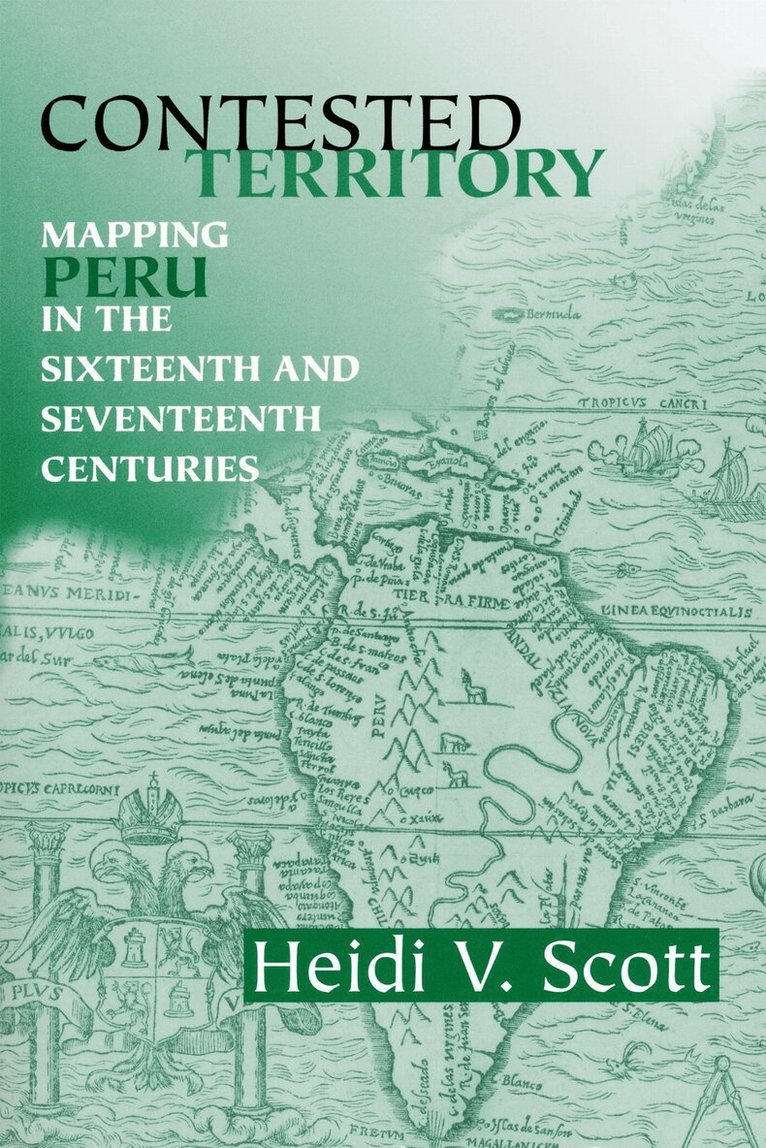
Landscape is never static, but changes continuously when seen in relation to human occupation, movement, labor, and discourse. Contested Territory explores the ways in which Peru's early colonial landscapes were experienced and portrayed, especially by the Spanish conquerors but also by their conquered subjects. It focuses on the role played by indigenous groups in shaping the Spanish experiences of landscapes, the diverse geographical images of Peru and ways in which these were constructed and contested, and what this can tell us about the nature of colonial relations in post-conquest Peru. This exceptional study, which draws from archival records and sources such as cartographies, offers a richly nuanced view of the complexity of colonial relations. It will be read with appreciation by those interested in Spanish history, geography, and colonialism.
Inbunden, Engelska, 2022
1 401 kr
Skickas inom 10-15 vardagar
When the Spanish invaded the Inca empire in 1532, the cult of the ancestors was an essential feature of pre-Columbian religion throughout the Andes. The dead influenced politics, protected the living, symbolized the past, and legitimized claims over the land their descendants occupied, while the living honored the presence of the dead in numerous aspects of daily life. A central purpose of the Spanish missionary endeavor was to suppress the Andean cult of the ancestors and force the indigenous people to adopt their Catholic, legal, and cultural views concerning death. In her book, Gabriela Ramos reveals the extent to which Christianizing death was essential for the conversion of the indigenous population to Catholicism.Ramos argues that understanding the relation between death and conversion in the Andes involves not only considering the obvious attempts to destroy the cult of the dead, but also investigating a range of policies and strategies whose application demanded continuous negotiation between Spaniards and Andeans. Drawing from historical, archaeological, and anthropological research and a wealth of original archival materials, especially the last wills and testaments of indigenous Andeans, Ramos looks at the Christianization of death as it affected the lives of inhabitants of two principal cities of the Peruvian viceroyalty: Lima, the new capital founded on the Pacific coast by the Spanish, and Cuzco, the old capital of the Incas in the Andean highlands. Her study of the wills in particular demonstrates the strategies that Andeans devised to submit to Spanish law and Christian doctrine, preserve bonds of kinship, and cement their place in colonial society.
Häftad, Engelska, 2004
388 kr
Skickas inom 5-8 vardagar
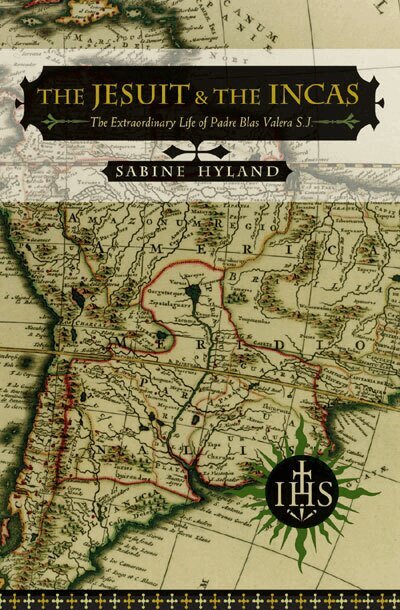
In the spirit of justice Blas Valera broke all the rules-and paid with his life. Hundreds of years later, his ghost has returned to haunt the official story. But is it the truth, and will it set the record straight?This is the tale of Father Blas Valera, the child of a native Incan woman and Spanish father, caught between the ancient world of the Incas and the conquistadors of Spain. Valera, a Jesuit in sixteenth-century Peru, believed in what to his superiors was pure heresy: that the Incan culture, religion, and language were equal to their Christian counterparts.As punishment for his beliefs he was imprisoned, beaten, and, finally, exiled to Spain, where he died at the hands of English pirates in 1597.Four centuries later, this Incan chronicler had been all but forgotten, until an Italian anthropologist discovered some startling documents in a private Neapolitan collection. The documents claimed, among other things, that Valera's death had been faked by the Jesuits; that he had returned to Peru; and, intriguingly, while there had taught his followers that the Incas used a secret phonetic quipu-a record-keeping device of the Inca empire-to record history.Far from settling anything, the documents created an international sensation among scholars and led to bitter disputes over how they should be assessed. Are they forgeries, authentic documents, or something in between? If genuine, they will radically reform our view of Inca culture and Valera. The author insightfully examines the evidence, showing how fact and fiction intertwine, and brings the dimly understood history of this author-priest to light.Sabine Hyland is Co-director of a multidisciplinary project studying the Chanka people of Peru. She holds a doctoral degree in anthropology from Yale, and is Assistant Professor of Anthropology at St. Norbert College.
Häftad, Engelska, 2006
377 kr
Skickas inom 5-8 vardagar
Romans in a New World shows how the ancient Romans haunted the Spanish conquest of the New World, more often than not as passionately rejected models. While the conquistadors themselves and their publicists challenged the reputations of the Romans for incomparable military genius and daring, Spanish critics of the conquest launched a concerted assault upon two other prominent uses of ancient Rome as a model: as an exemplar of imperialistic motives and behavior fit for Christians to follow, and as a yardstick against which to measure the cultural level of the natives of the New World. In the course of this debate, many Spaniards were inspired to think more deeply on their own ethnic ancestry and identity, as Spanish treatment of the New World natives awakened the slumbering memory of Roman treatment of the Iberian tribes whom modern Spaniards were now embracing as their truest ancestors. At the same time, growing awareness of the cultural practices--especially the religious rituals--of the American natives framed a new perspective on both the pre-Christian ancestors of modern Europeans and even on the survival of "pagan" customs among modern Europeans themselves. In this incisive study, David A. Lupher addresses the increasingly debated question of the impact the discovery of the New World had upon Europeans' perceptions of their identity and place in history. Romans in a New World holds much to interest both classicists and students of the history and culture of early modern Europe--especially, though not exclusively, historians of Spain. David A. Lupher's concern with the ideology of imperialism and colonization and with cross-cultural negotiations will be useful to students of cultural studies, as well. David A. Lupher is Professor of Classics, University of Puget Sound.
Häftad, Engelska, 2006
366 kr
Skickas inom 5-8 vardagar
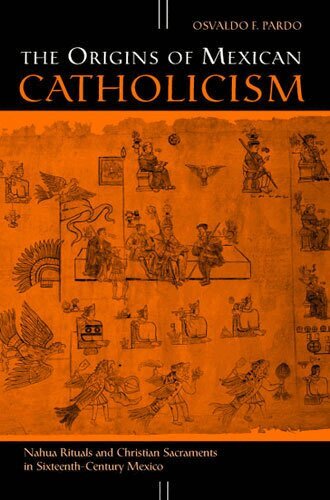
"Pardo's study provides a persuasive criticism of the widespread assumption that the process of Christianization in Mexico can be conceived as the imposition of a complete and fool-proof system that did not accept doubts or compromises. The Origins of Mexican Catholicism will become an invaluable tool for future researchers and enrich future debates on the subject." ---Fernando Cervantes, Bristol University, UK"Pardo does an excellent job of balancing and contrasting sixteenth-century Catholic theology with Nahua thought and belief." ---John F. Schwaller, University of MinnesotaAt first glance, religious conversion may appear to be only a one-way street. When studying sixteenth-century Mexico, one might assume that colonial coercion was the driving force behind the religious conversion of the native population. But The Origins of Mexican Catholicism shows how Spanish missionaries instead drew on existing native ceremonies in order to make Christianity more accessible to the Nahua population whom they were trying to convert. Osvaldo F. Pardo explains that religious figures not only shaped native thought, but that indigenous rituals had an impact on the religion itself. This work illustrates the complex negotiations that took place in the process of making the Christian sacraments available to the native peoples, and at the same time, forced the missionaries to reexamine the meaning of their sacraments through the eyes of an alien culture. For Spanish missionaries, ritual not only became a focus of evangelical concern but also opened a window to the social world of the Nahuas. Missionaries were able to delve into the Nahua's notions of self, emotions, and social and cosmic order. By better understanding the sociological aspects of Nahua culture, Christians learned ways to adequately convey their religion through mutual understanding instead of merely colonial oppression. Given its interdisciplinary approach, this book will be of interest to specialists in Latin American intellectual and literary history, the history of religion, and anthropology, and to anyone interested in cross-cultural processes.
Inbunden, Engelska, 2001
1 139 kr
Skickas inom 5-8 vardagar
The medieval Visigothic kingdom--even after the full-scale conversion of the population from Arianism to Catholicism--was barely held together by a fluctuating mixture of tradition inherited from Roman law, Germanic and provincial influences, local custom, and Catholic values. In her study of a society riddled with instability and conflicting paradigms of power, Rachel Stocking dissects the social meaning of consensus in the early medieval state. Using the compelling example of contemporary records and by drawing out the often-conflicting aspirations of kings and bishops, she addresses the dynamic and contradictory relationship between the ideals of Christian governance and early medieval social conditions.This eloquently presented, exhaustive study concludes that legislation, however persistently enacted, was unequal to the task of remedying a lack of unity and other social and political ills. Notions of consensus are explored as a way of maintaining community cohesion and order in the absence of strong central authorities. Other issues the author confronts are Catholic tolerance and intolerance toward heterodox and non-Christian "others;" the transformation and transmission of ancient ideals and social structures from the Roman to the later medieval worlds; and the position of medieval Spain in relation to the mainstream of western European history.This nuanced study is a must-read for anyone interested in medieval life, politics, religion, and the precarious nature of the medieval state.Rachel Stocking is Professor of History, Southern Illinois University at Carbondale.
Inbunden, Engelska, 2003
1 376 kr
Skickas inom 5-8 vardagar
A Network of Converso Families in Early Modern Toledo addresses the fortunes of Jewish families who converted to Catholicism in fifteenth-century Spain. From the fifteenth through the seventeenth century, their careers, successes, and misfortunes are traced as they confront institutional and societal prejudices in the form of the Spanish Inquisition and pure blood statutes. Linda M. Martz focuses on families that were immersed in the worlds of business and finance. They formed the backbone of the trade industry and, during the economic expansion of the sixteenth century, enjoyed a high degree of affluence. The seventeenth century, however, brought harder times. How these families rose to positions of commercial eminence and then adapted to this economic downturn is one of the questions addressed in this insightful book. A Network of Converso Families in Early Modern Toledo relies heavily on archival evidence--notarial, parish, and city records--that offers new insights into the families' histories. Business endeavors, marriage alliances, involvement in local politics, and the pursuit of improved social status are all subjected to Martz's keen analysis. These families appear to have been well integrated into their contemporary society; aside from their business and financial activities, many were members of the city's governing council. But how well did they integrate with the lower classes? Assimilating minorities in the majority culture is a task that confronts most modern societies, so the experience of Spain and this particular minority may serve as an example of how earlier societies viewed and confronted this challenge. This book will appeal to historians of medieval and Renaissance Spain and those interested in the Inquisition's effect on Renaissance Spain. It will also prove to be indispensable for those interested in the history of the Jewish race, as well as for those pursuing the question of marginalization. Linda M. Martz is an independent historian as well as a freelance editor and writer.
Inbunden, Engelska, 2004
1 309 kr
Skickas inom 5-8 vardagar
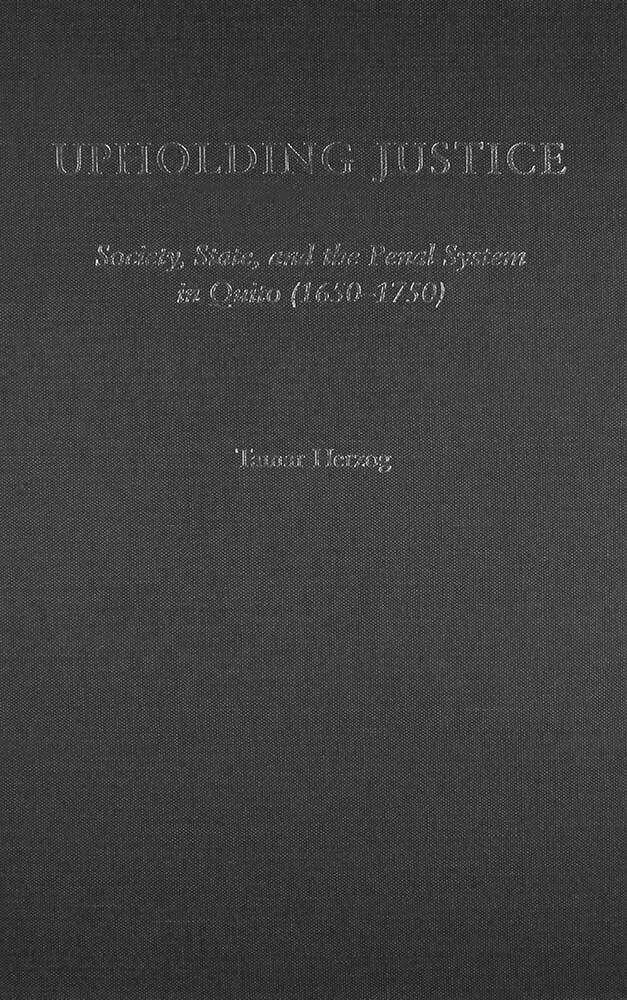
In colonies like Quito, order was typically maintained by local, private law enforcement, while weak and impoverished bureaucratic infrastructures receded into the background. Judicial administration was therefore open to the influences of social networks, rumor, and reputation. Upholding justice was a communal rather than a state-run enterprise, and the dominating rules were social and theological rather than legal.Herzog's combination of legal and historical analysis challenges the traditional paradigm in which the state was born under Spain's Catholic monarchs and only later exported to Spanish America. Her research reveals a more integrated and less oppositional relationship between the state and early modern society. Including both a specific case study and an innovative framework for the study of interactions between society, law, and the state, Upholding Justice will interest scholars of history, Latin American studies, anthropology, law, and political science.Tamar Herzog is Associate Professor of History at the University of Chicago.
Inbunden, Engelska, 2006
1 241 kr
Skickas inom 5-8 vardagar
Jews, Christian Society, and Royal Power in Medieval Barcelona traces the development of the Jewish community of Barcelona from 1050 to 1300. Elka Klein challenges the common perception that medieval Jews lived in relative isolation from the surrounding society, argues for the existence of significant cultural common ground between Jews and Christians, and proposes a new model for understanding Jewish communal autonomy and the relationship between Jews and their rulers.Klein traces the development of the Jewish community of Barcelona in two contexts: the parallel development of the city of Barcelona and the changing relationship of the king to urban communities, Jewish and Christian. Until the later twelfth century, the Jewish community, like the Christian city of Barcelona, was left mostly to its own devices by the counts of Barcelona, who had neither the interest nor the power to interfere in internal affairs. Klein draws on both Hebrew and Latin sources to offer a picture of a communal elite whose power, mostly informal, derived from their influence within the community. This system changed in the later twelfth century as a result of the expansion of comitial-royal administration. Four Jewish families used their positions as bailiffs, accountants, and secretaries to consolidate power within their community. The rule of this courtier elite was short lived; two episodes of communal conflict in the early thirteenth century and increased royal activism led to the institution of a new regime of elected officials in 1241. The book concludes with an examination of the new elite and the implications of increased royal interference in internal affairs.A central argument of Jews, Christian Society, and Royal Power in Medieval Barcelona is that it is necessary to distinguish between autonomy by default, resulting from the indifference of the ruler, who leaves a community to govern itself; and autonomy by design, guaranteed by selective royal interference. Against the view that royal interference undercut Jewish autonomy, Klein argues that autonomy by default left the community with insufficient power to enforce its decisions; because Catalan kings generally interfered in support of existing structures, autonomy by design in fact strengthened the community.This book contributes to ongoing debates about the relationship between the cultures of the three religions in the Iberian peninsula. It joins a body of recent scholarship arguing that medieval European Jews and Christians shared considerable cultural common ground.