Religion, Politics, and Public Life Under the auspices of the Leonard E. Greenb – serie
Visar alla böcker i serien Religion, Politics, and Public Life Under the auspices of the Leonard E. Greenb. Handla med fri frakt och snabb leverans.
6 produkter
6 produkter
E-bok
PDF, Engelska, 2008757 kr
Läs direkt efter köp
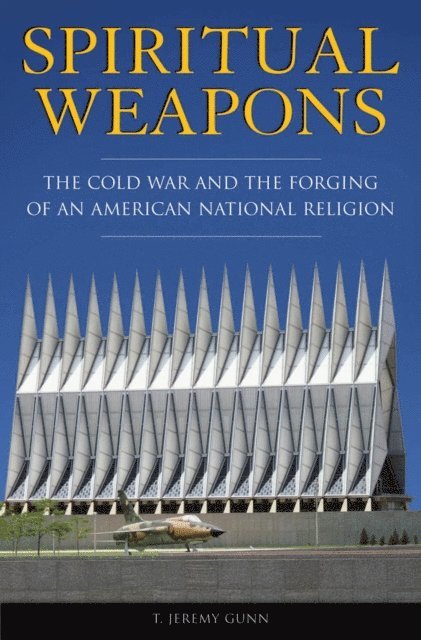
While some may argue that religion has & continues to influence U.S. foreign policy, others would argue that foreign policy has significantly influenced an American National Religion after 1947. Here, Gunn shows that in the wake of World War II, Americans quickly returned to their traditional peacetime suspicion of the military & engaged in disputes over capitalism. When Churchill delivered his Iron Curtain speech in 1946, the American press & American politicians panned it. Only one year later, the United States began to identify itself in reaction to the Soviet Union & its growing power and influence on the world stage. If the USSR promoted governmental affirmations of atheism, so the United States would respond with its public declarations of God. This was the origin of under God in the Pledge of Allegiance (1954), In God We Trust on paper money (1955), and other public declarations about God and religion. Tracing the development of this influence on American religion, Gunn reveals a new way of looking at how public faith has been transformed by world events and the U.S.'s reaction to them.Covering topics such as American national religion, government sponsorship of God and prayer, military activities, the Vietnam war, and current views on religion and foreign policy, the author underscores the ongoing influence foreign affairs and foreign policy have on religion and how it is practiced, both privately and publicly, in the United States. The post-WWII backlash to events occurring around the world, he contends, continues to shape and inform our notions of God and country, public faith, and the U.S.'s position in the global village. Taking the reader through this history to the present day, the author sheds new light on this important topic.
E-bok
PDF, Engelska, 2007636 kr
Läs direkt efter köp
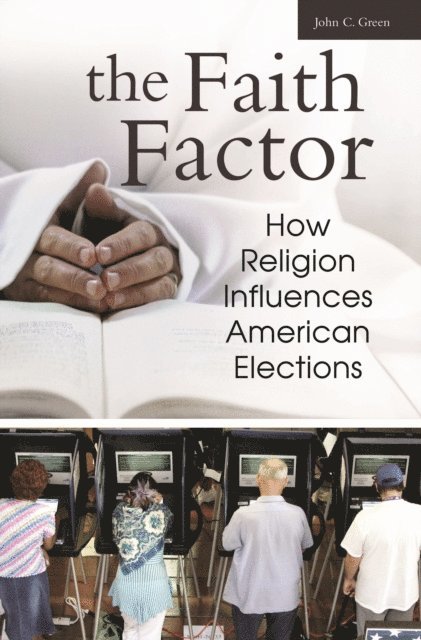
The impact of religion on the 2004 presidential election results provoked widespread consternation and surprise. In fact, religion and faith have played a vital role in American elections for some time, and here, Green explores the links and how they have changed over time.Green posits that an old religion gap describing longstanding political differences among religious communities has been supplanted by a new religion gap revealing political divisions based on religious behavior and belief. He puts the differences into context and documents the changing role of religion in politics over the last 60 years.The impact of religion on the 2004 presidential election results provoked widespread consternation and surprise. Given the intensity and closeness of the results, however, the role of religion should not have come as a shock. In fact, religion and faith have played a vital role in American elections for some time, and here, Green explores the links and how they have changed over time. Specifically, he concludes that there was an old religion gap that described longstanding political differences among religious communities, which has been supplanted by a new religion gap that shows political divisions based on religious behavior and belief. Green puts the differences into context and documents the changing role of religion in politics over the last sixty years.Covering three areas of religion that tend to influence election outcomes, Green illuminates the meaning of religious belonging, behaving, and believing in current political context. Each of these aspects of religion affects the way people vote and their views of issues, ideology, and partisanship. He reviews the importance of moral values in the major party coalitions and discusses the role religious appeals have in presidential campaigns. In addition, he compares the influence of religion to other factors such as gender, age, and income. Given the emphasis on the influence of religion on American politics and elections in recent years, this book serves as a cogent reminder that the situation is not new, and offers a careful analysis of the real role faith plays in the electing of government officials.
Inbunden, Engelska, 2008
634 kr
Skickas inom 10-15 vardagar
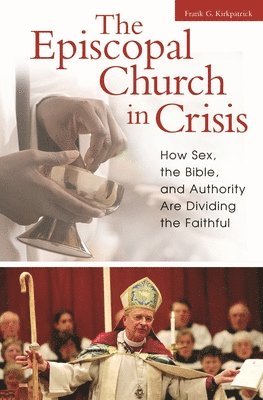
The current debate in the Episcopal Church in the United States (ECUSA) over its relationship with the worldwide Anglican Communion has been building for some time. Some Episcopalians (including priests, bishops, and dioceses) have broken or are considering breaking their historic affiliation with the current authoritative bodies of ECUSA because they believe they have betrayed the historic teachings and morality of the Anglican tradition. The author places this emerging crisis in context: historical, moral, theological, cultural, and ecclesiological. He explores how the rift between Episcopalians in the United States originated, how it is being played out now in the rift between the official representatives of ECUSA and the Anglican Communion, what the arguments are for and against all sides, and what are the prospects for either reconciliation at some level between the opposing parties or deepening schism in the future. Kirkpatrick explores the variety of contentious issues, rather than focusing just on the one that gets the most media attention: homosexuality.The crisis in the Church goes much deeper than that, however, and involves issues of church, tradition, and biblical authority. The author provides necessary background but focuses primarily on the events that have occurred since 2003 when ECUSA approved the election and consecration of an openly gay bishop. While the situation continues to evolve and change, the book provides readers with an up-to-date account of the history of the crisis, an analysis of the conflicting arguments, and a contextual guide for understanding what might come next in this unfolding story.
E-bok
PDF, Engelska, 2008878 kr
Läs direkt efter köp
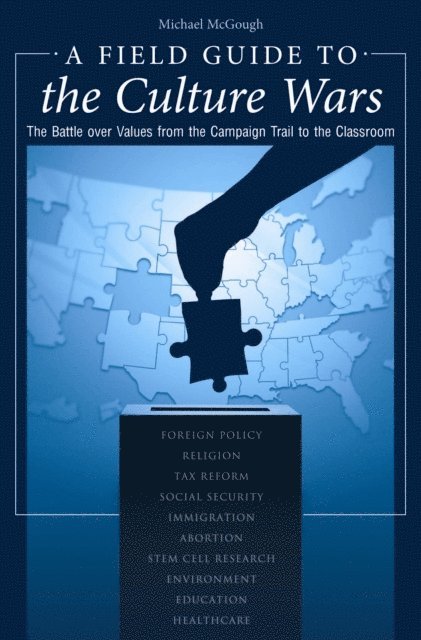
Like any realignment in politics, the Democratic takeover of Congress in the 2006 midterm elections inspired a raft of instant analyses. One take on the results that is surely wrong is that the change in control of Congress and the spike in Democratic hopes for the 2008 presidential race mark an end to the culture wars that conventional wisdom blamed (or credited) for George W. Bush's re-election in 2004. This book sets the stage for a new consideration of the contemporary culture wars by examining their antecedents—from the Scopes trial to Prohibition to the controversy over the Supreme Court's desegregation and school-prayer rulings to loyalty-oath battles of the 1950s to the pre- Roe v. Wade campaign to liberalize abortion laws. Even during times of supposed conformism, Americans have been presented with competing claims about what sort of culture this is and how and to what extent government should reflect, and police, values. The author covers such topics as same-sex marriage, stem cell research, intelligent design, and other hot button issues that are debated not just between the religious and secular, but more and more among the ranks of the religious themselves, where a religious left has emerged to counter arguments from the religious right. Anyone interested in the intersection of religion and politics, in the rise of the so-called moral majority, and in the current state of affairs with regard to values and public life in America will gain a better understanding from reading this book.
Inbunden, Engelska, 2008
703 kr
Skickas inom 10-15 vardagar
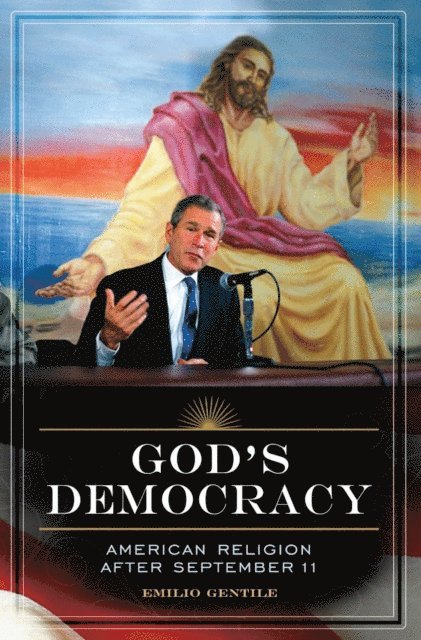
In God's Democracy, Emilio Gentile argues that the presidency of George W. Bush sought to alter the way religion functions in American political life. Prior to the events of 9/11, the national government operated under a civil religious regime that placed a sacred umbrella over the entire country and its leading political figures. American civil religion was not only an inclusive faith, but one that provided ample room for citizens with different politics and different world views. But in the wake of 9/11, President Bush used religion to differentiate Americans on partisan lines. Relying heavily on his evangelical Christian base, he attempted to substitute for the inclusivism of the traditional American civil religion an exclusivist political religion in which Democrats were portrayed as hostile to religious values and incapable of dealing with the country's foreign enemies. This book provides the historical context for this attempted transformation, and shows in a detailed way how the Bush administration pursued it. Gentile concludes by posing the question of whether this radical shift in the way Americans understand themselves religiously will prove permanent.Unlike other works that strive to show how religion has generally come to be treated in American politics, this new book looks more squarely at the Bush Administration and its attempt to shut out Democrats from the political process by invoking religious language and ideals. He goes on to consider the political exclusivism and whether or not it will persist beyond Bush's tenure.
E-bok
PDF, Engelska, 2008757 kr
Läs direkt efter köp
In God's Democracy, Emilio Gentile argues that the presidency of George W. Bush sought to alter the way religion functions in American political life. Prior to the events of 9/11, the national government operated under a civil religious regime that placed a sacred umbrella over the entire country and its leading political figures. American civil religion was not only an inclusive faith, but one that provided ample room for citizens with different politics and different world views. But in the wake of 9/11, President Bush used religion to differentiate Americans on partisan lines. Relying heavily on his evangelical Christian base, he attempted to substitute for the inclusivism of the traditional American civil religion an exclusivist political religion in which Democrats were portrayed as hostile to religious values and incapable of dealing with the country's foreign enemies. This book provides the historical context for this attempted transformation, and shows in a detailed way how the Bush administration pursued it. Gentile concludes by posing the question of whether this radical shift in the way Americans understand themselves religiously will prove permanent.Unlike other works that strive to show how religion has generally come to be treated in American politics, this new book looks more squarely at the Bush Administration and its attempt to shut out Democrats from the political process by invoking religious language and ideals. He goes on to consider the political exclusivism and whether or not it will persist beyond Bush's tenure.