Animals Culture and Society - Böcker
Visar alla böcker i serien Animals Culture and Society. Handla med fri frakt och snabb leverans.
14 produkter
14 produkter
998 kr
Skickas inom 7-10 vardagar
How veterinarians and pet owners manage companion animal euthanasia.
360 kr
Skickas inom 7-10 vardagar
How veterinarians and pet owners manage companion animal euthanasia.
1 167 kr
Skickas inom 7-10 vardagar
Winner of the Charles Horton Cooley Award, Society for the Study of Symbolic Interaction, 1997The first edition of Regarding Animals provided insight into the history and practice of how human beings construct animals, and how we construct ourselves and others in relation to them. Considerable progress in how society regards animals has occurred since that time. However, shelters continue to euthanize companion animals, extinction rates climb, and wildlife “management” pits human interests against those of animals. This revised and updated edition of Regarding Animals includes four new chapters, examining how relationships with pets help homeless people to construct positive personal identities; how adolescents who engage in or witness animal abuse understand their acts; how veterinary technicians experience both satisfaction and contamination in their jobs; and how animals are represented in mass media-both traditional editorial media and social media platforms.The authors illustrate how modern society makes it possible for people to shower animals with affection and yet also to abuse or kill them. Although no culture or subculture provides solutions for resolving all moral contradictions, Regarding Animals illuminates how people find ways to live with inconsistent behavior.
363 kr
Skickas inom 7-10 vardagar
Winner of the Charles Horton Cooley Award, Society for the Study of Symbolic Interaction, 1997The first edition of Regarding Animals provided insight into the history and practice of how human beings construct animals, and how we construct ourselves and others in relation to them. Considerable progress in how society regards animals has occurred since that time. However, shelters continue to euthanize companion animals, extinction rates climb, and wildlife “management” pits human interests against those of animals. This revised and updated edition of Regarding Animals includes four new chapters, examining how relationships with pets help homeless people to construct positive personal identities; how adolescents who engage in or witness animal abuse understand their acts; how veterinary technicians experience both satisfaction and contamination in their jobs; and how animals are represented in mass media-both traditional editorial media and social media platforms.The authors illustrate how modern society makes it possible for people to shower animals with affection and yet also to abuse or kill them. Although no culture or subculture provides solutions for resolving all moral contradictions, Regarding Animals illuminates how people find ways to live with inconsistent behavior.
323 kr
Skickas inom 7-10 vardagar
What is it about Western society, ask the authors, that makes it possible for people to express great affection for animals as sentient creatures and simultaneously turn a blind eye to the most callous behavior toward them? Animals are sold as expensive commodities, used as food and clothing, killed as vermin, and hunted for sport. But they also are treated as members of the family, used as the cause celebre of social movements, and made the subject of art, film, and poetry. Such contradictions motivate these unique ethnographers to venture into social worlds most people know about only in passing, such as veterinary clinics where companion animals are cared for, animal shelters where dogs and cats are "mercifully" euthanized, and primate labs where monkeys are kept for animal experimentation. Arluke and Sanders are not distanced ethnographers. They worked in the clinics, shelters, and laboratories, cleaning cages, assisting in surgery, and participating in "sacrificing" animals for science or helping to provide them with an "easy death."In this book, the people who work with these animals and live through them talk to the authors about the strategies they adopt to cope with the stress of the job. This fascinating book combines sociological analysis with ethnographic description to give us insight into the history and practice of how we as human beings construct animals, and by extrapolation, how we construct ourselves and others in relation to them. Author note: Arnold Arluke is Professor of Sociology at Northeastern University and a Research Associate at the Center for Animals and Public Policy at Tufts School of Veterinary Medicine. He is an Associate Editor of Society and Animals and the author of The Making of Rehabilitation: A Political Economy of Medical Specialization with Glenn Gritzer and Gossip: The Inside Scoop with Jack Levin. Clinton R. Sanders, Professor of Sociology at the University of Connecticut, is the author of Customizing the Body: The Art and Culture of Tattooing (Temple) and the co-editor (with Jeff Ferrell) of Cultural Criminology.
309 kr
Skickas inom 11-20 vardagar
Thought-provoking arguments and behaviors on both sides of the controversy surrounding biomedical research on animals
315 kr
Skickas inom 7-10 vardagar
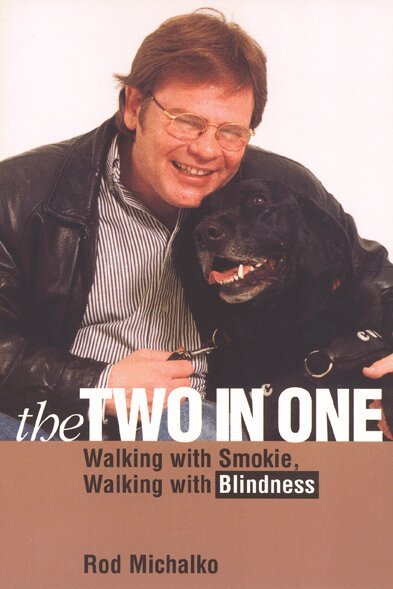
When Rod Michalko's sight finally became so limited that he no longer felt safe on busy city streets or traveling alone, he began a search for a guide. The Two-in-One is his account of how his search ended with Smokie, a guide dog, and a dramatically different sense of blindness. Few people who regularly encountered Michalko in his neighborhood shops and cafes realized that he was technically blind; like many people with physical disabilities, he had found ways of compensating for his impairment. Those who knew about his condition thought of him as a fully realized person who just happened to be blind. He thought so himself. Until Smokie changed all that. In this often moving, always compelling meditations on his relationship with Smokie, Michalko probes into what it means to be at home with blindness. Smokie makes no judgment about Michalko's lack of sight; it simply is the condition within which they work together. Their partnership thus allows Michalko to step outside of the conventional -- and even \u0022enlightened\u0022 -- understanding of blindness; he becomes not simply resigned to it but able to embrace it as an essential part of his being in the world.Drawing on his training as a sociologist and his experience as a disabled person, Michalko joins a still small circle of scholars who examine disability from the inside. More rare still -- and what will resonate with most readers -- is Michalko's remarkable portrayal of Smokie; avoiding sentimentality and pathos, it is a deeply affectionate yet restrained and nuanced appreciation of his behavior and personality. From their first meeting at the dog guide training school, Smokie springs to life in these pages as a highly competent, sure-footed, take-charge, full-speed-ahead, indispensable partner. \u0022Sighties\u0022 are always in awe watching them work; Michalko has even persuaded some of them that the Smokester can locate street addresses -- but has a little difficulty with the odd numbers! Readers of The Two-in-One can easily imagine Rod and Smokie sharing the joke as they continue on their way.
1 115 kr
Skickas inom 7-10 vardagar
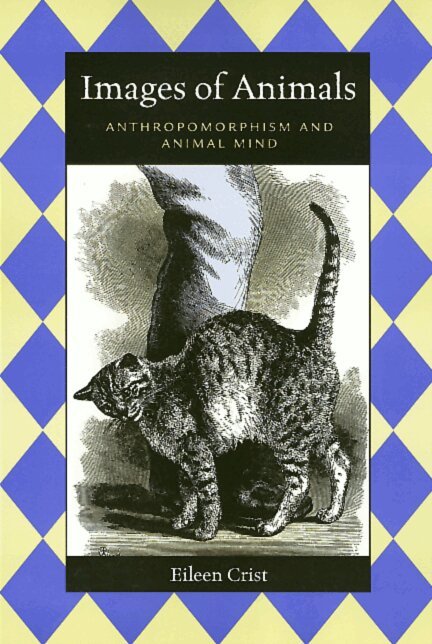
Seeing a cat rubbing against a person, Charles Darwin described her as \u0022in an affectionate frame of mind\u0022; for Samuel Barnett, a behavioralist, the mental realm is beyond the grasp of scientists andbehavior must be described technically, as a physical action only. What difference does this difference make? In Eileen Crist's analysis of the language used to portray animal behavior, the difference \u0022is that in the reader's mind the very image of the cat's 'body' is transfigured...from an experiencing subject...into a vacant object.\u0022 Images of Animals examines the literature of behavioral science, revealing how works with the common aim of documenting animal lives, habits, and instincts describe \u0022realities that are worlds apart.\u0022 Whether the writer affirms the Cartesian verdict of an unbridgeable chasm between animals and humans or the Darwinian panorama of evolutionary continuity, the question of animal mind is ever present and problematic in behavioral thought.Comparing the naturalist writings of Charles Darwin, Jean Henri Fabre, and George and Elizabeth Peckham to works of classical ethology by Konrad Lorenz and Nikolaas Tinbergen and of contemporary sociobiology, Crist demonstrates how words matter. She does not attempt to defend any of these constructions as a faithful representation of animal existence, but to show how each internally coherent view molds the reader's understanding of animals. Rejecting the notion that \u0022a neutral language exists, or can be constructed, which yields incontestably objective accounts of animal behavior,\u0022 Crist argues that \u0022language is not instrumental in the depiction of animals and, in particular, it is never impartial with respect to the question of animal mind.\u0022
323 kr
Skickas inom 7-10 vardagar
Can people have authentic social relationships with speechless animals? What does your dog mean to you, your understanding of yourself, and your perceived and actual relationships with other s and the world? What do you mean to your dog? In Understanding Dogs, sociologist and faithful dog companion Clinton R. Sanders explores the day-to-day experiences of living and working with domestic dogs. Based on a decade of research in veterinary offices and hospitals, dog guide training schools, and obediences classes -- and colored with his personal experiences and observations at and outside home with his own canine companions -- Sanders's book examines how everyday dog owners come to know their animal companions as thinking, emotional, and responsive individuals. Linking animal companionship with social as well as personal identity, Understanding Dogs uses detailed ethnographic data in viewing human and animal efforts to understand, manipulate, care for, and interact with each other.From nineteenth-century disapproval of what was seen as irresponsibly indulgent pet ownership among the poor to Bill Clinton's caring and fun-loving image and populist connection to the \u0022common person\u0022 as achieved through his labrador companion Buddy, Sanders looks at how dogs serve not only as social facilitators but also as adornments to social identity. He also reveals how, while we often strive to teach and shape our dogs' behavior, dogs often teach us to appreciate with more awareness a nourishing meal, physical warmth, a walk in the woods, and the simple joys of the immediate moment. Sanders devotes chapters to the specialized work of guide dog trainers; the problems and joys experienced by guide dog owners; the day-to-day work of veterinarians dealing with the healing, death, and euthanizing of their animal patients; and the everyday interactions, assumptions, and approaches of people who choose, for various reasons and in various ways, to spend their lives in the company of dogs. Understanding Dogs will interest those who live and work with animals as well as those studying the sociology of human-animal interactions.
417 kr
Skickas inom 7-10 vardagar
Seeing a cat rubbing against a person, Charles Darwin described her as \u0022in an affectionate frame of mind\u0022; for Samuel Barnett, a behavioralist, the mental realm is beyond the grasp of scientists andbehavior must be described technically, as a physical action only. What difference does this difference make? In Eileen Crist's analysis of the language used to portray animal behavior, the difference \u0022is that in the reader's mind the very image of the cat's 'body' is transfigured...from an experiencing subject...into a vacant object.\u0022 Images of Animals examines the literature of behavioral science, revealing how works with the common aim of documenting animal lives, habits, and instincts describe \u0022realities that are worlds apart.\u0022 Whether the writer affirms the Cartesian verdict of an unbridgeable chasm between animals and humans or the Darwinian panorama of evolutionary continuity, the question of animal mind is ever present and problematic in behavioral thought.Comparing the naturalist writings of Charles Darwin, Jean Henri Fabre, and George and Elizabeth Peckham to works of classical ethology by Konrad Lorenz and Nikolaas Tinbergen and of contemporary sociobiology, Crist demonstrates how words matter. She does not attempt to defend any of these constructions as a faithful representation of animal existence, but to show how each internally coherent view molds the reader's understanding of animals. Rejecting the notion that \u0022a neutral language exists, or can be constructed, which yields incontestably objective accounts of animal behavior,\u0022 Crist argues that \u0022language is not instrumental in the depiction of animals and, in particular, it is never impartial with respect to the question of animal mind.\u0022
287 kr
Skickas inom 7-10 vardagar
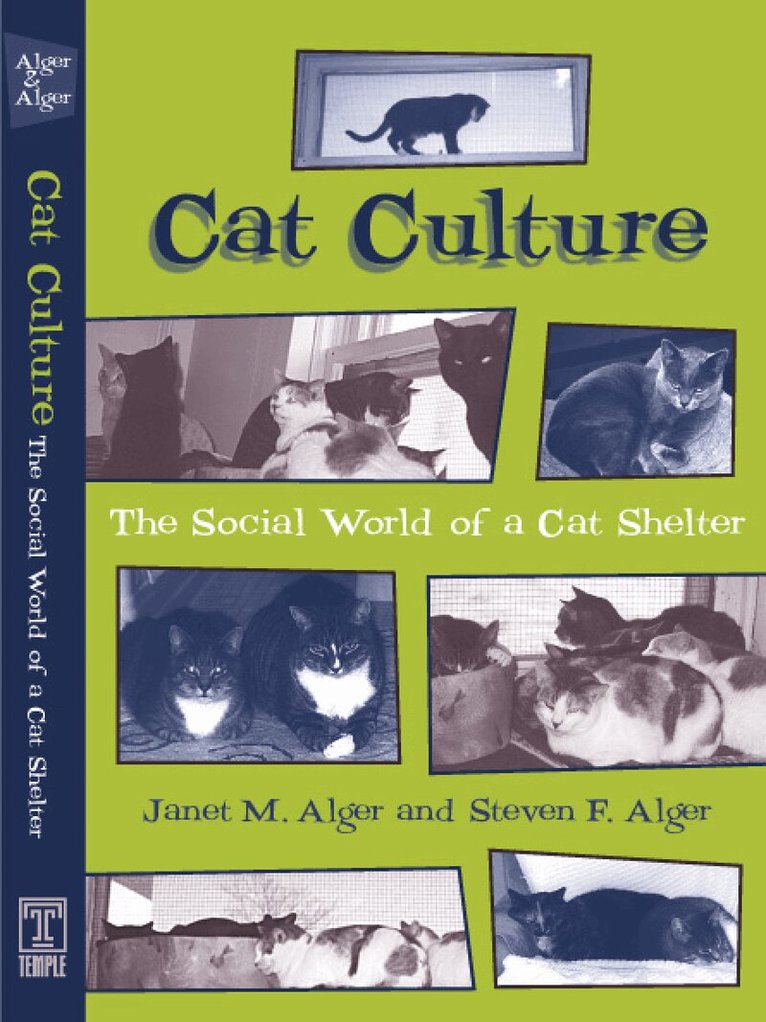
Even people who live with cats and have good reason to know better insist that cats are aloof and uninterested in relating to humans. Janet and Steven Alger contend that the anti-social cat is a myth; cats form close bonds with humans and with each other. In the potentially chaotic environment of a shelter that houses dozens of uncaged cats, they reveal a sense of self and build a culture--a shared set of rules, roles, and expectations that organizes their world and assimilates newcomers. As volunteers in a local cat shelter for eleven years, the Algers came to realize that despite the frequency of new arrivals and adoptions, the social world of the shelter remained quite stable and pacific. They saw even feral cats adapt to interaction with humans and develop friendships with other cats. They saw established residents take roles as welcomers and rules enforcers. That is, they saw cats taking an active interest in maintaining a community in which they could live together and satisfy their individual needs.Cat Culture's intimate portrait of life in the shelter, its engaging stories, and its interpretations of behavior, will appeal to general readers as well as academics interested in human and animal interaction. Author note: Janet M. Alger is Professor of Sociology at Siena College. Steven F. Alger is Associate Professor of Sociology at the College of St. Rose.
284 kr
Skickas inom 7-10 vardagar
Narrowing the gulf between humans and animals
864 kr
Skickas inom 7-10 vardagar
How humans think and feel about their work handling food animals
350 kr
Skickas inom 7-10 vardagar
How humans think and feel about their work handling food animals