Ashgate Wittgensteinian Studies - Böcker
Visar alla böcker i serien Ashgate Wittgensteinian Studies. Handla med fri frakt och snabb leverans.
14 produkter
14 produkter
2 103 kr
Skickas inom 10-15 vardagar
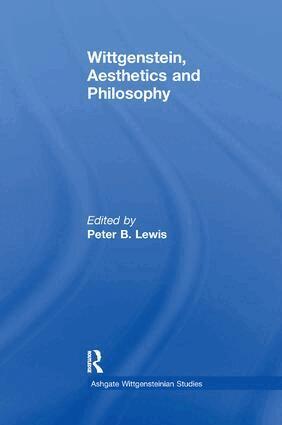
Although universally recognised as one of the greatest of modern philosophers, Wittgenstein's work in aesthetics has been unjustly neglected. This is the first book exclusively devoted to Wittgenstein's aesthetics, exploring the themes developed by Wittgenstein in his own writing on aesthetics as well as the implications of Wittgenstein's wider philosophical views for understanding central issues in aesthetics. Drawing together original contributions from leading international scholars, this book will be an important addition to studies of Wittgenstein's thought, but its discussion of issues in literature, music and performing art, and criticism will also be of interest to many students of literary and cultural studies. Exploring three key themes - the capacity of the arts to illuminate our lives; the nature of the particular responses involved in understanding and appreciating works of art; the role of theory and principle in artistic and critical practice - the contributors address issues raised by contemporary philosophers of art, and seek to make connections between Wittgenstein's work and that of other significant philosophies of art in the Western tradition. Displaying the best practice of modern philosophical writing - clarity, cogency, respect for but not blind obedience to common sense, argument illustrated with detailed examples, rejection of speculation and pretension - this book demonstrates how philosophy can make a valuable contribution to understanding the arts.
Gadamer and Wittgenstein on the Unity of Language
Reality and Discourse without Metaphysics
Inbunden, Engelska, 2005
2 103 kr
Skickas inom 10-15 vardagar
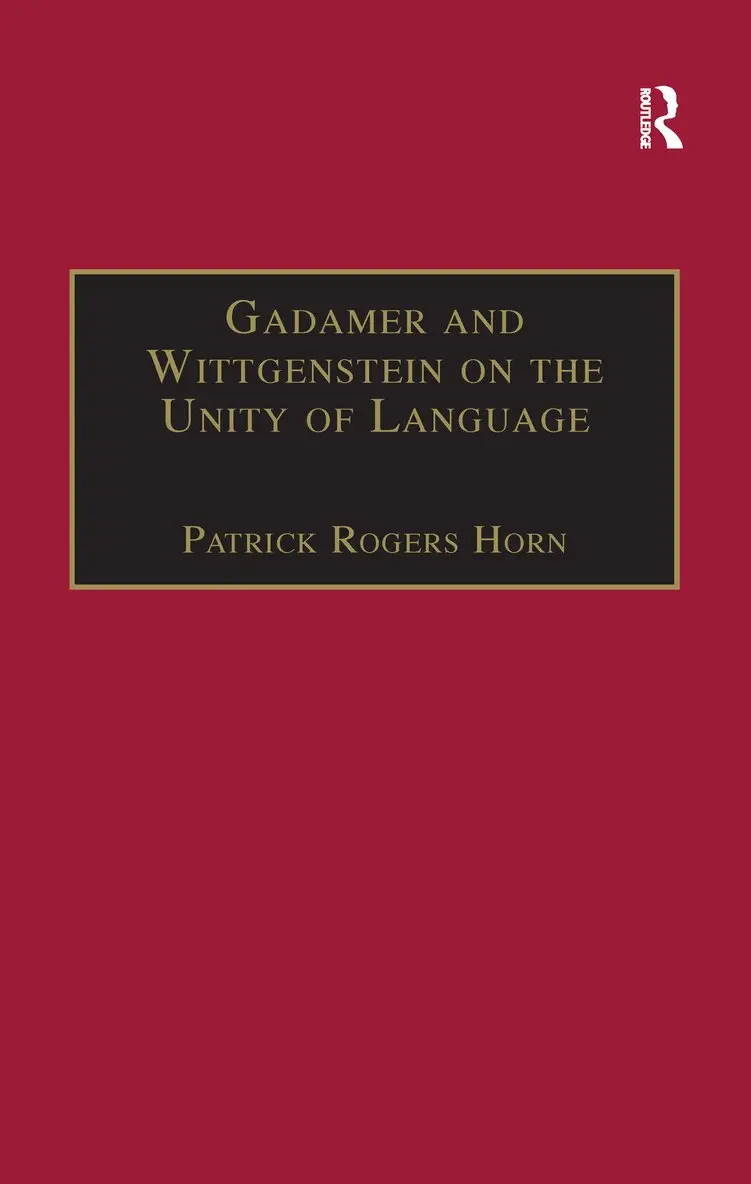
In this innovative comparison of Gadamer and Wittgenstein, the author explores their common concern with the relation of language to reality. Patrick Horn's starting point is the widely accepted view that both philosophers rejected a certain metaphysical account of that relation in which reality determines the nature of language. Horn proceeds to argue that Gadamer never completely escaped metaphysical assumptions in his search for the unity of language. In this respect, argues Horn, Gadamer's work is nearer to the earlier rather than to the later Wittgenstein. The final chapter of the book highlights the work of Wittgenstein’s pupil Rush Rhees, who shows that Wittgenstein's own later emphasis on language games, while doing justice to the variety of language, does less than justice to the dialogical relation between speakers of a language, wherein the unity of language resides. Contrasting Rhees's account of the unity of language with those given by Gadamer and the early Wittgenstein brings out the importance of understanding reality in terms of the life that people share rather than in terms of what philosophers say about reality.
2 103 kr
Skickas inom 10-15 vardagar
This anthology establishes the existence of a distinct and important post-Investigations Wittgenstein, uncovering the overlooked treasures of the final corpus and crystallising key perceptions of what his last thought was achieving. Speaking of a 'third Wittgenstein', this book seeks to correct the traditional bipartite conception of Wittgenstein's thought into his Tractatus and Philosophical Investigations by focusing on his neglected last masterpiece, On Certainty, and works contemporaneous with it: Remarks on Colour, Last Writings in the Philosophy of Psychology, and Remarks on the Philosophy of Psychology. Â Leading international Wittgenstein scholars reveal why On Certainty should be recognised as one of Wittgenstein's three great works. This sustained examination shows that the third Wittgenstein breaks new ground with insights unprecedented in both his own work and philosophy more broadly, giving us keys to the solution and dissolution of problems that have plagued philosophy since Descartes, such as philosophical scepticism and the mind-body problem. Wittgenstein's ultimate and revised positions with regard to epistemology, foundationalism, 'grammar', naturalism, the psychology of language, and psychological indeterminacy are clearly delineated. This book also provides new and illuminating accounts of difficult concepts, such as patterns of life, experiencing meaning, meaning blindness, lying and pretence.
2 103 kr
Skickas inom 10-15 vardagar
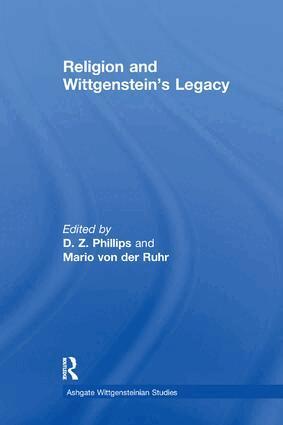
Wittgenstein was one of the greatest philosophers of the twentieth century. In this collection, distinguished Wittgenstein scholars examine his legacy for the philosophy of religion by examining key areas of his work: Wittgenstein's Tractatus; Frazer's 'Golden Bough'; and the implications of his later philosophy for the understanding of religion. Assessments are also provided of the philosophical and theological reception of his work. The collection provides an invaluable resource for graduate and undergraduate teaching of Wittgenstein in relation to religion.
2 103 kr
Skickas inom 10-15 vardagar
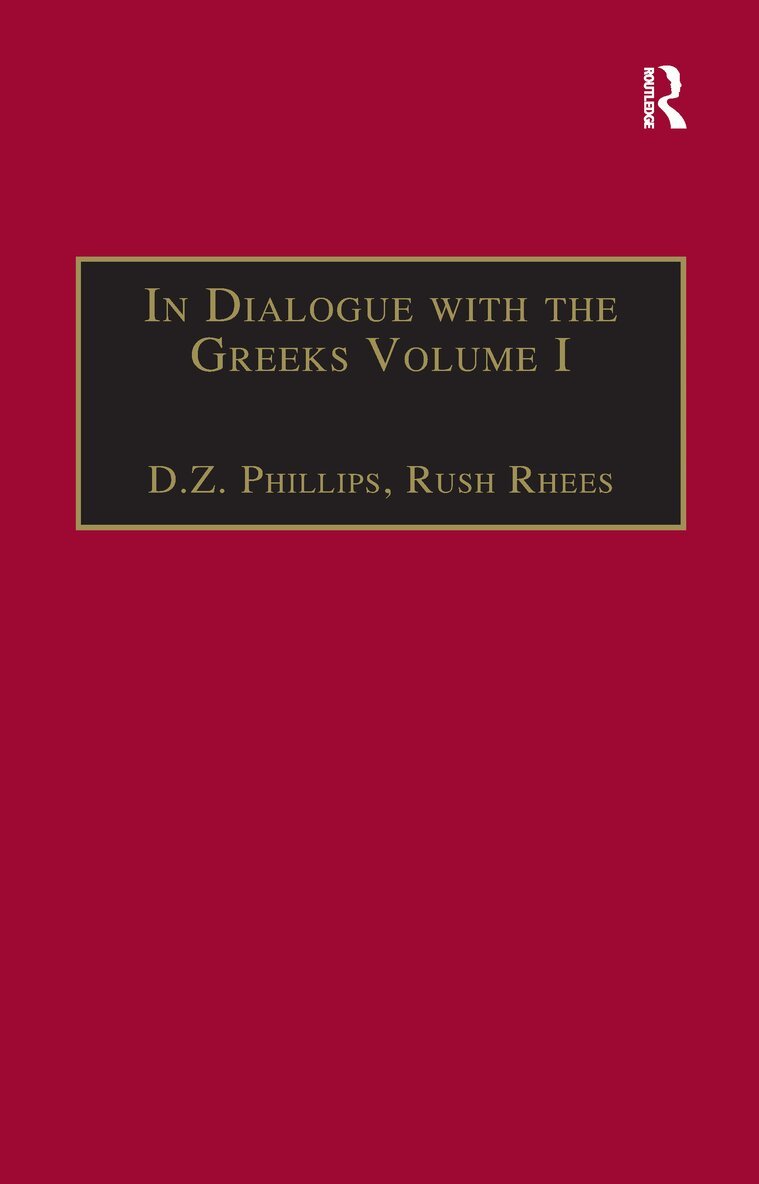
This first of two volumes on the Greeks by Rush Rhees addresses the central philosophical question: In what sense does philosophy investigate reality? In answering this question, Rhees brings the work of the Presocratics into close relation with contemporary philosophy. D.Z. Phillips's editorial commentary is particularly helpful in assisting the reader with their bearings as they approach the text and in elucidating the developments in Rhees's thinking. How is the philosophical investigation of reality different from that of science and can it be said that science investigates aspects of reality, whereas philosophy investigates reality as such? In this first volume Rhees affirms that most of the Presocratics seemed to be seeking a science of being qua being, looking for an essence of reality that simply is. Rhees asks, if the existence of reality cannot be denied, then how can it be asserted either? Does it make sense to say that reality exists? If we speak of something existing, we speak of the conditions of its existence that are independent of the 'something' in question, so how can this be said about reality? What conditions can be other than reality itself? Rhees argues that whatever unity reality has, it cannot be the unity of a thing. Rhees brings out how individual Presocratics are aware of their predecessors' difficulties, only to fall prey to new difficulties of their own. Rhees suggests that what is philosophically deep in their questionings can be found in discussing the relation of discourse and reality. Does what we say to each other depend on an underlying logic that determines what can and cannot be said, or on a system of unchanging meanings; or is the distinction between sense and nonsense rooted in our actual ways of thinking and acting? In discussing these Wittgensteinian themes, Rhees is not simply elucidating the Presocratics but is in dialogue with them.
2 103 kr
Skickas inom 10-15 vardagar
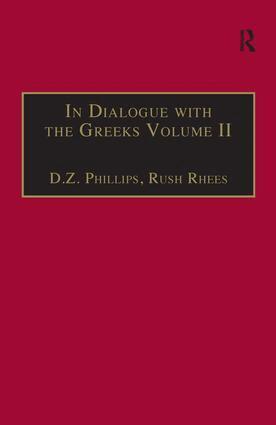
This second of two volumes on the Greeks by Rush Rhees takes up the questions bequeathed by the previous volume. If reality does not have the unity of a thing, can it have any kind of unity at all? The alternative seems to be that reality has the unity of a form. In this volume Rhees brings the perspective of a modern Wittgensteinian philosopher to bear on the dialogues of Plato. In his treatment of the Georgias and the Symposium Rhees emphasizes Socrates' claim that it is important to seek understanding although one cannot say, in the form of a theory or philosophical thesis, what that understanding amounts to. In considering the Phaedo, Theaetetus, Parmenides and Timaeus, Rhees pursues these questions in a way which relates them to live issues concerning the relation between logic and discourse. Rhees shows that Plato's Forms can neither be thought of by analogy with 'ultimate' particles in physics, nor as fixed concepts that determine what can and cannot be said. Finally, D. Z. Phillips includes two treatments by Rhees of the Republic separated by fifteen years. In the first he criticises Plato for a fixed view that an order predetermines and makes possible growth in understanding, showing how this is the very antithesis of growth. In the second he returns to the tension in Plato's thought between 'answerability to reality' and the view that understanding and growth can only be achieved through a seeking in dialogue. Rhees concludes that language is not a collection of isolated games, rather we speak in the course of lives that we lead and what we say has its meaning from the place it occupies in the course of a life.
1 842 kr
Skickas inom 10-15 vardagar
This two volume set of Rush Rhees's In Dialogue with the Greeks brings together Rhees's work on the Presocratics and on Plato. The first volume addresses the central philosophical question: In what sense does philosophy investigate reality? In answering this question Rhees brings the work of the Presocratics into close relation with contemporary philosophy. The second volume takes up the questions bequeathed by the first. If reality does not have the unity of a thing, can it have any kind of unity at all? The alternative seems to be that reality has the unity of a form. In this second volume Rhees brings the perspective of a modern Wittgensteinian philosopher to bear on the dialogues of Plato concluding that language is not a collection of isolated games, rather we speak in the course of lives that we lead and what we say has its meaning from the place it occupies in the course of a life. D.Z. Phillips' editorial commentary is particularly helpful in assisting the reader with their bearings as they approach the text and elucidating the developments in Rhees's thinking.
2 171 kr
Skickas inom 10-15 vardagar
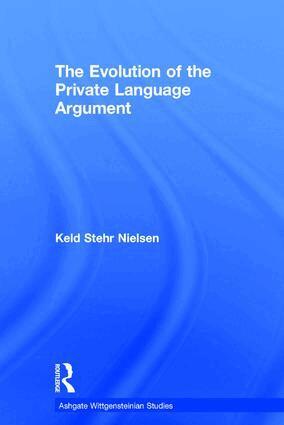
The Evolution of the Private Language Argument presents a continuous view of modern analytical philosophy by telling the history of one of its central strands. It is an in-depth history of this well known philosophical argument, the evolution of Wittgenstein's thoughts and its influence on analytical philosophy of mind and language. Nielsen looks at early discussions of the private language argument in the Vienna Circle and the influence of Wittgenstein's ideas and examines the relation between the early and later Wittgenstein on this subject. He discusses which influential versions of the private language argument have been presented in the fifty years since Philosophical Investigations was published and how they relate to Wittgenstein's thoughts, and considers how the role and the interpretation of the argument, and Wittgenstein's philosophy, changed along with changes in the conception of the nature of analytic philosophy.
818 kr
Skickas inom 10-15 vardagar
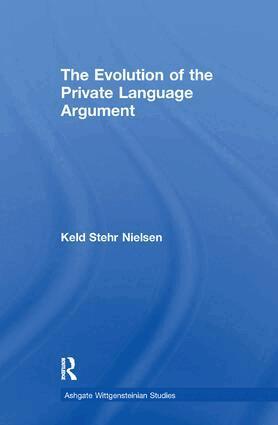
The Evolution of the Private Language Argument presents a continuous view of modern analytical philosophy by telling the history of one of its central strands. It is an in-depth history of this well known philosophical argument, the evolution of Wittgenstein's thoughts and its influence on analytical philosophy of mind and language. Nielsen looks at early discussions of the private language argument in the Vienna Circle and the influence of Wittgenstein's ideas and examines the relation between the early and later Wittgenstein on this subject. He discusses which influential versions of the private language argument have been presented in the fifty years since Philosophical Investigations was published and how they relate to Wittgenstein's thoughts, and considers how the role and the interpretation of the argument, and Wittgenstein's philosophy, changed along with changes in the conception of the nature of analytic philosophy.
Gadamer and Wittgenstein on the Unity of Language
Reality and Discourse without Metaphysics
Häftad, Engelska, 2016
764 kr
Skickas inom 10-15 vardagar
In this innovative comparison of Gadamer and Wittgenstein, the author explores their common concern with the relation of language to reality. Patrick Horn's starting point is the widely accepted view that both philosophers rejected a certain metaphysical account of that relation in which reality determines the nature of language. Horn proceeds to argue that Gadamer never completely escaped metaphysical assumptions in his search for the unity of language. In this respect, argues Horn, Gadamer's work is nearer to the earlier rather than to the later Wittgenstein. The final chapter of the book highlights the work of Wittgenstein’s pupil Rush Rhees, who shows that Wittgenstein's own later emphasis on language games, while doing justice to the variety of language, does less than justice to the dialogical relation between speakers of a language, wherein the unity of language resides. Contrasting Rhees's account of the unity of language with those given by Gadamer and the early Wittgenstein brings out the importance of understanding reality in terms of the life that people share rather than in terms of what philosophers say about reality.
818 kr
Skickas inom 10-15 vardagar
This anthology establishes the existence of a distinct and important post-Investigations Wittgenstein, uncovering the overlooked treasures of the final corpus and crystallising key perceptions of what his last thought was achieving. Speaking of a 'third Wittgenstein', this book seeks to correct the traditional bipartite conception of Wittgenstein's thought into his Tractatus and Philosophical Investigations by focusing on his neglected last masterpiece, On Certainty, and works contemporaneous with it: Remarks on Colour, Last Writings in the Philosophy of Psychology, and Remarks on the Philosophy of Psychology. Â Leading international Wittgenstein scholars reveal why On Certainty should be recognised as one of Wittgenstein's three great works. This sustained examination shows that the third Wittgenstein breaks new ground with insights unprecedented in both his own work and philosophy more broadly, giving us keys to the solution and dissolution of problems that have plagued philosophy since Descartes, such as philosophical scepticism and the mind-body problem. Wittgenstein's ultimate and revised positions with regard to epistemology, foundationalism, 'grammar', naturalism, the psychology of language, and psychological indeterminacy are clearly delineated. This book also provides new and illuminating accounts of difficult concepts, such as patterns of life, experiencing meaning, meaning blindness, lying and pretence.
818 kr
Skickas inom 10-15 vardagar
This first of two volumes on the Greeks by Rush Rhees addresses the central philosophical question: In what sense does philosophy investigate reality? In answering this question, Rhees brings the work of the Presocratics into close relation with contemporary philosophy. D.Z. Phillips's editorial commentary is particularly helpful in assisting the reader with their bearings as they approach the text and in elucidating the developments in Rhees's thinking. How is the philosophical investigation of reality different from that of science and can it be said that science investigates aspects of reality, whereas philosophy investigates reality as such? In this first volume Rhees affirms that most of the Presocratics seemed to be seeking a science of being qua being, looking for an essence of reality that simply is. Rhees asks, if the existence of reality cannot be denied, then how can it be asserted either? Does it make sense to say that reality exists? If we speak of something existing, we speak of the conditions of its existence that are independent of the 'something' in question, so how can this be said about reality? What conditions can be other than reality itself? Rhees argues that whatever unity reality has, it cannot be the unity of a thing. Rhees brings out how individual Presocratics are aware of their predecessors' difficulties, only to fall prey to new difficulties of their own. Rhees suggests that what is philosophically deep in their questionings can be found in discussing the relation of discourse and reality. Does what we say to each other depend on an underlying logic that determines what can and cannot be said, or on a system of unchanging meanings; or is the distinction between sense and nonsense rooted in our actual ways of thinking and acting? In discussing these Wittgensteinian themes, Rhees is not simply elucidating the Presocratics but is in dialogue with them.
764 kr
Skickas inom 10-15 vardagar
Wittgenstein was one of the greatest philosophers of the twentieth century. In this collection, distinguished Wittgenstein scholars examine his legacy for the philosophy of religion by examining key areas of his work: Wittgenstein's Tractatus; Frazer's 'Golden Bough'; and the implications of his later philosophy for the understanding of religion. Assessments are also provided of the philosophical and theological reception of his work. The collection provides an invaluable resource for graduate and undergraduate teaching of Wittgenstein in relation to religion.
629 kr
Skickas inom 10-15 vardagar
Although universally recognised as one of the greatest of modern philosophers, Wittgenstein's work in aesthetics has been unjustly neglected. This is the first book exclusively devoted to Wittgenstein's aesthetics, exploring the themes developed by Wittgenstein in his own writing on aesthetics as well as the implications of Wittgenstein's wider philosophical views for understanding central issues in aesthetics. Drawing together original contributions from leading international scholars, this book will be an important addition to studies of Wittgenstein's thought, but its discussion of issues in literature, music and performing art, and criticism will also be of interest to many students of literary and cultural studies. Exploring three key themes - the capacity of the arts to illuminate our lives; the nature of the particular responses involved in understanding and appreciating works of art; the role of theory and principle in artistic and critical practice - the contributors address issues raised by contemporary philosophers of art, and seek to make connections between Wittgenstein's work and that of other significant philosophies of art in the Western tradition. Displaying the best practice of modern philosophical writing - clarity, cogency, respect for but not blind obedience to common sense, argument illustrated with detailed examples, rejection of speculation and pretension - this book demonstrates how philosophy can make a valuable contribution to understanding the arts.