D.Z. Phillips – författare
Visar alla böcker från författaren D.Z. Phillips. Handla med fri frakt och snabb leverans.
34 produkter
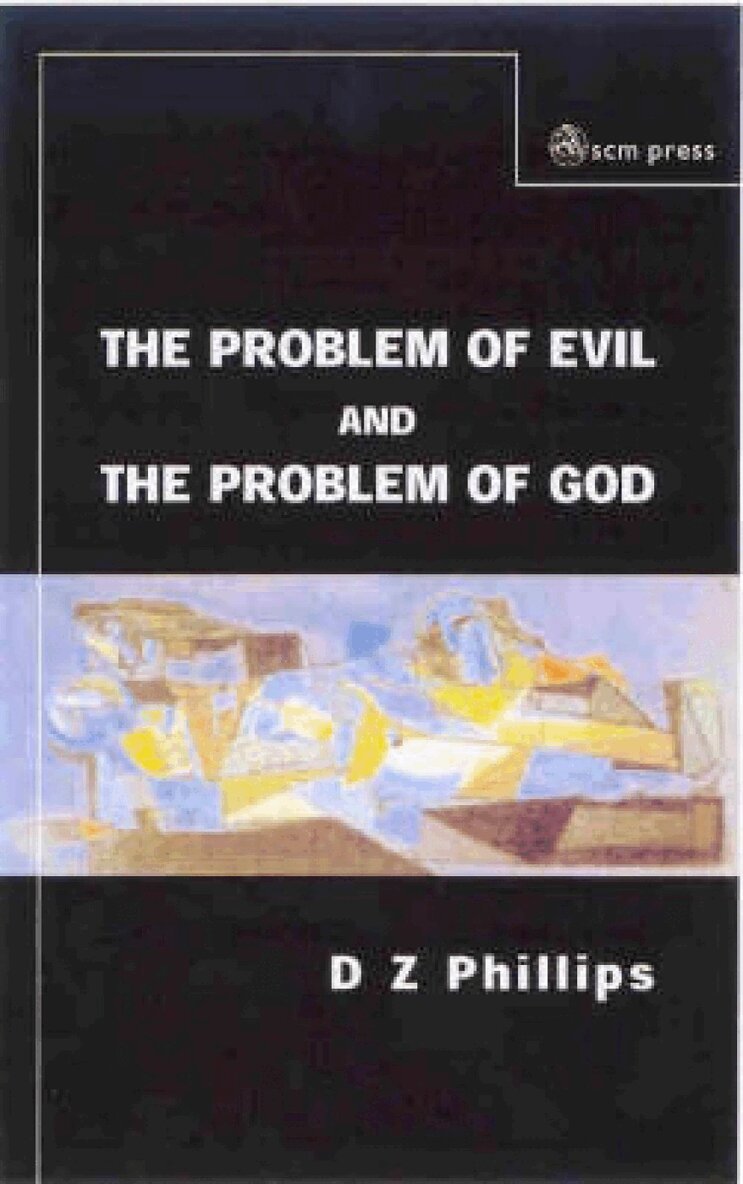
Problem of Evil and the Problem of God
Häftad, 2004
422 kr
Lägg i varukorg
By his own admission this is by far D Z Phillip’s most systematic attempt to discuss the problem of evil. Within the text the author argues that the majority of Anglo-American philosophers of religion who make a distinction between what is called the logical problem of evil and what is known as the …
Moral Practices Vol 6
Inbunden, 2003
1530 kr
Lägg i varukorg
This is Volume VI of nine in a collection of studies in Ethics and the Philosophy of Religion. Originally published in 1970, this volume looks at moral practices and the question which has puzzled philosophers: whether any value judgement can follow logically from the facts, can follow in such a …
Moral Practices Vol 6
Häftad, 2010
388 kr
Lägg i varukorg
This is Volume VI of nine in a collection of studies in Ethics and the Philosophy of Religion. Originally published in 1970, this volume looks at moral practices and the question which has puzzled philosophers: whether any value judgement can follow logically from the facts, can follow in such a …
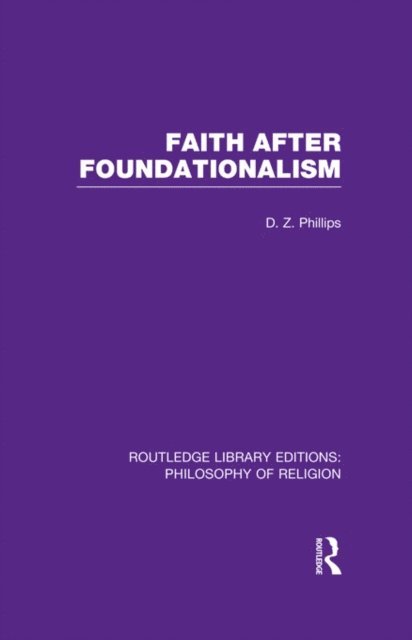
Faith after Foundationalism
Inbunden, 2013
2526 kr
Lägg i varukorg
Foundationalism is the view that philosophical propositions are of two kinds, those which need supporting evidence, and those which in themselves provide the evidence which renders them irrefutable. This book, originally published 1988, describes the battle between foundationalism, which places …
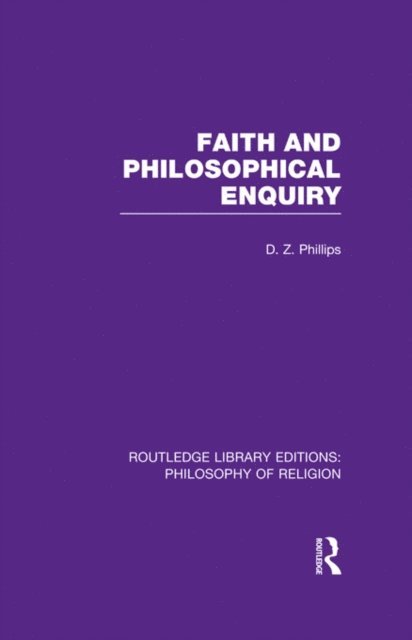
Faith and Philosophical Enquiry
Inbunden, 2013
2526 kr
Lägg i varukorg
The concern of this book is the nature of religious belief and the ways in which philosophical enquiry is related to it. Six chapters present the positive arguments the author wishes to put forward to discusses religion and rationality, scepticism about religion, language-games, belief and the loss …
Religion and Wittgenstein's Legacy
Av Mario von der Ruhr, D.Z. Phillips
Inbunden, 2005
2526 kr
Lägg i varukorg
Wittgenstein was one of the greatest philosophers of the twentieth century. In this collection, distinguished Wittgenstein scholars examine his legacy for the philosophy of religion by examining key areas of his work: Wittgenstein's Tractatus; Frazer's 'Golden Bough'; and the implications of his …
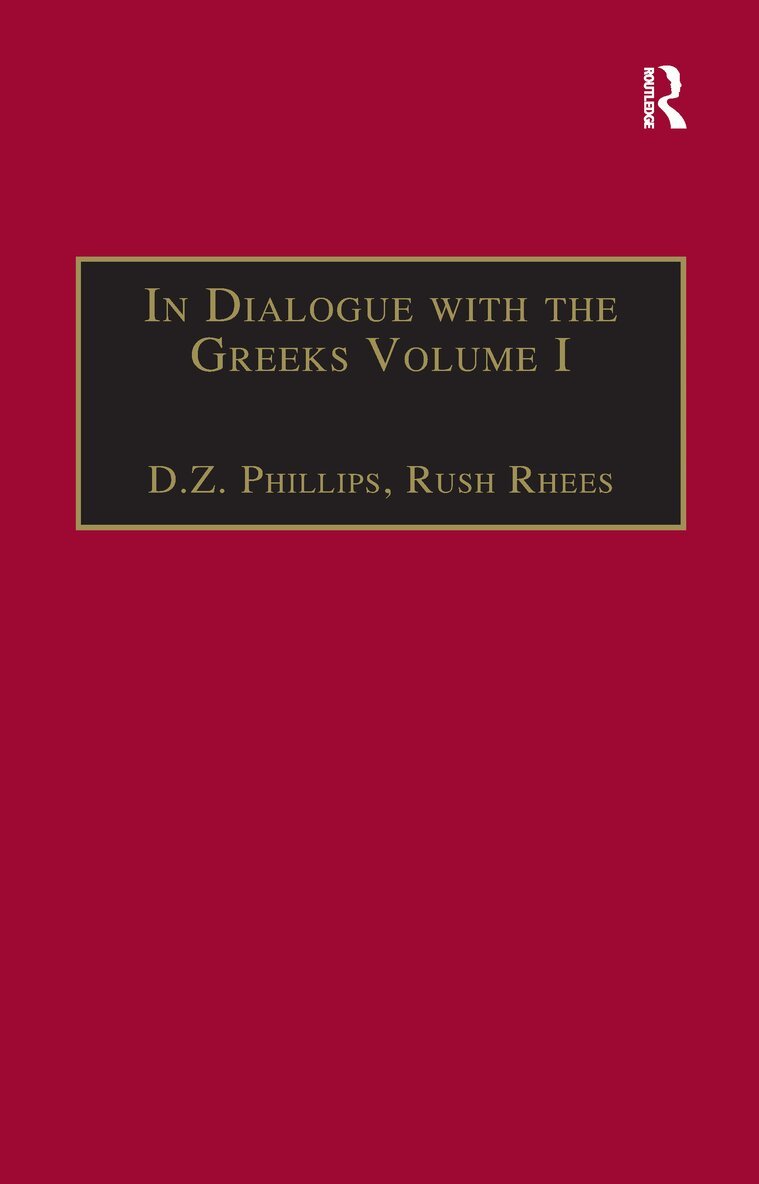
In Dialogue with the Greeks
Volume I: The Presocratics and Reality
Inbunden, 2004
3168 kr
Lägg i varukorg
This first of two volumes on the Greeks by Rush Rhees addresses the central philosophical question: In what sense does philosophy investigate reality? In answering this question, Rhees brings the work of the Presocratics into close relation with contemporary philosophy. D.Z. Phillips's editorial …
In Dialogue with the Greeks
Volume II: Plato and Dialectic
Inbunden, 2004
3168 kr
Lägg i varukorg
This second of two volumes on the Greeks by Rush Rhees takes up the questions bequeathed by the previous volume. If reality does not have the unity of a thing, can it have any kind of unity at all? The alternative seems to be that reality has the unity of a form. In this volume Rhees brings the …
Religion and Friendly Fire
Examining Assumptions in Contemporary Philosophy of Religion
Inbunden, 2004
2526 kr
Lägg i varukorg
In locating friendly fire in contemporary philosophy of religion, D.Z. Phillips shows that more harm can be done to religion by its philosophical defenders than by its philosophical despisers. Friendly fire is the result of an uncritical acceptance of empiricism, and Phillips argues that we need to …
Whose God? Which Tradition?
The Nature of Belief in God
Inbunden, 2008
2526 kr
Lägg i varukorg
Philosophy of Religion is marked by controversy over which philosophical accounts do justice to core religious beliefs. Many Wittgenstinian philosophers are accused by analytic philosophers of religion of distorting these beliefs. In Whose God? Which Tradition?, the accusers stand accused of the …
R.S. Thomas
Poet of the Hidden God
Av D.Z. Phillips, Dikran Y. Hadidian
Häftad, 1986
313 kr
Lägg i varukorg
Whose God? Which Tradition?
The Nature of Belief in God
Häftad, 2021
710 kr
Lägg i varukorg
Philosophy of Religion is marked by controversy over which philosophical accounts do justice to core religious beliefs. Many Wittgenstinian philosophers are accused by analytic philosophers of religion of distorting these beliefs. In Whose God? Which Tradition?, the accusers stand accused of the …
Faith after Foundationalism
E-bok, 2013
935 kr
Lägg i varukorg
Foundationalism is the view that philosophical propositions are of two kinds, those which need supporting evidence, and those which in themselves provide the evidence which renders them irrefutable. This book, originally published 1988, describes the battle between foundationalism, which places …
Faith after Foundationalism
E-bok, 2013
915 kr
Lägg i varukorg
Foundationalism is the view that philosophical propositions are of two kinds, those which need supporting evidence, and those which in themselves provide the evidence which renders them irrefutable. This book, originally published 1988, describes the battle between foundationalism, which places …
Faith and Philosophical Enquiry
E-bok, 2013
935 kr
Lägg i varukorg
The concern of this book is the nature of religious belief and the ways in which philosophical enquiry is related to it. Six chapters present the positive arguments the author wishes to put forward to discusses religion and rationality, scepticism about religion, language-games, belief and the loss …
Faith and Philosophical Enquiry
E-bok, 2013
935 kr
Lägg i varukorg
The concern of this book is the nature of religious belief and the ways in which philosophical enquiry is related to it. Six chapters present the positive arguments the author wishes to put forward to discusses religion and rationality, scepticism about religion, language-games, belief and the loss …
In Dialogue with the Greeks
Volume I: The Presocratics and Reality
Häftad, 2016
930 kr
Lägg i varukorg
This first of two volumes on the Greeks by Rush Rhees addresses the central philosophical question: In what sense does philosophy investigate reality? In answering this question, Rhees brings the work of the Presocratics into close relation with contemporary philosophy. D.Z. Phillips's editorial …
Religion and Friendly Fire
Examining Assumptions in Contemporary Philosophy of Religion
Häftad, 2017
710 kr
Lägg i varukorg
In locating friendly fire in contemporary philosophy of religion, D.Z. Phillips shows that more harm can be done to religion by its philosophical defenders than by its philosophical despisers. Friendly fire is the result of an uncritical acceptance of empiricism, and Phillips argues that we need to …
Religion and Wittgenstein's Legacy
Av Mario von der Ruhr, D.Z. Phillips
Häftad, 2017
871 kr
Lägg i varukorg
Wittgenstein was one of the greatest philosophers of the twentieth century. In this collection, distinguished Wittgenstein scholars examine his legacy for the philosophy of religion by examining key areas of his work: Wittgenstein's Tractatus; Frazer's 'Golden Bough'; and the implications of his …
Faith and Philosophical Enquiry
Häftad, 2016
798 kr
Lägg i varukorg
The concern of this book is the nature of religious belief and the ways in which philosophical enquiry is related to it. Six chapters present the positive arguments the author wishes to put forward to discusses religion and rationality, scepticism about religion, language-games, belief and the loss …
Faith after Foundationalism
Häftad, 2016
798 kr
Lägg i varukorg
Foundationalism is the view that philosophical propositions are of two kinds, those which need supporting evidence, and those which in themselves provide the evidence which renders them irrefutable. This book, originally published 1988, describes the battle between foundationalism, which places …
Moral Practices Vol 6
E-bok, 2017
450 kr
Lägg i varukorg
This is Volume VI of nine in a collection of studies in Ethics and the Philosophy of Religion. Originally published in 1970, this volume looks at moral practices and the question which has puzzled philosophers: whether any value judgement can follow logically from the facts, can follow in such a …
Moral Practices Vol 6
E-bok, 2017
441 kr
Lägg i varukorg
This is Volume VI of nine in a collection of studies in Ethics and the Philosophy of Religion. Originally published in 1970, this volume looks at moral practices and the question which has puzzled philosophers: whether any value judgement can follow logically from the facts, can follow in such a …
Whose God? Which Tradition?
The Nature of Belief in God
E-bok, 2016
831 kr
Lägg i varukorg
Philosophy of Religion is marked by controversy over which philosophical accounts do justice to core religious beliefs. Many Wittgenstinian philosophers are accused by analytic philosophers of religion of distorting these beliefs. In Whose God? Which Tradition?, the accusers stand accused of the …
Whose God? Which Tradition?
The Nature of Belief in God
E-bok, 2016
831 kr
Lägg i varukorg
Philosophy of Religion is marked by controversy over which philosophical accounts do justice to core religious beliefs. Many Wittgenstinian philosophers are accused by analytic philosophers of religion of distorting these beliefs. In Whose God? Which Tradition?, the accusers stand accused of the …
Religion and Wittgenstein's Legacy
Av Mario von der Ruhr, D.Z. Phillips
E-bok, 2017
1000 kr
Lägg i varukorg
Wittgenstein was one of the greatest philosophers of the twentieth century. In this collection, distinguished Wittgenstein scholars examine his legacy for the philosophy of religion by examining key areas of his work: Wittgenstein''s Tractatus; Frazer''s ''Golden Bough''; and the implications …
Religion and Wittgenstein's Legacy
Av Mario von der Ruhr, D.Z. Phillips
E-bok, 2017
1022 kr
Lägg i varukorg
Wittgenstein was one of the greatest philosophers of the twentieth century. In this collection, distinguished Wittgenstein scholars examine his legacy for the philosophy of religion by examining key areas of his work: Wittgenstein''s Tractatus; Frazer''s ''Golden Bough''; and the implications …
Religion and Friendly Fire
Examining Assumptions in Contemporary Philosophy of Religion
E-bok, 2017
807 kr
Lägg i varukorg
In locating friendly fire in contemporary philosophy of religion, D.Z. Phillips shows that more harm can be done to religion by its philosophical defenders than by its philosophical despisers. Friendly fire is the result of an uncritical acceptance of empiricism, and Phillips argues that we need to …
Religion and Friendly Fire
Examining Assumptions in Contemporary Philosophy of Religion
E-bok, 2017
831 kr
Lägg i varukorg
In locating friendly fire in contemporary philosophy of religion, D.Z. Phillips shows that more harm can be done to religion by its philosophical defenders than by its philosophical despisers. Friendly fire is the result of an uncritical acceptance of empiricism, and Phillips argues that we need to …
In Dialogue with the Greeks
Volume II: Plato and Dialectic
E-bok, 2017
831 kr
Lägg i varukorg
This second of two volumes on the Greeks by Rush Rhees takes up the questions bequeathed by the previous volume. If reality does not have the unity of a thing, can it have any kind of unity at all? The alternative seems to be that reality has the unity of a form. In this volume Rhees brings the …