Asia Pop! - Böcker
Visar alla böcker i serien Asia Pop!. Handla med fri frakt och snabb leverans.
15 produkter
15 produkter
849 kr
Skickas inom 7-10 vardagar
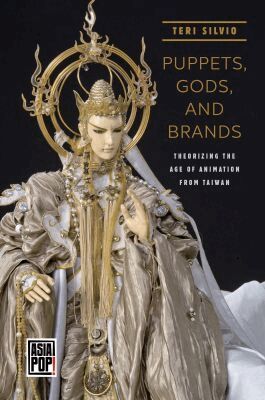
The early twenty-first century has seen an explosion of animation. Cartoon characters are everywhere—in cinema, television, and video games and as brand logos. There are new technological objects that seem to have lives of their own—from Facebook algorithms that suggest products for us to buy to robots that respond to human facial expressions. The ubiquity of animation is not a trivial side-effect of the development of digital technologies and the globalization of media markets. Rather, it points to a paradigm shift. In the last century, performance became a key term in academic and popular discourse: The idea that we construct identities through our gestures and speech proved extremely useful for thinking about many aspects of social life. The present volume proposes an anthropological concept of animation as a contrast and complement to performance: The idea that we construct social others by projecting parts of ourselves out into the world might prove useful for thinking about such topics as climate crisis, corporate branding, and social media.Like performance, animation can serve as a platform for comparisons of different cultures and historical eras.Teri Silvio presents an anthropology of animation through a detailed ethnographic account of how characters, objects, and abstract concepts are invested with lives, personalities, and powers—and how people interact with them—in contemporary Taiwan. The practices analyzed include the worship of wooden statues of Buddhist and Daoist deities and the recent craze for cute vinyl versions of these deities, as well as a wildly popular video fantasy series performed by puppets. She reveals that animation is, like performance, a concept that works differently in different contexts, and that animation practices are deeply informed by local traditions of thinking about the relationships between body and soul, spiritual power and the material world. The case of Taiwan, where Chinese traditions merge with Japanese and American popular culture, uncovers alternatives to seeing animation as either an expression of animism or as “playing God.” Looking at the contemporary world through the lens of animation will help us rethink relationships between global and local, identity and otherness, human and non-human.
319 kr
Skickas inom 7-10 vardagar
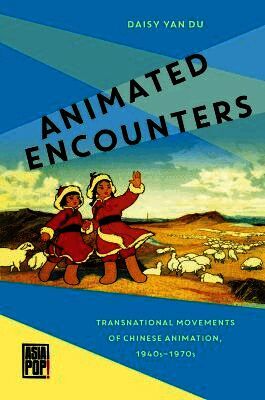
China's role in the history of world animation has been trivialized or largely forgotten. In Animated Encounters Daisy Yan Du addresses this omission in her study of Chinese animation and its engagement with international forces during its formative period, the 1940s-1970s. She introduces readers to transnational movements in early Chinese animation, tracing the involvement of Japanese, Soviet, American, Taiwanese, and China's ethnic minorities, at socio-historical or representational levels, in animated filmmaking in China. Du argues that Chinese animation was international almost from its inception and that such border-crossing exchanges helped make it ""Chinese"" and subsequently transform the history of world animation. She highlights animated encounters and entanglements to provide an alternative to current studies of the subject characterized by a preoccupation with essentialist ideas of ""Chineseness"" and further questions the long-held belief that the forty-year-period in question was a time of cultural isolationism for China due to constant wars and revolutions.China's socialist era, known for the pervasiveness of its political propaganda and suppression of the arts, unexpectedly witnessed a golden age of animation. Socialist collectivism, reinforced by totalitarian politics and centralized state control, allowed Chinese animation to prosper and flourish artistically. In addition, the double marginality of animation—a minor art form for children—coupled with its disarming qualities and intrinsic malleability and mobility, granted animators and producers the double power to play with politics and transgress ideological and geographical borders while surviving censorship, both at home and abroad.A fascinating and enlightening history, Animated Encounters will attract scholars and students of world film and animation studies, children's culture, and modern Chinese history.
874 kr
Skickas inom 7-10 vardagar
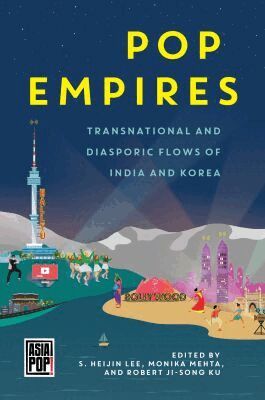
At the start of the twenty-first century challenges to the global hegemony of U.S. culture are more apparent than ever. Two of the contenders vying for the hearts, minds, bandwidths, and pocketbooks of the world's consumers of culture (principally, popular culture) are India and South Korea. “Bollywood” and “Hallyu” are increasingly competing with “Hollywood”—either replacing it or filling a void in places where it never held sway. This critical multidisciplinary anthology places the mediascapes of India (the site of Bollywood), South Korea (fountainhead of Hallyu, aka the Korean Wave), and the United States (the site of Hollywood) in comparative dialogue to explore the transnational flows of technology, capital, and labor. It asks what sorts of political and economic shifts have occurred to make India and South Korea important alternative nodes of techno-cultural production, consumption, and contestation. By adopting comparative perspectives and mobile methodologies and linking popular culture to the industries that produce it as well as the industries it supports, Pop Empires connects films, music, television serials, stardom, and fandom to nation-building, diasporic identity formation, and transnational capital and labor. Additionally, via the juxtaposition of Bollywood and Hallyu, as not only synecdoches of national affiliation but also discursive case studies, the contributors examine how popular culture intersects with race, gender, and empire in relation to the global movement of peoples, goods, and ideas.
309 kr
Skickas inom 7-10 vardagar
The early twenty-first century has seen an explosion of animation. Cartoon characters are everywhere—in cinema, television, and video games and as brand logos. There are new technological objects that seem to have lives of their own—from Facebook algorithms that suggest products for us to buy to robots that respond to human facial expressions. The ubiquity of animation is not a trivial side-effect of the development of digital technologies and the globalization of media markets. Rather, it points to a paradigm shift. In the last century, performance became a key term in academic and popular discourse: The idea that we construct identities through our gestures and speech proved extremely useful for thinking about many aspects of social life. The present volume proposes an anthropological concept of animation as a contrast and complement to performance: The idea that we construct social others by projecting parts of ourselves out into the world might prove useful for thinking about such topics as climate crisis, corporate branding, and social media.Like performance, animation can serve as a platform for comparisons of different cultures and historical eras.Teri Silvio presents an anthropology of animation through a detailed ethnographic account of how characters, objects, and abstract concepts are invested with lives, personalities, and powers—and how people interact with them—in contemporary Taiwan. The practices analyzed include the worship of wooden statues of Buddhist and Daoist deities and the recent craze for cute vinyl versions of these deities, as well as a wildly popular video fantasy series performed by puppets. She reveals that animation is, like performance, a concept that works differently in different contexts, and that animation practices are deeply informed by local traditions of thinking about the relationships between body and soul, spiritual power and the material world. The case of Taiwan, where Chinese traditions merge with Japanese and American popular culture, uncovers alternatives to seeing animation as either an expression of animism or as “playing God.” Looking at the contemporary world through the lens of animation will help us rethink relationships between global and local, identity and otherness, human and non-human.
Legacies of the Drunken Master
Politics of the Body in Hong Kong Kung Fu Comedy Films
Inbunden, Engelska, 2020
874 kr
Skickas inom 7-10 vardagar
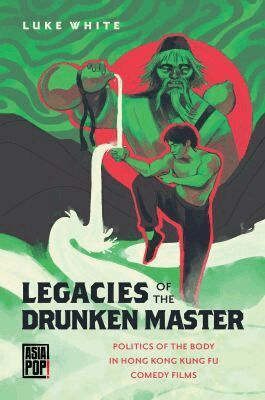
In 1978 the films Snake in the Eagle's Shadow and Drunken Master, both starring a young Jackie Chan, caused a stir in the Hong Kong cinema industry and changed the landscape of martial arts cinema. Mixing virtuoso displays of acrobatic kung fu with knockabout humor to huge box office success, they broke the mold of the tragic and heroic martial arts film and sparked not only a wave of imitations, but also a much longer trend for kung fu comedies that continues to the present day. Legacies of the Drunken Master - the first book-length analysis of kung fu comedy - interrogates the politics of the films and their representations of the performing body. It draws on an interdisciplinary engagement with popular culture and an interrogation of the critical literature on Hong Kong and martial arts cinema to offer original readings of key films. These readings pursue the genre in terms of its carnival aesthetic, the utopias of the body it envisions, its highly stylized depictions of violence, its images of masculinity, and the registers of its "hysterical" laughter. The book's analyses are carried out amidst kung fu comedy's shifting historical contexts, including the aftermath of the 1960s radical youth movements, the rapidly globalizing colonial enclave of Hong Kong and the emerging consciousness of its 1997 handover to China, and the transnationalization of cinema audiences. It argues that through kung fu comedy's images of the body, the genre articulated in complex and often contradictory ways political realities relevant to late twentieth-century Hong Kong and the wider conditions of globalized capitalism. The kung fu comedy entwines us in a popular cultural history that stretches into the folk past and forward into utopian and dystopian possibilities.Theoretically rich and critical, Legacies of the Drunken Master aims to be at the forefront of scholarship on martial arts cinema. It also addresses readers with a broader interest in Hong Kong culture and politics during the 1970s and 1980s, postcolonialism in East Asia, and action and comedy films in a global context - as well as those fascinated with the performing body in the martial arts.
1 010 kr
Skickas
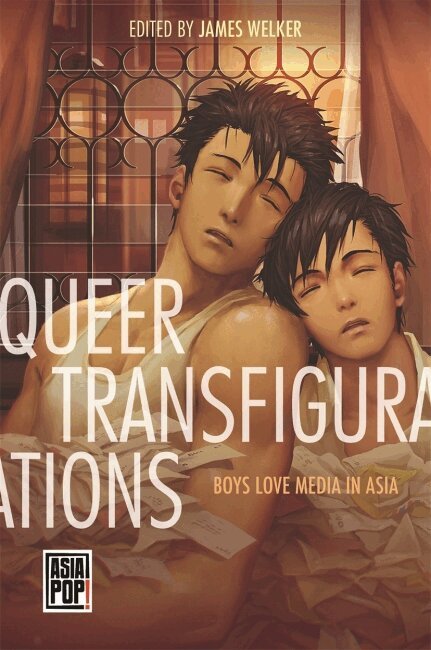
The boys love (BL) genre was created for girls and women by young female manga (comic) artists in early 1970s Japan to challenge oppressive gender and sexual norms. Over the years, BL has seen almost irrepressible growth in popularity and since the 2000s has become a global media phenomenon, weaving its way into anime, prose fiction, live-action dramas, video games, audio dramas, and fan works. BL's male-male romantic and sexual relationships have found a particularly receptive home in other parts of Asia, where strong local fan communities and locally produced BL works have garnered a following throughout the region, taking on new meanings and engendering widespread cultural effects.Queer Transfigurations is the first detailed examination of the BL media explosion across Asia. The book brings together twenty-one scholars exploring BL media, its fans, and its sociocultural impacts in a dozen countries in East, Southeast, and South Asia--and beyond. Contributors draw on their expertise in an array of disciplines and fields, including anthropology, fan studies, gender and sexuality studies, history, literature, media studies, political science, and sociology to shed light on BL media and its fandoms.Queer Transfigurations reveals the far-reaching influences of the BL genre, demonstrating that it is truly transnational and transcultural in diverse cultural contexts. It has also helped bring about positive changes in the status of LGBT(Q) people and communities as well as enlighten local understandings of gender and sexuality throughout Asia.In short, Queer Transfigurations shows that, some fifty years after the first BL manga appeared in print, the genre is continuing to reverberate and transform lives.
Legacies of the Drunken Master
Politics of the Body in Hong Kong Kung Fu Comedy Films
Häftad, Engelska, 2021
319 kr
Skickas inom 7-10 vardagar
In 1978 the films Snake in the Eagle's Shadow and Drunken Master, both starring a young Jackie Chan, caused a stir in the Hong Kong cinema industry and changed the landscape of martial arts cinema. Mixing virtuoso displays of acrobatic kung fu with knockabout humor to huge box office success, they broke the mold of the tragic and heroic martial arts film and sparked not only a wave of imitations, but also a much longer trend for kung fu comedies that continues to the present day. Legacies of the Drunken Master - the first book-length analysis of kung fu comedy - interrogates the politics of the films and their representations of the performing body. It draws on an interdisciplinary engagement with popular culture and an interrogation of the critical literature on Hong Kong and martial arts cinema to offer original readings of key films. These readings pursue the genre in terms of its carnival aesthetic, the utopias of the body it envisions, its highly stylized depictions of violence, its images of masculinity, and the registers of its ""hysterical"" laughter. The book's analyses are carried out amidst kung fu comedy's shifting historical contexts, including the aftermath of the 1960s radical youth movements, the rapidly globalizing colonial enclave of Hong Kong and the emerging consciousness of its 1997 handover to China, and the transnationalization of cinema audiences. It argues that through kung fu comedy's images of the body, the genre articulated in complex and often contradictory ways political realities relevant to late twentieth-century Hong Kong and the wider conditions of globalized capitalism. The kung fu comedy entwines us in a popular cultural history that stretches into the folk past and forward into utopian and dystopian possibilities.Theoretically rich and critical, Legacies of the Drunken Master aims to be at the forefront of scholarship on martial arts cinema. It also addresses readers with a broader interest in Hong Kong culture and politics during the 1970s and 1980s, postcolonialism in East Asia, and action and comedy films in a global context - as well as those fascinated with the performing body in the martial arts.
283 kr
Skickas inom 7-10 vardagar
The boys love (BL) genre was created for girls and women by young female manga (comic) artists in early 1970s Japan to challenge oppressive gender and sexual norms. Over the years, BL has seen almost irrepressible growth in popularity and since the 2000s has become a global media phenomenon, weaving its way into anime, prose fiction, live-action dramas, video games, audio dramas, and fan works. BL’s male–male romantic and sexual relationships have found a particularly receptive home in other parts of Asia, where strong local fan communities and locally produced BL works have garnered a following throughout the region, taking on new meanings and engendering widespread cultural effects.Queer Transfigurations is the first detailed examination of the BL media explosion across Asia. The book brings together twenty-one scholars exploring BL media, its fans, and its sociocultural impacts in a dozen countries in East, Southeast, and South Asia—and beyond. Contributors draw on their expertise in an array of disciplines and fields, including anthropology, fan studies, gender and sexuality studies, history, literature, media studies, political science, and sociology to shed light on BL media and its fandoms.Queer Transfigurations reveals the far-reaching influences of the BL genre, demonstrating that it is truly transnational and transcultural in diverse cultural contexts. It has also helped bring about positive changes in the status of LGBT(Q) people and communities as well as enlighten local understandings of gender and sexuality throughout Asia. In short, Queer Transfigurations shows that, some fifty years after the first BL manga appeared in print, the genre is continuing to reverberate and transform lives.
855 kr
Skickas inom 7-10 vardagar
Since the first translations of Lewis Carroll’s Alice books appeared in Japan in 1899, Alice has found her way into nearly every facet of Japanese life and popular culture. The books have been translated into Japanese more than 500 times, resulting in more editions of these works in Japanese than any other language except English. Generations of Japanese children learned English from textbooks containing Alice excerpts. Japan’s internationally famous fashion vogue, Lolita, merges Alice with French Rococo style. In Japan Alice is everywhere—in manga, literature, fine art, live-action film and television shows, anime, video games, clothing, restaurants, and household goods consumed by people of all ages and genders. In Alice in Japanese Wonderlands, Amanda Kennell traverses the breadth of Alice’s Japanese media environment, starting in 1899 and continuing through 60s psychedelia and 70s intellectual fads to the present, showing how a set of nineteenth-century British children’s books became a vital element in Japanese popular culture.Using Japan’s myriad adaptations to investigate how this modern media landscape developed, Kennell reveals how Alice connects different fields of cultural production and builds cohesion out of otherwise disparate media, artists, and consumers. The first sustained examination of Japanese Alice adaptations, her work probes the meaning of Alice in Wonderland as it was adapted by a cast of characters that includes the "father of the Japanese short story," Ryūnosuke Akutagawa; the renowned pop artist Yayoi Kusama; and the best-selling manga collective CLAMP. While some may deride adaptive activities as mere copying, the form Alice takes in Japan today clearly reflects domestic considerations and creativity, not the desire to imitate. By engaging with studies of adaptation, literature, film, media, and popular culture, Kennell uses Japan’s proliferation of Alices to explore both Alice and the Japanese media environment.
326 kr
Skickas inom 7-10 vardagar
Since the first translations of Lewis Carroll’s Alice books appeared in Japan in 1899, Alice has found her way into nearly every facet of Japanese life and popular culture. The books have been translated into Japanese more than 500 times, resulting in more editions of these works in Japanese than any other language except English. Generations of Japanese children learned English from textbooks containing Alice excerpts. Japan’s internationally famous fashion vogue, Lolita, merges Alice with French Rococo style. In Japan Alice is everywhere—in manga, literature, fine art, live-action film and television shows, anime, video games, clothing, restaurants, and household goods consumed by people of all ages and genders. In Alice in Japanese Wonderlands, Amanda Kennell traverses the breadth of Alice’s Japanese media environment, starting in 1899 and continuing through 60s psychedelia and 70s intellectual fads to the present, showing how a set of nineteenth-century British children’s books became a vital element in Japanese popular culture.Using Japan’s myriad adaptations to investigate how this modern media landscape developed, Kennell reveals how Alice connects different fields of cultural production and builds cohesion out of otherwise disparate media, artists, and consumers. The first sustained examination of Japanese Alice adaptations, her work probes the meaning of Alice in Wonderland as it was adapted by a cast of characters that includes the "father of the Japanese short story," Ryūnosuke Akutagawa; the renowned pop artist Yayoi Kusama; and the best-selling manga collective CLAMP. While some may deride adaptive activities as mere copying, the form Alice takes in Japan today clearly reflects domestic considerations and creativity, not the desire to imitate. By engaging with studies of adaptation, literature, film, media, and popular culture, Kennell uses Japan’s proliferation of Alices to explore both Alice and the Japanese media environment.
356 kr
Skickas inom 7-10 vardagar
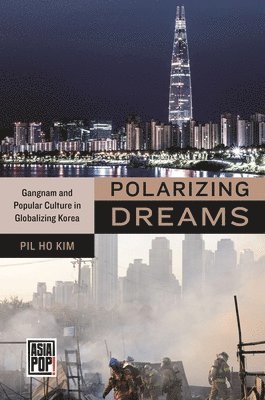
Anyone genuinely curious about what makes South Korean pop culture tick should look no further than Gangnam. Celebrated in a song by an unlikely K-pop superstar named Psy in 2012, Gangnam is the epicenter of Hallyu, the Korean Wave. It is an exclusive zone of privilege and wealth that has lured pop culture industries since the 1980s and fueled the aspirations of Seoul’s middle class, producing in its wake the "dialectical images" of the modern city described by Walter Benjamin: sweet dreams and nightmares, visions of heaven and hell, scenes of spectacular rises and great falls. In Polarizing Dreams, Pil Ho Kim presents South Korea’s Gangman-style urban development as a unique case of cultural globalization in the age of social polarization.Unlike previous genre- or industry-focused publications on Hallyu, Polarizing Dreams mobilizes sources that may be unknown to many K-pop fans—dissident poetry and protest songs from the 1980s, B-rated adult films, tour bus disco music, obscure early works by famous authors and filmmakers, interviews with sex workers and urban entrepreneurs—to weave together Gangnam’s rich backstory and give readers a deeper appreciation of such acclaimed films as Bong Joon Ho’s Parasite and Lee Chang-dong’s Burning and the Netflix drama series Squid Game. Kim takes an unflinching look at the darker side of Korean society that includes school bullying, entertainment industry scandals, and misogynistic violence, all of which have provided compelling narratives for an increasing number of Hallyu media products. The Gangnam portrayed in this volume is the site of rampant disaster capitalism and rising inequality as well as the engine of cultural and technological innovation. In short, Gangnam is at the heart of Korea’s global-polarization.As one of a handful of books on Korean cultural history that bridges the twentieth and the twenty-first centuries, Polarizing Dreams will have a lasting impact on the study of Korean pop culture and beyond.
916 kr
Skickas inom 7-10 vardagar
Anyone genuinely curious about what makes South Korean pop culture tick should look no further than Gangnam. Celebrated in a song by an unlikely K-pop superstar named Psy in 2012, Gangnam is the epicenter of Hallyu, the Korean Wave. It is an exclusive zone of privilege and wealth that has lured pop culture industries since the 1980s and fueled the aspirations of Seoul’s middle class, producing in its wake the "dialectical images" of the modern city described by Walter Benjamin: sweet dreams and nightmares, visions of heaven and hell, scenes of spectacular rises and great falls. In Polarizing Dreams, Pil Ho Kim presents South Korea’s Gangman-style urban development as a unique case of cultural globalization in the age of social polarization.Unlike previous genre- or industry-focused publications on Hallyu, Polarizing Dreams mobilizes sources that may be unknown to many K-pop fans—dissident poetry and protest songs from the 1980s, B-rated adult films, tour bus disco music, obscure early works by famous authors and filmmakers, interviews with sex workers and urban entrepreneurs—to weave together Gangnam’s rich backstory and give readers a deeper appreciation of such acclaimed films as Bong Joon Ho’s Parasite and Lee Chang-dong’s Burning and the Netflix drama series Squid Game. Kim takes an unflinching look at the darker side of Korean society that includes school bullying, entertainment industry scandals, and misogynistic violence, all of which have provided compelling narratives for an increasing number of Hallyu media products. The Gangnam portrayed in this volume is the site of rampant disaster capitalism and rising inequality as well as the engine of cultural and technological innovation. In short, Gangnam is at the heart of Korea’s global-polarization.As one of a handful of books on Korean cultural history that bridges the twentieth and the twenty-first centuries, Polarizing Dreams will have a lasting impact on the study of Korean pop culture and beyond.
820 kr
Skickas inom 7-10 vardagar
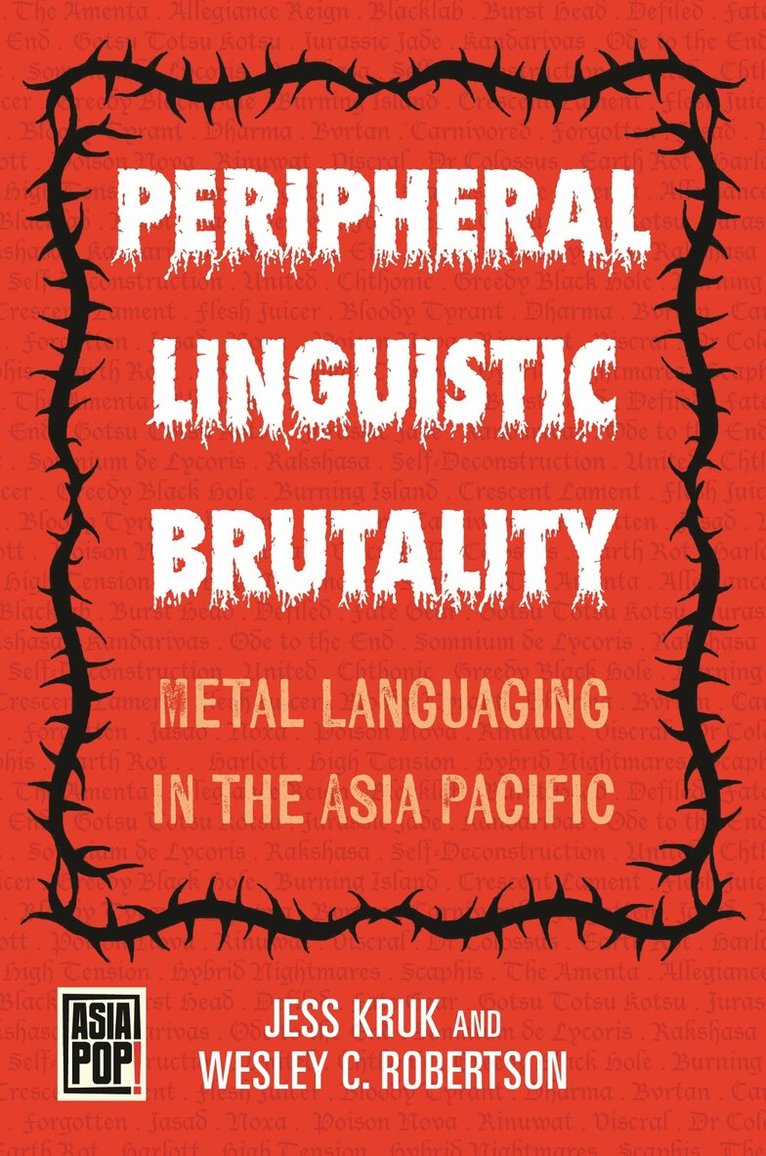
Peripheral Linguistic Brutality is a sociolinguistic investigation into the production of "metalness" through language in the Asia Pacific. Focusing on the ways local music scenes adopt, reject, and modify linguistic ideologies, Jess Kruk and Wesley Robertson (hosts of the podcast Lingua Brutallica) examine how translocal participation in metal settings shapes how and why specific language forms are used to construct "metal language." Although much research has been done on language flows and use in global subcultures, their volume intervenes in two key ways. First, most prior work has focused on hip-hop, which unlike metal has an established "origin" dialect, namely AAVE (African American Vernacular English), linked to concepts of authenticity in the scene. Secondly, writing on global language flows has centered around what happens when a language, mainly English, enters a new space or context—not on how individuals employ imported forms and reimagine already extant linguistic resources as indexes, or markers, of new identities. Through interviews with practicing metal lyricists from Australia, Indonesia, Japan, and Taiwan, Peripheral Linguistic Brutality therefore fills gaps in the knowledge of language’s role in translocal subcultures. Specifically, it sheds new light on how global subcultures spawn new local beliefs about the meaning and purpose of language forms, the sociolinguistic conflicts that can arise and influence language use when a scene enters a new locale, and metal itself as a global practice.
323 kr
Skickas inom 10-15 vardagar
Peripheral Linguistic Brutality is a sociolinguistic investigation into the production of "metalness" through language in the Asia Pacific. Focusing on the ways local music scenes adopt, reject, and modify linguistic ideologies, Jess Kruk and Wesley Robertson (hosts of the podcast Lingua Brutallica) examine how translocal participation in metal settings shapes how and why specific language forms are used to construct "metal language." Although much research has been done on language flows and use in global subcultures, their volume intervenes in two key ways. First, most prior work has focused on hip-hop, which unlike metal has an established "origin" dialect, namely AAVE (African American Vernacular English), linked to concepts of authenticity in the scene. Secondly, writing on global language flows has centered around what happens when a language, mainly English, enters a new space or context—not on how individuals employ imported forms and reimagine already extant linguistic resources as indexes, or markers, of new identities. Through interviews with practicing metal lyricists from Australia, Indonesia, Japan, and Taiwan, Peripheral Linguistic Brutality therefore fills gaps in the knowledge of language’s role in translocal subcultures. Specifically, it sheds new light on how global subcultures spawn new local beliefs about the meaning and purpose of language forms, the sociolinguistic conflicts that can arise and influence language use when a scene enters a new locale, and metal itself as a global practice.
785 kr
Kommande
In the Malay print romance industry, love stories are far more than entertainment. Emerging in the late 1980s amidst rapid social and cultural change, the genre gained popularity and continues to thrive, functioning as diversion, medicine, identity creation, and destiny for thousands of women. Above all, it constitutes serious work. Malay women have established themselves as authors, editors, publishers, and devoted readers within the romance literary landscape, navigating between Islamic teachings about gender and the promises of modernity. Across five years of ethnographic fieldwork in bookstores, coffee shops, publishing houses, and bookfairs, Alicia Izharuddin interviewed hundreds of women who produce and consume Malay romances in print and online. Their work centers on a fundamental question: How should romantic love be expressed, learned, regulated, and shared in contemporary Muslim society? Izharuddin reveals that for these women, romance and its pursuit represent a moral—even religious—calling. Through close engagement with love stories, she uncovers how readers develop new tools for problem-solving and self-transformation that extend far beyond temporary escape. Such narratives create a distinct form of gendered labor for women seeking both marital and personal fulfillment. The Work of Romance determines how romance fiction performs hidden yet vital cultural work and offers fresh insights into the multifaceted nature of women’s emotional and intellectual labor. It makes a pioneering contribution to gender studies, feminist literary history, and the sociology of print culture in Asia and Muslim-majority societies.