ASNEL Papers - Böcker
Visar alla böcker i serien ASNEL Papers. Handla med fri frakt och snabb leverans.
6 produkter
6 produkter
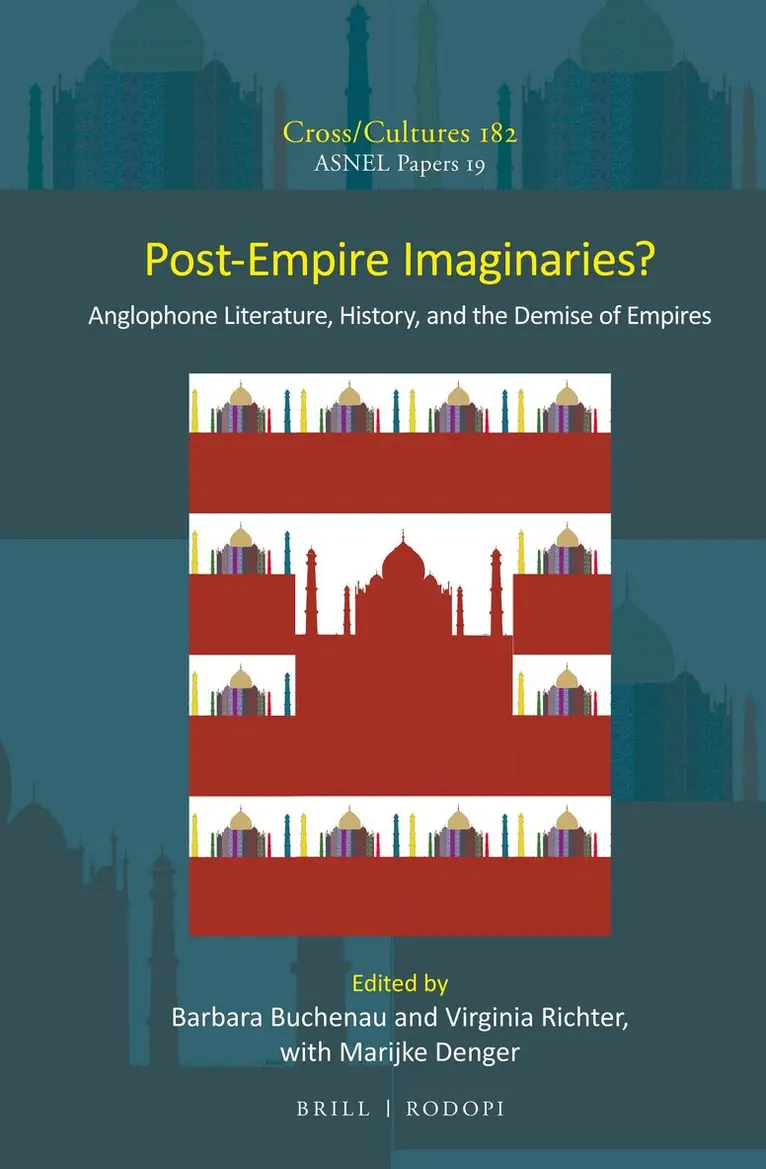
Post-Empire Imaginaries?
Anglophone Literature, History, and the Demise of Empires
Inbunden, Engelska, 2015
2 948 kr
Skickas inom 5-8 vardagar
Empires as political entities may be a thing of the past, but as a concept, empire is alive and kicking. From heritage tourism and costume dramas to theories of the imperial idea(l): empire sells. Post-Empire Imaginaries? Anglophone Literature, History, and the Demise of Empires presents innovative scholarship on the lives and legacies of empires in diverse media such as literature, film, advertising, and the visual arts. Though rooted in real space and history, the post-empire and its twin, the post-imperial, emerge as ungraspable ideational constructs. The volume convincingly establishes empire as welcoming resistance and affirmation, introducing post-empire imaginaries as figurations that connect the archives and repertoires of colonial nostalgia, postcolonial critique, post-imperial dreaming.
3 192 kr
Skickas inom 5-8 vardagar
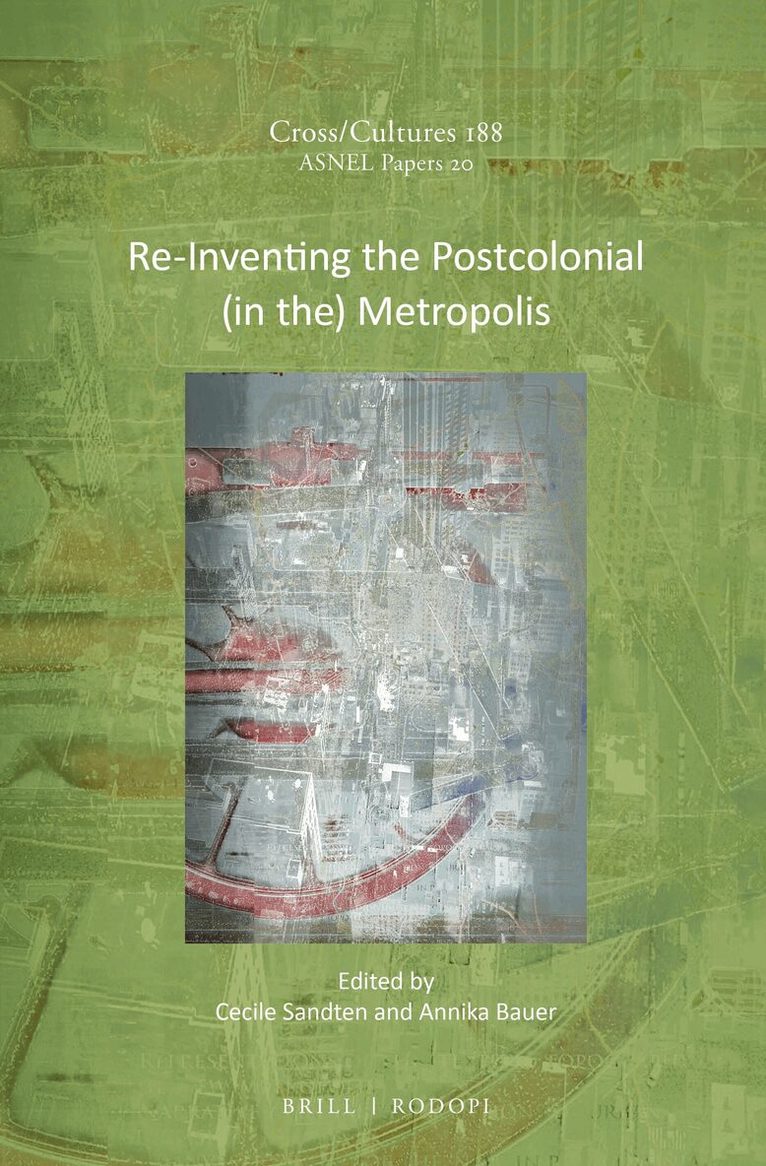
The notion of the postcolonial metropolis has gained prominence in the last two decades both within and beyond postcolonial studies. Disciplines such as sociology and urban studies, however, have tended to focus on the economic inequalities, class disparities, and other structural and formative aspects of the postcolonial metropolises that are specific to Western conceptions of the city at large. It is only recently that the depiction of postcolonial metropolises has been addressed in the writings of Suketu Mehta, Chris Abani, Amit Chaudhuri, Salman Rushdie, Aravind Adiga, Helon Habila, Sefi Atta, and Zakes Mda, among others. Most of these works probe the urban specifics and physical and cultural topographies of postcolonial cities while highlighting their agential capacity to defy, appropriate, and abrogate the superimposition of theories of Western modernity and urbanism. These ASNEL Papers are all concerned with the idea of the postcolonial (in the) metropolis from various disciplinary viewpoints, as drawn from a great range of cityscapes (spread out over five continents). The essays explore, on the one hand, ideas of spatial subdivision and inequality, political repression, social discrimination, economic exploitation, and cultural alienation, and, on the other, the possibility of transforming, reinventing and reconfigurating the ‘postcolonial condition’ in and through literary texts and visual narratives.In this context, the volume covers a broad spectrum of theoretical and thematic approaches to postcolonial and metropolitan topographies and their depictions in writings from Australia and New Zealand, South Africa, South Asia, and greater Asia, as well as the UK, addressing issues such as modernity and market economies but also caste, class, and social and linguistic aspects. At the same time, they reflect on the postcolonial metropolis and postcolonialism in the metropolis by concentrating on an urban imaginary which turns on notions of spatial subdivision and inequality, political repression, social discrimination, economic exploitation, and cultural alienation – as the continuing ‘postcolonial’ condition.
1 973 kr
Skickas inom 5-8 vardagar
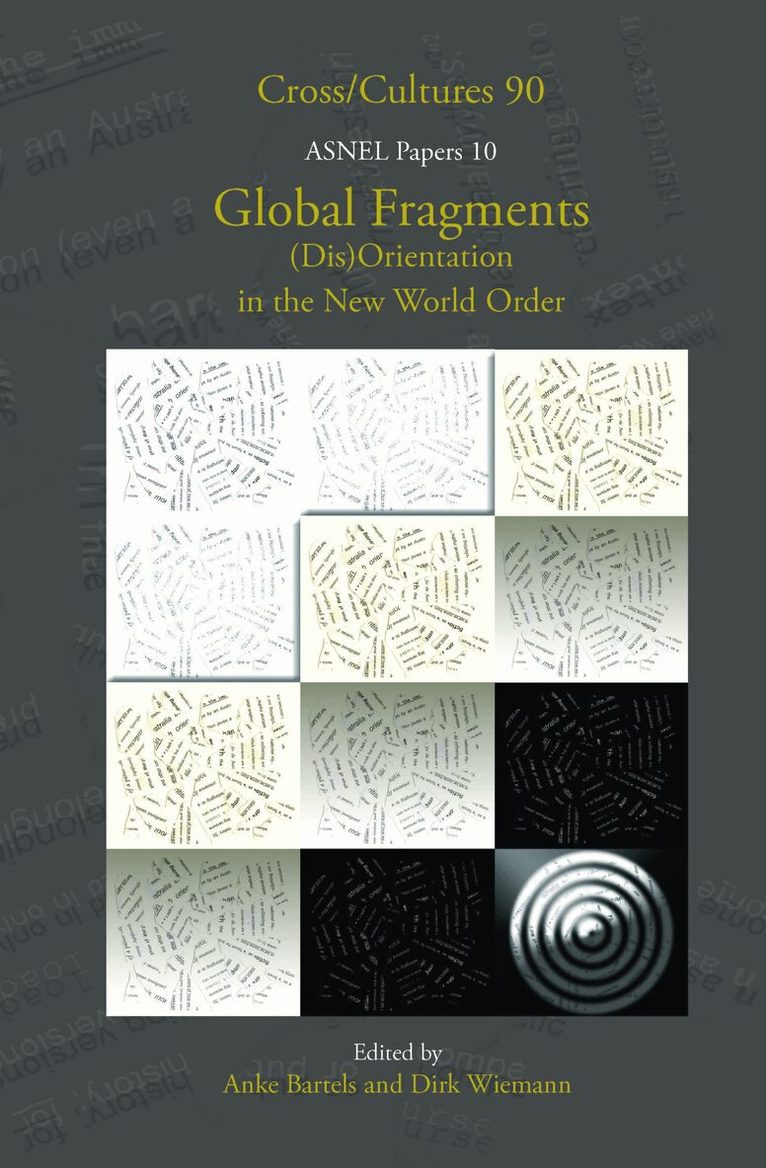
While the world seems to be getting ever smaller and globalization has become the ubiquitous buzz-word, regionalism and fragmentation also abound. This might be due to the fact that, far from being the alleged production of cultural homogeneity, the global is constantly re-defined and altered through the local. This tension, pervading much of contemporary culture, has an obvious special relevance for the new varieties of English and the literature published in English world-wide. Postcolonial literatures exist at the interface of English as a hegemonic medium and its many national, regional and local competitors that transform it in the new English literatures. Thus any exploration of a globalization of cultures has to take into account the fact that culture is a complex field characterized by hybridization, plurality, and difference. But while global or transnational cultures may allow for a new cosmopolitanism that produces ever-changing, fluid identities, they do not give rise to an egalitarian ‘global village’ – an asymmetry between centre and periphery remains largely intact, albeit along new parameters.The essays collected in this volume offer readings of literary, theoretical, and filmic texts from the postcolonial world. These texts are read as attempts to articulate the global with the local from a perspective of immersion in the actual diversity of life-worlds, focusing on such issues as consumption, identity-politics, and modes of affiliation. In this sense, they are global fragments: locally refractured figurations of an experience of world-wide interconnectedness.
1 650 kr
Skickas inom 5-8 vardagar
Perhaps more than in any other period in modern history, our globalized present is characterized by a constant interaction of, and exposure to, different peoples, regions, ways of life, traditions, languages, and cultures. Cross-boundary communication today comes in various shapes: as mutual exchange, open dialogue, enforced process, misunderstanding, or even violent conflict. In this situation, ‘translation’ has become an inevitable requirement in order to ease the flow of disinterested and unbiased cultural communication. The contributors to this collection approach the subject of the ‘translation of cultures’ from various angles. Translation refers, of course, to the rendering of texts from one language into another and the shift between languages under precolonial (retelling/transcreation), colonial (domestication), and postcolonial (multilingual trafficking) conditions. It is also concerned with the (in-)adequacy of the Western translation concept of equivalence, the problem of the (un)translatability of cultures, and new postcolonial approaches (representation through translation). Translation here is used as a broader term covering the interaction of cultures, the transfer of cultural experience, the concern with cultural borders, the articulation of liminal experience, and intercultural understanding.
Postcolonial Translocations
Cultural Representation and Critical Spatial Thinking
Inbunden, Engelska, 2013
3 070 kr
Skickas inom 5-8 vardagar
The sites from which postcolonial cultural articulations develop and the sites at which they are received have undergone profound transformations within the last decades. This book traces the accelerating emergence of cultural crossovers and overlaps in a global perspective and through a variety of disciplinary approaches. It starts from the premise that after the ‘spatial turn’ human action and cultural representations can no longer be grasped as firmly located in or clearly demarcated by territorial entities. The collection of essays investigates postcolonial articulations of various genres and media in their spatiality and locatedness while envisaging acts of location as dynamic cultural processes. It explores the ways in which critical spatial thinking can be made productive: Testing the uses and limitations of ‘translocation’ as an open exploratory model for a critically spatialized postcolonial studies, it covers a wide range of cultural expressions from the anglophone world and beyond – literature, film, TV, photography and other forms of visual art, philosophy, historical memory, and tourism.The extensive introductory chapter charts various facets of spatial thinking from a variety of disciplines, and critically discusses their implications for postcolonial studies. The contributors’ essays range from theoretical interventions into the critical routines of postcolonial criticism to case studies of specific cultural texts, objects, and events reflecting temporal and spatial, material and intellectual, physical and spiritual mobility. What emerges is a fascinating survey of the multiple directions postcolonial translocations can take in the future.This book is aimed at students and scholars of postcolonial literary and cultural studies, diaspora studies, migration studies, transnational studies, globalisation studies, critical space studies, urban studies, film studies, media studies, art history, philosophy, history, and anthropology.Contributors: Diana Brydon, Lars Eckstein, Paloma Fresno-Calleja, Lucia Krämer, Gesa Mackenthun, Thomas Martinek, Sandra Meyer, Therese-M. Meyer, Marga Munkelt, Lynda Ng, Claudia Perner, Katharina Rennhak, Gundo Rial y Costas, Markus Schmitz, Mark Stein, Silke Stroh, Kathy-Ann Tan, Petra Tournay-Theodotou, Daria Tunca, Jessica Voges, Roland Walter, Dirk Wiemann.
2 622 kr
Skickas inom 5-8 vardagar
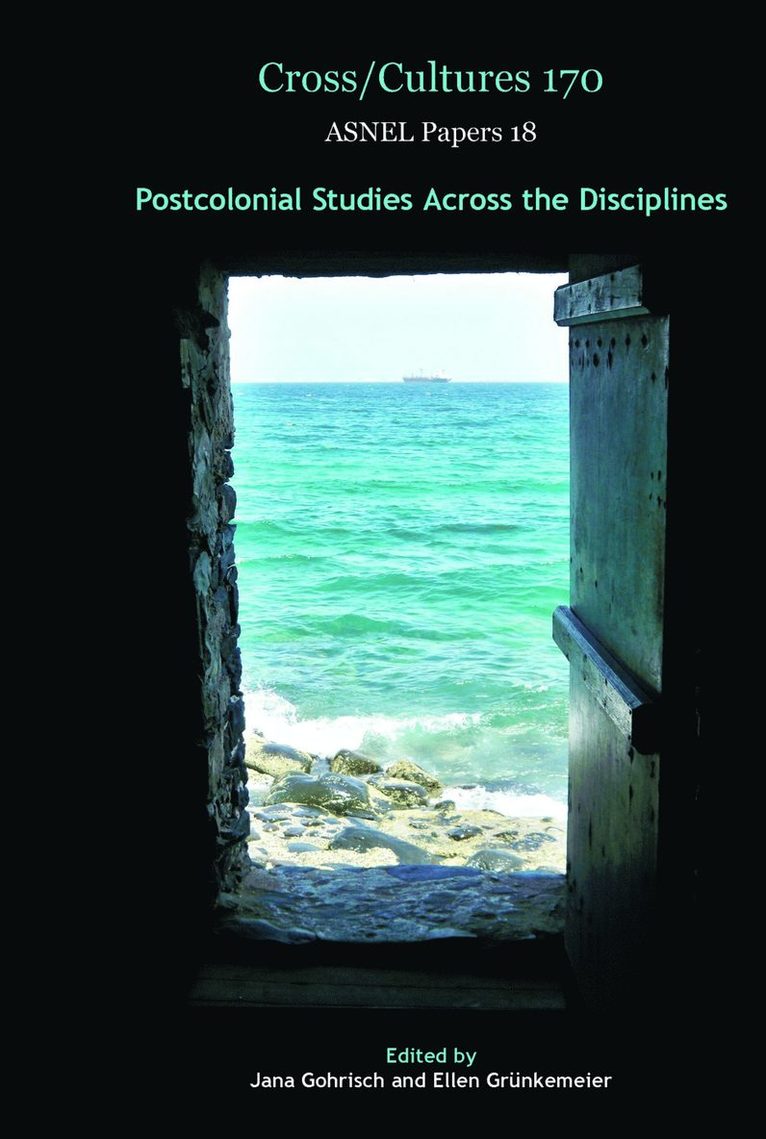
Bringing together contributions from various disciplines and academic fields, this collection engages in interdisciplinary dialogue on postcolonial issues. Covering African, anglophone, Romance, and New-World themes, linguistic, literary, and cultural studies, and historiography, music, art history, and textile studies, the volume raises questions of (inter)disciplinarity, methodology, and entangled histories.The essays focus on the representation of slavery in the transatlantic world (the USA, Jamaica, Haiti, and the wider Caribbean, West Africa, and the UK). Drawing on a range of historical sources, material objects, and representations, they study Jamaican Creole, African masks, knitted objects, patchwork sculpture, newspapers, films, popular music, and literature of different genres from the Caribbean, West and South Africa, India, and Britain. At the same time, they reflect on theoretical problems such as intertextuality, intermediality, and cultural exchange, and explore intersections – postcolonial literature and transatlantic history; postcolonial and African-American studies; postcolonial literary and cultural studies. The final section keys in with the overall aim of challenging established disciplinary modes of knowledge production: exploring schools and universities as locations of postcolonial studies. Teachers investigate the possibilities and limits of their respective institutions and probe new ways of engaging with postcolonial concerns.With its integrative, interdisciplinary focus, this collection addresses readers interested in understanding how colonization and globalization have influenced societies and cultures around the world.Contributors: Anja Bandau, Sabine Broeck, Sarah Fekadu, Matthias Galler, Janou Glencross, Jana Gohrisch, Ellen Grünkemeier, Jessica Hemmings, Jan Hüsgen, Johannes Salim Ismaiel–Wendt, Ursula Kluwick, Henning Marquardt, Dennis Mischke, Timo Müller, Mala Pandurang, Carl Plasa, Elinor Jane Pohl, Brigitte Reinwald, Steffen Runkel, Andrea Sand, Cecile Sandten, Frank Schulze–Engler, Melanie Ulz, Reinhold Wandel, Tim Watson