Banipal Magazine of Modern Arab Literature – serie
Visar alla böcker i serien Banipal Magazine of Modern Arab Literature. Handla med fri frakt och snabb leverans.
6 produkter
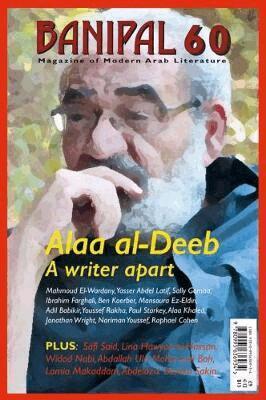
Banipal 60 A Writer Apart
Av Alaa Al-Deeb, Samuel Shimon
Häftad, 2017
126 kr
Lägg i varukorg
Banipal magazine’s 60th issue presents a major feature on the influential Egyptian author Alaa al-Deeb, with translations from his pivotal works and articles by six fellow Egyptian writers. Other authors include Safi Said (Tunisia), Abdallah Uld Mohamadi Bah (Mauritania), Abdelaziz Baraka Sakin …
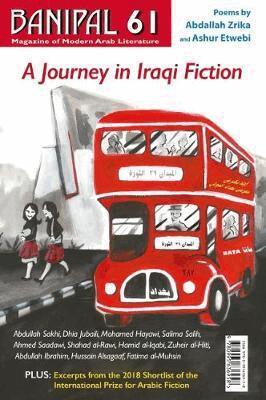
Banipal 61 A Journal In Iraqi Fiction
Av Abdullah Sakhi, Samuel Shimon
Häftad, 2018
139 kr
Lägg i varukorg
Since the invasion of Iraq in 2003 and overthrow of Saddam Hussein, Iraqis have created a revolution in literature, writing nearly 600 novels. Banipal's first issue of 2018 focuses on this unexpected journey in Iraqi fiction with articles and chapters from selected novels. Plus two poets and the 6 …
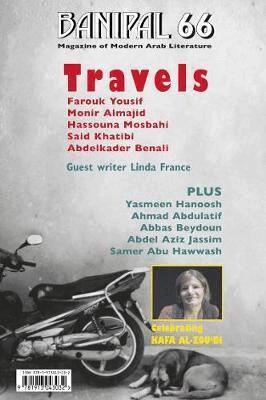
Banipal 66 Travels
Av Farouk Yousif, Samuel Shimon
Häftad, 2019
139 kr
Lägg i varukorg
“Travels” features five Arab travel writers: Iraqi Farouk Yousif in New York; Tunisian Hassouna Mosbahi in Andalucia; Algerian Said Khatibi in Sarajevo; Moroccan-Dutch Abdelkader Benali in Tangiers and Syrian-Danish Monir Almajid in Japan. Plus profiles on Jordanian Kafa Al-Zou‘bi and British poet …
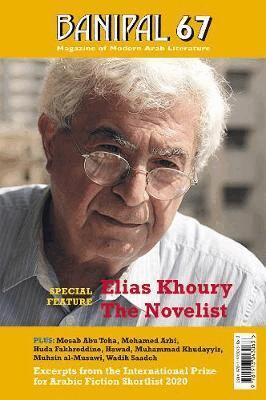
Banipal Issue 67
Elias Khoury, The Novelist
Av Elias Khoury, Muhammad Khudayyir m. fl.
Häftad, 2020
139 kr
Lägg i varukorg
Banipal 67 – Elias Khoury, The Novelist presents a major feature on the celebrated Lebanese and international author, with excerpts from his latest novel Stella Maris, the second in the Children of the Ghetto trilogy, and a chapter from his first novel (until now not translated), plus in-depth …
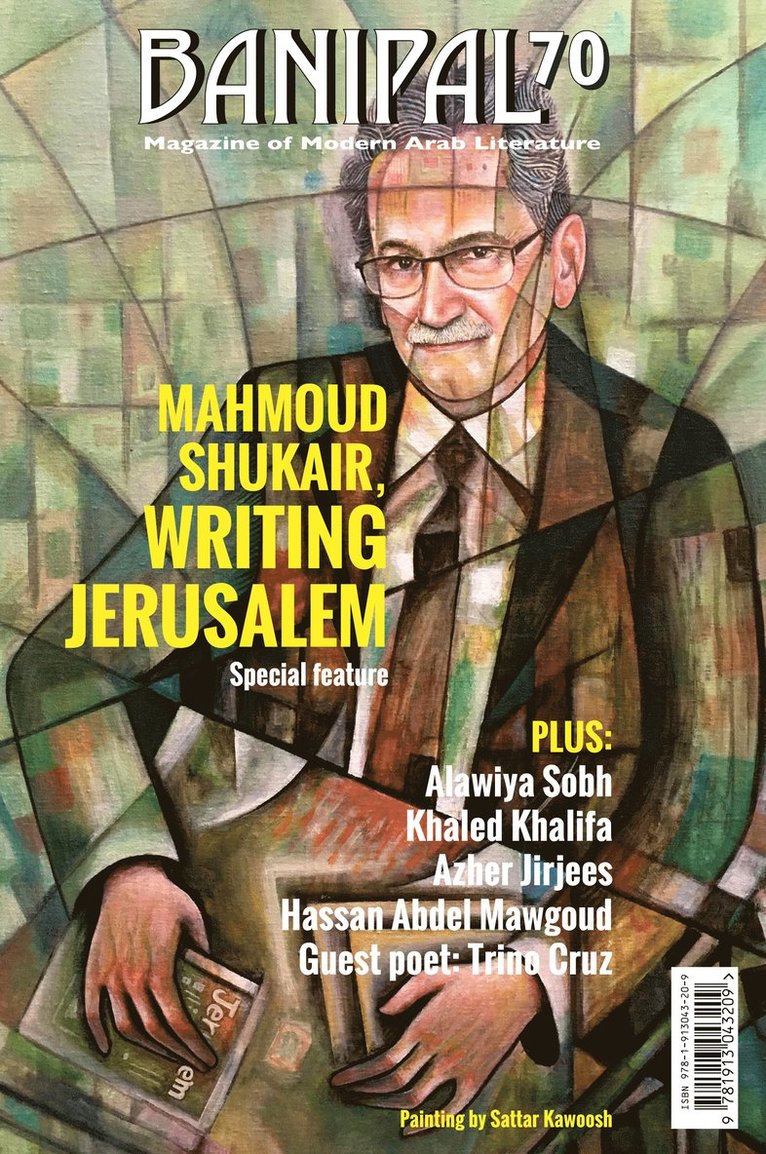
Banipal 70
Mahmoud Shukair, Writing Jerusalem
Av Mahmoud Shukair, Alawiyah Sobh m. fl.
Häftad, 2021
135 kr
Lägg i varukorg
Banipal 70 – Mahmoud Shukair, Writing Jerusalem is a rich issue of diverse authors and literary news to inspire and enthuse you in this continuing time of Covid-19.The main feature on Palestinian author Mahmoud Shukair is a gift to the great Jerusalemite on his 80th birthday – which took place in …
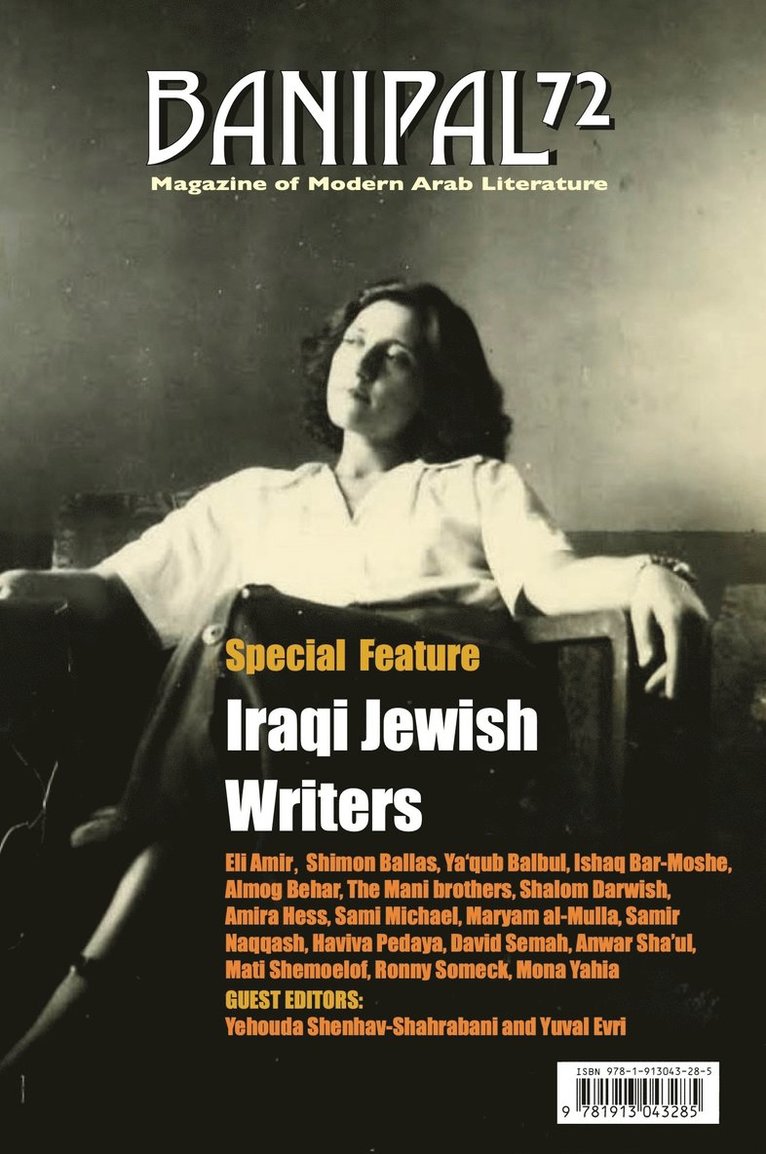
Iraqi Jewish Writers
Autumn/Winter 2021
Av Shimon Ballas, Sami Michael m. fl.
Häftad, 2021
135 kr
Lägg i varukorg
This unique feature on Iraqi Jewish writers includes short stories, excerpts from novels, and poems – written by 17 authors – all of whom are of Iraqi descent. For several centuries, Iraqi Jews were key contributors to Iraq’s rich social and cultural tapestry – active in all areas of life as …