Beckett Manuscript Project – serie
Visar alla böcker i serien Beckett Manuscript Project. Handla med fri frakt och snabb leverans.
4 produkter
4 produkter
469 kr
Skickas inom 10-15 vardagar
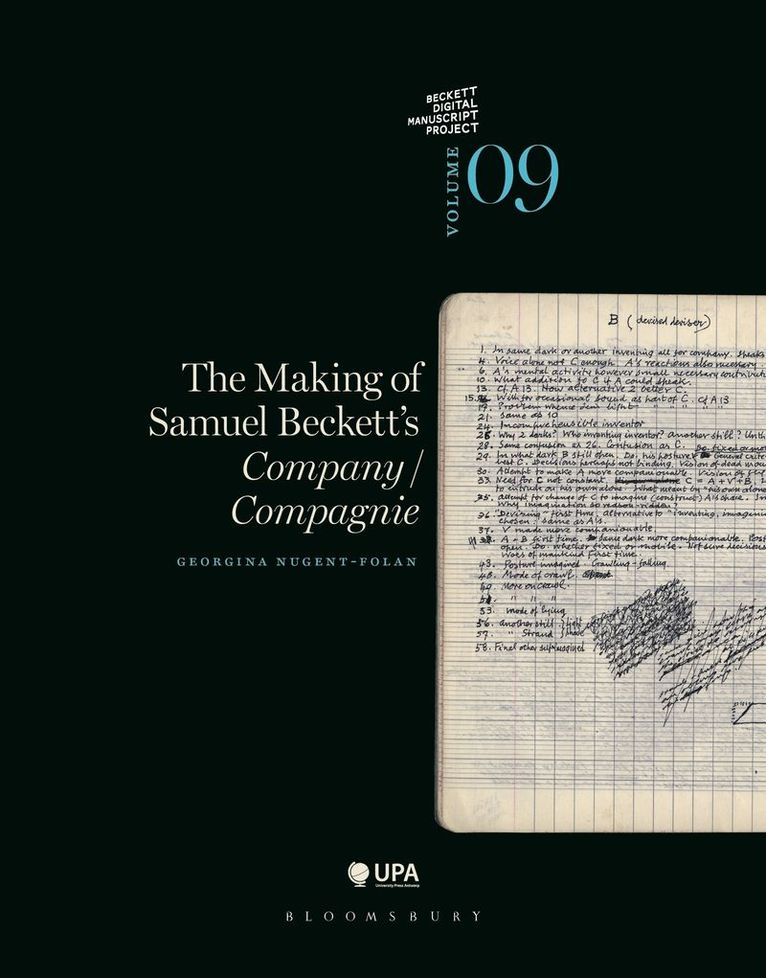
Company was first composed in English over two years, with Beckett breaking a 20-year-long pattern of composing primarily in French to craft this meticulously structured 59-paragraph masterpiece of his late prose. Its French companion, Compagnie, was translated in only two weeks.The genetic critical analysis of the manuscripts of Company/Compagnie takes this schema-dependent compositional method as its core focus. It forwards a new hypothesis regarding the genetic map of both works, and considers the relationship between this uniquely entwined ‘original’ and ‘translation.’This volume is part of the Beckett Digital Manuscript Project (BDMP), a collaboration between the Centre for Manuscript Genetics (University of Antwerp, Belgium), the Beckett International Foundation (University of Reading, UK) and the Harry Ransom Humanities Research Centre (University of Texas at Austin, USA), with the support of theEstate of Samuel Beckett.
Making of Samuel Beckett's Not I / Pas moi, That Time / Cette fois and Footfalls / Pas
Häftad, Engelska, 2023
463 kr
Skickas inom 7-10 vardagar
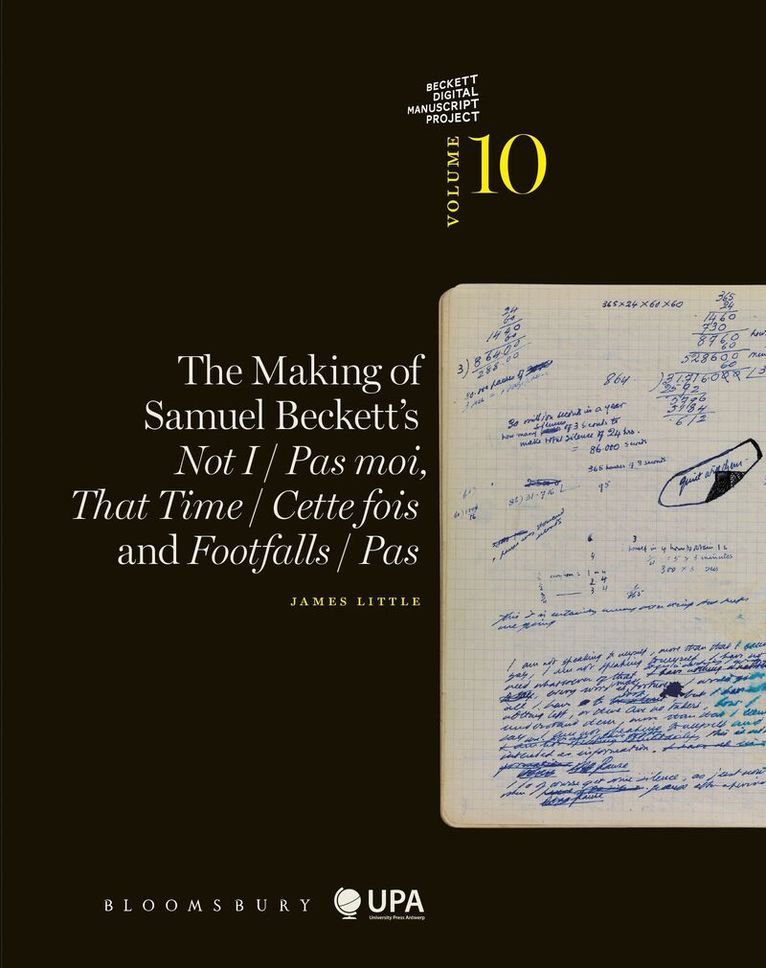
This volume of the BDMP series charts the genesis of three iconic Beckett plays: Not I (1973), That Time (1976) and Footfalls (1976), all translated into French by their author. Including analyses of abandoned archival precursors – the ‘Kilcool’ drafts (1963) and the ‘Petit Odéon’ Fragments (1967–1968) – the book covers a crucial period in Beckett’s playwriting career, during which his long-held ambition to stage a mouth babbling in the dark became a catalyst for some of his most innovative work. This volume provides a comprehensive guide to the history of the three plays, tracking their development from compositional manuscripts through to publication and performance. The book contends that these plays should be seen as stagings of the subject–object breakdown explored in Beckett’s early writing. Drawing on the notes he took on psychology and psychoanalysis in 1934–1935, it examines the many psychological and psychoanalytic concepts that are used in the author’s later stagings of the mind. The plays are analysed through the lens of enactive cognition: not as representations of particular psychological conditions, but as pieces which encourage active interpretation on the part of their audiences. By staging minds in states of breakdown that resist diagnosis, Not I / Pas moi, That Time / Cette fois and Footfalls / Pas enact the subject–object breakdown that is such a key part of Beckett’s aesthetics.
554 kr
Skickas inom 7-10 vardagar
Originally published in French as Malone meurt in 1951 and later translated into English by the author himself, Malone Dies is the second novel of Samuel Beckett's Trilogy. The Making of Samuel Beckett's 'Malone Dies'/'Malone meurt' is a comprehensive reference guide to the history of the text. The book includes: A complete descriptive catalogue of available relevant manuscripts, including French and English texts, alternative drafts and notebook pages A critical reconstruction of the history of the history of the text, from its genesis through the process of composition to its full publication history A detailed guide to exploring the manuscripts online at the Beckett Digital Manuscripts Project at www.beckettarchive.org This volume is part of the Beckett Digital Manuscript Project (BDMP), a collaboration between the Centre for Manuscript Genetics (University of Antwerp, Belgium), the Beckett International Foundation (University of Reading, UK) and the Harry Ransom Humanities Research Centre (University of Texas at Austin, USA), with the support of the Estate of Samuel Beckett.
554 kr
Skickas inom 7-10 vardagar
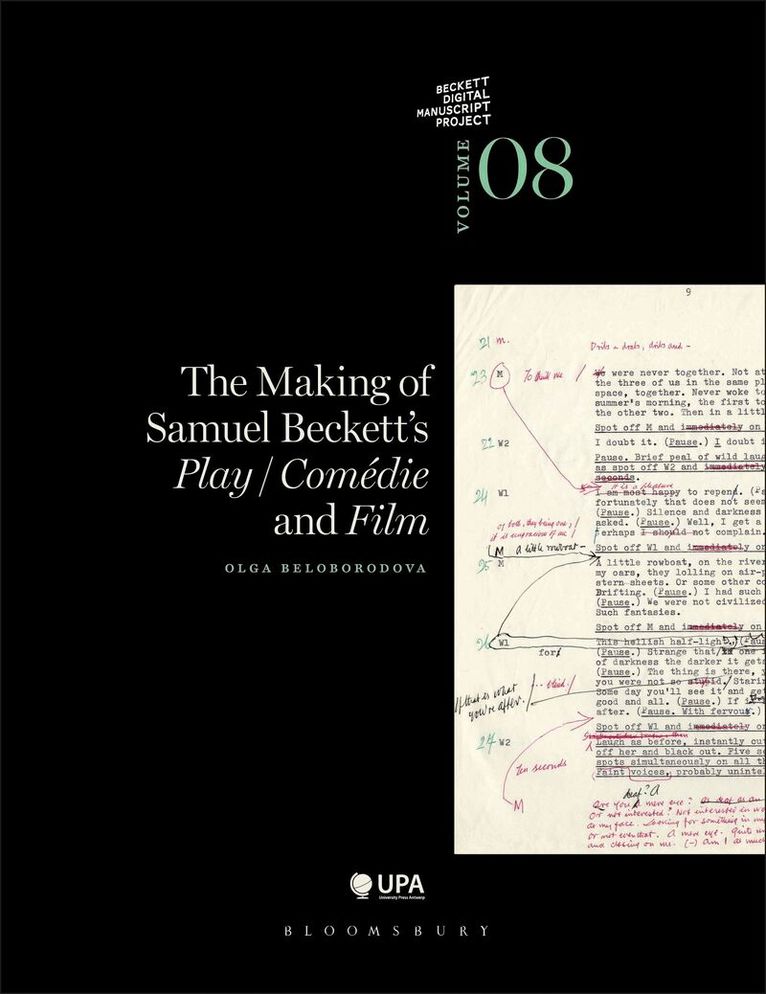
Samuel Beckett’s short play Play / Comédie and his only film Film were written around the same time (1962-1963). They both have self-referential titles that invite meditation on the genres they represent. Although medium-specific opportunities and challenges underlie their very different geneses, they have influenced each other in terms of both form and content. In more ways than one, Film continues where Play left off. Whereas in Play the genesis shows a steady increase in speech tempo to the point of near unintelligibility, the silent Film radically eliminates speech from the outset. Conversely, the cinematic element is also clearly present in Play, notably in the crucial role assigned to the light beam as the mechanical, mindless inquisitor. Both works are grounded in technology and rely heavily on explanatory notes for the members of their production teams, thus exposing the inherently collaborative nature of such projects. The genetic critical analysis of the manuscripts of Play / Comédie and Film not only contributes to the interpretation of each work separately but also considers the two works together through the prism of Beckett’s multimedial authorship.