Big Issues in Music - Böcker
Visar alla böcker i serien Big Issues in Music. Handla med fri frakt och snabb leverans.
9 produkter
9 produkter
266 kr
Skickas inom 7-10 vardagar
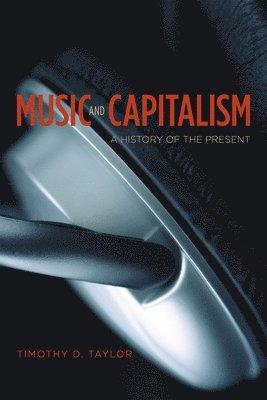
iTunes. Spotify. Pandora. With these brief words one can map the landscape of music today, but these aren't musicians, songs, or anything else actually musical-they are products and brands. In this book, Timothy D. Taylor explores just how pervasively capitalism has shaped music over the last few decades. Examining changes in the production, distribution, and consumption of music, he offers an incisive critique of the music industry's shift in focus from creativity to profits, as well as stories of those who are laboring to find and make musical meaning in the shadows of the mainstream cultural industries. Taylor explores everything from the branding of musicians to the globalization of music to the emergence of digital technologies in music production and consumption. Drawing on interviews with industry insiders, musicians, and indie label workers, he traces both the constricting forces of bottom-line economics and the revolutionary emergence of the affordable home studio, the global internet, and the mp3 that have shaped music in different ways.A sophisticated analysis of how music is made, repurposed, advertised, sold, pirated, and consumed, Music and Capitalism is a must read for anyone who cares about what they are listening to, how, and why.
766 kr
Tillfälligt slut
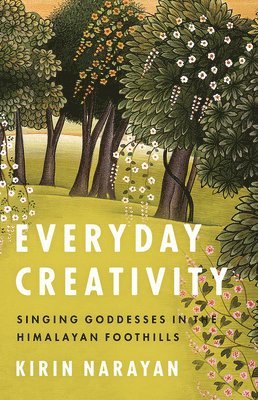
Kirin Narayan's imagination was captured the very first time, as a girl visiting the region, that she heard Kangra women join their voices together in song. Returning as an anthropologist, she became fascinated by how they spoke of singing as a form of enrichment, bringing feelings of accomplishment, companionship, happiness, and even good health all benefits of the "everyday creativity" she explores in this book. Part ethnography, part musical discovery, part poetry, part memoir, and part unforgettable portraits of creative individuals, this unique work draws on an association across forty years, and brings the Himalayan foothill region of Kangra in North India alive in sight and sound while celebrating the incredible powers of music in our lives. With rare and captivating eloquence, Narayan portrays Kangra songs about difficulties on the lives of goddesses and female saints as a path to well-being.Like the intricate geometries of mandalu patterns drawn in courtyards or the subtle balance of flavors in a meal, well-crafted songs offer a variety of deeply meaningful benefits: as a way of making something of value, as a means of establishing a community of shared pleasure and skill, as a path through hardships and limitations, and as an arena of renewed possibility. Everyday Creativity makes big the small world of Kangra song and opens up new ways of thinking about what creativity is to us and why we are so compelled to engage it.
242 kr
Skickas inom 7-10 vardagar
Kirin Narayan's imagination was captured the very first time, as a girl visiting the region, that she heard Kangra women join their voices together in song. Returning as an anthropologist, she became fascinated by how they spoke of singing as a form of enrichment, bringing feelings of accomplishment, companionship, happiness, and even good health all benefits of the "everyday creativity" she explores in this book. Part ethnography, part musical discovery, part poetry, part memoir, and part unforgettable portraits of creative individuals, this unique work draws on an association across forty years, and brings the Himalayan foothill region of Kangra in North India alive in sight and sound while celebrating the incredible powers of music in our lives. With rare and captivating eloquence, Narayan portrays Kangra songs about difficulties on the lives of goddesses and female saints as a path to well-being.Like the intricate geometries of mandalu patterns drawn in courtyards or the subtle balance of flavors in a meal, well-crafted songs offer a variety of deeply meaningful benefits: as a way of making something of value, as a means of establishing a community of shared pleasure and skill, as a path through hardships and limitations, and as an arena of renewed possibility. Everyday Creativity makes big the small world of Kangra song and opens up new ways of thinking about what creativity is to us and why we are so compelled to engage it.
792 kr
Skickas inom 7-10 vardagar
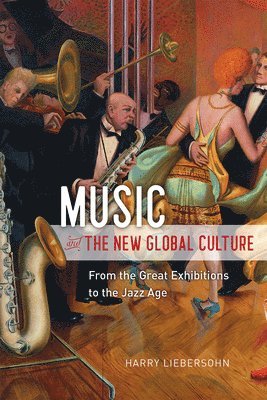
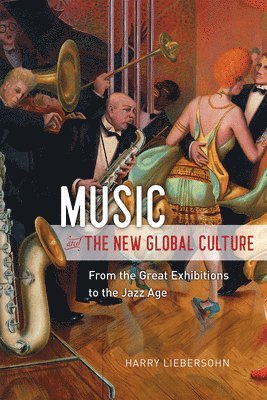
Music listeners today can effortlessly flip from K-pop to Ravi Shankar to Amadou & Mariam with a few quick clicks of a mouse. While contemporary globalized musical culture has become ubiquitous and unremarkable, its fascinating origins long predate the internet era. In Music and the New Global Culture, Harry Liebersohn traces the origins of global music to a handful of critical transformations that took place between the mid-nineteenth and early twentieth century. In Britain, the arts and crafts movement inspired a fascination with non-Western music; Germany fostered a scholarly approach to global musical comparison, creating the field we now call ethnomusicology; and the United States provided the technological foundation for the dissemination of a diverse spectrum of musical cultures by launching the phonograph industry. This is not just a story of Western innovation, however: Liebersohn shows musical responses to globalization in diverse areas that include the major metropolises of India and China and remote settlements in South America and the Arctic. By tracing this long history of world music, Liebersohn shows how global movement has forever changed how we hear music--and indeed, how we feel about the world around us.
266 kr
Skickas inom 7-10 vardagar
Music listeners today can effortlessly flip from K-pop to Ravi Shankar to Amadou & Mariam with a few quick clicks of a mouse. While contemporary globalized musical culture has become ubiquitous and unremarkable, its fascinating origins long predate the internet era. In Music and the New Global Culture, Harry Liebersohn traces the origins of global music to a handful of critical transformations that took place between the mid-nineteenth and early twentieth century. In Britain, the arts and crafts movement inspired a fascination with non-Western music; Germany fostered a scholarly approach to global musical comparison, creating the field we now call ethnomusicology; and the United States provided the technological foundation for the dissemination of a diverse spectrum of musical cultures by launching the phonograph industry. This is not just a story of Western innovation, however: Liebersohn shows musical responses to globalization in diverse areas that include the major metropolises of India and China and remote settlements in South America and the Arctic. By tracing this long history of world music, Liebersohn shows how global movement has forever changed how we hear music--and indeed, how we feel about the world around us.
1 047 kr
Skickas inom 7-10 vardagar
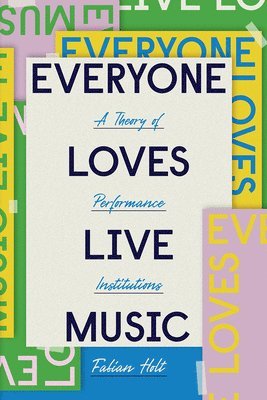
For decades, millions of music fans have gathered every summer in parks and fields to hear their favorite bands at festivals such as Lollapalooza, Coachella, and Glastonbury. How did these and countless other festivals across the globe evolve into glamorous pop culture events, and how are they changing our relationship to music, leisure, and public culture? In Everyone Loves Live Music, Fabian Holt looks beyond the marketing hype to show how festivals and other institutions of musical performance have evolved in recent decades, as sites that were once meaningful sources of community and culture are increasingly subsumed by corporate giants. Examining a diverse range of cases across Europe and the United States, Holt upends commonly-held ideas of live music and introduces a pioneering theory of performance institutions. He explores the fascinating history of the club and the festival in San Francisco and New York, as well as a number of European cities. This book also explores the social forces shaping live music as small, independent venues become corporatized and as festivals transform to promote mainstream Anglophone culture and its consumerist trappings. The book further provides insight into the broader relationship between culture and community in the twenty-first century. An engaging read for fans, industry professionals, and scholars alike, Everyone Loves Live Music reveals how our contemporary enthusiasm for live music is more fraught than we would like to think.
324 kr
Skickas inom 7-10 vardagar
For decades, millions of music fans have gathered every summer in parks and fields to hear their favorite bands at festivals such as Lollapalooza, Coachella, and Glastonbury. How did these and countless other festivals across the globe evolve into glamorous pop culture events, and how are they changing our relationship to music, leisure, and public culture? In Everyone Loves Live Music, Fabian Holt looks beyond the marketing hype to show how festivals and other institutions of musical performance have evolved in recent decades, as sites that were once meaningful sources of community and culture are increasingly subsumed by corporate giants. Examining a diverse range of cases across Europe and the United States, Holt upends commonly-held ideas of live music and introduces a pioneering theory of performance institutions. He explores the fascinating history of the club and the festival in San Francisco and New York, as well as a number of European cities. This book also explores the social forces shaping live music as small, independent venues become corporatized and as festivals transform to promote mainstream Anglophone culture and its consumerist trappings. The book further provides insight into the broader relationship between culture and community in the twenty-first century. An engaging read for fans, industry professionals, and scholars alike, Everyone Loves Live Music reveals how our contemporary enthusiasm for live music is more fraught than we would like to think.
1 019 kr
Skickas inom 7-10 vardagar
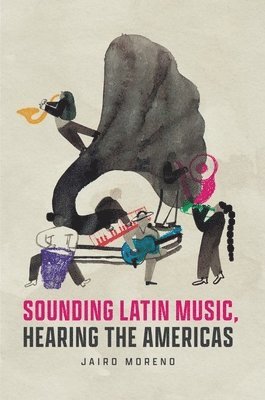
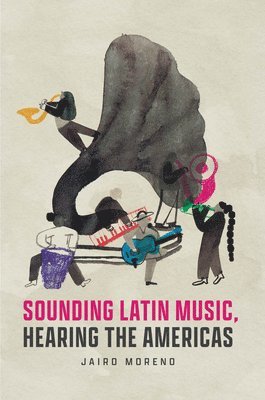
How is Latin American music heard, by whom, and why?Many in the United States believe Latin American musicians make “Latin music”—which carries with it a whole host of assumptions, definitions, and contradictions. In their own countries, these expatriate musicians might generate immense national pride or trigger suspicions of “national betrayals.” The making, sounding, and hearing of “Latin music” brings into being the complex array of concepts that constitute “Latin Americanism”—its fissures and paradoxes, but also its universal aspirations. Taking as its center musicians from or with declared roots in Latin America, Jairo Moreno presents us with an innovative analysis of how and why music emerges as a necessary but insufficient shorthand for defining and understanding Latin American, Latinx, and American experiences of modernity. This close look at the growth of music-making by Latin American and Spanish-speaking musicians in the United States at the turn of the twenty-first century reveals diverging understandings of music’s social and political possibilities for participation and belonging. Through the stories of musicians—Rubén Blades, Shakira, Arturo O’Farrill and the Afro-Latin Jazz Orchestra, and Miguel Zenón—Sounding Latin Music, Hearing the Americas traces how artists use music to produce worlds and senses of the world at the ever-transforming conjunction of Latin America and the United States.
290 kr
Skickas inom 7-10 vardagar
How is Latin American music heard, by whom, and why?Many in the United States believe Latin American musicians make “Latin music”—which carries with it a whole host of assumptions, definitions, and contradictions. In their own countries, these expatriate musicians might generate immense national pride or trigger suspicions of “national betrayals.” The making, sounding, and hearing of “Latin music” brings into being the complex array of concepts that constitute “Latin Americanism”—its fissures and paradoxes, but also its universal aspirations. Taking as its center musicians from or with declared roots in Latin America, Jairo Moreno presents us with an innovative analysis of how and why music emerges as a necessary but insufficient shorthand for defining and understanding Latin American, Latinx, and American experiences of modernity. This close look at the growth of music-making by Latin American and Spanish-speaking musicians in the United States at the turn of the twenty-first century reveals diverging understandings of music’s social and political possibilities for participation and belonging. Through the stories of musicians—Rubén Blades, Shakira, Arturo O’Farrill and the Afro-Latin Jazz Orchestra, and Miguel Zenón—Sounding Latin Music, Hearing the Americas traces how artists use music to produce worlds and senses of the world at the ever-transforming conjunction of Latin America and the United States.