Bio-IT and AI - Böcker
Visar alla böcker i serien Bio-IT and AI. Handla med fri frakt och snabb leverans.
2 produkter
2 produkter
2 793 kr
Kommande
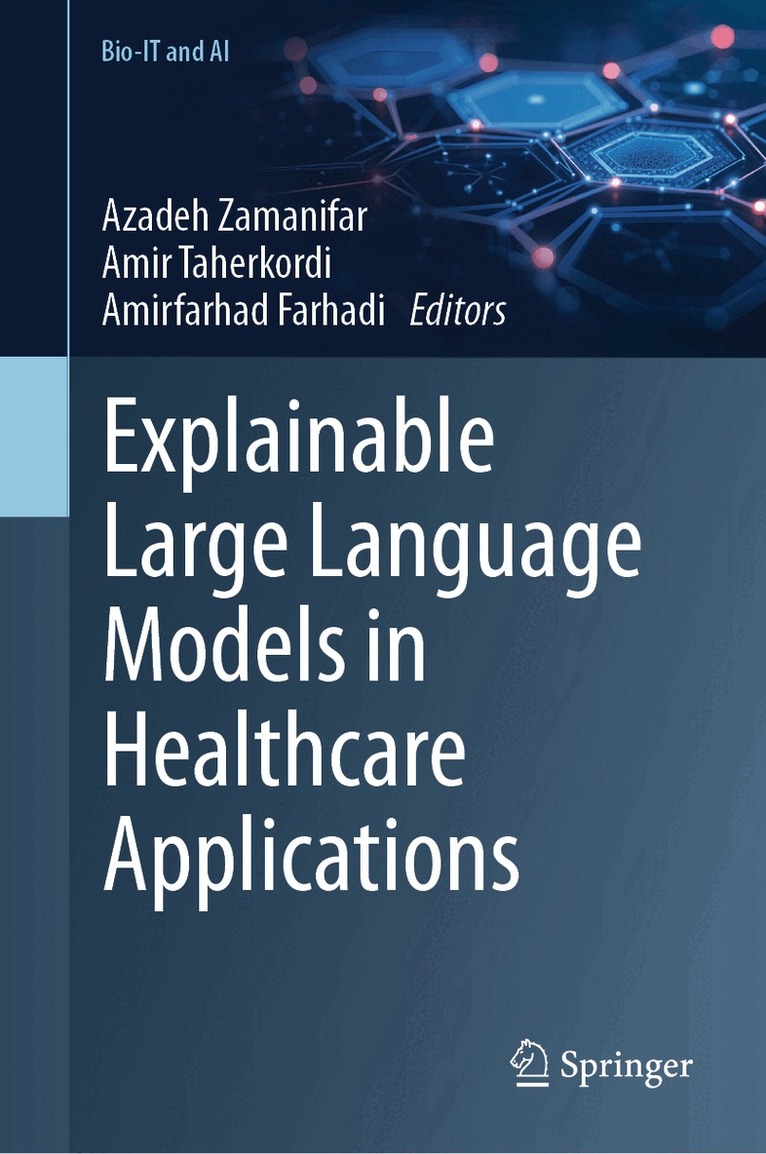
This is a comprehensive book that explores how explainable artificial intelligence (XAI), particularly large language models (LLMs), is transforming healthcare. The book covers foundational concepts of XAI, emphasizing the need for transparency, accountability, and interpretability in AI-driven medical systems, that are crucial for clinician and patient trust. It examines the principles and methodologies in explainable AI. It details how LLMs can make complex machine learning outputs understandable through explanations, model design, and human-centered description.Part of the book is dedicated to real-world applications, such as disease diagnosis, treatment planning, and patient management. It demonstrates how XAI improves clinical decision-making and patient outcomes. It discusses the integration of explainable LLMs into electronic health records (EHRs) and clinical workflows. It shows how these technologies facilitate data analysis, improve documentation, and support care. The book also addresses the challenges and limitations of deploying explainable LLMs in healthcare. It includes issues of privacy, data complexity, and adapting models to specific domains. Evaluation techniques for explainability are discussed, with attention to metrics, benchmarks, and human-centered assessment methods that ensure AI explanations are both accurate and clinically relevant. Ethical considerations, such as fairness, accountability, and privacy, are discussed. We highlight the importance of balancing transparency with patient confidentiality. The book provides case studies and empirical evidence illustrating the benefits and challenges of implementing XAI in real clinical settings.
2 712 kr
Kommande
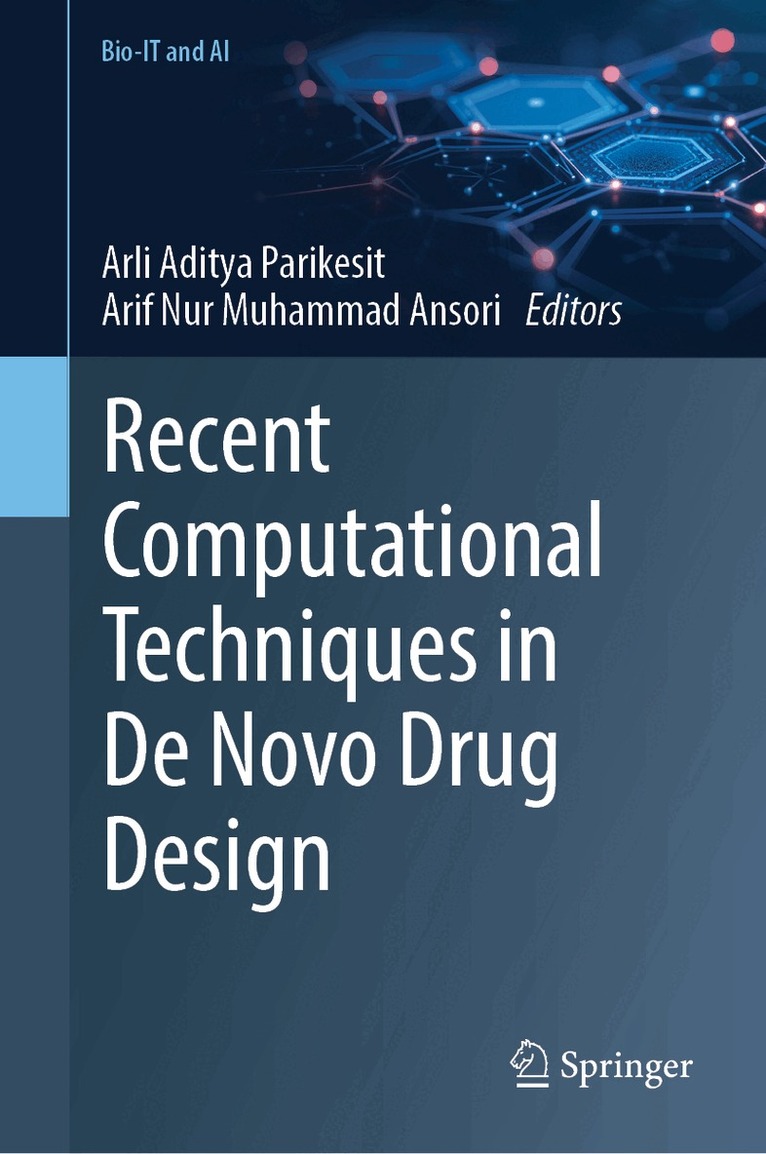
“Recent Computational Techniques in De Novo Drug Design” gives a thorough overview of modern computational methods used to discover new chemical compounds. The book looks at how fragment-based design, evolutionary algorithms, free-energy-guided optimization, and deep generative models have helped advance molecular discovery. It also discusses important challenges such as synthetic accessibility and ADME/Tox issues. The book explains how structural bioinformatics, cheminformatics, and machine learning work together to speed up hit generation and lead optimization in both academic and industry settings.The chapters start by introducing the basics of de novo drug design and explain how it differs from virtual screening and QSAR methods. The book describes the shift from rule-based techniques to those driven by artificial intelligence that use a wide range of molecular data. The content is organized into sections on structure-based and ligand-based methods, MD and QM approaches, deep learning applications, and case studies from different therapeutic areas.