
Brepols Medieval Women Series – serie
Visar alla böcker i serien Brepols Medieval Women Series. Handla med fri frakt och snabb leverans.
3 produkter
3 produkter
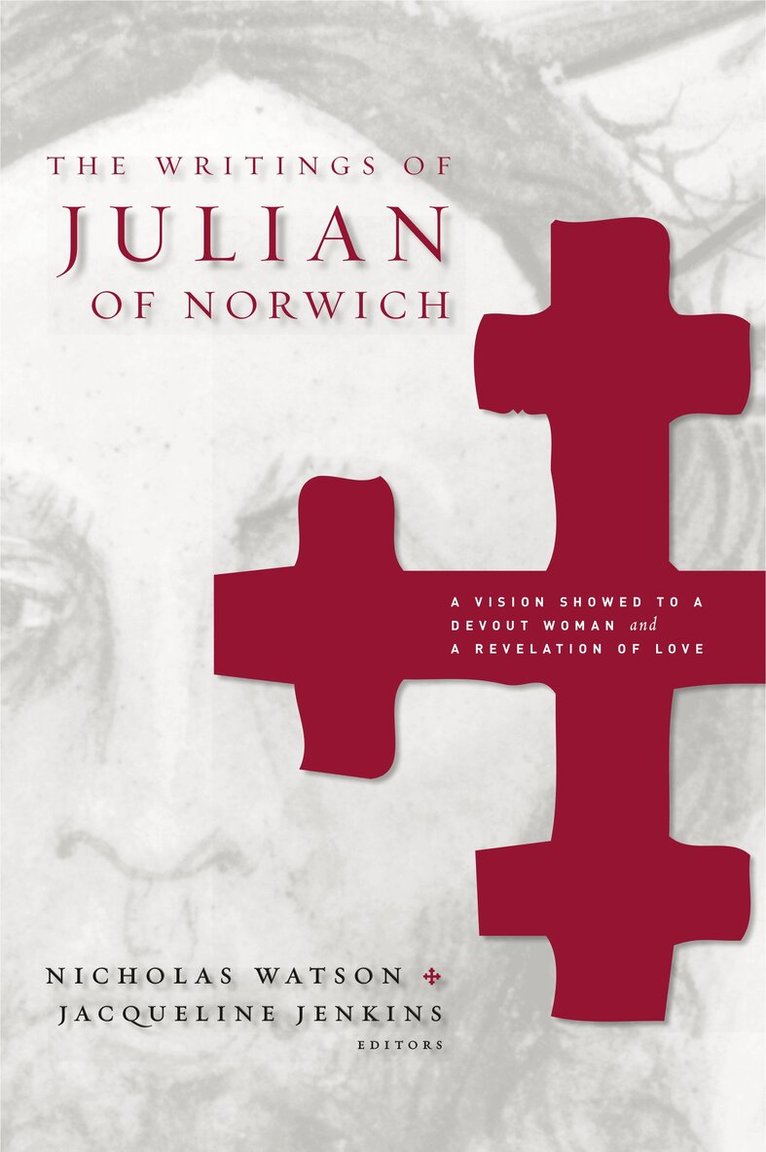
Writings of Julian of Norwich
A Vision Showed to a Devout Woman and A Revelation of Love
Häftad, Engelska, 2007
513 kr
Skickas inom 7-10 vardagar
Julian of Norwich (ca. 1343–ca. 1416), a contemporary of Geoffrey Chaucer, William Langland, and John Wyclif, is the earliest woman writer of English we know about. Although she described herself as “a simple creature unlettered,” Julian is now widely recognized as one of the great speculative theologians of the Middle Ages, whose thinking about God as love has made a permanent contribution to the tradition of Christian belief. Despite her recent popularity, however, Julian is usually read only in translation and often in extracts rather than as a whole. This book presents a much-needed new edition of Julian’s writings in Middle English, one that makes possible the serious reading and study of her thought not just for students and scholars of Middle English but also for those with little or no previous experience with the language.• Separate texts of both Julian’s works, A Vision Showed to a Devout Woman and A Revelation of Love, with modern punctuation and paragraphing and partly regularized spelling.• A second, analytic edition of A Vision printed underneath the text of A Revelation to show what was left out, changed, or added as Julian expanded the earlier work into the later one.• Facing-page explanatory notes, with translations of difficult words and phrases, cross-references to other parts of the text, and citations of biblical and other sources.• A thoroughly accessible introduction to Julian’s life and writings.• An appendix of medieval and early modern records relating to Julian and her writings.• An analytic bibliography of editions, translations, scholarly studies, and other works. The most distinctive feature of this volume is the editors’ approach to the manuscripts. Middle English editions habitually retain original spellings of their base manuscript intact and only emend that manuscript when its readings make no sense. At once more interventionist and more speculative, this edition synthesizes readings from all the surviving manuscripts, with careful justification of each choice involved in this process. For readers who are not concerned with textual matters, the result will be a more readable and satisfying text. For Middle English scholars, the edition is intended both as a hypothesis and as a challenge to the assumptions the field brings to the business of editing.
Send Me God
The Lives of Ida the Compassionate of Nivelles, Nun of la Ramée, Arnulf, Lay Brother of Villers, and Abundus, Monk of Villers, by Goswin of Bossut
Häftad, Engelska, 2005
453 kr
Skickas
In the early thirteenth century, the diocese of Liège witnessed an extraordinary religious revival, known to us largely through the abundant corpus of saints’ lives from that region. Cistercian monks and nuns, along with beguines and recluses, formed close-knit networks of spiritual friendship that easily crossed the boundaries of gender, religious status, and even language. Holy women such as Mary of Oignies and Christina the Astonishing were held up by their biographers as models of orthodoxy and miraculous powers. Less familiar but no less fascinating are the male saints of the region. In this volume, Martinus Cawley has translated a trilogy of Cistercian lives composed by the same hagiographer, Goswin, who was a monk and cantor at the celebrated abbey of Villers in Brabant. Although all three of these saints were connected with the same order, their versions of holiness represent a study in contrasts, from the compassionate nun Ida of Nivelles, remarkable for her Eucharistic raptures, to the fiercely ascetic lay brother Arnulf, to the gentle monk Abundus, renowned for his deep liturgical and Marian piety. The title Send Me God derives from a revealing catchphrase that devout men and women used to request prayers from their spiritual friends.Send Me God is published as part of the Brepols Medieval Women Series.
Writings of Julian of Norwich
A Vision Showed to a Devout Woman and A Revelation of Love
Inbunden, Engelska, 2006
1 071 kr
Skickas inom 7-10 vardagar
Julian of Norwich (ca. 1343–ca. 1416), a contemporary of Geoffrey Chaucer, William Langland, and John Wyclif, is the earliest woman writer of English we know about. Although she described herself as “a simple creature unlettered,” Julian is now widely recognized as one of the great speculative theologians of the Middle Ages, whose thinking about God as love has made a permanent contribution to the tradition of Christian belief. Despite her recent popularity, however, Julian is usually read only in translation and often in extracts rather than as a whole. This book presents a much-needed new edition of Julian’s writings in Middle English, one that makes possible the serious reading and study of her thought not just for students and scholars of Middle English but also for those with little or no previous experience with the language.• Separate texts of both Julian’s works, A Vision Showed to a Devout Woman and A Revelation of Love, with modern punctuation and paragraphing and partly regularized spelling.• A second, analytic edition of A Vision printed underneath the text of A Revelation to show what was left out, changed, or added as Julian expanded the earlier work into the later one.• Facing-page explanatory notes, with translations of difficult words and phrases, cross-references to other parts of the text, and citations of biblical and other sources.• A thoroughly accessible introduction to Julian’s life and writings.• An appendix of medieval and early modern records relating to Julian and her writings.• An analytic bibliography of editions, translations, scholarly studies, and other works. The most distinctive feature of this volume is the editors’ approach to the manuscripts. Middle English editions habitually retain original spellings of their base manuscript intact and only emend that manuscript when its readings make no sense. At once more interventionist and more speculative, this edition synthesizes readings from all the surviving manuscripts, with careful justification of each choice involved in this process. For readers who are not concerned with textual matters, the result will be a more readable and satisfying text. For Middle English scholars, the edition is intended both as a hypothesis and as a challenge to the assumptions the field brings to the business of editing.