Buell Center Books in the History and Theory of American Architecture – serie
Visar alla böcker i serien Buell Center Books in the History and Theory of American Architecture. Handla med fri frakt och snabb leverans.
8 produkter
8 produkter
976 kr
Skickas
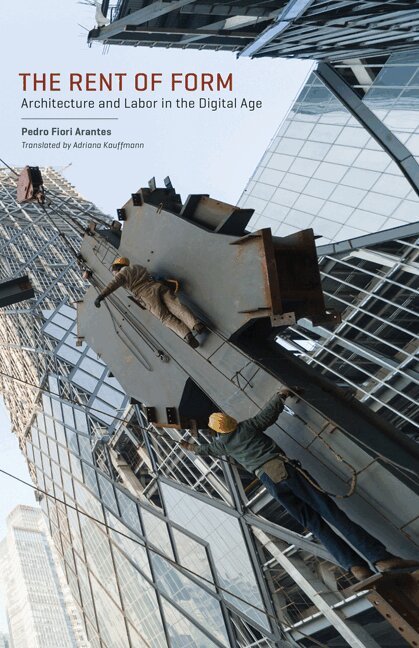
A critique of prominent architects’ approach to digitally driven design and labor practices over the past two decadesWith the advent of revolutionary digital design and production technologies, contemporary architects and their clients developed a taste for dramatic, unconventional forms. Seeking to amaze their audiences and promote their global brands, “starchitects” like Herzog & de Meuron and Frank Gehry have reaped substantial rewards through the pursuit of spectacle enabled by these new technologies. This process reached a climax in projects like Gehry’s Guggenheim Bilbao and the “Bilbao effect,” in which spectacular architectural designs became increasingly sought by municipal and institutional clients for their perceived capacity to enhance property values, which author Pedro Fiori Arantes calls the “rent of form.”Analyzing many major international architectural projects of the past twenty years, Arantes provides an in-depth account of how this “architecture of exception” has come to dominate today’s industry. Articulating an original, compelling critique of the capital and labor practices that enable many contemporary projects, Arantes explains how circulation (via image culture), consumption (particularly through tourism), the division of labor, and the distribution of wealth came to fix a certain notion of starchitecture at the center of the industry.Significantly, Arantes’s viewpoint is not that of Euro-American capitalism. Writing from the Global South, this Brazilian theorist offers a fresh perspective that advances ideas less commonly circulated in dominant, English-language academic and popular discourse. Asking key questions about the prevailing logics of finance capital, and revealing inconvenient truths about the changing labor of design and the treatment of construction workers around the world, The Rent of Form delivers a much-needed reevaluation of the astonishing buildings that have increasingly come to define world cities.
324 kr
Skickas inom 10-15 vardagar
A critique of prominent architects’ approach to digitally driven design and labor practices over the past two decadesWith the advent of revolutionary digital design and production technologies, contemporary architects and their clients developed a taste for dramatic, unconventional forms. Seeking to amaze their audiences and promote their global brands, “starchitects” like Herzog & de Meuron and Frank Gehry have reaped substantial rewards through the pursuit of spectacle enabled by these new technologies. This process reached a climax in projects like Gehry’s Guggenheim Bilbao and the “Bilbao effect,” in which spectacular architectural designs became increasingly sought by municipal and institutional clients for their perceived capacity to enhance property values, which author Pedro Fiori Arantes calls the “rent of form.”Analyzing many major international architectural projects of the past twenty years, Arantes provides an in-depth account of how this “architecture of exception” has come to dominate today’s industry. Articulating an original, compelling critique of the capital and labor practices that enable many contemporary projects, Arantes explains how circulation (via image culture), consumption (particularly through tourism), the division of labor, and the distribution of wealth came to fix a certain notion of starchitecture at the center of the industry.Significantly, Arantes’s viewpoint is not that of Euro-American capitalism. Writing from the Global South, this Brazilian theorist offers a fresh perspective that advances ideas less commonly circulated in dominant, English-language academic and popular discourse. Asking key questions about the prevailing logics of finance capital, and revealing inconvenient truths about the changing labor of design and the treatment of construction workers around the world, The Rent of Form delivers a much-needed reevaluation of the astonishing buildings that have increasingly come to define world cities.
1 310 kr
Skickas inom 7-10 vardagar
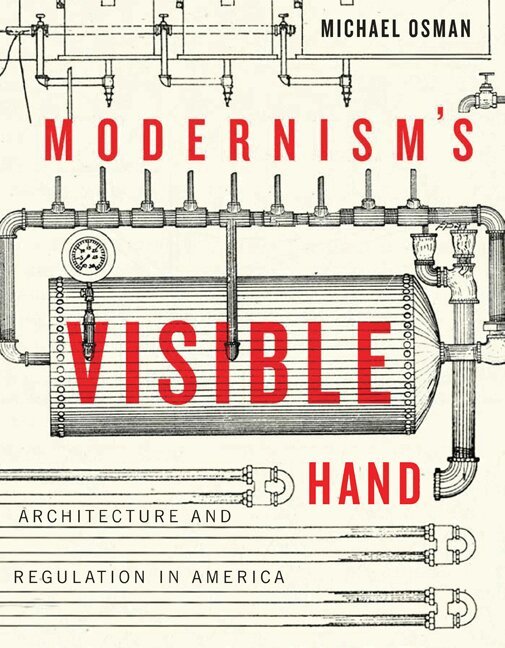
A groundbreaking history of the confluence of regulatory thinking and building design in the United StatesWhat is the origin of “room temperature”? When did food become considered fresh or not fresh? Why do we think management makes things more efficient? The answers to these questions share a history with architecture and regulation at the turn of the twentieth century. This pioneering technological and architectural history of environmental control systems during the Gilded Age begins with the premise that regulation-of temperature, the economy, even the freshness of food-can be found in the guts of buildings. From cold storage and scientific laboratories to factories, these infrastructures first organized life in a way we now call “modern.”Drawing on a range of previously unexplored archival resources, Michael Osman examines the increasing role of environmental technologies in building design from the late nineteenth century. He shows how architects appropriated and subsumed the work of engineers as thermostats, air handlers, and refrigeration proliferated. He argues that this change was closely connected to broader cultural and economic trends in management and the regulation of risk. The transformation shaped the evolution of architectural modernism and the development of the building as a machine. Rather than assume the preexisting natural order of things, participants in regulation-including architects, scientists, entrepreneurs, engineers, managers, economists, government employees, and domestic reformers-became entangled in managing the errors, crises, and risks stemming from the nation’s unprecedented growth.Modernism’s Visible Hand not only broadens our conception of how industrial capitalism shaped the built environment but is also vital to understanding the role of design in dealing with ecological crises today.
328 kr
Skickas inom 11-20 vardagar
A groundbreaking history of the confluence of regulatory thinking and building design in the United StatesWhat is the origin of “room temperature”? When did food become considered fresh or not fresh? Why do we think management makes things more efficient? The answers to these questions share a history with architecture and regulation at the turn of the twentieth century. This pioneering technological and architectural history of environmental control systems during the Gilded Age begins with the premise that regulation-of temperature, the economy, even the freshness of food-can be found in the guts of buildings. From cold storage and scientific laboratories to factories, these infrastructures first organized life in a way we now call “modern.”Drawing on a range of previously unexplored archival resources, Michael Osman examines the increasing role of environmental technologies in building design from the late nineteenth century. He shows how architects appropriated and subsumed the work of engineers as thermostats, air handlers, and refrigeration proliferated. He argues that this change was closely connected to broader cultural and economic trends in management and the regulation of risk. The transformation shaped the evolution of architectural modernism and the development of the building as a machine. Rather than assume the preexisting natural order of things, participants in regulation-including architects, scientists, entrepreneurs, engineers, managers, economists, government employees, and domestic reformers-became entangled in managing the errors, crises, and risks stemming from the nation’s unprecedented growth.Modernism’s Visible Hand not only broadens our conception of how industrial capitalism shaped the built environment but is also vital to understanding the role of design in dealing with ecological crises today.
Shape of Utopia
The Architecture of Radical Reform in Nineteenth-Century America
Inbunden, Engelska, 2023
1 528 kr
Skickas inom 7-10 vardagar
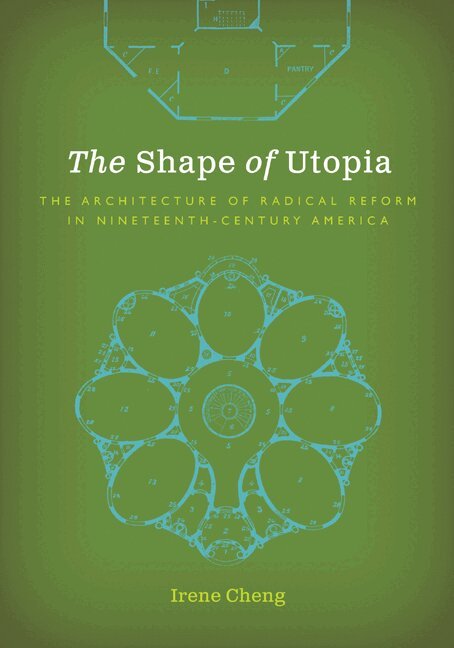
How nineteenth-century social reformers devised a new set of radical blueprints for societyIn the middle of the nineteenth century, a utopian impulse flourished in the United States through the circulation of architectural and urban plans predicated on geometrically distinct designs. Though the majority of such plans remained unrealized, The Shape of Utopia emphasizes the enduring importance of these radical propositions and their ability to visualize alternatives to what was then a newly emerging capitalist nation. Drawing diagrammatic plans for structures such as octagonal houses, a hexagonal anarchist city, and circular centers of equitable commerce, these various architectural utopians applied geometric forms to envision a more just and harmonious society. Highlighting the inherent political capacity of architecture, Irene Cheng showcases how these visionary planners used their blueprints as persuasive visual rhetoric that could mobilize others to share in their aspirations for a better world. Offering an extensive and uniquely focused view of mid-nineteenth-century America’s rapidly changing cultural landscape, this book examines these utopian plans within the context of significant economic and technological transformation, encompassing movements such as phrenology, anarchism, and spiritualism. Engaging equally with architectural history, visual culture studies, and U.S. history, The Shape of Utopia documents a pivotal moment in American history when ordinary people ardently believed in the potential to reshape society.
Shape of Utopia
The Architecture of Radical Reform in Nineteenth-Century America
Häftad, Engelska, 2023
374 kr
Skickas inom 7-10 vardagar
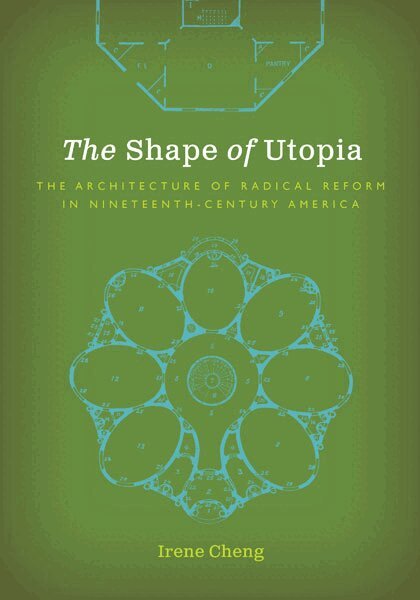
How nineteenth-century social reformers devised a new set of radical blueprints for societyIn the middle of the nineteenth century, a utopian impulse flourished in the United States through the circulation of architectural and urban plans predicated on geometrically distinct designs. Though the majority of such plans remained unrealized, The Shape of Utopia emphasizes the enduring importance of these radical propositions and their ability to visualize alternatives to what was then a newly emerging capitalist nation. Drawing diagrammatic plans for structures such as octagonal houses, a hexagonal anarchist city, and circular centers of equitable commerce, these various architectural utopians applied geometric forms to envision a more just and harmonious society. Highlighting the inherent political capacity of architecture, Irene Cheng showcases how these visionary planners used their blueprints as persuasive visual rhetoric that could mobilize others to share in their aspirations for a better world. Offering an extensive and uniquely focused view of mid-nineteenth-century America’s rapidly changing cultural landscape, this book examines these utopian plans within the context of significant economic and technological transformation, encompassing movements such as phrenology, anarchism, and spiritualism. Engaging equally with architectural history, visual culture studies, and U.S. history, The Shape of Utopia documents a pivotal moment in American history when ordinary people ardently believed in the potential to reshape society.
1 528 kr
Skickas inom 7-10 vardagar
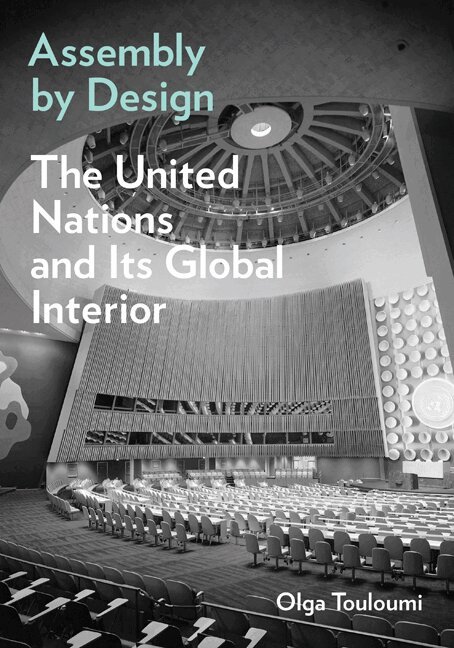
How the United Nations headquarters became the architectural instrument and broadcast medium of global diplomacyFor almost seven years after World War II, a small group of architects took on an exciting task: to imagine the spaces of global governance for a new political organization called the United Nations (UN). To create the iconic headquarters of the UN in New York City, these architects experimented with room layouts, media technologies, and design in tribunal courtrooms, assembly halls, and council chambers. The result was the creation of a new type of public space, the global interior. Assembly by Design shows how this space leveraged media to help the UN communicate with the world. With its media infrastructure, symbols, acoustic design, and architecture, the global interior defined political assembly both inside and outside the UN headquarters, serving as the architectural medium to organize multilateral encounters of international publics around the globe. Demonstrating how aesthetics have long held sway over political work, Olga Touloumi posits that the building framed diplomacy on the ground amid a changing political landscape that brought the United States to the forefront of international politics, destabilizing old and establishing new geopolitical alliances. Uncovering previously closed institutional and family archives, Assembly by Design offers new information about the political and aesthetic decisions that turned the UN headquarters into a communications organism. It looks back at a moment of hope, when politicians, architects, and diplomats-believing that assembly was a matter of design-worked together to deliver platforms for global democracy and governance.
374 kr
Skickas inom 7-10 vardagar
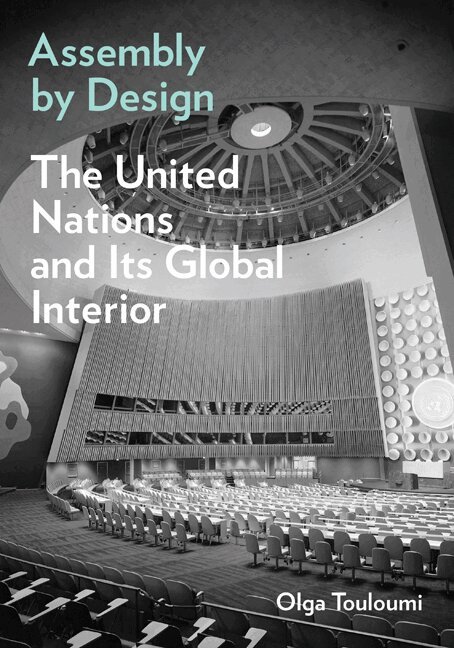
How the United Nations headquarters became the architectural instrument and broadcast medium of global diplomacyFor almost seven years after World War II, a small group of architects took on an exciting task: to imagine the spaces of global governance for a new political organization called the United Nations (UN). To create the iconic headquarters of the UN in New York City, these architects experimented with room layouts, media technologies, and design in tribunal courtrooms, assembly halls, and council chambers. The result was the creation of a new type of public space, the global interior. Assembly by Design shows how this space leveraged media to help the UN communicate with the world. With its media infrastructure, symbols, acoustic design, and architecture, the global interior defined political assembly both inside and outside the UN headquarters, serving as the architectural medium to organize multilateral encounters of international publics around the globe. Demonstrating how aesthetics have long held sway over political work, Olga Touloumi posits that the building framed diplomacy on the ground amid a changing political landscape that brought the United States to the forefront of international politics, destabilizing old and establishing new geopolitical alliances. Uncovering previously closed institutional and family archives, Assembly by Design offers new information about the political and aesthetic decisions that turned the UN headquarters into a communications organism. It looks back at a moment of hope, when politicians, architects, and diplomats-believing that assembly was a matter of design-worked together to deliver platforms for global democracy and governance.