Business History and Political Economy – serie
Visar alla böcker i serien Business History and Political Economy. Handla med fri frakt och snabb leverans.
2 produkter
2 produkter
2 014 kr
Skickas inom 3-6 vardagar
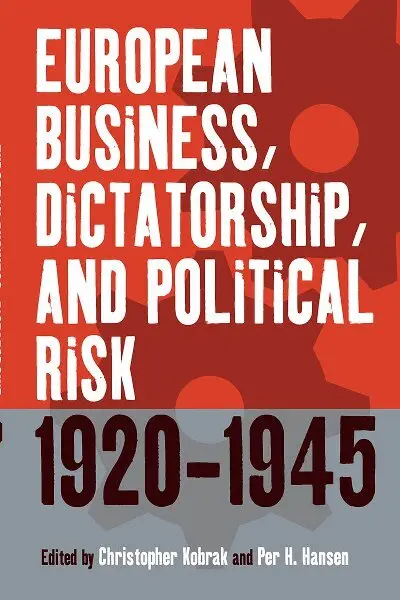
For much of the twentieth century, the prevalence of dictatorial regimes has left business, especially multinational firms, with a series of complex and for the most part unwelcome choices. This volume, which includes essays by noted American and European scholars such as Mira Wilkins, Gerald Feldman, Peter Hayes, and Wilfried Feldenkirchen, sets business activity in its political and social context and describes some of the strategic and tactical responses of firms investing from or into Europe to a myriad of opportunities and risks posed by host or home country authoritarian governments during the interwar period. Although principally a work of history, it puts into perspective some commercial dilemmas with which practitioners and business theorists must still unfortunately grapple.
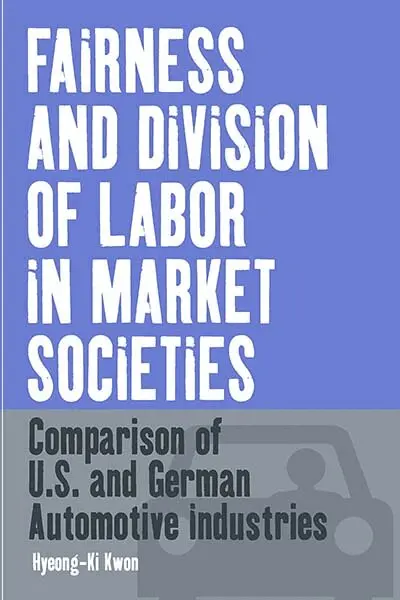
Fairness and Division of Labor in Market Societies
Comparison of U.S. and German Automotive Industries
Inbunden, Engelska, 2004
2 014 kr
Skickas inom 3-6 vardagar
Contrary to the explanations offered by the theory of non-reflexive, path-dependent institutionalism, the U.S. and the German automotive industries undertook strikingly similar patterns of industry modification under tough international competition during the 1990s, departing from their traditional national patterns. By investigating the processes of the U.S. and German adjustments, the author critically reconsiders the prevalent paradigms of political economy and comes to the conclusion that the evidence does not confirm the neoliberal paradigm. In order to better account for the recomposition of new market relations, which the author terms "converging but non-liberal" and "diverging but not predetermined" markets, he proposes an alternative model of "politics among reflexive agents," emphasizing different kinds of problem-solving practices among those reflexive agents. He argues that different forms and regimes of market are established in the process of recomposition, in which agents reflect upon not only market rationality but also upon their own institutions, creating new norms.