Cambridge Science Biographies - Böcker
Visar alla böcker i serien Cambridge Science Biographies. Handla med fri frakt och snabb leverans.
15 produkter
15 produkter
744 kr
Skickas inom 7-10 vardagar
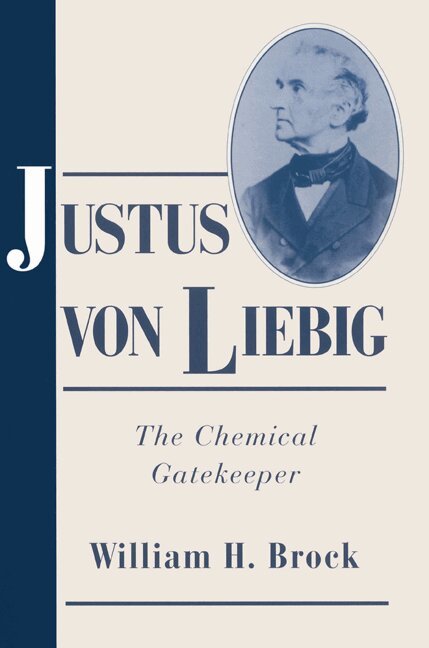
One of the founding fathers of organic chemistry and also a great teacher, the German scientist Justus von Liebig transformed scientific education, medical practice, and agriculture in Great Britain. William H. Brock's fresh interpretation of Liebig's stormy career shows how he moved chemistry into the sociopolitical marketplace, demonstrating its significance for society in food production, nutrition, and public health. Through his controversial ideas on artificial fertilizers and recycling, his theory of disease, and his stimulating suggestions concerning food and nutrition, he warned the world of the dangers of failing to recycle sewage or to replace soil nutrients. Liebig also played the role of an elder statesman of European science by commenting, via popular lectures and expansions of his readable Chemical Letters, on such issues as scientific methodology and materialism.
1 154 kr
Skickas inom 7-10 vardagar
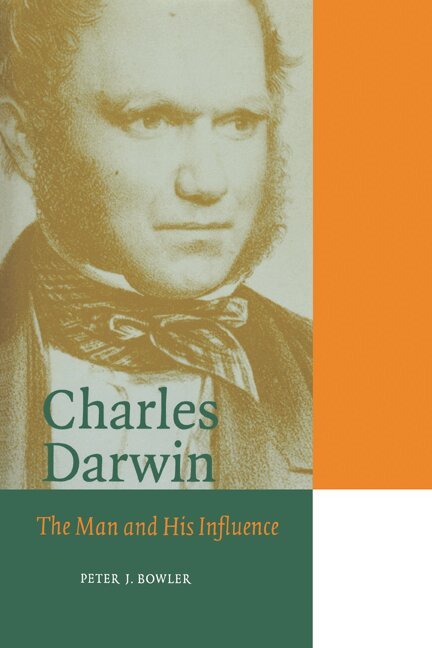
Darwin's enormous influence on science and culture, begun during his lifetime, is still very evident today. The Origin of Species excited much debate and controversy, challenging the foundations of Christianity, yet underpinning the Victorian concept of progress, and today still evokes powerful and contradictory responses. Yet he was not first to publish evolutionary ideas and his theory of natural selection was not accepted by many of his contemporaries. Peter Bowler's study of Darwin's life and influence combines biography and cultural history. He shows how Darwin's contemporaries were unable to appreciate precisely those aspects of his thinking that are considered scientifically important today. Darwin was a product of his time, but he also transcended it, by creating an idea capable of being exploited by twentieth-century scientists and intellectuals who had very different values from his own.
1 196 kr
Skickas inom 7-10 vardagar
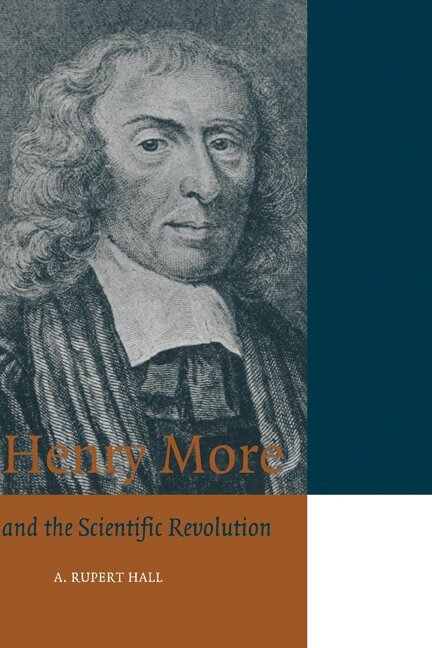
Henry More (1614-87) was the greatest English metaphysical theologian and the most perplexing; he was also perhaps the most distinguished member of the group of divines known as the Cambridge Platonists. An admirer of Galileo, Descartes, and Boyle, he rejected their detailed applications of mechanical philosophy to the explanation of natural phenomena. He was an experimenter, yet also a cabbalist and one of the few writers whom Newton acknowledged as having influenced his ideas. This thorough and accessible biography is the first book-length treatment of this remarkable character. More's important contributions to science are illuminated, particularly his work on space and time which influenced Newton, and the book gives fascinating insights into his spiritual philosophy and his preoccupation with witchcraft. The depth of Professor Hall's scholarship makes the book an exceptional account of the turbulent world of the Scientific Revolution.
1 679 kr
Skickas inom 7-10 vardagar
One of the founding fathers of organic chemistry and also a great teacher, the German scientist Justus von Liebig transformed scientific education, medical practice, and agriculture in Great Britain. William H. Brock's fresh interpretation of Liebig's stormy career shows how he moved chemistry into the sociopolitical marketplace, demonstrating its significance for society in food production, nutrition, and public health. Through his controversial ideas on artificial fertilizers and recycling, his theory of disease, and his stimulating suggestions concerning food and nutrition, he warned the world of the dangers of failing to recycle sewage or to replace soil nutrients. Liebig also played the role of an elder statesman of European science by commenting, via popular lectures and expansions of his readable Chemical Letters, on such issues as scientific methodology and materialism.
720 kr
Skickas inom 7-10 vardagar
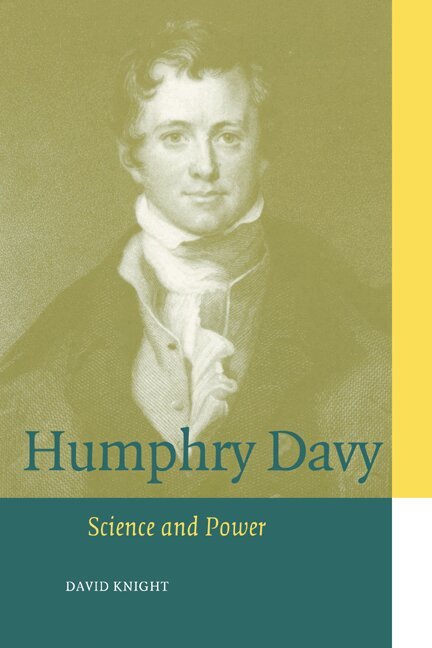
In this illuminating and entertaining biography David Knight draws upon Humphry Davy's poetry, notebooks, and informal writings to introduce us to one of the first professional scientists. Davy is best remembered for his work on laughing gas, for the arc lamp, for isolating sodium and potassium, for his theory that chemical affinity is electrical, and, of course, for his safety lamp. His lectures on science made the fortunes of the Royal Institution in London, and he taught chemistry to the young Faraday. He is also recognized for his poetry and was the friend of Coleridge, Wordsworth, and Byron. By investigating Davy's life Knight shows what it was like to be a creative scientist in Regency Britain, demonstrating the development of science and its institutions during this crucial period in history.
328 kr
Skickas inom 7-10 vardagar
Darwin's enormous influence on science and culture, begun during his lifetime, is still very evident today. The Origin of Species excited much debate and controversy, challenging the foundations of Christianity, yet underpinning the Victorian concept of progress, and today still evokes powerful and contradictory responses. Yet he was not first to publish evolutionary ideas and his theory of natural selection was not accepted by many of his contemporaries. Peter Bowler's study of Darwin's life and influence combines biography and cultural history. He shows how Darwin's contemporaries were unable to appreciate precisely those aspects of his thinking that are considered scientifically important today. Darwin was a product of his time, but he also transcended it, by creating an idea capable of being exploited by twentieth-century scientists and intellectuals who had very different values from his own.
664 kr
Skickas inom 7-10 vardagar
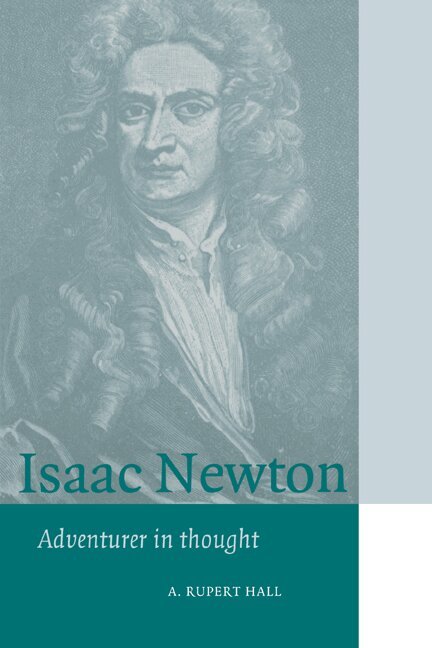
In this elegant, absorbing biography of Isaac Newton (1642-1727), Rupert Hall surveys the vast field of modern scholarship in order to interpret Newton's mathematical and experimental approach to nature. Mathematics was always the deepest, most innovative and productive of Newton's interests. However, he was also a historian, theologian, chemist, civil servant, and natural philosopher. These diverse studies were unified in his single design as a Christian to explore every facet of God's creation. The story of Newton's life and discoveries has been greatly altered by exploration of his huge manuscript legacy during the last forty years, throwing new light upon his personality and intellect. Hall's discussion of this research shows that Newton cannot simply be explained as a Platonist, mystic, or magus. He remains a complex and enigmatic genius with an immensely imaginative and commonsensical mind.
756 kr
Skickas inom 7-10 vardagar
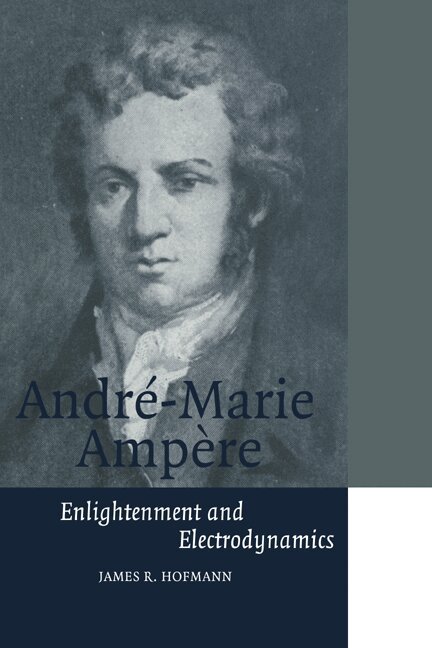
In this authoritative biography, James Hofmann examines the extraordinary life of André-Marie Ampère, who made original, significant contributions to mathematics and chemistry and is renowned for his new branch of physics - electrodynamics. A member of the Académie des Sciences, and professor at the École Polytechnique, his accomplishments are remarkable in view of his tragic personal life. One of the elite of early nineteenth-century Parisian science, yet having no formal education, he embraced the scientific optimism of the Enlightenment, and the Catholic faith. This combination of intellectual expectation and emotional spirituality made Ampère's genius both destructive and extraordinarily creative. This, the only biography available in the English language, illuminates the scientific contributions of an individual and his epoch, and provides a fascinating insight into the workings of the scientific mind.
328 kr
Skickas inom 7-10 vardagar
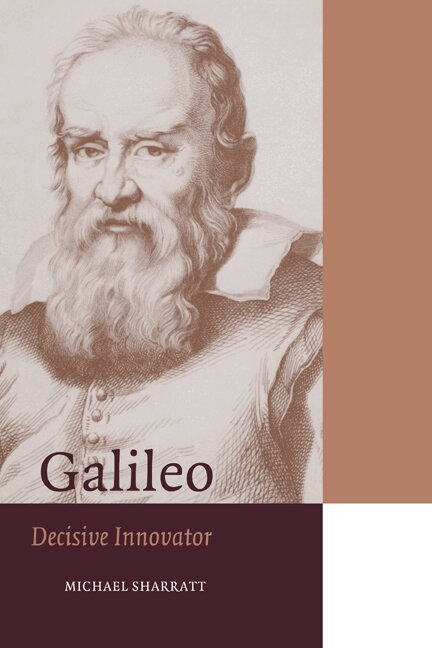
In this entertaining and authoritative biography Michael Sharratt examines the flair, imagination, hard-headedness, clarity, combativeness, and penetration of Galileo Galilei. To follow his career as he exploited unforeseen opportunities to unseat established ways of comprehending nature is to understand a crucial stage of the Scientific Revolution. Galileo was a path-breaker for the newly-invented telescope, the decoder of nature's mathematical language, and a quite brilliant populariser of science. Even his reluctant excursion into theology has at last been officially and handsomely recognised by the Church's 'rehabilitation' of the Inquisition's most famous victim, fully discussed in the last chapter. This book makes his lasting contributions accessible to non-scientists and his mistakes are not overlooked. This is not a mythical story, but the biography of an innovator - one of the greatest ever known.
581 kr
Skickas inom 7-10 vardagar
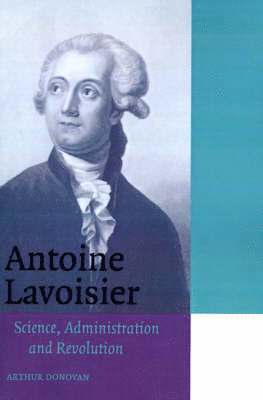
This biography represents a comprehensive, accessible account of the great eighteenth-century French chemist and administrator, Antoine Lavoisier. Historians of science know Lavoisier as a founder of modern chemistry. Students of the French Revolution know him as an important financier and administrator in the final decades of the old regime and as the most famous scientist to be guillotined during the Terror. This volume devotes equal attention to the creation of his oxygen theory of combustion and to his efforts as a public administrator before and during the Revolution. Lavoisier was an historical figure of extraordinary importance. His biography illuminates the rise of modern science and the history of the French Revolution. Antoine Lavoisier provides its reader with a vivid, informed image of the man, his achievement, and the tumultuous age in which he lived.
1 098 kr
Skickas inom 7-10 vardagar
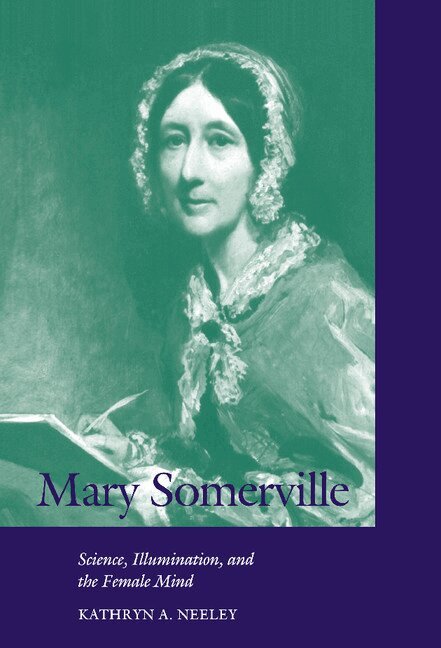
In an era when science was perceived as a male domain, Mary Somerville (1780-1872) became both the leading woman scientist of her day and an integral part of the British scientific community. She achieved this status through careful management of her gender identity and by creating rich, readable, and authoritative accounts of science that were rhetorically compelling, aesthetically satisfying, and valuable to the scientific community in the UK and abroad. This biography offers detailed analysis of the underlying patterns, themes, and rhetorical strategies of her major works and argues that Somerville employed a transcendent feminine style that retained the advantages but transcended the limitations usually associated with women's ways of knowing. The book advocates a new narrative for women's participation in science and demonstrates the many ways that gender relates to science and science functions in culture.
368 kr
Skickas inom 7-10 vardagar
In an era when science was perceived as a male domain, Mary Somerville (1780-1872) became both the leading woman scientist of her day and an integral part of the British scientific community. She achieved this status through careful management of her gender identity and by creating rich, readable, and authoritative accounts of science that were rhetorically compelling, aesthetically satisfying, and valuable to the scientific community in the UK and abroad. This biography offers detailed analysis of the underlying patterns, themes, and rhetorical strategies of her major works and argues that Somerville employed a transcendent feminine style that retained the advantages but transcended the limitations usually associated with women's ways of knowing. The book advocates a new narrative for women's participation in science and demonstrates the many ways that gender relates to science and science functions in culture.
1 192 kr
Skickas inom 7-10 vardagar
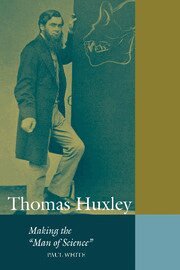
Dubbed 'Darwin's Bulldog' for his combative role in the Victorian controversies over evolutionary theory, Thomas Huxley has been widely regarded as the epitome of the professional scientist who emerged in the nineteenth century from the restrictions of ecclesiastical authority and aristocratic patronage. Yet from the 1850s until his death in 1895, Huxley always defined himself as a 'man of science', a moral and religious figure, not a scientist. Exploring his relationships with his wife, fellow naturalists, clergymen and men of letters, White presents a new analysis of the authority of science, literature, and religion during the Victorian period, showing how these different practices were woven into a fabric of high culture, and integrated into institutions of print, education and research. He provides a substantially different view of Huxley's role in the evolution debates, and of his relations with his scientific contemporaries, especially Richard Owen and Charles Darwin.
481 kr
Skickas inom 7-10 vardagar
Dubbed 'Darwin's Bulldog' for his combative role in the Victorian controversies over evolutionary theory, Thomas Huxley has been widely regarded as the epitome of the professional scientist who emerged in the nineteenth century from the restrictions of ecclesiastical authority and aristocratic patronage. Yet from the 1850s until his death in 1895, Huxley always defined himself as a 'man of science', a moral and religious figure, not a scientist. Exploring his relationships with his wife, fellow naturalists, clergymen and men of letters, White presents a new analysis of the authority of science, literature, and religion during the Victorian period, showing how these different practices were woven into a fabric of high culture, and integrated into institutions of print, education and research. He provides a substantially different view of Huxley's role in the evolution debates, and of his relations with his scientific contemporaries, especially Richard Owen and Charles Darwin.
809 kr
Skickas inom 7-10 vardagar
Henry More (1614-87) was the greatest English metaphysical theologian and the most perplexing; he was also perhaps the most distinguished member of the group of divines known as the Cambridge Platonists. An admirer of Galileo, Descartes, and Boyle, he rejected their detailed applications of mechanical philosophy to the explanation of natural phenomena. He was an experimenter, yet also a cabbalist and one of the few writers whom Newton acknowledged as having influenced his ideas. This thorough and accessible biography is the first book-length treatment of this remarkable character. More's important contributions to science are illuminated, particularly his work on space and time which influenced Newton, and the book gives fascinating insights into his spiritual philosophy and his preoccupation with witchcraft. The depth of Professor Hall's scholarship makes the book an exceptional account of the turbulent world of the Scientific Revolution.