Cambridge Studies in the History of Mass Communication – serie
Visar alla böcker i serien Cambridge Studies in the History of Mass Communication. Handla med fri frakt och snabb leverans.
14 produkter
14 produkter
385 kr
Skickas inom 7-10 vardagar
This is the first comprehensive study on the relationship of propaganda to participatory democracy in the United States during the twentieth century. The Muckrackers were the first critics to question whether the standard practices of communications industries, such as advertising and public relations, undermined the ability of citizens to gather enough reliable information in order to participate meaningfully in society. The communications industry has countered that propaganda merely circulates socially useful information in an efficient manner and further, that propaganda is harmless to democracy because of competition and professional codes. This study critically examines these various schools of thought in an effort to determine and understand the contribution and effects of propaganda in a democratic society.
645 kr
Skickas inom 7-10 vardagar
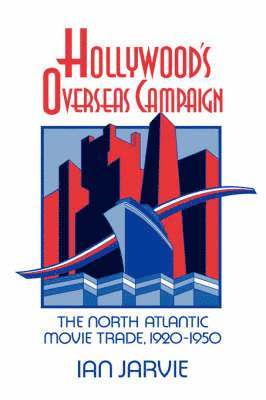
A history of how the American film industry succeeded in dominating the film markets of Canada and Great Britain in the period 1920-1950, this book shows how well-organised and effective the American industry was overseas. It addresses Hollywood operations in Canada and various unsuccessful official attempts to curb them, and in Great Britain where legislation was enacted to control them, achieving some but by no means complete success. The study deals with the complexity of the situation in the United States, where the film industry coped with internal divisions, hostile pressure groups, and ambivalent administrations and shows that the secret of success is in the mastery of organization and supply.
428 kr
Skickas inom 7-10 vardagar
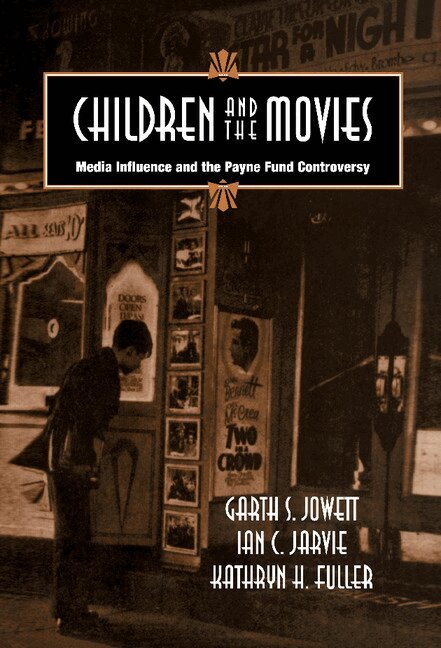
An analysis of the first and most comprehensive study of the influence of movies on American youth, the Payne Fund Studies. First published in 1933, these studies are intrinsically important for their insights and conclusions regarding the effects of movies on behaviour. They are, moreover, also an important landmark of modern social science research, demonstrating the rapid evolution of this discipline in American academic institutions over the first three decades of the century. Based on more recently discovered primary sources, whose contents are published here for the first time, this volume also reproduces the long-missing first Payne Fund study in its entirety.
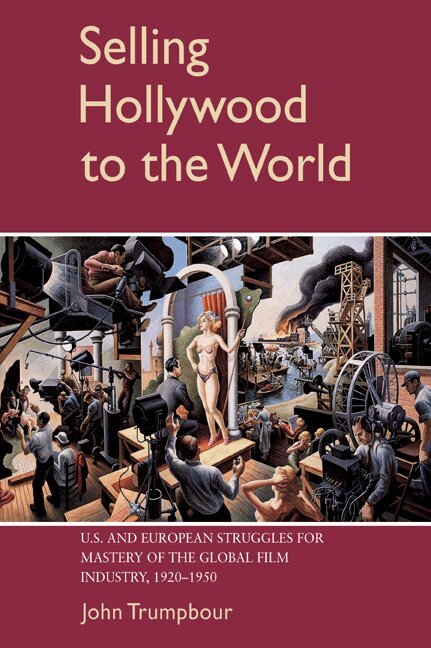
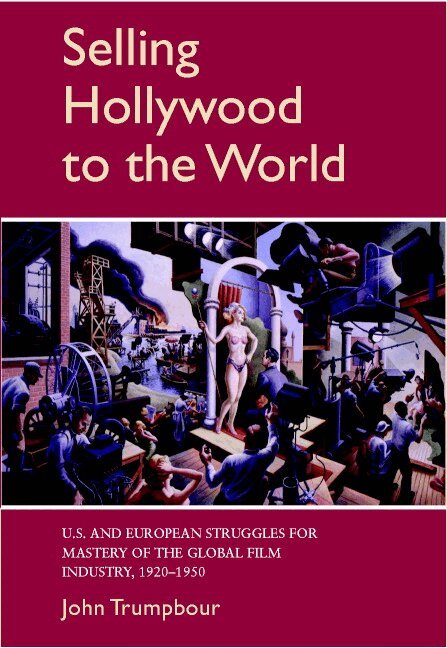
Selling Hollywood to the World
US and European Struggles for Mastery of the Global Film Industry, 1920-1950
Häftad, Engelska, 2007
744 kr
Skickas inom 7-10 vardagar
The global expansion of Hollywood and American popular culture in the first decades of the twentieth century met with strong opposition throughout the world. Determined to defeat such resistance, the Hollywood moguls created a powerful trade organization that worked closely with the US State Department in an effort to expand the American film industry's dominance worldwide. This book offers insight into and analysis of European efforts to overcome the American film industry's pre-eminence. It focuses particularly on Britain, Hollywood's largest overseas market of the interwar years; France, a nation with an alternative vision of cinema; and Belgium, which was entrusted by the Vatican with coordination of the international movement against depravity in films. In contributing to the understanding of American popular culture at home and abroad, this study demonstrates Hollywood's role in orchestrating the American Century.
586 kr
Skickas inom 7-10 vardagar
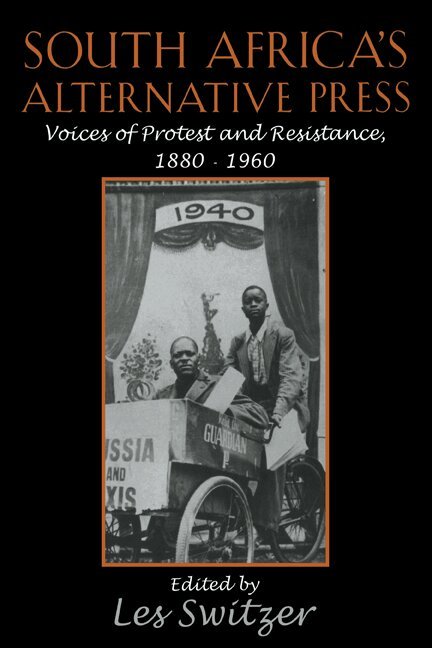
This is the first full-length study of the protest-cum-resistance press and its role in the struggle for a democratic South Africa between the 1880s and 1960s. South Africa's alternative press played a crucial, but still largely undocumented, role in the making of modern South Africa. Projecting the point of view of intermediary social groups, who saw themselves as a modernising, upwardly mobile non-ethnic force in the struggle to create a black middle-class culture in South Africa, these presses mirrored political realities that differed substantially from those projected by South Africa's established commercial press, which was owned and controlled by whites, and concerned almost exclusively with the political, economic and social life of the white population. An important venue for an emerging black literary tradition, these alternative presses also constitute a unique political and social archive.
1 685 kr
Skickas inom 7-10 vardagar
A history of how the American film industry succeeded in dominating the film markets of Canada and Great Britain in the period 1920-1950, this book shows how well-organised and effective the American industry was overseas. It addresses Hollywood operations in Canada and various unsuccessful official attempts to curb them, and in Great Britain where legislation was enacted to control them, achieving some but by no means complete success. The study deals with the complexity of the situation in the United States, where the film industry coped with internal divisions, hostile pressure groups, and ambivalent administrations and shows that the secret of success is in the mastery of organization and supply.
1 237 kr
Skickas inom 7-10 vardagar
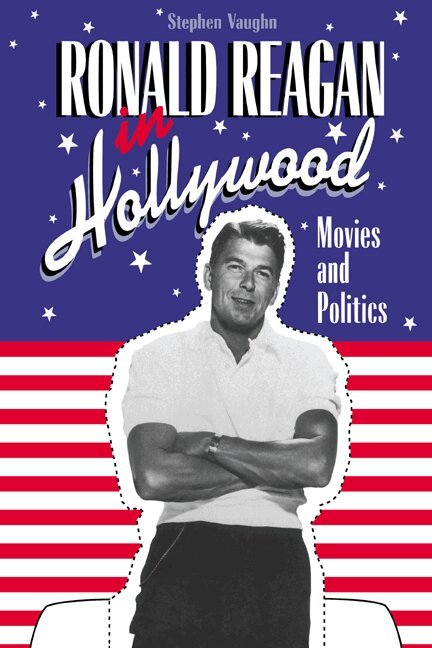
Ronald Reagan in Hollywood explores the relationship between the motion picture industry and American politics through the prism of Reagan's film career at Warner Bros. During the Depression, World War II, and the early Cold War era, the film industry served as a 'grand, world-wide propaganda base' using movies to influence attitudes about patriotism, national defence, communism, the welfare state, race, sex, and civil liberties. Ronald Reagan thrived in this environment. During his years in Hollywood from 1937 to 1952 he formed many of the ideas which were later carried into his presidency. Not merely a star, Reagan also became an articulate industry spokesperson and skilled propagandist, playing an important role in the battle to 'capture the minds' of humanity in the struggle against communism. By the time he left Warner Bros. in 1952, Reagan had abandoned his New Deal liberalism and had become a militant anti-communist. Based on hundreds of interviews (including some with Reagan himself), formerly secret FBI files, and material from more than 150 archival collections, this is the most comprehensive book on this subject to date, providing incisive analysis of Reagan's formative years in Hollywood.
1 390 kr
Skickas inom 7-10 vardagar
An analysis of the first and most comprehensive study of the influence of movies on American youth, the Payne Fund Studies. First published in 1933, these studies are intrinsically important for their insights and conclusions regarding the effects of movies on behaviour. They are, moreover, also an important landmark of modern social science research, demonstrating the rapid evolution of this discipline in American academic institutions over the first three decades of the century. Based on more recently discovered primary sources, whose contents are published here for the first time, this volume also reproduces the long-missing first Payne Fund study in its entirety.
762 kr
Skickas inom 7-10 vardagar
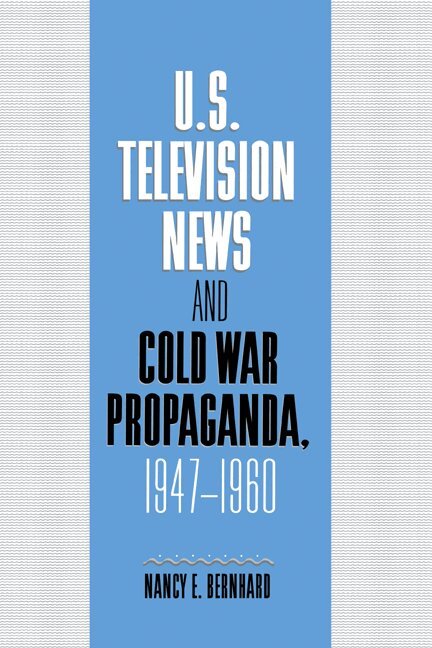
Television news and the Cold War grew simultaneously in the years following World War II, and their history is deeply intertwined. In order to guarantee sufficient resolve in the American public for a long term arms buildup, defense and security officials turned to the television networks. In need of access to official film and newsmakers to build themselves into serious news organizations, and anxious to prove their loyalty in the age of blacklisting, the network news divisions acted as unofficial state propagandists. They aired programs produced, scripted, and approved by the White House and the Departments of State and Defense as news and public affairs programs. Based on extensive primary research, this book makes a strong and compelling argument for collaboration between US television networks and government during the early years of the medium, and demonstrates how the Cold War was effectively 'sold' to the American public.
422 kr
Skickas inom 7-10 vardagar
After a series of sex scandals rocked the film industry in 1922, movie moguls hired Will Hays to clear the image of movies. Hays tried a variety of ways to regulate movies before adopting what became known as the production code. Written in 1930 by a St Louis priest, the code stipulated that movies stress proper behaviour, respect for government, and 'Christian values'. The Catholic Church reinforced these efforts by launching its Legion of Decency in 1934. Intended to force Hays and Hollywood to censor films, the Legion of Decency engineered the appointment of Joseph Breen as head of the Production Code Administration. For the next three decades, Breen, Hays, and the Catholic Legion of Decency virtually controlled the content of all Hollywood films.
1 311 kr
Skickas inom 7-10 vardagar
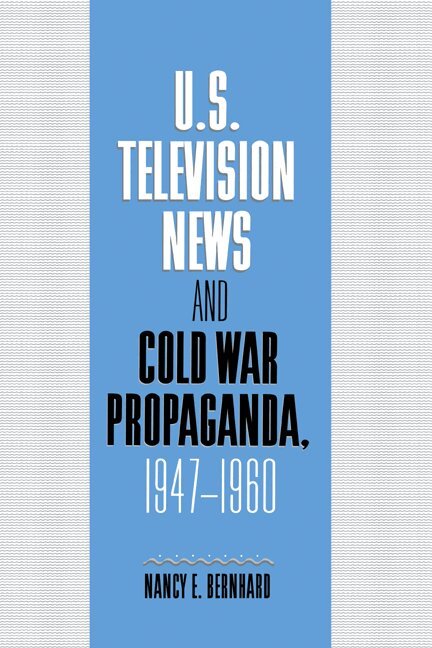
Television news and the Cold War grew simultaneously in the years following World War II, and their history is deeply intertwined. In order to guarantee sufficient resolve in the American public for a long term arms buildup, defense and security officials turned to the television networks. In need of access to official film and newsmakers to build themselves into serious news organizations, and anxious to prove their loyalty in the age of blacklisting, the network news divisions acted as unofficial state propagandists. They aired programs produced, scripted, and approved by the White House and the Departments of State and Defense as news and public affairs programs. Based on extensive primary research, this book makes a strong and compelling argument for collaboration between US television networks and government during the early years of the medium, and demonstrates how the Cold War was effectively 'sold' to the American public.
Selling Hollywood to the World
US and European Struggles for Mastery of the Global Film Industry, 1920-1950
Inbunden, Engelska, 2002
1 442 kr
Skickas inom 7-10 vardagar
The global expansion of Hollywood and American popular culture in the first decades of the twentieth century met with strong opposition throughout the world. Determined to defeat such resistance, the Hollywood moguls created a powerful trade organization that worked closely with the US State Department in an effort to expand the American film industry's dominance worldwide. This book offers insight into and analysis of European efforts to overcome the American film industry's pre-eminence. It focuses particularly on Britain, Hollywood's largest overseas market of the interwar years; France, a nation with an alternative vision of cinema; and Belgium, which was entrusted by the Vatican with coordination of the international movement against depravity in films. In contributing to the understanding of American popular culture at home and abroad, this study demonstrates Hollywood's role in orchestrating the American Century.
570 kr
Skickas inom 7-10 vardagar
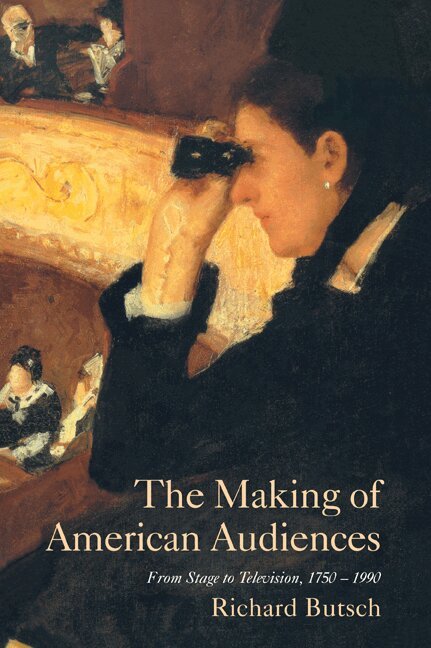
In The Making of American Audiences, Richard Butsch provides a comprehensive survey of American entertainment audiences from the colonial period to the modern day. Providing coverage of theatre, opera, vaudeville, minstrelsy, movies, radio and television, he examines the evolution of audience practices as each genre supplanted another as the primary popular entertainment. Based on original historical research, this volume exposes how audiences made themselves through their practices - how they asserted control over their own entertainments and their own behaviour. Importantly, Butsch articulates two long-term processes: pacification and privatization. Whereas during the nineteenth century, overactive audiences represented a threat to civic order through their unruly behaviour, in the twentieth century, audiences have become more passive, dependent upon and controlled by media messages. This timely study serves as an important contribution to communication research, as well as American cultural history and cultural studies.
385 kr
Skickas inom 7-10 vardagar
This book examines the role of American Jews in the entertainment industry, from the turn of the century to the outbreak of World War II. Eastern European Jewish immigrants are often credited with building a film industry during the first decade of the twentieth century that they dominated by the 1920s. In this study, Steven Carr reconceptualizes Jewish involvement in Hollywood by examining prevalent attitudes towards Jews among American audiences. Analogous to the Jewish Question of the nineteenth century, which was concerned with the full participation of Jews within public life, the Hollywood Question of the 1920s, 30s, and 40s addressed the Jewish population within mass media. This study reveals the powerful set of assumptions concerning ethnicity and media influence as related to the role of the Jew in the motion picture industry.