Camden House History of German Literature – serie
Visar alla böcker i serien Camden House History of German Literature. Handla med fri frakt och snabb leverans.
10 produkter
10 produkter
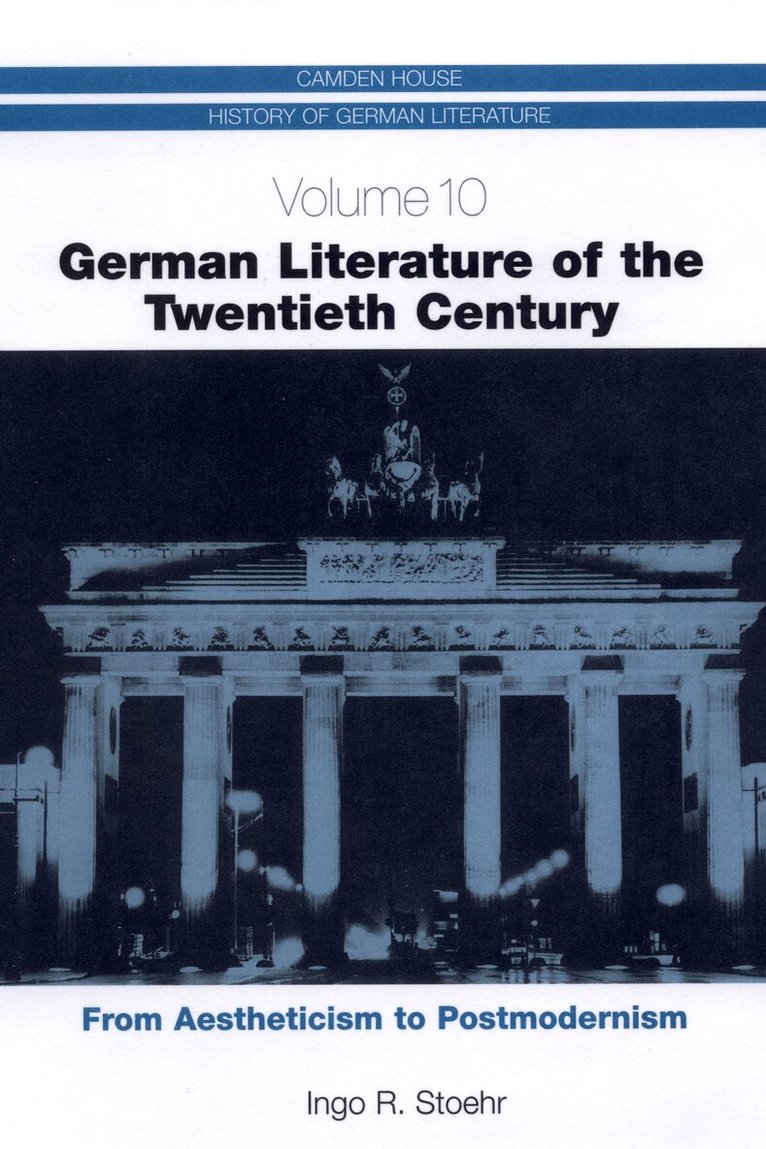
Del 10 - Camden House History of German Literature
German Literature of the Twentieth Century
From Aestheticism to Postmodernism
Inbunden, Engelska, 2001
1 853 kr
Skickas inom 10-15 vardagar
Traces literary developments in the German-speaking countries from 1900 to the present.This study of German literature in the past hundred years sets its subject clearly in the artistic and political context of developments in Western Europe during the century. It begins with the turn-of-the-century aestheticism andvisions of decay led by Schnitzler, Hofmannsthal and other Austrian writers, and the quite different explosion of new artistic energy in the Expressionist and Dada movements. These movements are succeeded by the rise of Modernism, culminating in the inter-war years: the poetry of Rilke, Brecht's epic theatre, and novels by Thomas Mann, Kafka, Hesse, Musil, Doblin and Broch; the influence of Nazism on literary production is considered. The study of developments after 1945 reflects the struggle to establish a post-Holocaust literature and to deal with the questions posed by the political division of Germany. Finally, the convergence of East and West German literature after unification is addressed.Ingo R. Stoehr teaches literature at Kilgore College, Texas, and is editor of the bilingual journal of German literature in English translation, Dimension2.
Del 3 - Camden House History of German Literature
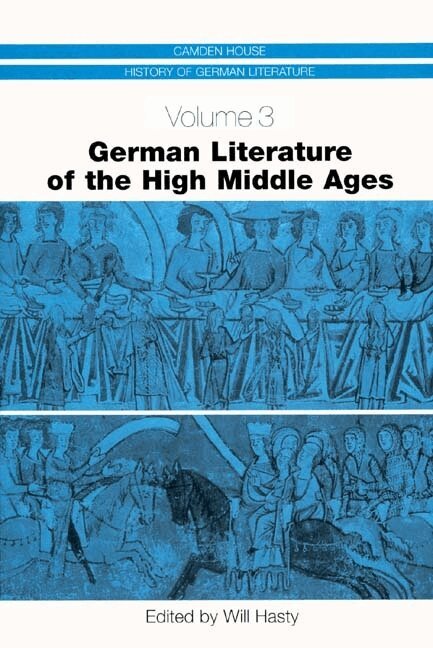
German Literature of the High Middle Ages
Inbunden, Engelska, 2006
1 337 kr
Skickas inom 7-10 vardagar
New essays on the first flowering of German literature, in the High Middle Ages and especially during the period 1180-1230.The High Middle Ages, and particularly the period from 1180 to 1230, saw the beginnings of a vibrant literary culture in the German vernacular. While significant literary achievements in German had already been made in earlier centuries, they were a somewhat precarious vernacular extension of Christian Latin culture. But the vernacular literary culture of the High Middle Ages was an integral part of broader cultural developments in which the unquestioned validity of traditional authoritative models began to lose its hold. A secular culture began to emerge in which positive value began to be attached to the -- however transitory -- allegiances, pleasures, and loves of life. In new essays dealing with the most significant literary genres (the heroic epics, the romances, the love lyrics, and political poetry) and with broader political, social, and cultural issues (control of aggression, territorialization), this third volume of the Camden House History of German Literature demonstrates how the emergence of a vernacular literary culture in Germany was an important part of a broader cultural transformation in which medieval people began to redefine themselves, their relationships to one another, and the position of humanity in the scheme of things.Contributors: Albrecht Classen, Nicola McLelland, Rodney Fisher, Neil Thomas, Marion Gibbs and Sidney Johnson, Rüdiger Krohn, Will Hasty, Nigel Harris, Susann Samples, Sara Poor, Michael Resler, Rüdiger Brandt, Elizabeth A. Andersen, Ulrich Müller and Franz Viktor Spechtler, Ruth Weichselbaumer, W. H. Jackson, Charles Bowlus.Will Hasty is Professor of German Studies and co-founder and co-director of the Center for Medieval and Early Modern Studies at the University of Florida.
Del 6 - Camden House History of German Literature
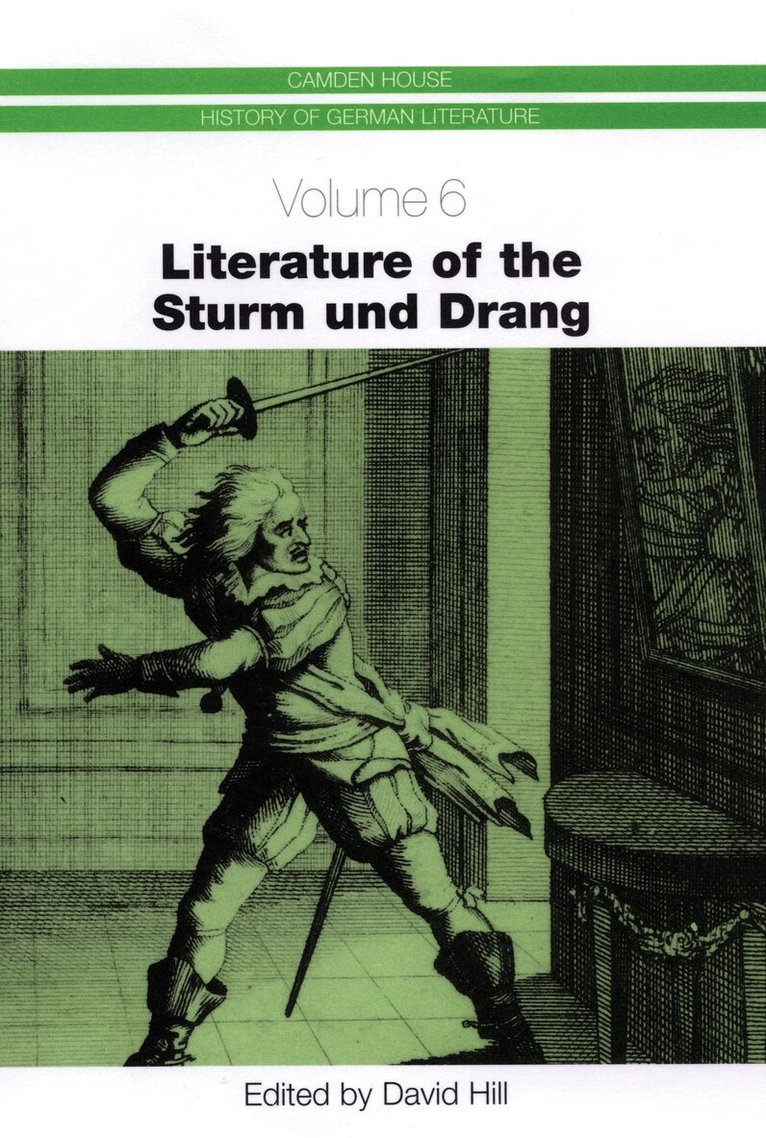
Literature of the Sturm und Drang
Inbunden, Engelska, 2002
1 640 kr
Skickas inom 10-15 vardagar
Carefully focused essays on major aspects of one of the most significant German literary movements, the Storm and Stress.Sturm und Drang refers to a set of values and a style of writing that arose in Germany in the second half of the eighteenth century, a particularly intense kind of pre-Romanticism that has often been represented as marking the beginning of an independent modern German culture. The circle of writers around the young Goethe, including Herder, Lenz, Klinger, and later Schiller, felt frustrated by the Enlightenment world of reason, balance, and control, and turned instead to nature as the source of authentic experience. Inspired by Rousseau and Herder, by Shakespeare, and by folk culture, they rebelled against propriety and experimented with new literary forms, their creative energy bursting through conventions that seemed staid and artificial. The Sturm und Drang has often been cited by those attempting to legitimate nationalism and irrationalism, but scholars have more recently emphasized the diversity of the movement and the links between it and the Enlightenment. This volume of essays by leading scholars from the UK, the US, and Germany illuminates the guiding ideas of the movement, discussing its most important authors, texts, and ideas, and taking account of the variety and complexity of the movement, placing it more securely within late-eighteenth-century European history. The main focus is on literature, and in particular on the drama, which was of special importance to the Sturm und Drang. However, the essays also outline the social conditions that gave rise to the movement, and consideration is given to different currents of ideas that underlie the movement, including areas of thought and bodies of work that traditional approaches have tended to marginalize. Contributors: Bruce Duncan, Howard Gaskill, Wulf Koepke, Susanne Kord, Frank Lamport, Alan Leidner, Matthias Luserke, Michael Patterson, Gerhard Sauder, Margaret Stoljar, Daniel Wilson, Karin Wurst.David Hill is a Senior Lecturer in the Department of German Studies at the University of Birmingham, UK.
Del 1 - Camden House History of German Literature
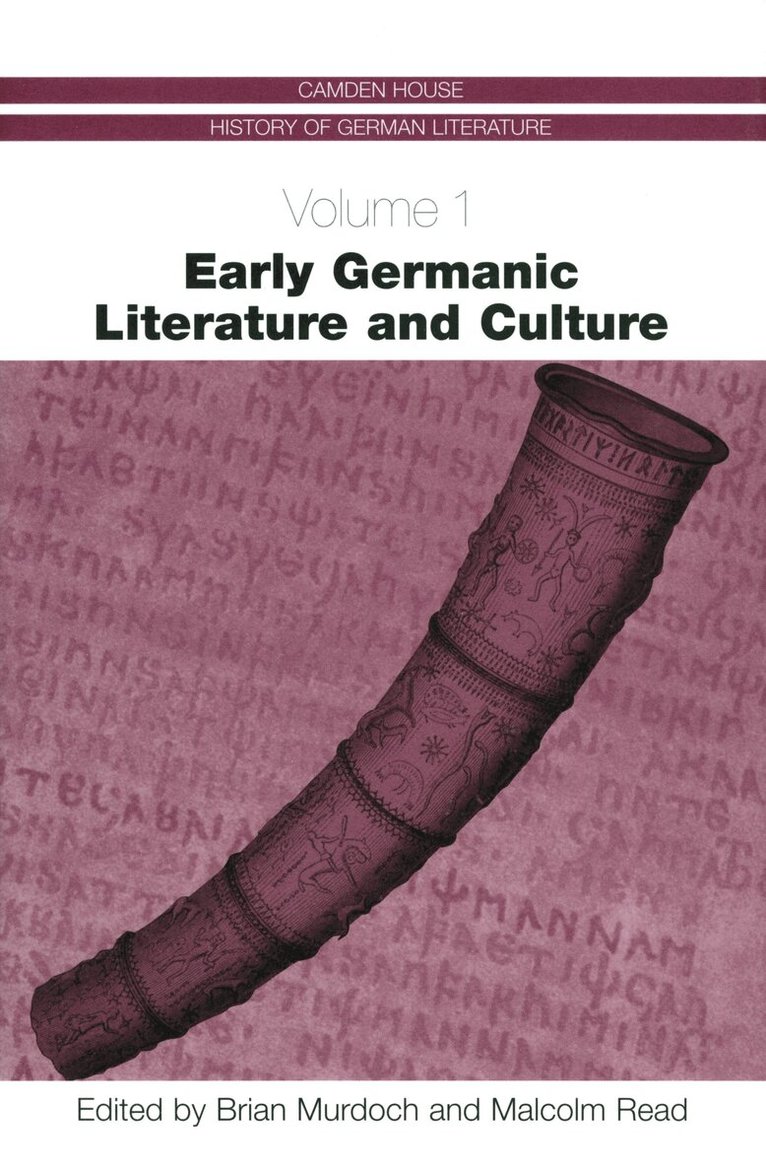
Early Germanic Literature and Culture
Inbunden, Engelska, 2004
1 337 kr
Skickas inom 7-10 vardagar
A collection of fresh essays examining the wide scope and significance of early Germanic culture and literature.The first volume of this set views the development of writing in German with respect to broad aspects of the early Germanic past, drawing on a range of disciplines including archaeology, anthropology, and philology in addition toliterary history. The first part considers the whole concept of Germanic antiquity and the way in which it has been approached, examines classical writings about Germanic origins and the earliest Germanic tribes, and looks at thetwo great influences on the early Germanic world: the confrontation with the Roman Empire and the displacement of Germanic religion by Christianity. A chapter on orality -- the earliest stage of all literature -- provides a bridgeto the earliest Germanic writings. The second part of the book is devoted to written Germanic -- rather than German -- materials, with a series of chapters looking first at the Runic inscriptions, then at Gothic, the first Germanic language to find its way onto parchment (in Ulfilas's Bible translation). The topic turns finally to what we now understand as literature, with general surveys of the three great areas of early Germanic literature: Old Norse, Old English, and Old High and Low German. A final chapter is devoted to the Old Saxon Heliand.Contributors: T. M. Andersson, Heinrich Beck, Graeme Dunphy, Klaus Düwel, G. Ronald Murphy, Adrian Murdoch, Brian Murdoch, Rudolf Simek, Herwig Wolfram.Brian Murdoch and Malcolm Read both teach in the German Department of the University of Stirling in Scotland.
Del 8 - Camden House History of German Literature
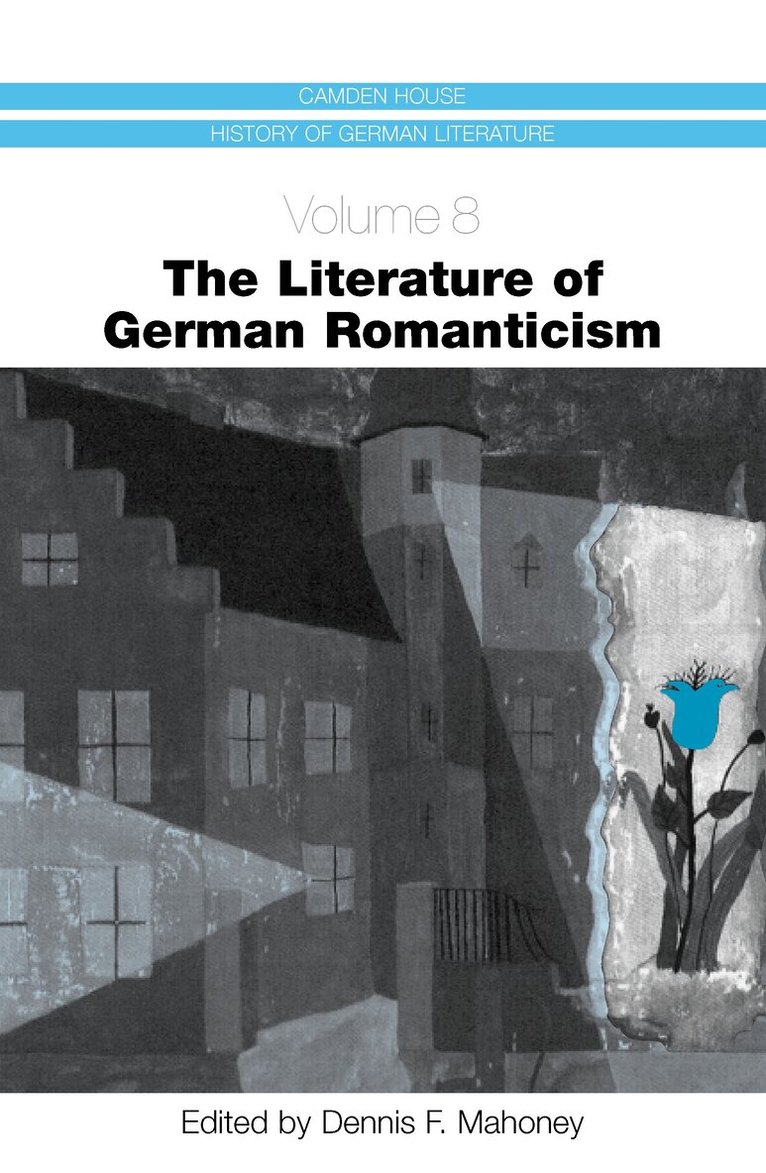
Literature of German Romanticism
Inbunden, Engelska, 2003
1 853 kr
Skickas inom 10-15 vardagar
Sharply focused essays on the most significant aspects of German Romanticism.This volume of sharply focused essays by an international team of scholars deals not only with the most significant literary, philosophical, and cultural aspects of German Romanticism -- one of the most influential, albeit highlycontroversial movements in the history of German literature -- but also with the history and status of scholarship on the literature of the period. The introduction and first section establish an overall framework by placing German Romanticism within a European context that includes its English counterpart. Goethe and Schiller are considered, as are the Jena Romantics. The second section is organized according to the traditional distinctions between epic,dramatic, and lyric modes of writing, while realizing that particularly in the Romantic novel, there was an attempt to blend these three. A final group of essays focuses on German literary Romanticism's relation to other aspects of German culture: folklore studies, politics, psychology, natural science, gender presentation and representation, music, and visual art.Contributors: Gerhard Schulz, Arnd Bohm, Richard Littlejohns, Gerhart Hoffmeister, Ulrich Scheck, Claudia Stockinger, Bernadette Malinowski, Fabian Lampart, Klaus Peter, Gabriele Rommel, Martha B. Helfer, Kristina Muxfeldt, Beate Allert, Paul Bishop and R. H. Stephenson, Nicholas Saul Dennis F. Mahoney is Professor of German and Director of the European Studies Program at the University of Vermont.
Del 2 - Camden House History of German Literature
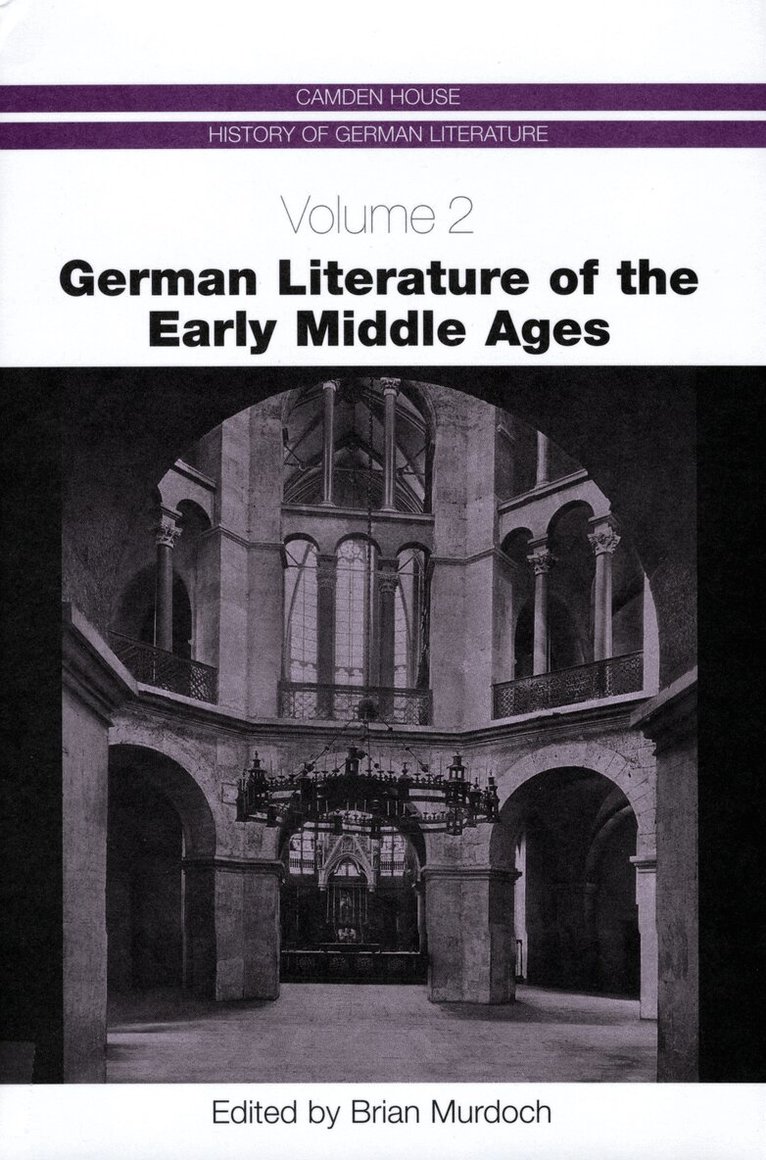
German Literature of the Early Middle Ages
Inbunden, Engelska, 2004
1 337 kr
Skickas inom 7-10 vardagar
A detailed, contextualized picture of the very beginnings of writing in German from around 750 to 1100.This second volume of the set not only presents a detailed picture of the beginnings of writing in German from its first emergence as a literary language from around 750 to 1100, but also places those earliest writings into a context. The first stages of German literature existed within a manuscript culture, so careful consideration is given to what constitutes the actual texts, but German literature also arose within a society that had recently been Christianized -- through the medium of Latin. Therefore what we understand by literature in Germany at this early period must include a great amount of writing in Latin. Thus the volume looks in detail at Latin works in prose and verse, but with an eye upon the interaction between Latin and German writings. Some of the material in the newly written German language is not literary in the modern sense of the word, but makes clear the difficulties and indeed the triumphs of the establishing of a written literary language. Individual chapters look first at the earliest translations and functional literature in German (including charms and prayers); next, the examination of heroic material juxtaposes the Hildebrandlied with the Christian Ludwigslied and with Latin writings like Waltharius and the panegyrics; Otfrid's work -- the Gospel-poem in German -- is given its due prominence; the smaller German texts and the later prose works are fully treated; as is chronicle-writing in German and Latin. Old High German literature was a trickle compared to the flood of the Latin that surrounded (and influenced) it, but its importance is undeniable: that trickle became a river.Contributors: Linda Archibald, Graeme Dunphy, Stephen Penn, Christopher Wells, Jonathan West, Brian Murdoch.Brian Murdoch is Professor of German at the University of Stirling,Scotland.
Del 5 - Camden House History of German Literature
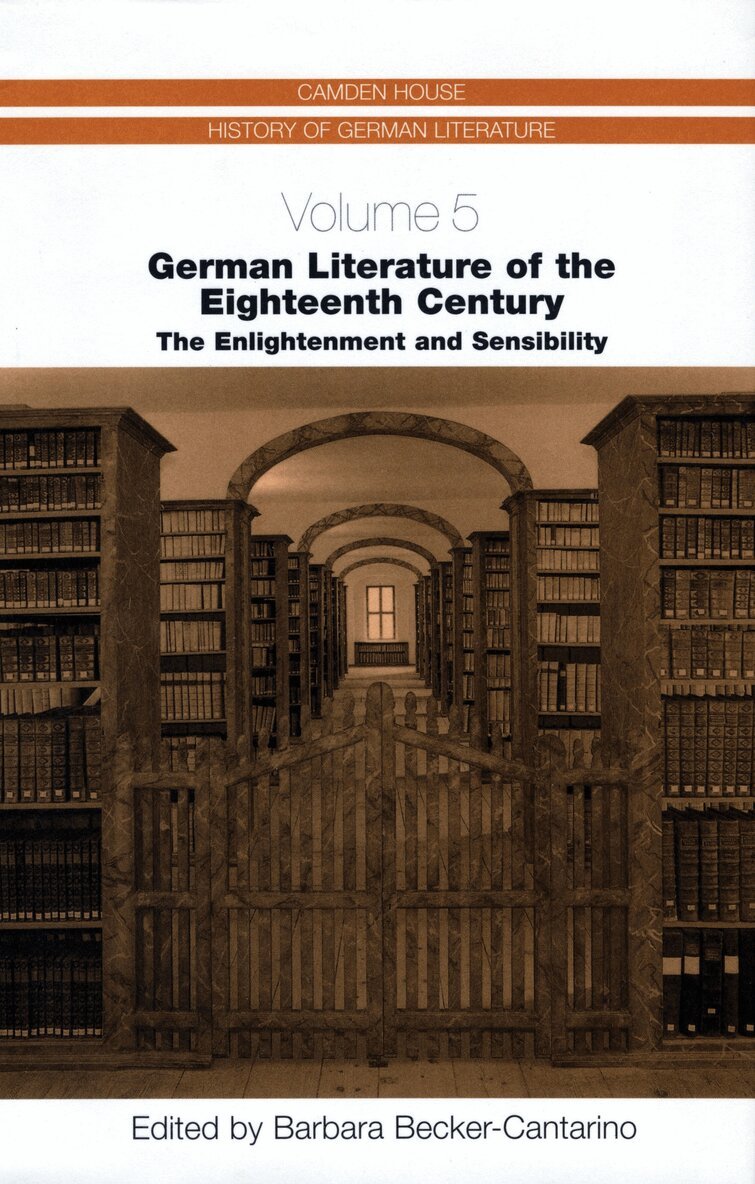
German Literature of the Eighteenth Century
The Enlightenment and Sensibility
Inbunden, Engelska, 2004
1 640 kr
Skickas inom 10-15 vardagar
New essays tracing the 18th-century literary revival in German-speaking lands and the cultural developments that accompanied it.The Enlightenment was based on the use of reason, common sense, and "natural law," and was paralleled by an emphasis on feelings and the emotions in religious, especially Pietist circles. Progressive thinkers in England, France, and later in Germany began to assail the absolutism of the state and the orthodoxy of the Church; in Germany the line led from Leibniz, Thomasius, and Wolff to Lessing and Kant, and eventually to the rise of an educated upper middle class. Literary developments encompassed the emergence of a national theater, literature, and a common literary language. This became possible in part because of advances in literacy and education, especially among bourgeois women, and the reorganization of book production and the book market. This major new reference work provides a fresh look at the major literary figures, works, and cultural developments from around 1700 up to the late Enlightenment.They trace the 18th-century literary revival in German-speaking countries: from occasional and learned literature under the influence of French Neoclassicism to the establishment of a new German drama, religious epic and secular poetry, and the sentimentalist novel of self-fashioning. The volume includes the new, stimulating works of women, a chapter on music and literature, chapters on literary developments in Switzerland and in Austria, and a chapter onreactions to the Enlightenment from the 19th century to the present. The recent revaluing of cultural and social phenomena affecting literary texts informs the presentations in the individual chapters and allows for the inclusionof hitherto neglected but important texts such as essays, travelogues, philosophical texts, and letters. Contributors: Kai Hammermeister, Katherine Goodman, Helga Brandes, Rosmarie Zeller, Kevin Hilliard, Francis Lamport, Sarah Colvin, Anna Richards, Franz M. Eybl, W. Daniel Wilson, Robert Holub.Barbara Becker-Cantarino is Research Professor in German at the Ohio State University.
1 305 kr
Tillfälligt slut
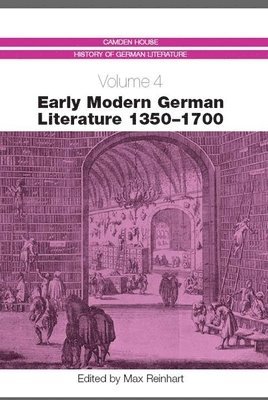
Pathbreaking volume providing a detailed, state-of-the-art overview of the literature of this 350-year period and its cultural and historical background.
Del 7 - Camden House History of German Literature
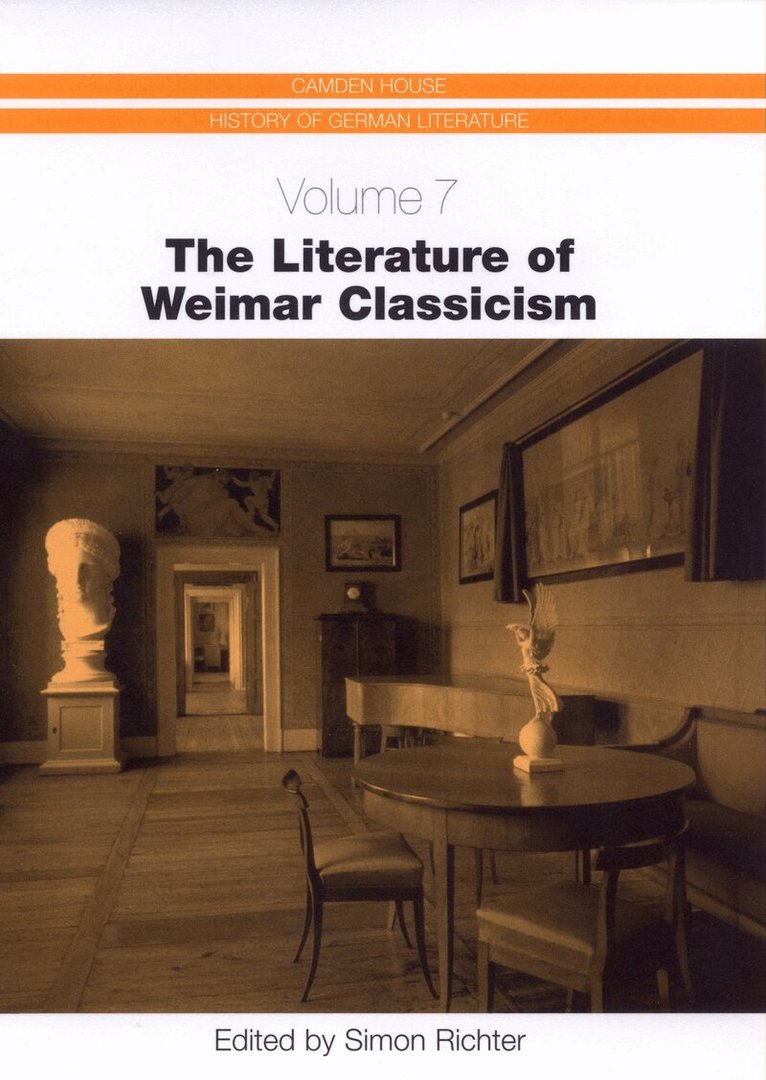
Literature of Weimar Classicism
Inbunden, Engelska, 2005
1 640 kr
Skickas inom 10-15 vardagar
New essays providing an account of the shaping beliefs, preoccupations, motifs, and values of Weimar Classicism.In Germany, Weimar Classicism (roughly the period from Goethe's return to Germany from Italy in 1788 to the death of his friend and collaborator Schiller in 1805) is widely regarded as an apogee of literary art. But outside of Germany, Goethe is considered a Romantic, and the notion of Weimar Classicism as a distinct period is viewed with skepticism. This volume of new essays regards the question of literary period as a red herring: Weimar Classicism is best understood as a project that involved the ambitious attempt not only to imagine but also to achieve a new quality of wholeness in human life and culture at a time when fragmentation, division, and alienation appeared to be thenorm. By not succumbing to the myth of Weimar and its literary giants, but being willing to explore the phenomenon as a complex cultural system with a unique signature, this book provides an account of its shaping beliefs, preoccupations, motifs, and values. Contributions from leading German, British, and North American scholars open up multiple interdisciplinary perspectives on the period. Essays on the novel, poetry, drama, and theater are joined by accounts of politics, philosophy, visual culture, women writers, and science. The reader is introduced to the full panoply of cultural life in Weimar, its accomplishments as well as its excesses and follies. Emancipatory and doctrinaire by turns, the project of Weimar Classicism is best approached as a complex whole. Contributors: Dieter Borchmeyer, Charles Grair, Gail Hart, Thomas Saine, Jane Brown, Cyrus Hamlin, Roger Stephenson, Elisabeth Krimmer, Helmut Pfotenhauer, Benjamin Bennett, Astrida Orle Tantillo, W. Daniel Wilson.Simon J. Richter is Associate Professor of German at the University of Pennsylvania.
Del 9 - Camden House History of German Literature
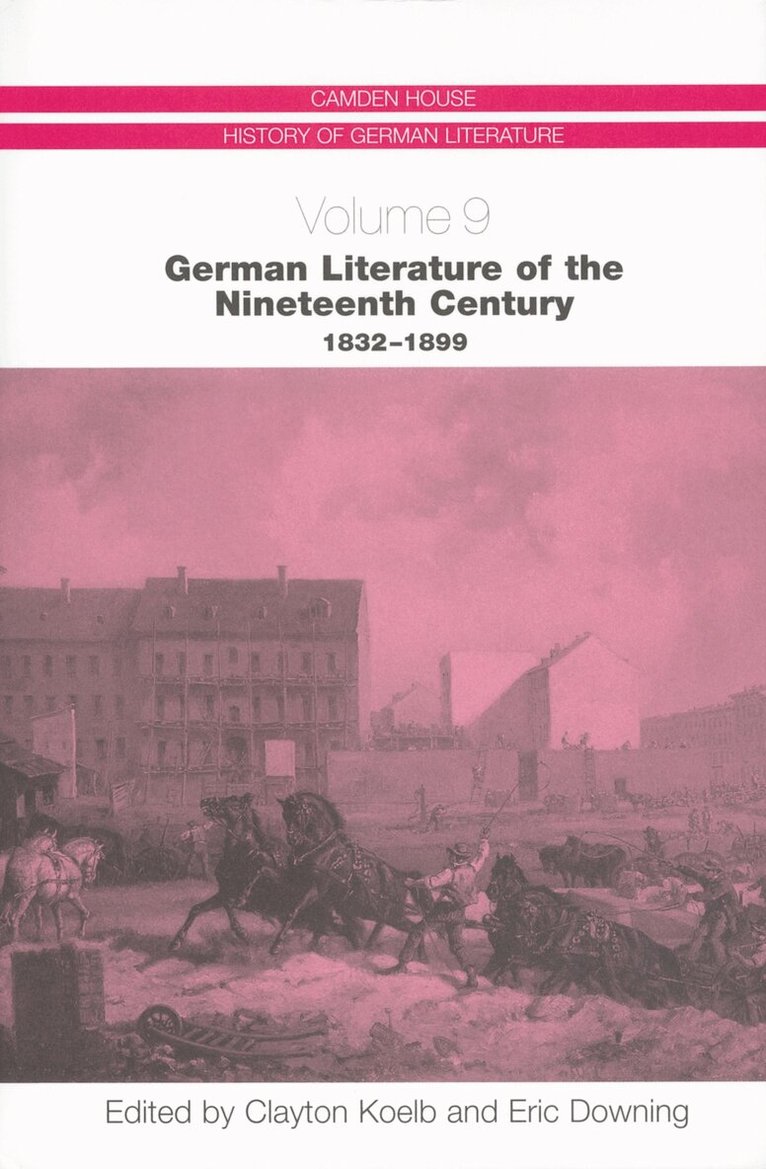
German Literature of the Nineteenth Century, 1832-1899
Inbunden, Engelska, 2005
1 640 kr
Skickas inom 10-15 vardagar
New essays providing an overview of the major movements, genres, and authors of 19th-century German literature in social and political context.This volume provides an overview of the major movements, genres, and authors of 19th-century German literature in the period from the death of Goethe in 1832 to the publication of Freud's Interpretation of Dreams in 1899. Although the primary focus is on imaginative literature and its genres, there is also substantial discussion of related topics, including music-drama, philosophy, and the social sciences. Literature is considered in its cultural and socio-political context, and the German literary scene takes its place in a wider European perspective. Following the editors' introduction, essays consider the impact of Romanticism on subsequent literary movements, the effectsof major movements and writers of non-German-speaking Europe on the development of German literature, and the impact of politics on the changing cultural scene. The second section presents overviews of the principal movements ofthe time (Junges Deutschland, Vormärz, Biedermeier, Poetic Realism, Naturalism, Symbolism, and Impressionism), and the third section focuses on the major genres of lyric poetry, prose fiction, drama, and music-drama. The final section provides bibliographical resources in the form of a critical bibliography and a list of primary sources. Contributors to the volume are distinguished scholars of German literature, culture, and history from North America andEurope: Andrew Webber, Lilian Furst, Arne Koch, Robert Holub, Gail Finney, Ernst Grabovszki, Benjamin Bennett, Jeffrey Sammons, Thomas Pfau, Christopher Morris, John Pizer, Thomas Spencer.Clayton Koelb is Guy B. Johnson Distinguished Professor of German at the University of North Carolina-Chapel Hill, and Eric Downing is Associate Professor of German at the same institution.