Canada 150 Collection - Böcker
Visar alla böcker i serien Canada 150 Collection. Handla med fri frakt och snabb leverans.
9 produkter
9 produkter
427 kr
Skickas inom 7-10 vardagar
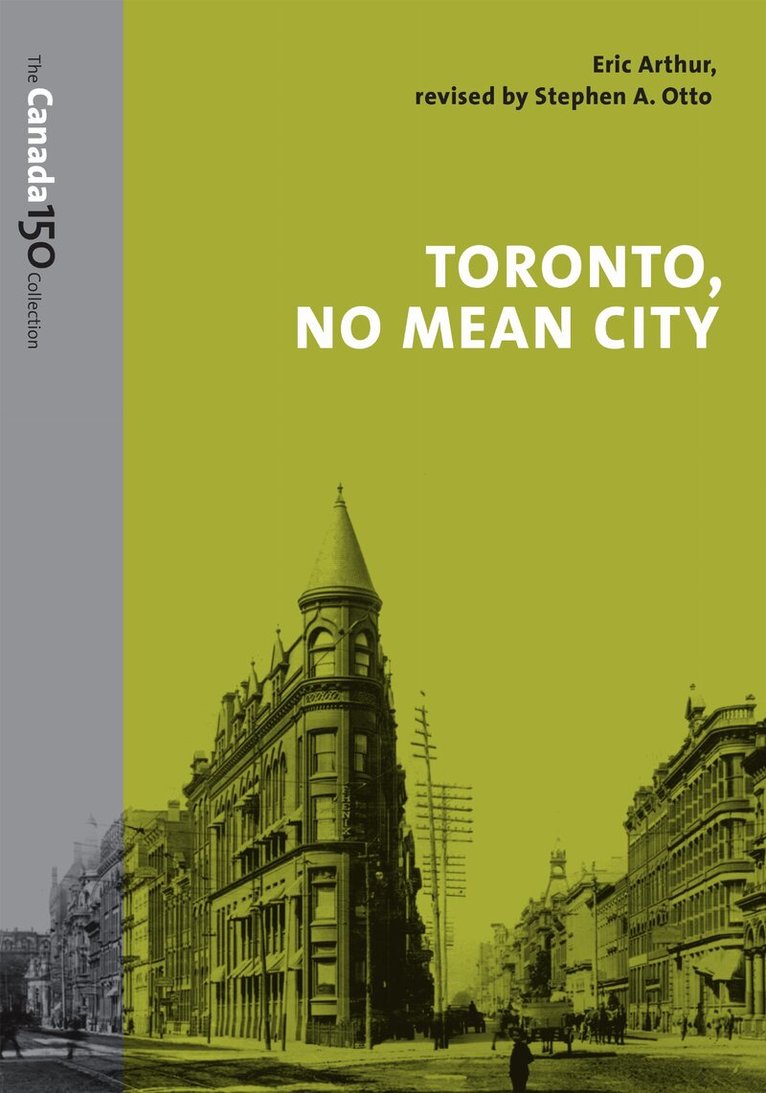
Eric Arthur fell in love with Toronto the first time he saw it. The year was 1923; he was twenty-five years old, newly arrived to teach architecture at the University of Toronto. For the next sixty years he dedicated himself to saving the great buildings of Toronto's past. Toronto, No Mean City sounded a clarion call in his crusade. First published in 1964, it sparked the preservation movement of the 1960s and 1970s and became its bible. This reprint of the third edition, prepared by Stephen Otto, updates Arthur's classic to include information and illustrations uncovered since the appearance of the first edition.Four new essays were commissioned for this reprint. Christopher Hume, architecture critic and urban affairs columnist for the Toronto Star, addresses the changes to the city since the appearance of the third edition in 1986. Architect and heritage preservation activist Catherine Nasmith assesses the current status of the city's heritage preservation movement. Susan Crean, a freelance writer in Toronto, explores Toronto's vibrant arts scene. Mark Kingwell, professor and cultural commentator, reflects on the development of professional and amateur sports in and around town.Readers will delight in these anecdotal accounts of the city's rich architectural heritage.
296 kr
Skickas inom 7-10 vardagar
The Canadian Charter of Rights is composed of words that describe the foundations of a just society: equality, freedom, and democracy. These words of justice have inspired struggles for civil rights, self-determination, trade unionism, the right to vote, and social welfare. Why is it, then, that fifteen years after the entrenchment of the Charter, social injustice remains pervasive in Canada?Joel Bakan explains why the Charter has failed to promote social justice, and why it may even impede it. He argues that the Charter's fine-sounding words of justice are 'just words.' Freedom, equality and democracy are fundamental principles of social justice. The Canadian Charter of Rights and Freedoms entrenches them in Canada's highest law, the constitution. Yet the Charter has failed to promote social justice in Canada. In Just Words, Joel Bakan explains why. Sophisticated in its analyses but clearly written and accessible, Just Words is cutting-edge commentary by one of Canada's rising intellectuals.
522 kr
Skickas inom 7-10 vardagar
Odysseys Home: Mapping African-Canadian Literature is a pioneering study of African-Canadian literary creativity, laying the groundwork for future scholarly work in the field. Based on extensive excavations of archives and texts, this challenging passage through twelve essays presents a history of the literature and examines its debt to, and synthesis with, oral cultures. George Elliott Clarke identifies African-Canadian literature's distinguishing characteristics, argues for its relevance to both African Diasporic Black and Canadian Studies, and critiques several of its key creators and texts.Scholarly and sophisticated, the survey cites and interprets the works of several major African-Canadian writers, including André Alexis, Dionne Brand, Austin Clarke, Claire Harris, and M. Nourbese Philip. In so doing, Clarke demonstrates that African-Canadian writers and critics explore the tensions that exist between notions of universalism and black nationalism, liberalism and conservatism. These tensions are revealed in the literature in what Clarke argues to be – paradoxically – uniquely Canadian and proudly apart from a mainstream national identity.Clarke has unearthed vital but previously unconsidered authors, and charted the relationship between African-Canadian literature and that of Africa, African America, and the Caribbean. In addition to the essays, Clarke has assembled a seminal and expansive bibliography of texts – literature and criticism – from both English and French Canada. This important resource will inevitably challenge and change future academic consideration of African-Canadian literature and its place in the international literary map of the African Diaspora.
323 kr
Skickas inom 7-10 vardagar
Bad Attitude(s) on Trial is a critical analysis of pornography in the context of contemporary Canada. The notion that pornography both reflects sexual domination and 'victimizes' women has recently found expression in law in the landmark Canadian Supreme Court decision of R. v. Butler (1992). Many feminists embrace this new law as progressive, but in the post-Butler years, straight, mainstream pornography is still flourishing, while sexual representations that challenge conventional notions of sexuality, such as those centering on gay and lesbian sex and s/m sex, are the focus of censorship. It is the censorship of sexual others that the authors critique from a legal, cultural, gay, and philosophical standpoint.Lise Gotell examines the intervention of the Women's Legal Education and Action Fund (LEAF) in the Butler decision and provides an overview of socio-legal debates on pornography and censorship. Brenda Cossman examines the Butler decision itself and challenges the dominant reading of this case as a feminist victory. Becki Ross critically examines the expert testimony she delivered in defense of Bad Attitude, an American lesbian sex magazine seized by police from Glad Day Bookshop in Toronto in 1992. She details the difficulties she encountered in explicating and contextualizing the specificities, nuances, and complexities of lesbian s/m fantasy in a court of law. In the final chapter, Shannon Bell advances a conception of pornography that is not distinguishable from philosophy, using philosophy to make pornography.Bad Attitude(s) on Trial provides a new debate on pornography and feminism. It will be of particular interest to students of both women's, and gay and lesbian issues, but will also be relevant for scholars of law, political science, and philosophy, as well as for anyone interested in a different, provocative view of the Butler decision.
305 kr
Skickas inom 7-10 vardagar
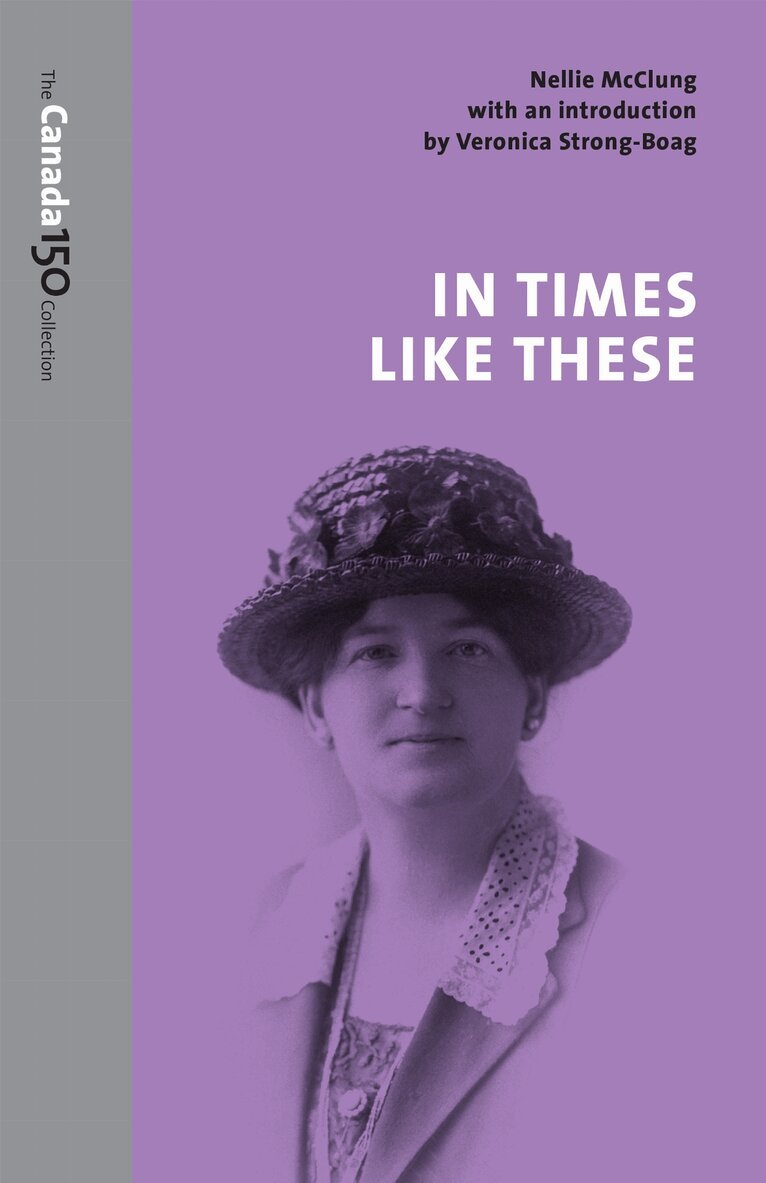
Nellie McClung's fourth book, In Times Like These, written in 1915, survives as a classic formulation of a feminist position. With hard-hitting rhetoric it demands women's rights as a logical extension of traditional views of female moral superiority and maternal responsibility.
441 kr
Skickas inom 7-10 vardagar
From its eighteenth-century roots in exploration and trade, to the major conflicts of the First and Second World Wars, through to current roles in multinational operations with United Nations and NATO forces, Canada's navy - now celebrating its one hundredth anniversary - has been an expression of Canadian nationhood and a catalyst in the complex process of national unity.In the second edition of Canada's Navy, Marc Milner brings his classic work up to date and looks back at one hundred years of the Navy in Canada. With supplementary photos, updated sources, a new preface and epilogue, and an additional chapter on the Navy's global reach from 1991 to 2010, this edition carries Canadian Naval history into the twenty-first century. Milner brings effortless prose and exacting attention to detail to his comprehensive and accessible examination of this fascinating Canadian organization. This much-needed update of Canada's Navy will continue to provoke discussion about the past and future of the country's naval forces and their evolving role in the interwoven issues of maritime politics and economics, defence and strategy, and national and foreign policy.
422 kr
Skickas inom 10-15 vardagar
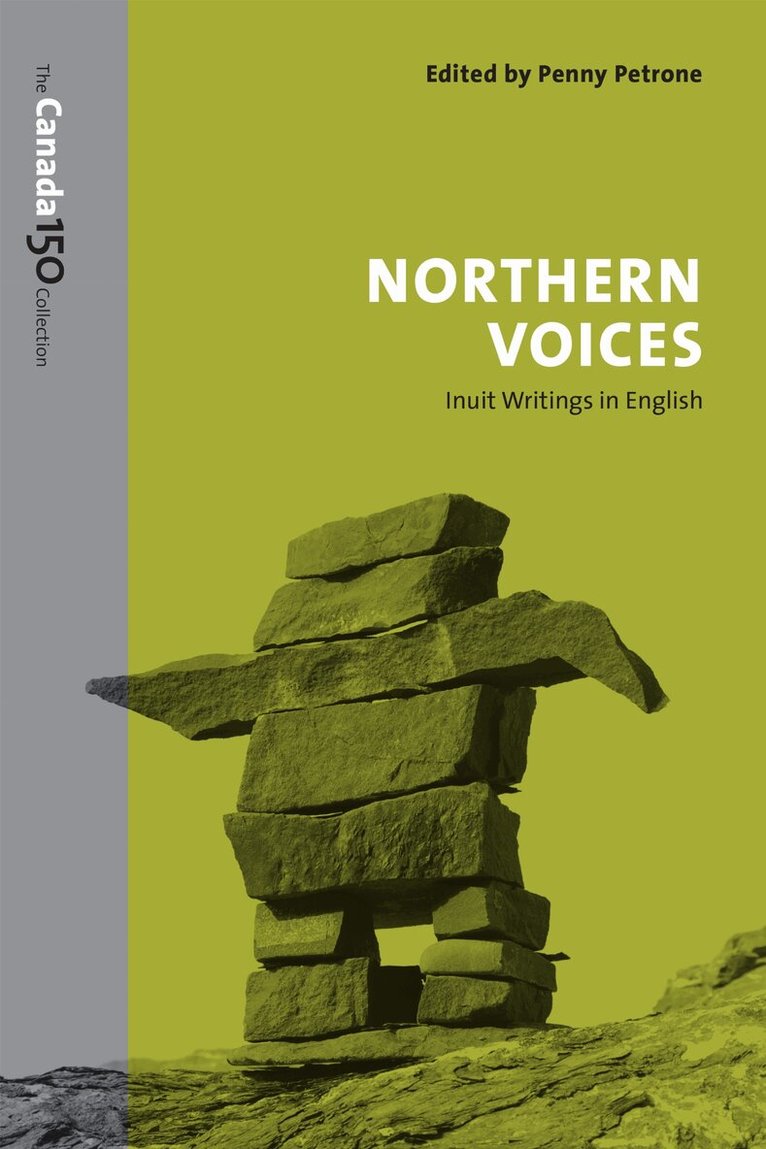
Inuit of northern Canada have a rich oral tradition in their ancient languages and a more recent tradition of written English. Penny Petrone traces the two paths that link the cultural past of arctic peoples with its expression in the present day. The book's first section includes traditional legends, myths, folk history told by native story-tellers, and poetry sung by Inuit composers. The second presents statements and observations by some of the first Inuit to come into contact with European newcomers, including official reports, interviews, letters, and diaries. Next are early poetry and prose in translation, much of it autobiographical. The final section includes contemporary Inuit writing, from essays and speeches to fiction, poetry, and other genres of imaginative literature. The editor has provided an introduction for each item and arranged the material chronologically to give historical perspective and continuity to the whole.
309 kr
Skickas inom 7-10 vardagar
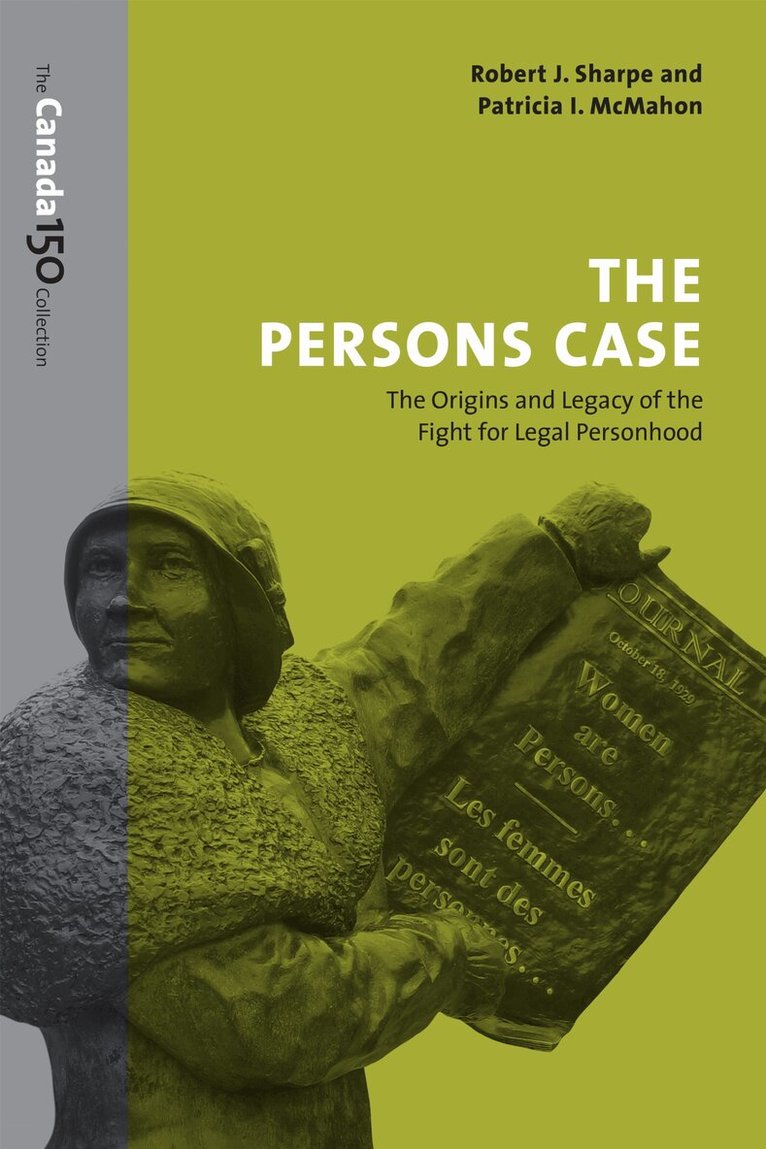
On 18 October 1929, John Sankey, England's reform-minded Lord Chancellor, ruled in the Persons case that women were eligible for appointment to Canada's Senate. Initiated by Edmonton judge Emily Murphy and four other activist women, the Persons case challenged the exclusion of women from Canada's upper house and the idea that the meaning of the constitution could not change with time. The Persons Case considers the case in its political and social context and examines the lives of the key players: Emily Murphy, Nellie McClung, and the other members of the "famous five," the politicians who opposed the appointment of women, the lawyers who argued the case, and the judges who decided it.Robert J. Sharpe and Patricia I. McMahon examine the Persons case as a pivotal moment in the struggle for women's rights and as one of the most important constitutional decisions in Canadian history. Lord Sankey's decision overruled the Supreme Court of Canada's judgment that the courts could not depart from the original intent of the framers of Canada's constitution in 1867. Describing the constitution as a "living tree," the decision led to a reassessment of the nature of the constitution itself. After the Persons case, it could no longer be viewed as fixed and unalterable, but had to be treated as a document that, in the words of Sankey, was in "a continuous process of evolution."The Persons Case is a comprehensive study of this important event, examining the case itself, the ruling of the Privy Council, and the profound affect that it had on women's rights and the constitutional history of Canada.
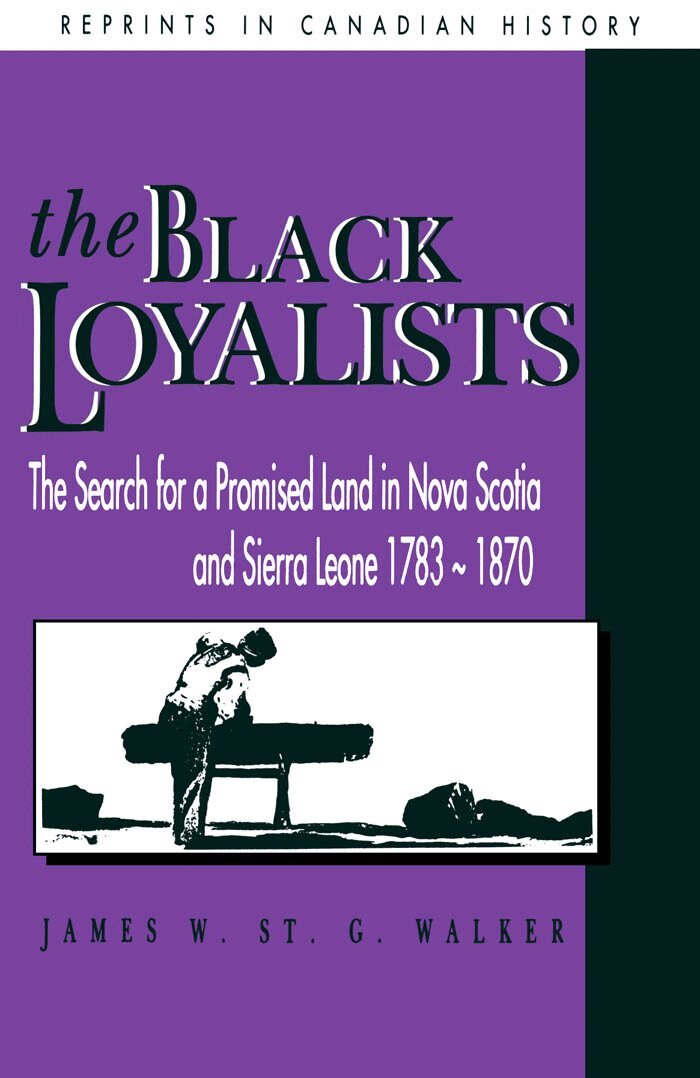
Black Loyalists
The Search for a Promised Land in Nova Scotia and Sierra Leone, 1783-1870
Häftad, Engelska, 2017
427 kr
Skickas inom 7-10 vardagar
There is a Canadian myth about the Loyalists who left the United States after the American Revolution for Canada. The myth says they were white, upper-class citizens devoted to British ideals, transplanting the best of colonial American society to British North America. In reality, more than 10 per cent of the Loyalists who came to the Maritime provinces were black and had been slaves. The Black Loyalists tells the story of one such group who came to Nova Scotia, but didn't stay. James Walker documents their experience in Canada, following them across the Atlantic as they became part of a unique colonial experiment in Sierra Leone.