Chapman & Hall/CRC Finance Series - Böcker
Visar alla böcker i serien Chapman & Hall/CRC Finance Series. Handla med fri frakt och snabb leverans.
13 produkter
13 produkter
2 588 kr
Skickas inom 10-15 vardagar
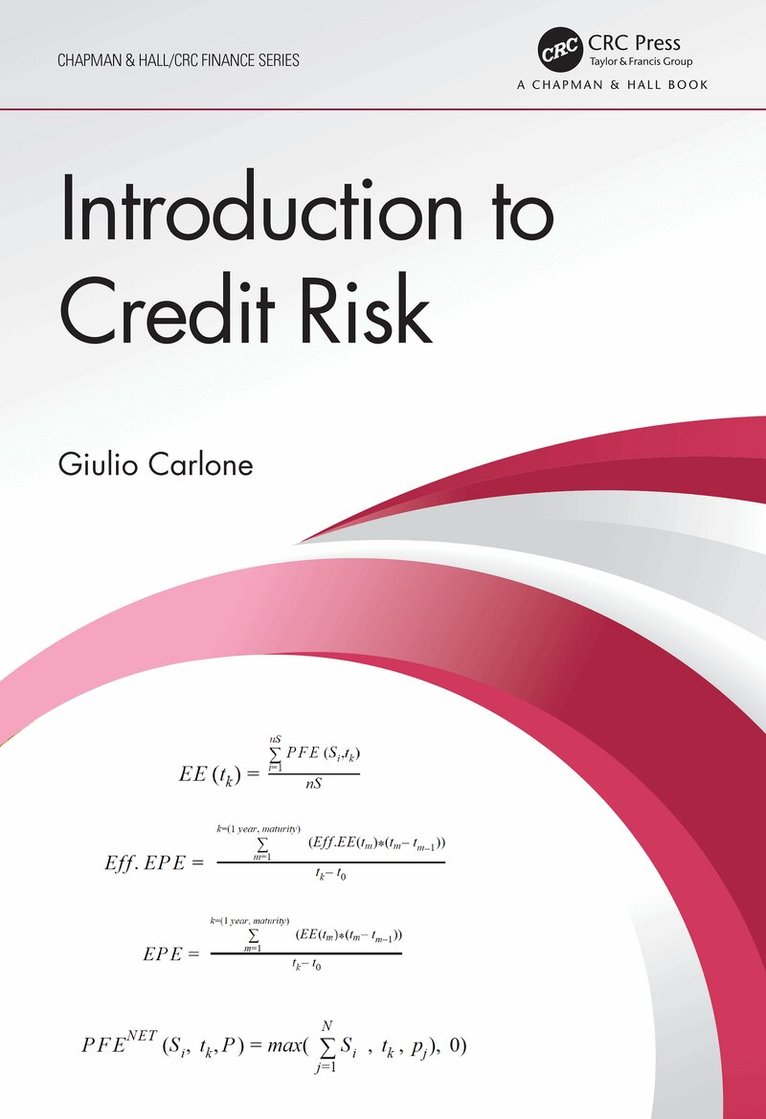
Introduction to Credit Risk focuses on analysis of credit risk, derivatives, equity investments, portfolio management, quantitative methods, and risk management. In terms of application, this book can be used as an important tool to explain how to generate data rows of expected exposure to counterparty credit risk. The book also directs the reader on how to visualize, in real time, the results of this data, generated with a Java tool.Features Uses an in-depth case study to illustrate multiple factors in counterparty credit risk exposures Suitable for quantitative risk managers at banks, as well as students of finance, financial mathematics, and software engineering Provides the reader with numerous examples and applicationsGiulio Carlone has an MBA, a PhD, and a Master’s degree in Computer Science from the University of Italy. He is a member of the software system engineering staff of the Department of Computer Science at University College London. He has 20 years of practical experience in technical software engineering and quantitative finance engineering in the commercial sector. His research interests include the use of communication strategies and the implementation of plans and projects using financial software for requirement specifications, requirements analysis, and architectural design.
673 kr
Skickas inom 10-15 vardagar
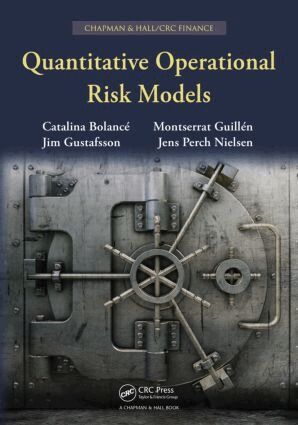
Using real-life examples from the banking and insurance industries, Quantitative Operational Risk Models details how internal data can be improved based on external information of various kinds. Using a simple and intuitive methodology based on classical transformation methods, the book includes real-life examples of the combination of internal data and external information.A guideline for practitioners, the book begins with the basics of managing operational risk data to more sophisticated and recent tools needed to quantify the capital requirements imposed by operational risk. The book then covers statistical theory prerequisites, and explains how to implement the new density estimation methods for analyzing the loss distribution in operational risk for banks and insurance companies. In addition, it provides: Simple, intuitive, and general methods to improve on internal operational risk assessment Univariate event loss severity distributions analyzed using semiparametric modelsMethods for the introduction of underreporting information A practical method to combine internal and external operational risk data, including guided examples in SAS and R Measuring operational risk requires the knowledge of the quantitative tools and the comprehension of insurance activities in a very broad sense, both technical and commercial. Presenting a nonparametric approach to modeling operational risk data, Quantitative Operational Risk Models offers a practical perspective that combines statistical analysis and management orientations.
659 kr
Skickas inom 10-15 vardagar
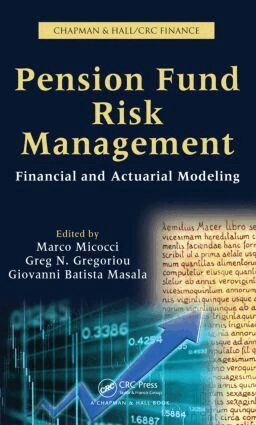
As pension fund systems decrease and dependency ratios increase, risk management is becoming more complex in public and private pension plans. Pension Fund Risk Management: Financial and Actuarial Modeling sheds new light on the current state of pension fund risk management and provides new technical tools for addressing pension risk from an integrated point of view.Divided into four parts, the book first presents the correct measurement of risk in pension funds, fund dynamics under a performance-oriented arrangement, an attribution model for monitoring the performance and risk of a defined benefit (DB) pension fund, and an optimal investment problem of a defined contribution (DC) pension fund under inflationary risk. It also describes a pension plan from a dynamic optimization viewpoint, the optimal asset allocation of U.S. pension funds, the identification of stakeholders’ risks, value-at-risk (VaR) methodology, and various effects on the asset allocation of DB pension schemes.The second section focuses on the effects of uncertainty on employer-provided DB private pension plan liabilities; wage-based lump sum payments by death, retirement, or dismissal by the employer; fundamental retirement changes; occupational pension insurance in Germany; and longevity risk securitization in pension schemes.In the third part, the book examines employers’ risks, accountability rules and regulations, useful actuarial analysis instruments, risk-based solvency regime in the Netherlands, and the impact of the 2008 global financial crisis on pension participants.The final part covers DB pension freezes and terminations of plans, the two-pillar social security system of Italy, the Greek social security system, the effect of a company’s unfunded pension liabilities on its stock market valuation, and the returns of Spanish balanced pension plans and portfolio performance.With contributions from well-known, international academics and professionals, this book will assist pension fund executives, risk managers, consultants, and academic researchers in attaining a clear picture of the integration of risks in the pension world. It offers a comprehensive, contemporary account of how to handle the risks involved with pension funds.
1 080 kr
Skickas inom 10-15 vardagar
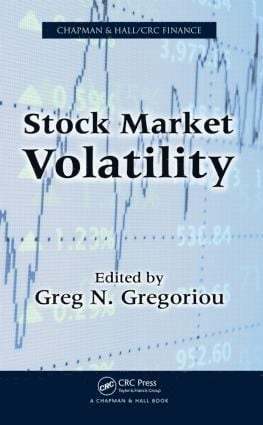
Up-to-Date Research Sheds New Light on This Area Taking into account the ongoing worldwide financial crisis, Stock Market Volatility provides insight to better understand volatility in various stock markets. This timely volume is one of the first to draw on a range of international authorities who offer their expertise on market volatility in developed, emerging, and frontier economies.The expert contributors cover stock market volatility modeling, portfolio management, hedge fund volatility, and volatility in developed countries and emerging markets. They present some of the vocational aspects, emphasizing the equity markets. The book approaches the material from the practitioner’s viewpoint and familiarizes readers with how volatility is linked to speculation, trading volume, and information arrival. It also discusses recent trends in forecasting volatility, along with the newly cultivated trading platform of volatility derivatives. Given the current state of high levels of volatility in global stock markets, money managers, financial institutions, investment banks, financial analysts, and others need to improve their understanding of volatility. Examining key aspects of stock market volatility, this comprehensive reference offers novel suggestions for accurately assessing the field.
1 080 kr
Skickas inom 10-15 vardagar
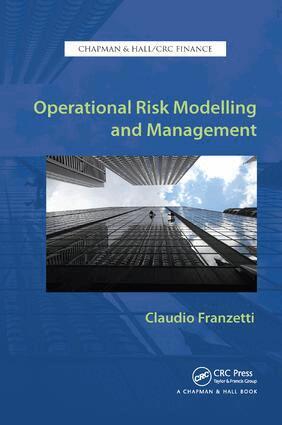
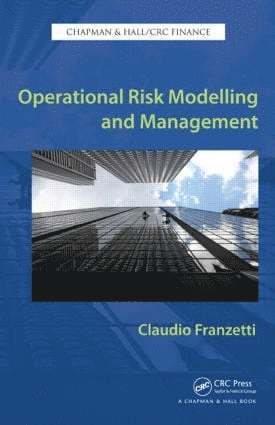
Taking into account the standards of the Basel Accord, Operational Risk Modelling and Management presents a simulation model for generating the loss distribution of operational risk. It also examines a multitude of management issues that must be considered when adjusting the quantitative results of a comprehensive model.The book emphasizes techniques that can be understood and applied by practitioners. In the quantitative portions of the text, the author supplies key concepts and definitions without stating theorems or delving into mathematical proofs. He also offers references for readers looking for further background information. In addition, the book includes a Monte Carlo simulation of risk capital in the form of a run-through example of risk calculations based on data from a quantitative impact study. Since the computations are too complicated for a scripting language, a prototypical software program can be downloaded from www.garrulus.comHelping you navigate the tricky world of risk calculation and management, this book presents two main building blocks for determining how much capital needs to be reserved for operational risk. It employs the loss distribution approach as a model for calculating the risk capital figure and explains risk mitigation through management and management’s actuations.
1 080 kr
Skickas inom 10-15 vardagar
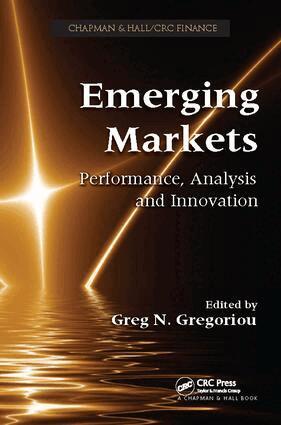
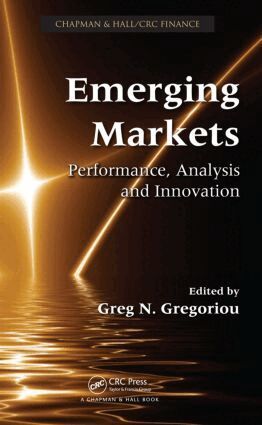
Although emerging market economies consist of 50% of the global population, they are relatively unknown. Filling this knowledge gap, Emerging Markets: Performance, Analysis and Innovation compiles the latest research by noteworthy academics and money managers from around the world. With a focus on both traditional emerging markets and new areas, such as the Balkan, Middle East, and North African regions, it looks at how these markets can serve as drivers of portfolios and a significant force over the long term. This noteworthy collection sheds some light on what lies ahead for emerging markets with the most up-to-date research from academics and practitioners. It covers general issues in emerging markets and provides in-depth studies of regional markets experiencing transition, including the European Union, Latin America, and the Middle East. The book also explores Asian and Indian markets as well as financial instruments, such as bonds and funds, relative to these markets. It concludes with chapters on regulations, corporate governance, and corruption.
1 686 kr
Skickas inom 10-15 vardagar
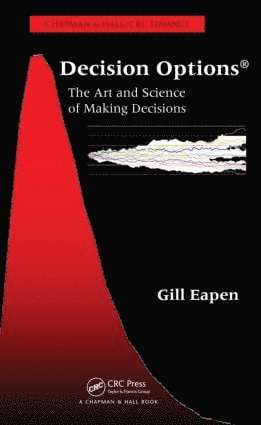
Although uncertainty and flexibility are important attributes that drive the value of an investment, they are seldom systematically considered in traditional financial analysis. Through theory and case studies, Decision Options: The Art and Science of Making Decisions details how uncertainty and flexibility can be evaluated to assist in making better investment decisions in companies. Harnessing the author’s own software technology, the book supplies a tool set that enables the incorporation of uncertainty and flexibility in investment decisions up front without being too complex. After a qualitative introduction to decision options, the author covers private and market risks, including how risks relate to decisions and the use of stochastic processes to represent risks. He then presents self-standing options, such as financial options and options pricing theory; describes how decision options are different from single-standing financial options; and deals with a special case of decision options in pricing employee stock options. The next several chapters focus on various case studies of practical applications of decision options. The book also explores common misperceptions around the term real options and the impediments that currently exist in large companies for the systematic practice of decision options.Providing rigorous methods to use when making decisions, this book helps readers reduce the time and effort needed to reach decisions and build consensus, improve decision fidelity and communication, and enhance the value of their enterprise.
2 996 kr
Skickas inom 10-15 vardagar
Up-to-Date Research Sheds New Light on This Area Taking into account the ongoing worldwide financial crisis, Stock Market Volatility provides insight to better understand volatility in various stock markets. This timely volume is one of the first to draw on a range of international authorities who offer their expertise on market volatility in developed, emerging, and frontier economies.The expert contributors cover stock market volatility modeling, portfolio management, hedge fund volatility, and volatility in developed countries and emerging markets. They present some of the vocational aspects, emphasizing the equity markets. The book approaches the material from the practitioner’s viewpoint and familiarizes readers with how volatility is linked to speculation, trading volume, and information arrival. It also discusses recent trends in forecasting volatility, along with the newly cultivated trading platform of volatility derivatives. Given the current state of high levels of volatility in global stock markets, money managers, financial institutions, investment banks, financial analysts, and others need to improve their understanding of volatility. Examining key aspects of stock market volatility, this comprehensive reference offers novel suggestions for accurately assessing the field.
3 085 kr
Skickas inom 10-15 vardagar
Although emerging market economies consist of 50% of the global population, they are relatively unknown. Filling this knowledge gap, Emerging Markets: Performance, Analysis and Innovation compiles the latest research by noteworthy academics and money managers from around the world. With a focus on both traditional emerging markets and new areas, such as the Balkan, Middle East, and North African regions, it looks at how these markets can serve as drivers of portfolios and a significant force over the long term. This noteworthy collection sheds some light on what lies ahead for emerging markets with the most up-to-date research from academics and practitioners. It covers general issues in emerging markets and provides in-depth studies of regional markets experiencing transition, including the European Union, Latin America, and the Middle East. The book also explores Asian and Indian markets as well as financial instruments, such as bonds and funds, relative to these markets. It concludes with chapters on regulations, corporate governance, and corruption.
2 724 kr
Skickas inom 10-15 vardagar
As pension fund systems decrease and dependency ratios increase, risk management is becoming more complex in public and private pension plans. Pension Fund Risk Management: Financial and Actuarial Modeling sheds new light on the current state of pension fund risk management and provides new technical tools for addressing pension risk from an integrated point of view.Divided into four parts, the book first presents the correct measurement of risk in pension funds, fund dynamics under a performance-oriented arrangement, an attribution model for monitoring the performance and risk of a defined benefit (DB) pension fund, and an optimal investment problem of a defined contribution (DC) pension fund under inflationary risk. It also describes a pension plan from a dynamic optimization viewpoint, the optimal asset allocation of U.S. pension funds, the identification of stakeholders’ risks, value-at-risk (VaR) methodology, and various effects on the asset allocation of DB pension schemes.The second section focuses on the effects of uncertainty on employer-provided DB private pension plan liabilities; wage-based lump sum payments by death, retirement, or dismissal by the employer; fundamental retirement changes; occupational pension insurance in Germany; and longevity risk securitization in pension schemes.In the third part, the book examines employers’ risks, accountability rules and regulations, useful actuarial analysis instruments, risk-based solvency regime in the Netherlands, and the impact of the 2008 global financial crisis on pension participants.The final part covers DB pension freezes and terminations of plans, the two-pillar social security system of Italy, the Greek social security system, the effect of a company’s unfunded pension liabilities on its stock market valuation, and the returns of Spanish balanced pension plans and portfolio performance.With contributions from well-known, international academics and professionals, this book will assist pension fund executives, risk managers, consultants, and academic researchers in attaining a clear picture of the integration of risks in the pension world. It offers a comprehensive, contemporary account of how to handle the risks involved with pension funds.
3 200 kr
Skickas inom 10-15 vardagar
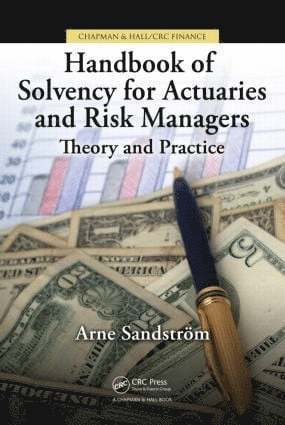
Reflecting the author’s wealth of experience in this field, Handbook of Solvency for Actuaries and Risk Managers: Theory and Practice focuses on the valuation of assets and liabilities, the calculation of capital requirement, and the calculation of the standard formula for the European Solvency II project.The first three sections of the book examine the solvency concept, historical development, and the role of solvency in an enterprise risk management approach. The text provides a general discussion on valuation, investment, and capital, along with modeling and measuring. It also covers dependence, risk measures, capital requirements, subrisks, aggregation, the main risks market, and credit, operational, liquidity, and underwriting risks.The last three sections focus on the European Solvency II project. Basing the material on CEIOPS final advice, the author presents the general ideas, valuation, investments, and funds of this project as well as the standard formula framework. He also includes all calibrations from previous quantitative impact studies and discusses the political progress of the project.A one-stop shop for actuaries and risk managers, this handbook offers a complete overview of solvency and the European Solvency II standard formula. It gives a clear definition and broad historical review of solvency and incorporates a comprehensive discussion of the theory behind the calculation of the capital requirement. Updates on solvency projects and issues are available at www.SolvencyII.nu
2 996 kr
Skickas inom 10-15 vardagar
Taking into account the standards of the Basel Accord, Operational Risk Modelling and Management presents a simulation model for generating the loss distribution of operational risk. It also examines a multitude of management issues that must be considered when adjusting the quantitative results of a comprehensive model.The book emphasizes techniques that can be understood and applied by practitioners. In the quantitative portions of the text, the author supplies key concepts and definitions without stating theorems or delving into mathematical proofs. He also offers references for readers looking for further background information. In addition, the book includes a Monte Carlo simulation of risk capital in the form of a run-through example of risk calculations based on data from a quantitative impact study. Since the computations are too complicated for a scripting language, a prototypical software program can be downloaded from www.garrulus.comHelping you navigate the tricky world of risk calculation and management, this book presents two main building blocks for determining how much capital needs to be reserved for operational risk. It employs the loss distribution approach as a model for calculating the risk capital figure and explains risk mitigation through management and management’s actuations.
1 434 kr
Skickas inom 10-15 vardagar
Using real-life examples from the banking and insurance industries, Quantitative Operational Risk Models details how internal data can be improved based on external information of various kinds. Using a simple and intuitive methodology based on classical transformation methods, the book includes real-life examples of the combination of internal data and external information.A guideline for practitioners, the book begins with the basics of managing operational risk data to more sophisticated and recent tools needed to quantify the capital requirements imposed by operational risk. The book then covers statistical theory prerequisites, and explains how to implement the new density estimation methods for analyzing the loss distribution in operational risk for banks and insurance companies. In addition, it provides: Simple, intuitive, and general methods to improve on internal operational risk assessment Univariate event loss severity distributions analyzed using semiparametric modelsMethods for the introduction of underreporting information A practical method to combine internal and external operational risk data, including guided examples in SAS and RMeasuring operational risk requires the knowledge of the quantitative tools and the comprehension of insurance activities in a very broad sense, both technical and commercial. Presenting a nonparametric approach to modeling operational risk data, Quantitative Operational Risk Models offers a practical perspective that combines statistical analysis and management orientations.