Civil Rights in Mississippi Series – Serie
Visar alla böcker i serien Civil Rights in Mississippi Series. Handla med fri frakt och snabb leverans.
17 produkter
17 produkter
379 kr
Skickas inom 10-15 vardagar
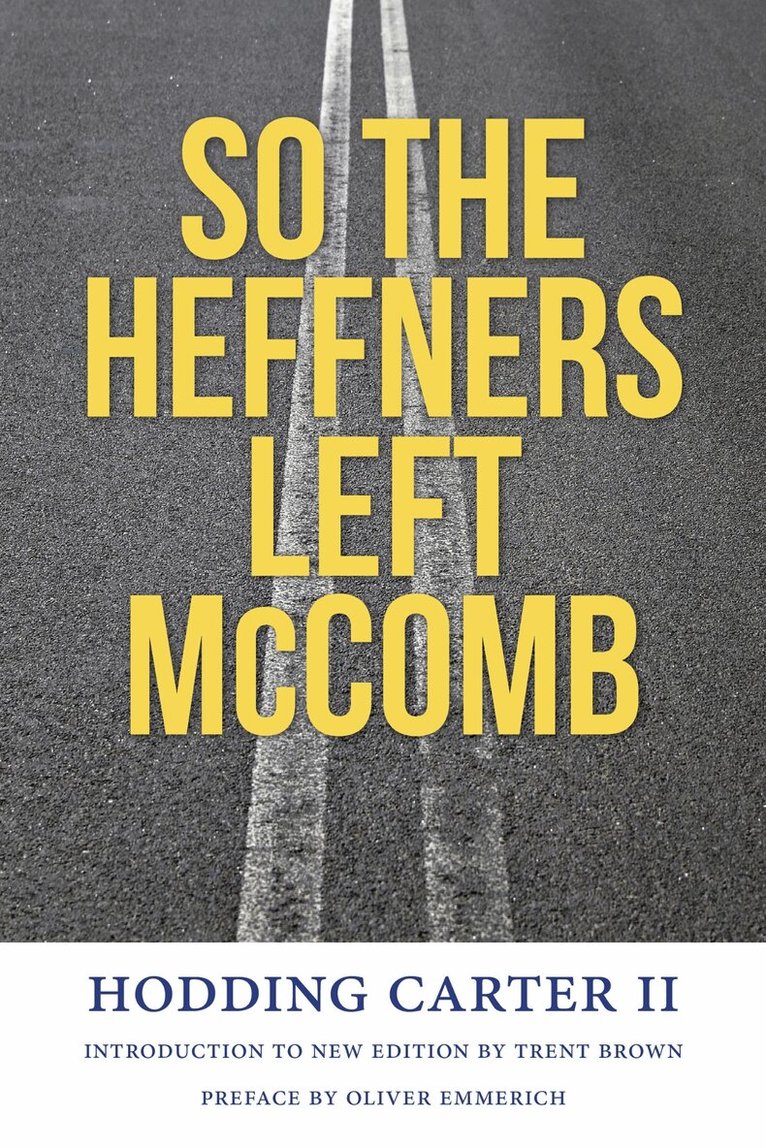
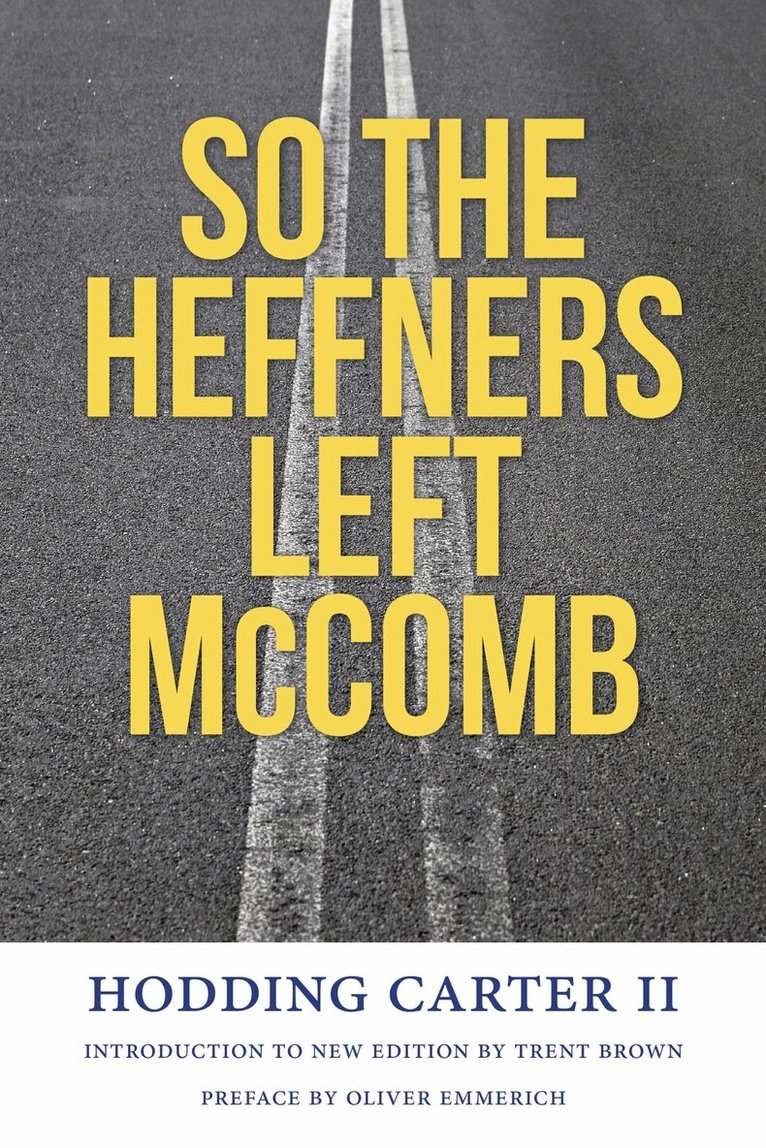
On Saturday, September 5, 1964, the family of Albert W. ""Red"" Heffner Jr., a successful insurance agent, left their house at 202 Shannon Drive in McComb, Mississippi, where they had lived for ten years. They never returned. In the eyes of neighbors, their unforgiveable sin was to have spoken on several occasions with civil rights workers and to have invited two into their home. Consequently, the Heffners were subjected to a campaign of harassment, ostracism, and economic retaliation shocking to a white family who believed that they were respected community members.So the Heffners Left McComb, originally published in 1965 and reprinted now for the first time, is Greenville journalist Hodding Carter's account of the events that led to the Heffners' downfall. Historian Trent Brown, a McComb native, supplies a substantial introduction evaluating the book's significance. The Heffners' story demonstrates the forces of fear, conformity, communal pressure, and threats of retaliation that silenced so many white Mississippians during the 1950s and 1960s. Carter's book provides a valuable portrait of a family who was not choosing to make a stand, but merely extending humane hospitality. Yet the Heffners were systematically punished and driven into exile for what was perceived as treason against white apartheid.
1 219 kr
Skickas inom 10-15 vardagar
On Saturday, September 5, 1964, the family of Albert W. ""Red"" Heffner Jr., a successful insurance agent, left their house at 202 Shannon Drive in McComb, Mississippi, where they had lived for ten years. They never returned. In the eyes of neighbors, their unforgiveable sin was to have spoken on several occasions with civil rights workers and to have invited two into their home. Consequently, the Heffners were subjected to a campaign of harassment, ostracism, and economic retaliation shocking to a white family who believed that they were respected community members.So the Heffners Left McComb, originally published in 1965 and reprinted now for the first time, is Greenville journalist Hodding Carter's account of the events that led to the Heffners' downfall. Historian Trent Brown, a McComb native, supplies a substantial introduction evaluating the book's significance. The Heffners' story demonstrates the forces of fear, conformity, communal pressure, and threats of retaliation that silenced so many white Mississippians during the 1950s and 1960s. Carter's book provides a valuable portrait of a family who was not choosing to make a stand, but merely extending humane hospitality. Yet the Heffners were systematically punished and driven into exile for what was perceived as treason against white apartheid.
1 219 kr
Skickas inom 10-15 vardagar
In 1964, sociologist William McCord, long interested in movements for social change in the United States, began a study of Mississippi's Freedom Summer. Stanford University, where McCord taught, had been the site of recruiting efforts for student volunteers for the Freedom Summer project by such activists as Robert Moses and Allard Lowenstein. Described by his wife as ""an old-fashioned liberal,"" McCord believed that he should both examine and participate in events in Mississippi. He accompanied student workers and black Mississippians to courthouses and Freedom Houses, and he attracted police attention as he studied the mechanisms of white supremacy and the black nonviolent campaign against racial segregation.Published in 1965 by W. W. Norton, his book, Mississippi: The Long, Hot Summer, is one of the first examinations of the events of 1964 by a scholar. It provides a compelling, detailed account of Mississippi people and places, including the thousands of student workers who found in the state both opportunities and severe challenges. McCord's work sought to communicate to a broad audience the depth of repression in Mississippi. Here was evidence of the need for federal action to address what he recognized as both national and southern failures to secure civil rights for black Americans. His field work and activism in Mississippi offered a perspective that few other academics or other white Americans had shared.Historian Françoise N. Hamlin provides a substantial introduction that sets McCord's work within the context of other narratives of Freedom Summer and explores McCord's broader career that combined distinguished scholarship with social activism.
379 kr
Skickas inom 10-15 vardagar
In 1964, sociologist William McCord, long interested in movements for social change in the United States, began a study of Mississippi's Freedom Summer. Stanford University, where McCord taught, had been the site of recruiting efforts for student volunteers for the Freedom Summer project by such activists as Robert Moses and Allard Lowenstein. Described by his wife as ""an old-fashioned liberal,"" McCord believed that he should both examine and participate in events in Mississippi. He accompanied student workers and black Mississippians to courthouses and Freedom Houses, and he attracted police attention as he studied the mechanisms of white supremacy and the black nonviolent campaign against racial segregation.Published in 1965 by W. W. Norton, his book, Mississippi: The Long, Hot Summer, is one of the first examinations of the events of 1964 by a scholar. It provides a compelling, detailed account of Mississippi people and places, including the thousands of student workers who found in the state both opportunities and severe challenges. McCord's work sought to communicate to a broad audience the depth of repression in Mississippi. Here was evidence of the need for federal action to address what he recognized as both national and southern failures to secure civil rights for black Americans. His field work and activism in Mississippi offered a perspective that few other academics or other white Americans had shared.Historian Françoise N. Hamlin provides a substantial introduction that sets McCord's work within the context of other narratives of Freedom Summer and explores McCord's broader career that combined distinguished scholarship with social activism.
324 kr
Skickas inom 10-15 vardagar
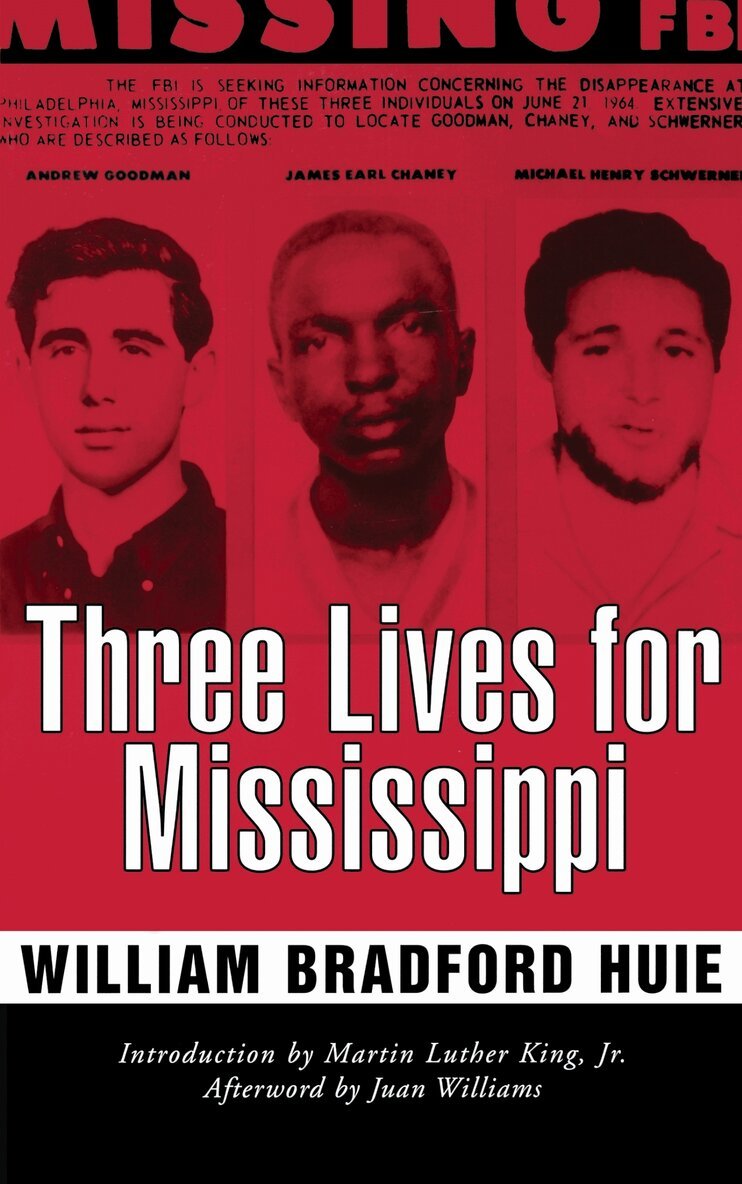
In the civil rights movement, 1964 was the year of Freedom Summer. On June 21, Mississippi, one of the last bastions of segregation in America and a bloody battleground in the fight for civil rights, reached the low point in its history. On that steamy night three young activists were abducted and murdered in Neshoba County near the small town of Philadelphia.Their names were James Chaney, Andrew Goodman, and Michael Schwerner. Two were from the North and labeled locally as “outside agitators.” Chaney was a Mississippi black. The murders not only shook the nation and shamed the state of Mississippi but also forced loose the iron grip of white supremacy in the South.William Bradford Huie was sent to this seething community by the New York Herald Tribune to cover the breaking story. Probing for answers and conducting interviews, he wrote this documentary account in the heat of the dangerous and dramatic moment, not in the safe zone of retrospection.This is not a political or sociological study, a collection of articles or a diary, but a journalist’s fact-filled story of people that fate brought together in a tragic confrontation. Huie tells the history of each young man and studies the personalities of the killers. He reveals not only the harrowing events in this heinous case but also the prejudice of ordinary citizens who allowed murder to serve as their defense of prejudice. He helps us know the young martyrs closely and introduces us to their killers and to the hatred and suspicion that led inexorably to murder. This edition includes Huie’s report on the trial three years later. Nineteen local men were charged. Seven were found guilty of conspiracy but none of murder.
Mississippi Black Paper
Inbunden, Engelska, 2017
1 219 kr
Skickas inom 10-15 vardagar
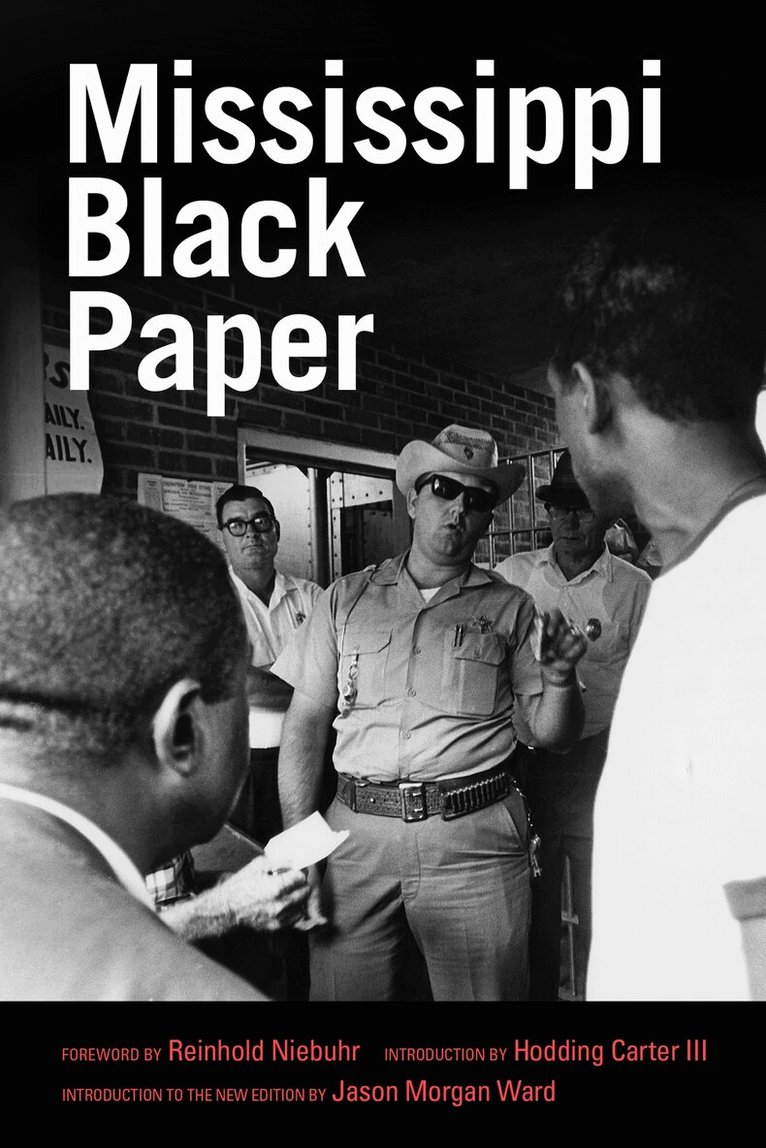
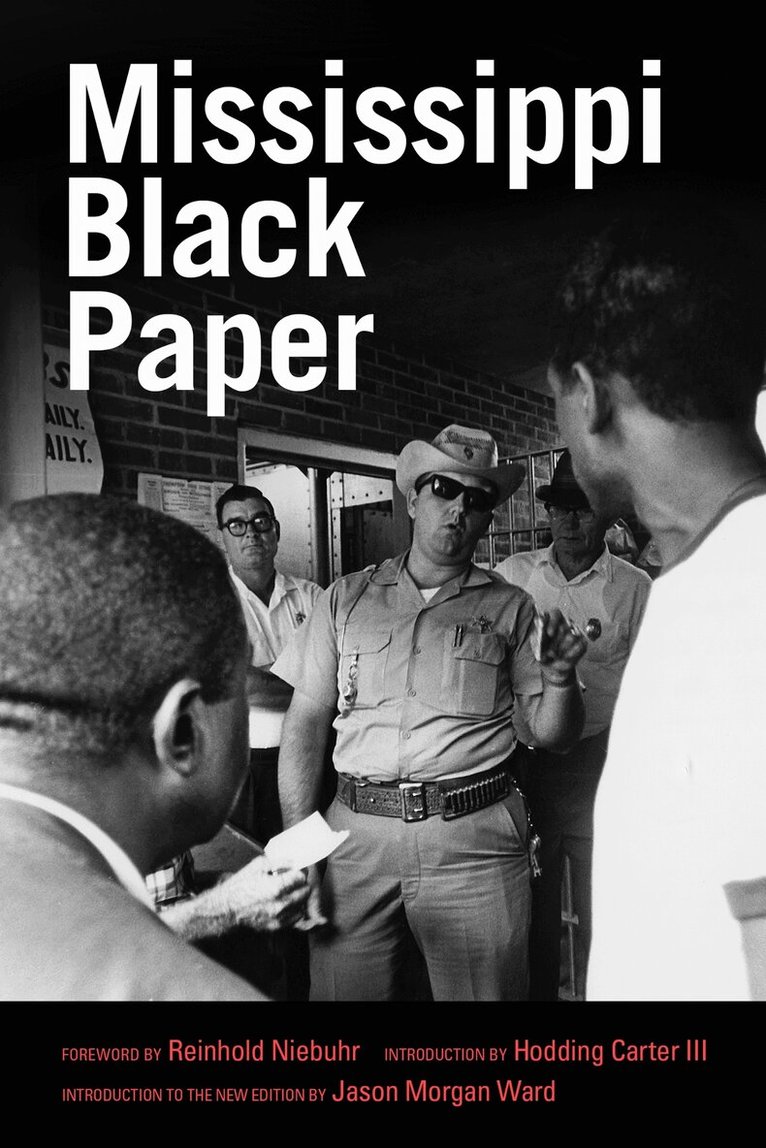
At the height of the civil rights movement in Mississippi, as hundreds of volunteers prepared for the 1964 Freedom Summer Project, the Council of Federated Organizations (COFO) compiled hundreds of statements from activists and everyday citizens who endured police abuse and vigilante violence. Fifty-seven of those testimonies appear in Mississippi Black Paper. The statements recount how white officials and everyday citizens employed assassinations, beatings, harassment, and petty meanness to block any change in the state’s segregated status quo.The testimonies in Mississippi Black Paper come from well-known civil rights heroes such as Fannie Lou Hamer, Aaron Henry, and Rita Schwerner, but the book also brings new voices and stories to the fore. Alongside these iconic names appear grassroots activists and everyday people who endured racial terror and harassment for challenging, sometimes in seemingly imperceptible ways, the state’s white supremacy.This new edition includes the original foreword by Reinhold Neibuhr and the original introduction by Mississippi journalist Hodding Carter III, as well as Jason Morgan Ward’s new introduction that places the book in its context as a vital source in the history of the civil rights movement.
Mississippi Black Paper
Häftad, Engelska, 2017
379 kr
Skickas inom 10-15 vardagar
At the height of the civil rights movement in Mississippi, as hundreds of volunteers prepared for the 1964 Freedom Summer Project, the Council of Federated Organizations (COFO) compiled hundreds of statements from activists and everyday citizens who endured police abuse and vigilante violence. Fifty-seven of those testimonies appear in Mississippi Black Paper. The statements recount how white officials and everyday citizens employed assassinations, beatings, harassment, and petty meanness to block any change in the state’s segregated status quo.The testimonies in Mississippi Black Paper come from well-known civil rights heroes such as Fannie Lou Hamer, Aaron Henry, and Rita Schwerner, but the book also brings new voices and stories to the fore. Alongside these iconic names appear grassroots activists and everyday people who endured racial terror and harassment for challenging, sometimes in seemingly imperceptible ways, the state’s white supremacy.This new edition includes the original foreword by Reinhold Neibuhr and the original introduction by Mississippi journalist Hodding Carter III, as well as Jason Morgan Ward’s new introduction that places the book in its context as a vital source in the history of the civil rights movement.
1 219 kr
Skickas inom 10-15 vardagar
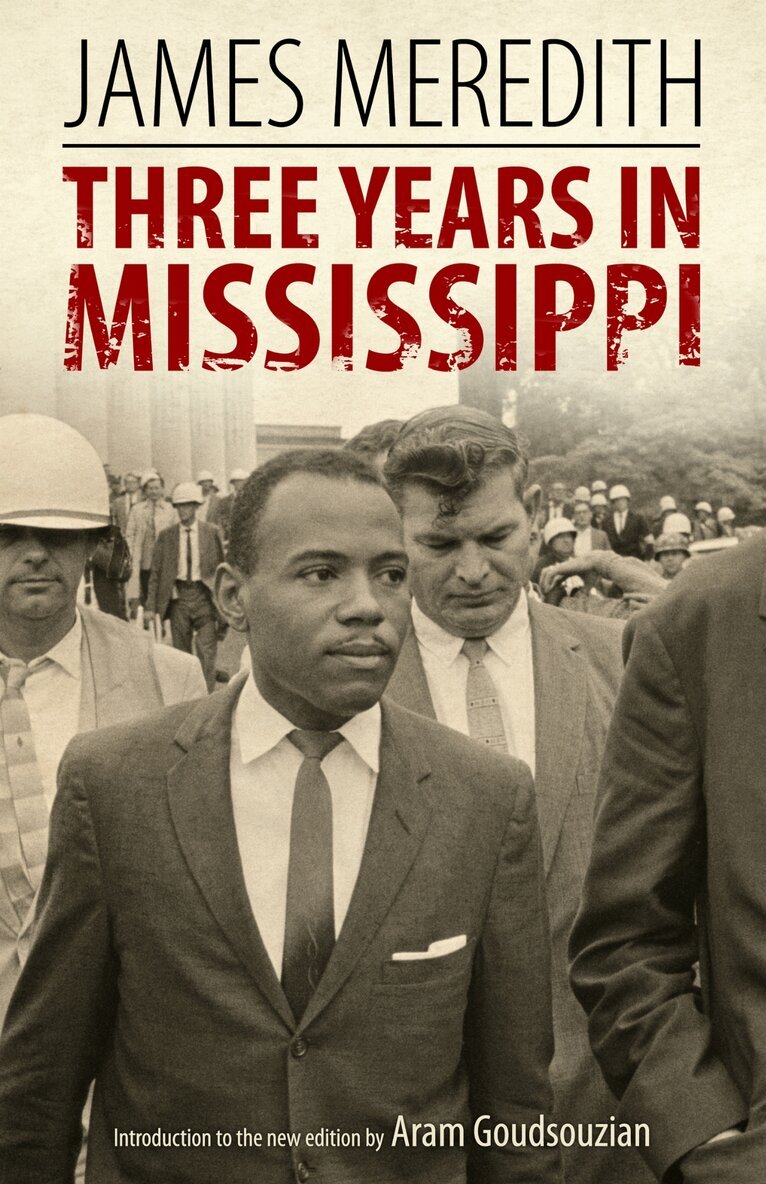
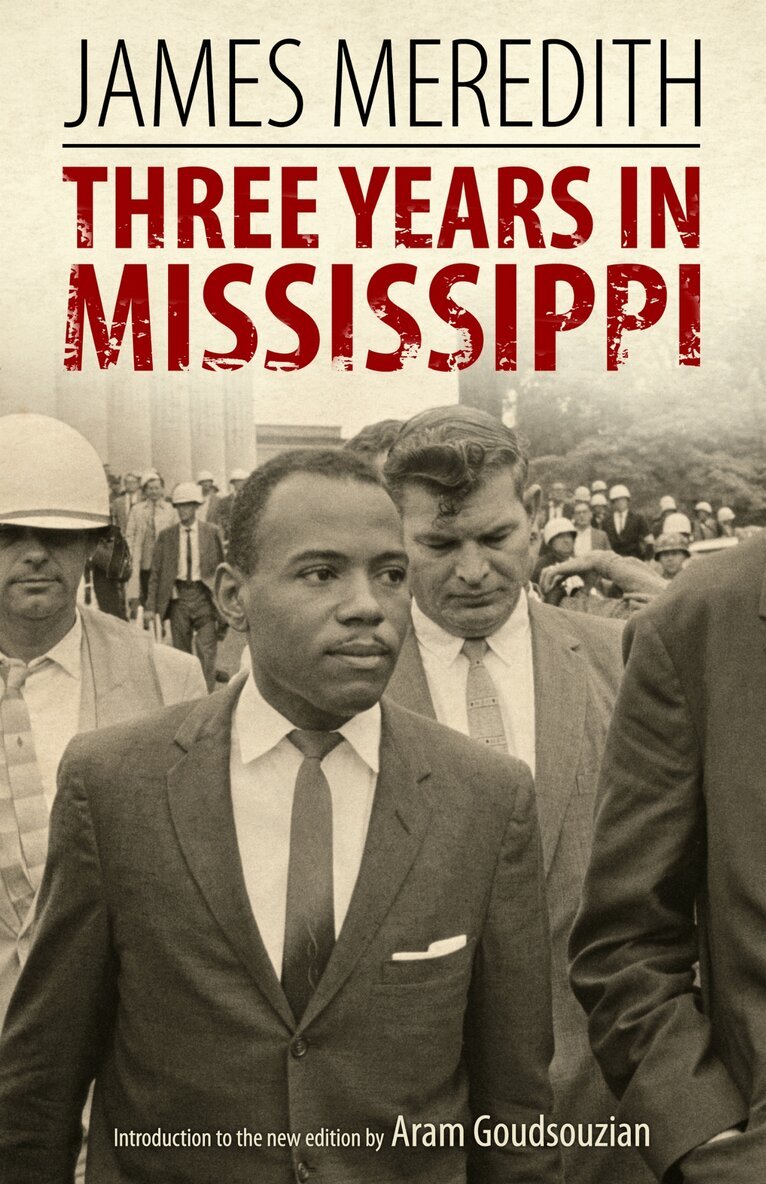
On October 1, 1962, James Meredith was the first African American student to enroll at the University of Mississippi. Preceded by violent rioting resulting in two deaths and a lengthy court battle that made it all the way to the Supreme Court, his admission was a pivotal moment in civil rights history. Citing his ""divine responsibility"" to end white supremacy, Meredith risked everything to attend Ole Miss. In doing so, he paved the way for integration across the country. Originally published in 1966, more than ten years after the Supreme Court ended segregation in public schools in Brown v. Board of Education, Meredith describes his intense struggle to attend an all-white university and break down long-held race barriers in one of the most conservative states in the country. This first-person account offers a glimpse into a crucial point in civil rights history and the determination and courage of a man facing unfathomable odds.Reprinted for the first time, this volume features a new introduction by historian Aram Goudsouzian.
324 kr
Skickas inom 10-15 vardagar
On October 1, 1962, James Meredith was the first African American student to enroll at the University of Mississippi. Preceded by violent rioting resulting in two deaths and a lengthy court battle that made it all the way to the Supreme Court, his admission was a pivotal moment in civil rights history. Citing his ""divine responsibility"" to end white supremacy, Meredith risked everything to attend Ole Miss. In doing so, he paved the way for integration across the country. Originally published in 1966, more than ten years after the Supreme Court ended segregation in public schools in Brown v. Board of Education, Meredith describes his intense struggle to attend an all-white university and break down long-held race barriers in one of the most conservative states in the country. This first-person account offers a glimpse into a crucial point in civil rights history and the determination and courage of a man facing unfathomable odds.Reprinted for the first time, this volume features a new introduction by historian Aram Goudsouzian.
1 219 kr
Skickas inom 10-15 vardagar
Journalist Ira Harkey risked it all when he advocated for James Meredith’s admission to the University of Mississippi as the first African American student in 1962.Preceded by a legal battle that went all the way to the Supreme Court and violent, deadly rioting, Meredith’s admission constituted a pivotal moment in civil rights history. At the time, Harkey was editor of the Chronicle in Pascagoula, Mississippi, where he published pieces in support of Meredith and the integration of Ole Miss. In 1963, Harkey won the Pulitzer Prize for editorial writing after firmly articulating his advocacy of change.Originally published in 1967, this book is Harkey’s memoir of the crisis and what it was like to be a white integrationist editor in fiercely segregationist Mississippi. He recounts conversations with University of Mississippi officials and the Ku Klux Klan’s attempts to intimidate him and muzzle his work. The memoir’s Title refers to a burning cross Set on the lawn of his home, which occurred in addition to the shot fired at his office. Reprinted for the fifth time, this book features a new introduction by historian William Hustwit.
379 kr
Skickas inom 10-15 vardagar
Journalist Ira Harkey risked it all when he advocated for James Meredith’s admission to the University of Mississippi as the first African American student in 1962.Preceded by a legal battle that went all the way to the Supreme Court and violent, deadly rioting, Meredith’s admission constituted a pivotal moment in civil rights history. At the time, Harkey was editor of the Chronicle in Pascagoula, Mississippi, where he published pieces in support of Meredith and the integration of Ole Miss. In 1963, Harkey won the Pulitzer Prize for editorial writing after firmly articulating his advocacy of change.Originally published in 1967, this book is Harkey’s memoir of the crisis and what it was like to be a white integrationist editor in fiercely segregationist Mississippi. He recounts conversations with University of Mississippi officials and the Ku Klux Klan’s attempts to intimidate him and muzzle his work. The memoir’s Title refers to a burning cross Set on the lawn of his home, which occurred in addition to the shot fired at his office. Reprinted for the fifth time, this book features a new introduction by historian William Hustwit.
1 219 kr
Skickas inom 10-15 vardagar
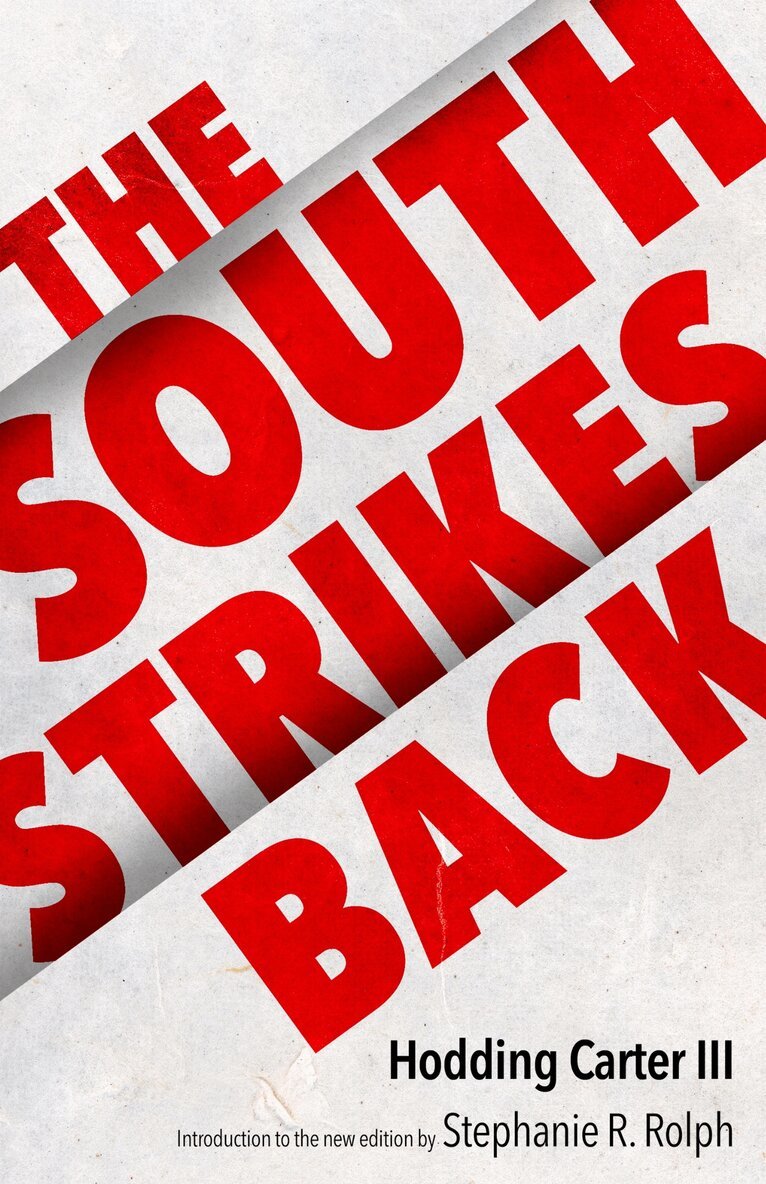
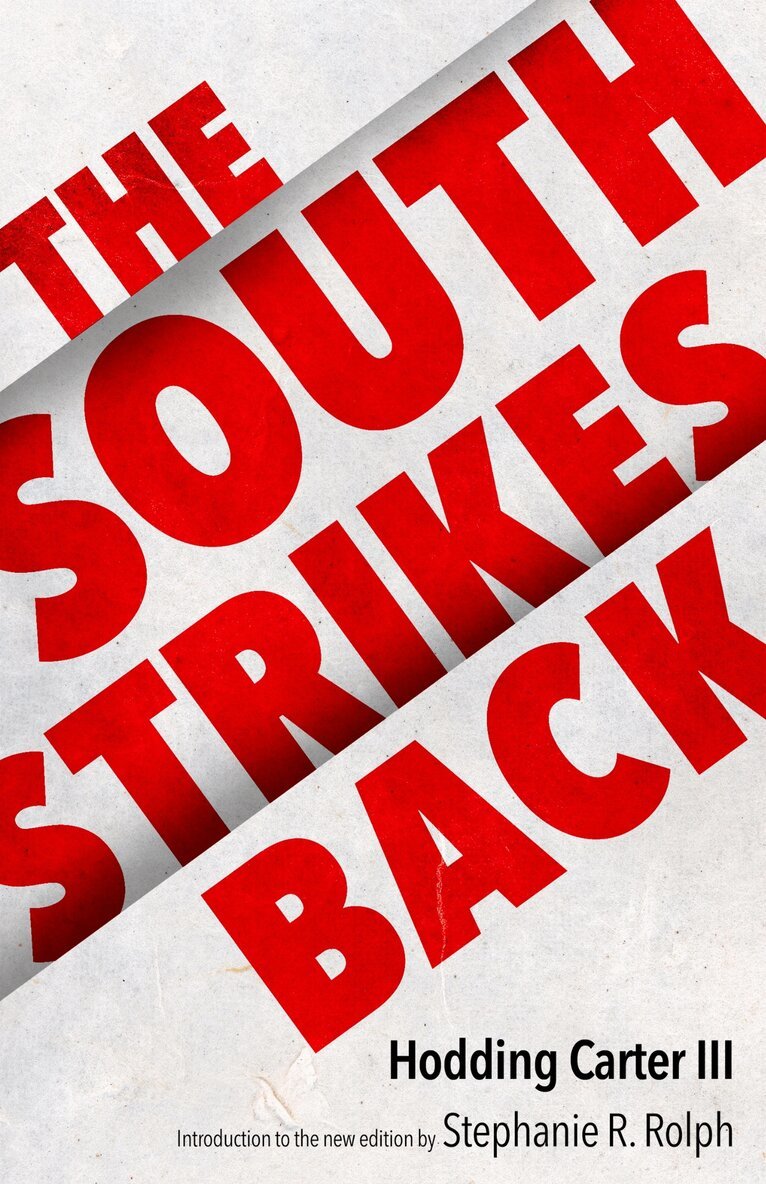
In The South Strikes Back, Hodding Carter III describes the birth of the white Citizens’ Council in the Mississippi Delta and its spread throughout the South. Carter begins with a brief historical overview and traces the formation of the Council, its treatment of African Americans, and its impact on white communities, concluding with an analysis of the Council’s future in Mississippi.Through economic boycott, social pressure, and political influence, the Citizens’ Council was able to subdue its opponents and dominate the communities in which it operated. Carter considers trends working against the Council—the federal government’s efforts to improve voting rights for African Americans, economic growth within African American communities, and especially the fact that the Citizens’ Council was founded on the defense of segregation's status quo and dedicated to its preservation. As Carter writes in the final chapter, "Defense of the status quo, as history has shown often enough, is an arduous task at best. When, in a democracy such as ours, it involves the repression of a minority, it becomes an impossibility.
379 kr
Skickas inom 10-15 vardagar
In The South Strikes Back, Hodding Carter III describes the birth of the white Citizens’ Council in the Mississippi Delta and its spread throughout the South. Carter begins with a brief historical overview and traces the formation of the Council, its treatment of African Americans, and its impact on white communities, concluding with an analysis of the Council’s future in Mississippi.Through economic boycott, social pressure, and political influence, the Citizens’ Council was able to subdue its opponents and dominate the communities in which it operated. Carter considers trends working against the Council—the federal government’s efforts to improve voting rights for African Americans, economic growth within African American communities, and especially the fact that the Citizens’ Council was founded on the defense of segregation's status quo and dedicated to its preservation. As Carter writes in the final chapter, "Defense of the status quo, as history has shown often enough, is an arduous task at best. When, in a democracy such as ours, it involves the repression of a minority, it becomes an impossibility.
1 219 kr
Skickas inom 10-15 vardagar
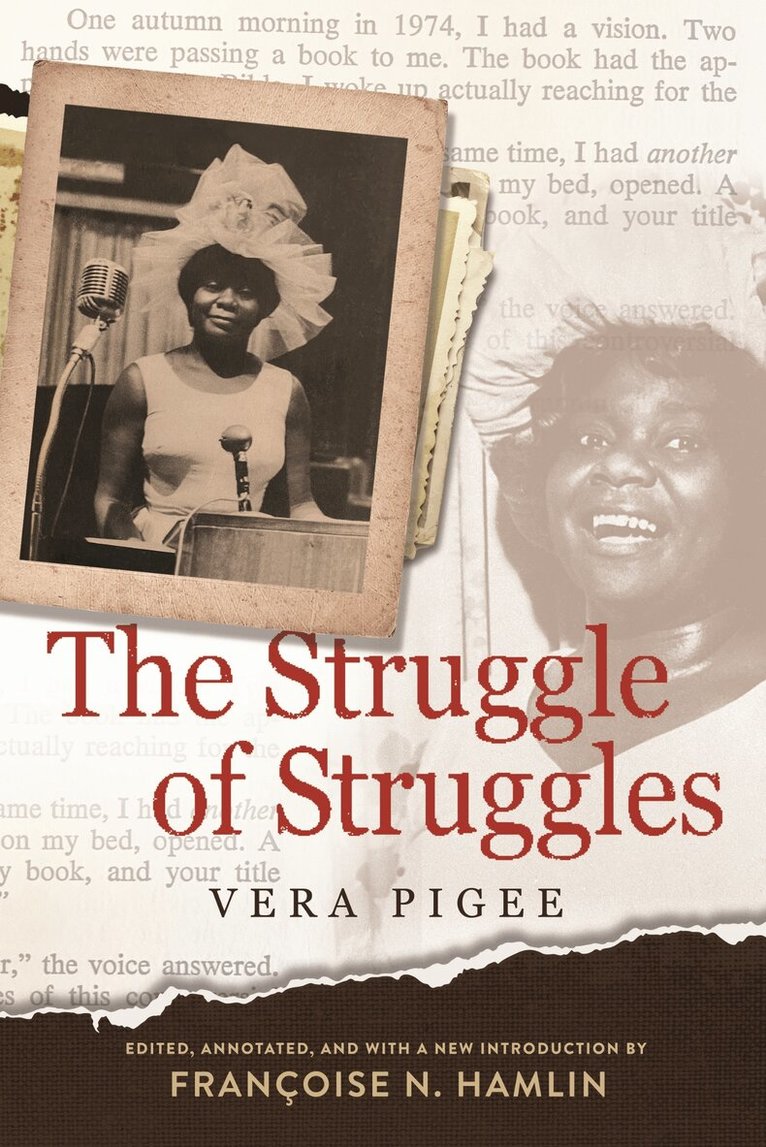
From 1955 to 1975, Vera Pigee (1924–2007) put her life and livelihood on the line with grassroots efforts for social change in Mississippi, principally through her years of leadership in Coahoma County’s NAACP. Known as the "Lady of Hats," coined by NAACP executive secretary Roy Wilkins, Pigee was a businesswoman, mother, and leader. Her book, The Struggle of Struggles, offers a detailed view of the daily grind of organizing for years to open the state’s closed society. Fearless, forthright, and fashionable, Pigee also suffered for her efforts at the hands of white supremacists and those unwilling to accept strong women in leadership. She wrote herself into the histories, confronted misinformation, and self-published one of the first autobiographies from the era. Women like her worked, often without accolade or recognition, in their communities all over the country, but did not document their efforts in this way.The Struggle of Struggles, originally published in 1975, spotlights the gendered and generational tensions within the civil rights movement. It outlines the complexity, frustrations, and snubs, as well as the joy and triumphs that Pigee experienced and witnessed in the quest for a fairer and more equitable nation. This new edition begins with a detailed introductory essay by historian Françoise N. Hamlin, who interviewed Pigee and her daughter in the few years preceding their passing, as well as their coworkers and current activists. In addition to the insightful Introduction, Hamlin has also provided annotations to the original text for clarity and explanation, along with a timeline to guide a new generation of readers.
269 kr
Skickas inom 10-15 vardagar
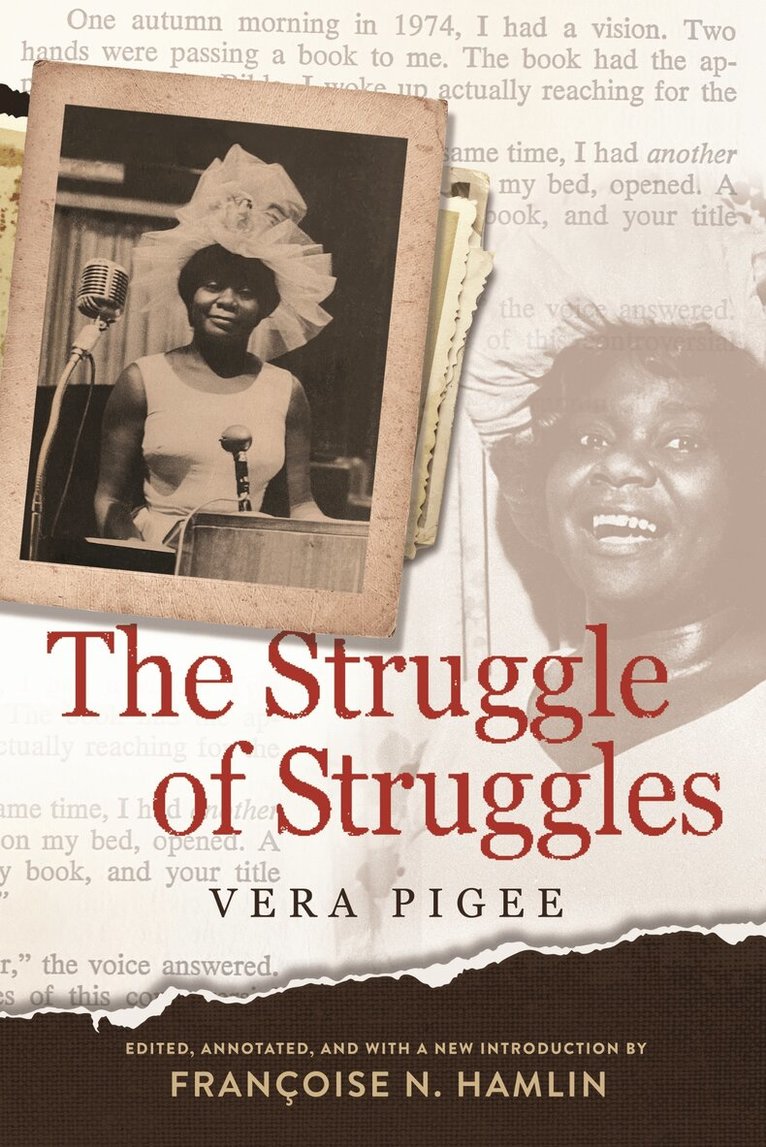
From 1955 to 1975, Vera Pigee (1924–2007) put her life and livelihood on the line with grassroots efforts for social change in Mississippi, principally through her years of leadership in Coahoma County’s NAACP. Known as the "Lady of Hats," coined by NAACP executive secretary Roy Wilkins, Pigee was a businesswoman, mother, and leader. Her book, The Struggle of Struggles, offers a detailed view of the daily grind of organizing for years to open the state’s closed society. Fearless, forthright, and fashionable, Pigee also suffered for her efforts at the hands of white supremacists and those unwilling to accept strong women in leadership. She wrote herself into the histories, confronted misinformation, and self-published one of the first autobiographies from the era. Women like her worked, often without accolade or recognition, in their communities all over the country, but did not document their efforts in this way.The Struggle of Struggles, originally published in 1975, spotlights the gendered and generational tensions within the civil rights movement. It outlines the complexity, frustrations, and snubs, as well as the joy and triumphs that Pigee experienced and witnessed in the quest for a fairer and more equitable nation. This new edition begins with a detailed introductory essay by historian Françoise N. Hamlin, who interviewed Pigee and her daughter in the few years preceding their passing, as well as their coworkers and current activists. In addition to the insightful Introduction, Hamlin has also provided annotations to the original text for clarity and explanation, along with a timeline to guide a new generation of readers.
1 080 kr
Skickas inom 7-10 vardagar
In the summer of 1964, Mississippi became a flashpoint for the civil rights movement during Freedom Summer—a season marked by courage, terror, and relentless struggle. Chicago Daily News reporter Nicholas von Hoffman journeyed deep into the heart of the state to capture the unvarnished reality of life in Mississippi during this pivotal moment.Over ten tense weeks and 6,000 miles, von Hoffman bore witness to the Delta’s heat, the piney hills’ quiet, and the Gulf’s restlessness, documenting the complex and volatile relationships between white and Black Mississippians. His reporting reveals a state caught between its violent past and a potential for change, illuminating the ordinary lives and extraordinary bravery of those who stood on the front lines of justice.Now, over sixty years later, Mississippi Notebook endures as a vital document of a transformative period in American history. This edition features a new introduction by civil rights scholar Charles W. McKinney Jr., who contextualizes von Hoffman’s sharp and poignant observations as a powerful counter to oversimplified narratives about Freedom Summer.Mississippi Notebook reminds us of the enduring importance of movements powered by collective courage and the necessity of confronting the forces of fear and bigotry to achieve lasting change.
265 kr
Skickas inom 7-10 vardagar
In the summer of 1964, Mississippi became a flashpoint for the civil rights movement during Freedom Summer—a season marked by courage, terror, and relentless struggle. Chicago Daily News reporter Nicholas von Hoffman journeyed deep into the heart of the state to capture the unvarnished reality of life in Mississippi during this pivotal moment. Over ten tense weeks and 6,000 miles, von Hoffman bore witness to the Delta’s heat, the piney hills’ quiet, and the Gulf’s restlessness, documenting the complex and volatile relationships between white and Black Mississippians. His reporting reveals a state caught between its violent past and a potential for change, illuminating the ordinary lives and extraordinary bravery of those who stood on the front lines of justice. Now, over sixty years later, Mississippi Notebook endures as a vital document of a transformative period in American history. This edition features a new introduction by civil rights scholar Charles W. McKinney Jr., who contextualizes von Hoffman’s sharp and poignant observations as a powerful counter to oversimplified narratives about Freedom Summer. Mississippi Notebook reminds us of the enduring importance of movements powered by collective courage and the necessity of confronting the forces of fear and bigotry to achieve lasting change.