Clarendon Plato Series - Böcker
Visar alla böcker i serien Clarendon Plato Series. Handla med fri frakt och snabb leverans.
8 produkter
8 produkter
718 kr
Skickas inom 5-8 vardagar
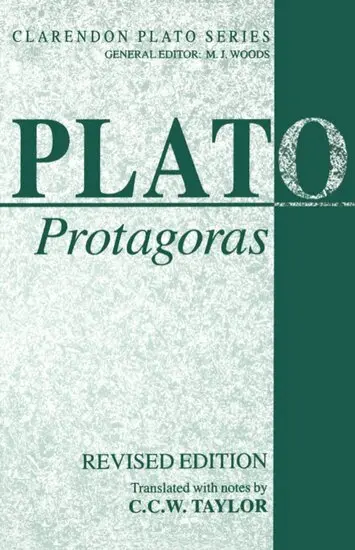
In addition to its interest as one of Plato's most brilliant dramatic masterpieces, the Protagoras presents a vivid picture of the crisis of fifth-century Greek thought, in which traditional values and conceptions of man were subjected on the one hand to the criticism of the Sophists and on the other to the far more radical criticism of Socrates. The dialogue deals with many themes which are central to the ethical theories which Plato developed under the influence of Socrates, notably the nature of human excellence, the relation of knowledge to right conduct, and the place of pleasure in the good life.This translation of the Protagoras was originally published in 1976. In this revised edition, C. C. W. Taylor has made a number of changes in the translation and commentary, and has added a new Preface and Introduction. The Bibliography has also been extended to include titles published up to 1990.
686 kr
Skickas inom 7-10 vardagar
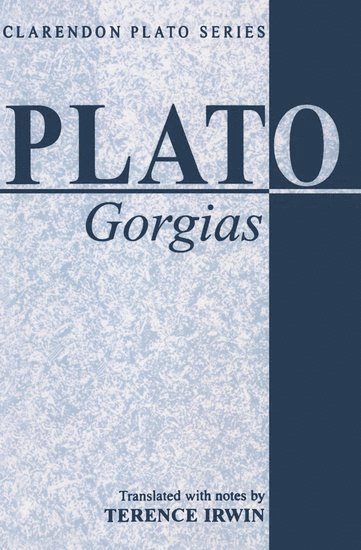
The Gorgias is a vivid introduction to central problems of moral and political philosophy. In answer to an eloquent attack on morality as conspiration of the weak against the strong, Plato develops his own doctrine, insisting that the benefits of being moral always outweigh any benefits to be won from immorality. He applies his views to such questions as the errors of democracy, the role of the political expert in society, and the justification of punishment.In the notes to this translation, Professor Irwin discusses the historical and social context of the dialogue, expounds and criticizes the arguments, and tries above all to suggest the questions a modern reader ought to raise about Plato's doctrines.
1 200 kr
Skickas inom 5-8 vardagar
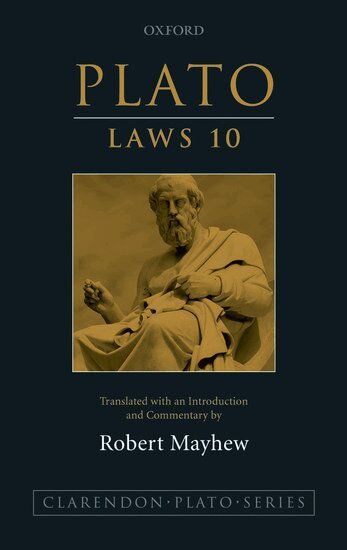
The Laws is Plato's last and longest dialogue. Although it has been neglected (compared to such works as the Republic and Symposium), it is beginning to receive a great deal of scholarly attention. Book 10 of the Laws contains Plato's fullest defence of the existence of the gods, and his last word on their nature, as well as a presentation and defence of laws against impiety (e.g. atheism). Plato's primary aim is to defend the idea that the gods exist and that they are good - this latter meaning that they do not neglect human beings and cannot be swayed by prayers and sacrifices to overlook injustice. As such, the Laws is an important text for anyone interested in ancient Greek religion, philosophy, and politics generally, and the later thought of Plato in particular. Robert Mayhew presents a new translation, with commentary, of Book 10 of the Laws . His primary aim in the translation is fidelity to the Greek. His commentary focuses on philosophical issues (broadly understood to include religion and politics), and deals with philological matters only when doing so serves to better explain those issues. Knowledge of Greek is not assumed, and the Greek that does appear has been transliterated. It is the first commentary in English of any kind on Laws 10 for nearly 140 years.
1 539 kr
Skickas inom 3-6 vardagar
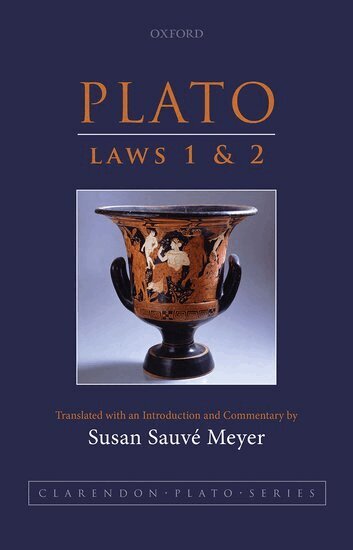
Susan Sauvé Meyer presents a new translation of Plato's Laws, 1 and 2. In these opening books of Plato's last work, a Cretan, a Spartan, and an Athenian discuss legislative theory, moral psychology, and the criteria for evaluating art. The interlocutors compare the relative merits of different nomoi (laws, practices, institutions), in particular, the communal meals (sussitia) practiced in Sparta and Crete and the paradigmatically Athenian institution of the drinking party (sumposion). They agree that the legislator's goal is to inculcate virtue in the citizens, but they disagree about what the virtues are, and what institutions are required to inculcate them. The Spartan and Cretan, who value military strength in a city and courage in its citizens, see no value in drinking parties, which they take to encourage softness and susceptibility to pleasure. The Athenian insists that drinking parties train citizens in moderation, just as military exercises train citizens in courage. He defends this paradoxical thesis by offering a moral psychology and theory of virtue (rather different from that of the Republic but highly evocative of Aristotle's Ethics), along with a theory of education in which choral song and dance play an important role. A detailed discussion of the criteria for evaluating works of art rounds out the discussion, and here too the reader will find a discussion very different from the treatment of art in the Republic. Meyer's fluent and readable translation achieves a high standard of fidelity to the original Greek. The commentary lays bare the structure of the argumentation, illuminates the philosophical issues, and explains difficult passages, making this complex and intricate work accessible to students and scholars alike.
Plato: Laws 1 and 2
Häftad, Engelska, 2017
445 kr
Skickas inom 7-10 vardagar
Susan Sauvé Meyer presents a new translation of Plato's Laws, 1 and 2. In these opening books of Plato's last work, a Cretan, a Spartan, and an Athenian discuss legislative theory, moral psychology, and the criteria for evaluating art. The interlocutors compare the relative merits of different nomoi (laws, practices, institutions), in particular, the communal meals (sussitia) practiced in Sparta and Crete and the paradigmatically Athenian institution of the drinking party (sumposion). They agree that the legislator's goal is to inculcate virtue in the citizens, but they disagree about what the virtues are, and what institutions are required to inculcate them. The Spartan and Cretan, who value military strength in a city and courage in its citizens, see no value in drinking parties, which they take to encourage softness and susceptibility to pleasure. The Athenian insists that drinking parties train citizens in moderation, just as military exercises train citizens in courage. He defends this paradoxical thesis by offering a moral psychology and theory of virtue (rather different from that of the Republic but highly evocative of Aristotle's Ethics), along with a theory of education in which choral song and dance play an important role. A detailed discussion of the criteria for evaluating works of art rounds out the discussion, and here too the reader will find a discussion very different from the treatment of art in the Republic. Meyer's fluent and readable translation achieves a high standard of fidelity to the original Greek. The commentary lays bare the structure of the argumentation, illuminates the philosophical issues, and explains difficult passages, making this complex and intricate work accessible to students and scholars alike.
455 kr
Skickas inom 3-6 vardagar
The Laws is Plato's last and longest dialogue. Although it has been neglected (compared to such works as the Republic and Symposium), it is beginning to receive a great deal of scholarly attention. Book 10 of the Laws contains Plato's fullest defence of the existence of the gods, and his last word on their nature, as well as a presentation and defence of laws against impiety (e.g. atheism). Plato's primary aim is to defend the idea that the gods exist and that they are good - this latter meaning that they do not neglect human beings and cannot be swayed by prayers and sacrifices to overlook injustice. As such, the Laws is an important text for anyone interested in ancient Greek religion, philosophy, and politics generally, and the later thought of Plato in particular. Robert Mayhew presents a new translation, with commentary, of Book X of the Laws. His primary aim in the translation is fidelity to the Greek. His commentary focuses on philosophical issues (broadly understood to include religion and politics), and deals with philological matters only when doing so serves to better explain those issues. Knowledge of Greek is not assumed, and the Greek that does appear has been transliterated. It is the first commentary in English of any kind on Laws X for nearly 140 years.