Susan Sauvé Meyer - Böcker
Visar alla böcker från författaren Susan Sauvé Meyer. Handla med fri frakt och snabb leverans.
8 produkter
8 produkter
156 kr
Skickas inom 7-10 vardagar
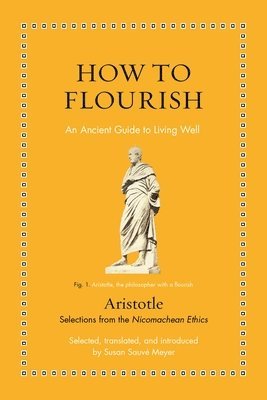
Aristotle’s essential guide to human flourishing—the Nicomachean Ethics—in a lively new abridged translationAristotle’s Nicomachean Ethics is one of the greatest guides to human flourishing ever written, but its length and style have left many readers languishing. How to Flourish is a carefully abridged version of the entire work in a highly readable and colloquial new translation by Susan Sauvé Meyer that makes Aristotle’s timeless insights about how to lead a good life more engaging and accessible than ever before.For Aristotle, flourishing involves becoming a good person through practice, and having a life of the mind. To that end, he draws vivid portraits of virtuous and vicious characters and offers sound practical advice about everything from eating and drinking to managing money, controlling anger, getting along with others, and telling jokes. He also distinguishes different kinds of wisdom that are essential to flourishing and offers an unusual perspective on how to appreciate our place in the universe and our relation to the divine.Omitting Aristotle’s digressions and repetitions and overly technical passages, How to Flourish provides connecting commentary that allows readers to follow the continuous line of his thought; it also features the original Greek on facing pages. The result is an inviting and lively version of an essential work about how to flourish and lead a good life.
1 240 kr
Skickas inom 5-8 vardagar
Plato's Statesman, A Philosophical Discussion, is the second volume in the Plato Dialogue Project series. Like the volume before it, Plato's Philebus, A Philosophical Discussion, it offers a comprehensive philosophical analysis of the entire dialogue it treats. The present volume divides the Statesman into argumentatively self-contained sections, each one of which is scrutinized thoroughly. This style of treatment proves particularly useful for the Statesman, an acutely perplexing dialogue that deals with many and seemingly unconnected themes-such as leadership of a state and the best from of constitution (politeia), philosophical methodology and epistemology, the doctrine of due measure (to metrion), the dialectical practice of collection and division and ancillary investigative methods such as the use of myth and models (paradeigmata). The present volume discusses all issues the dialogue raises while abstaining from making an overarching claim on the dialogue as a whole, other than the one implied by the notion that all its parts are interrelated, equally important philosophically, and together constitute a unified whole. The aim is to bring to the forefront each one of the dialogue's many themes and devote to it the attention that will permit it to stake its claim to be part of a unified philosophical work. In this respect, the present volume challenges the readers to come to their own view on how the dialogue hangs together as a whole, but only after having gone through a comprehensive philosophical discussion of and reflection on its constitutive parts.
Virtue, Happiness, Knowledge
Themes from the Work of Gail Fine and Terence Irwin
Inbunden, Engelska, 2018
1 132 kr
Skickas inom 7-10 vardagar
Fifteen leading philosophers explore a set of themes from the pioneering work of Gail Fine and Terence Irwin, in ancient philosophy but also in later periods and in systematic philosophy. The contributors discuss knowledge, rhetoric, freedom and practical reason, virtue and the good life, ethics and politics in Plato and Aristotle and beyond. The editors offer an introduction charting the scholarly contributions of Fine and Irwin and assessing their individual and joint impact, together with a complete bibliography of their writings.
1 539 kr
Skickas inom 3-6 vardagar
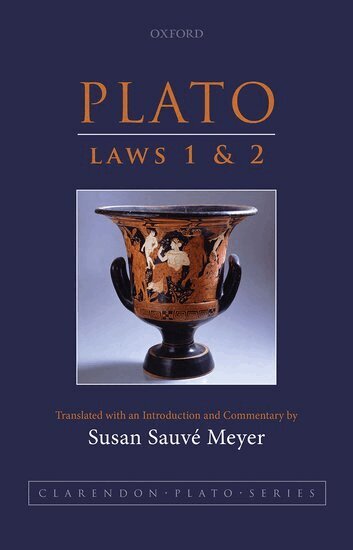
Susan Sauvé Meyer presents a new translation of Plato's Laws, 1 and 2. In these opening books of Plato's last work, a Cretan, a Spartan, and an Athenian discuss legislative theory, moral psychology, and the criteria for evaluating art. The interlocutors compare the relative merits of different nomoi (laws, practices, institutions), in particular, the communal meals (sussitia) practiced in Sparta and Crete and the paradigmatically Athenian institution of the drinking party (sumposion). They agree that the legislator's goal is to inculcate virtue in the citizens, but they disagree about what the virtues are, and what institutions are required to inculcate them. The Spartan and Cretan, who value military strength in a city and courage in its citizens, see no value in drinking parties, which they take to encourage softness and susceptibility to pleasure. The Athenian insists that drinking parties train citizens in moderation, just as military exercises train citizens in courage. He defends this paradoxical thesis by offering a moral psychology and theory of virtue (rather different from that of the Republic but highly evocative of Aristotle's Ethics), along with a theory of education in which choral song and dance play an important role. A detailed discussion of the criteria for evaluating works of art rounds out the discussion, and here too the reader will find a discussion very different from the treatment of art in the Republic. Meyer's fluent and readable translation achieves a high standard of fidelity to the original Greek. The commentary lays bare the structure of the argumentation, illuminates the philosophical issues, and explains difficult passages, making this complex and intricate work accessible to students and scholars alike.
407 kr
Skickas inom 5-8 vardagar
This is a reissue, with new introduction, of Susan Sauvé Meyer's 1993 book, in which she presents a comprehensive examination of Aristotle's accounts of voluntariness in the Eudemian and Nicomachean Ethics. She makes the case that these constitute a theory of moral responsibility--albeit one with important differences from modern theories. Highlights of the discussion include a reconstruction of the dialectical argument in the Eudemian Ethics II 6-9, and a demonstration that the definitions of 'voluntary' and 'involuntary' in Nicomachean Ethics III 1 are the culmination of that argument. By identifying the paradigms of voluntariness and involuntariness that Aristotle begins with and the opponents (most notably Plato) he addresses, Meyer explains notoriously puzzling features of the Nicomachean account--such as Aristotle's requirement that involuntary agents experience pain or regret. Other familiar features of Aristotle's account are cast in a new light. That we are responsible for the characters we develop turns out not to be a necessary condition of responsible agency. That voluntary action has its "origin" in the agent and that our actions are "up to us to do and not to do"--often interpreted as implying a libertarian conception of agency--turn out to be perfectly compatible with causal determinism, a point Meyer makes by locating these locutions in the context of Aristotle's general understanding of causality. While Aristotle does not himself face or address worries that determinism is incompatible with responsibility, his causal repertoire provides the resources for a powerful response to incompatibilist arguments. On this and other fronts Aristotle's is a view to be taken seriously by theorists of moral responsibility.
530 kr
Skickas inom 7-10 vardagar
This is a reissue, with new introduction, of Susan Sauvé Meyer's 1993 book, in which she presents a comprehensive examination of Aristotle's accounts of voluntariness in the Eudemian and Nicomachean Ethics. She makes the case that these constitute a theory of moral responsibility--albeit one with important differences from modern theories. Highlights of the discussion include a reconstruction of the dialectical argument in the Eudemian Ethics II 6-9, and a demonstration that the definitions of 'voluntary' and 'involuntary' in Nicomachean Ethics III 1 are the culmination of that argument. By identifying the paradigms of voluntariness and involuntariness that Aristotle begins with and the opponents (most notably Plato) he addresses, Meyer explains notoriously puzzling features of the Nicomachean account--such as Aristotle's requirement that involuntary agents experience pain or regret. Other familiar features of Aristotle's account are cast in a new light. That we are responsible for the characters we develop turns out not to be a necessary condition of responsible agency. That voluntary action has its "origin" in the agent and that our actions are "up to us to do and not to do"--often interpreted as implying a libertarian conception of agency--turn out to be perfectly compatible with causal determinism, a point Meyer makes by locating these locutions in the context of Aristotle's general understanding of causality. While Aristotle does not himself face or address worries that determinism is incompatible with responsibility, his causal repertoire provides the resources for a powerful response to incompatibilist arguments. On this and other fronts Aristotle's is a view to be taken seriously by theorists of moral responsibility.
2 629 kr
Skickas inom 5-8 vardagar
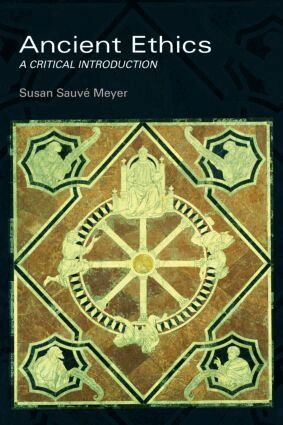
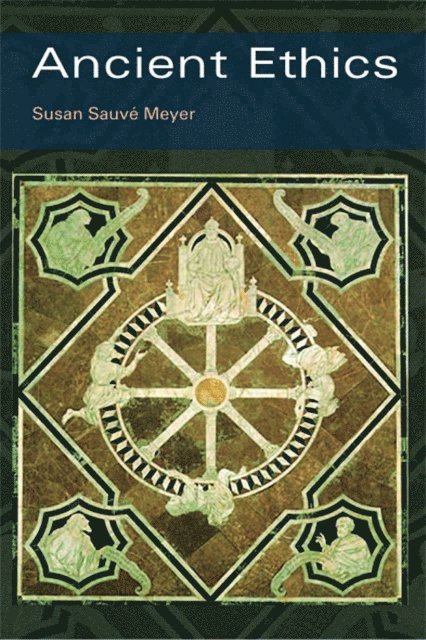
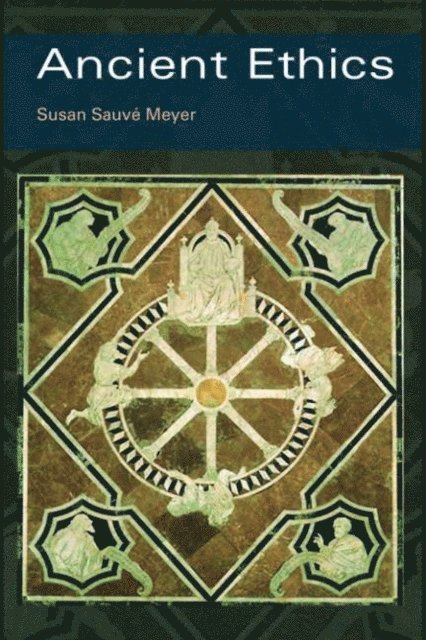
This is the first comprehensive guide and only substantial undergraduate level introduction to ancient Greek and Roman ethics.It covers the ethical theories and positions of all the major philosophers (including Socrates, Plato and Aristotle) and schools (Stoics and Epicureans) from the earliest times to the Hellenistic philosophers, analyzing their main arguments and assessing their legacy. This book maps the foundations of this key area, which is crucial knowledge across the disciplines and essential for a wide range of readers.
631 kr
Skickas inom 10-15 vardagar
This is the first comprehensive guide and only substantial undergraduate level introduction to ancient Greek and Roman ethics.It covers the ethical theories and positions of all the major philosophers (including Socrates, Plato and Aristotle) and schools (Stoics and Epicureans) from the earliest times to the Hellenistic philosophers, analyzing their main arguments and assessing their legacy. This book maps the foundations of this key area, which is crucial knowledge across the disciplines and essential for a wide range of readers.