Classic Geology in Europe - Böcker
Visar alla böcker i serien Classic Geology in Europe. Handla med fri frakt och snabb leverans.
4 produkter
4 produkter
504 kr
Skickas inom 7-10 vardagar
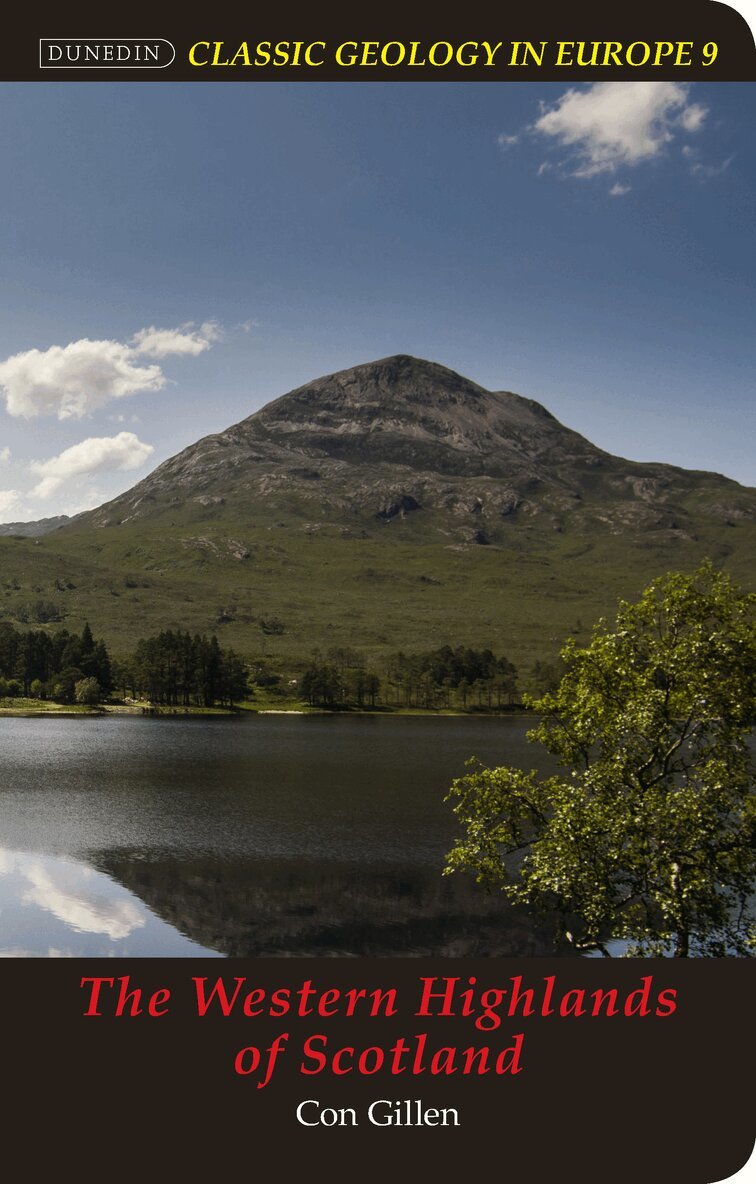
This guide is for those who wish to understand the interplay between rocks and scenery in a truly classic geology in Europe. Nowhere else in Britain is this link to be more clearly observed. Key geological localities that make the Scottish Highlands a unique region for the study of geology are linked together geographically in a series of journeys.The Western Highlands contain some of the oldest rocks in Europe in a landscape formed more than a billion years ago that has re-emerged from the depths. Geologists have been examining these rocks since the early nineteenth century and, in spite of intense research in this tiny fraction of the Earth's surface, major controversies still surround some of the rock formations. Many fundamentally important concepts in geology were first developed here and then applied elsewhere around the world. The region is an outstanding natural laboratory for the study of mountain building and folding, including the discovery that thick sequences of rocks have been turned completely upside down, and pushed sideways for over 100 kilometres. Representatives of all the major rocks types are found here, and their ages span three-quarters of geological time since the Earth began, some four and a half billion years ago.The journeys and localities are detailed in chapters: Tongue to Lochinver; Lochinver, Assynt, Ullapool; Ullapool to Gairloch; Gairloch to Kyle of Lochalsh; Kyle of Lochalsh, Glenelg, Mallaig, Cluanie, Glen Roy; Fort William, Loch Eil, Glenfinnan, Lochailort, Ardnamurchan, Strontian; Fort William, Ballachulish, Kentallen, Oban, Easdale, Kilmartin, Tayvallich and Kilmory; Fort William, Ben Nevis and Glen Nevis, Ballachulish, Glencoe, Glen Etive, Glen Orchy and Loch Lomond. Excursions are easily accessible, along footpaths and the coast, with a few more challenging options, including Ben Nevis, Scotland’s highest mountain.This is an ideal accompaniment for geologists and earth science students visiting the Western Highlands.
504 kr
Skickas inom 7-10 vardagar
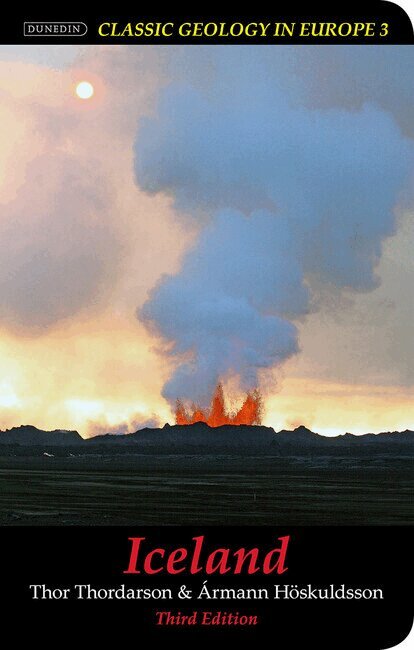
A concise and authoritative field guide to an exceptional natural laboratory, this title in the Classic Geology in Europe series is an essential companion for those visiting Iceland to observe the Earth in action. Rifting of the crust, volcanic eruptions and glacial activity are among a host of processes and features to be observed in this fascinating land. Nowhere else on Earth is the volcanic and tectonic architecture of seafloor rifts better exposed. Large icecaps and extensive river systems grind down the volcanic pile at rapid rates, dispersing and forming thick sequences of sediments. These formations are further modified by the pounding waves of the North Atlantic causing intriguing landforms that exhibit an intricate balance between the construction and erosion of land. Iceland is the only part of the North Atlantic Large Igneous Province that is still active and the only place on Earth where the construction of such provinces can be observed directly. As such, it is a window into the formation of proto-continents early in the Earth’s history. For the past seven million years Iceland has been situated at the boundary of major air and ocean masses and has consequently been exposed to extreme climate changes. The effects of the climate on the rock-forming processes are clearly illustrated by diverse sedimentary and volcanic successions and by the wide range of volcanic landforms formed in sub-aqueous to sub-aerial environments; each succession reflecting the characteristics of internal and external processes.Icelandic culture cannot be fully comprehended without understanding its geology. Thus the book will interest not only student, amateur and professional geologists but also others attracted by the natural environment and seeking a deeper understanding of what makes Iceland the unique place that it is.
504 kr
Skickas inom 7-10 vardagar
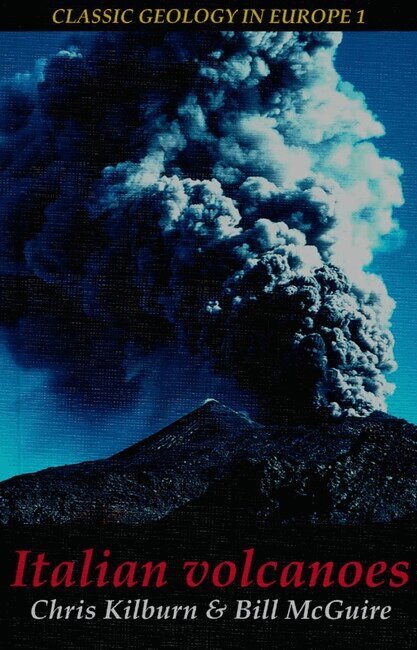
Based on an intimate knowledge and extensive research, Italian volcanoes, provides a complete introductory guide to one of the world's best known and most intensively studied volcanic areas. It is a unique guide to volcanic geology and an exciting introduction to how volcanoes work. Twelve detailed itineraries have been specially chosen to highlight the spectrum of volcanic products, their threat to human activity and their importance to understanding how volcanoes behave. Richly illustrated with maps and photographs, this guide is ideal for all geologists and visitors to Italy who have been captivated by some of the world's most spectacular volcanoes.
575 kr
Skickas inom 7-10 vardagar
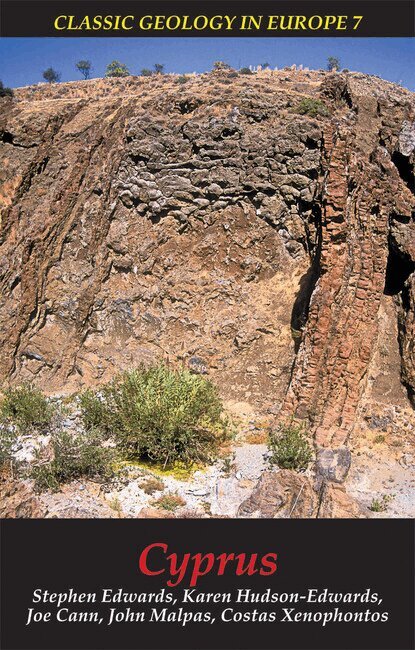
The island of Cyprus is a truly classic area of geology in Europe. Perhaps nowhere else on Earth does so small an area provide such an excellent illustration of the dynamics of Earth processes through abundant exposures of spectacular and diverse geology. The geology, natural resources and climate of Cyprus have enabled civilizations to flourish, and world-renowned archaeological sites date as far back as the Neolithic period. Much of the wealth and development of the island has been based on copper, and evidence of its exploitation dates to at least the third millennium BC. Cyprus is also a hazardous island. Modern and ancient settlements have been destroyed or abandoned as a consequence of earthquakes and landslides. This authoritative work will appeal to all those with an interest in geology who visit this exceptional Mediterranean destination.